
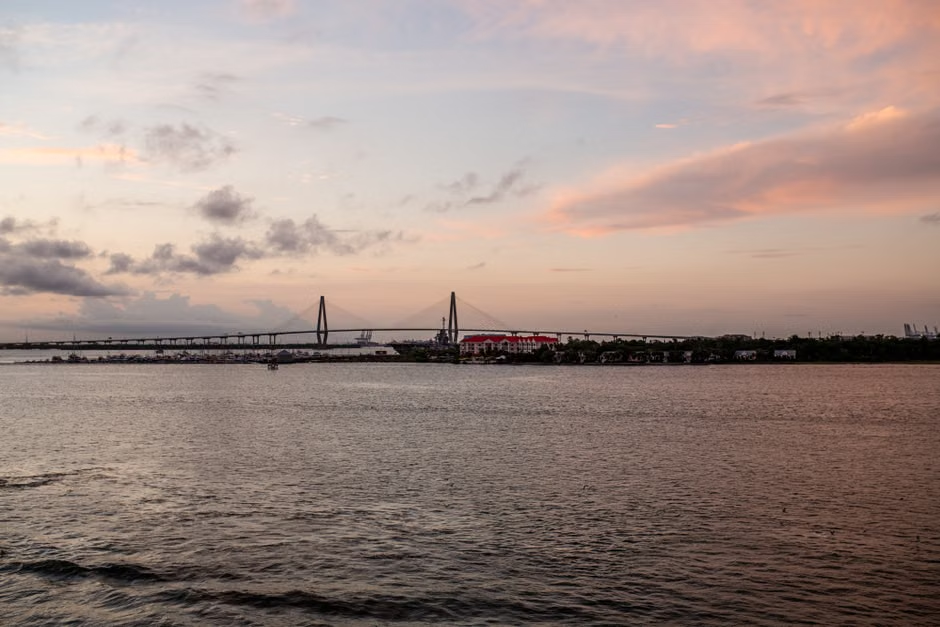
Why Charleston is Perfect for Your Celebration
- Iconic antebellum plantations and historic mansion estates offer unmatched ceremony backdrops
- Mild spring and fall seasons (Mar–May, Oct–Nov) provide near-perfect outdoor event conditions
- World-class lowcountry cuisine and a mature catering and hospitality vendor ecosystem
- Compact, walkable historic district makes guest logistics simple and scenic
- Strong direct air connectivity via CHS from major US hubs keeps travel stress low
- Diverse venue mix — from waterfront ballrooms to garden courtyards and boutique hotel rooftops

Compare Charleston with Other Top Destinations
Frequently Asked Questions
Is Charleston a good destination for a wedding?
Yes. Charleston is widely regarded as one of the strongest wedding destinations in the United States. Its combination of antebellum plantation estates, historic mansion venues, garden courtyards, and waterfront spaces — supported by a mature local vendor ecosystem and reliable spring and fall weather — makes it particularly well-suited to intimate and mid-size weddings seeking a timeless, culturally rich setting.
What is the best time of year to hold a wedding or event in Charleston?
Spring (March through May) and the fall shoulder months of October and November are the best periods. These windows offer mild temperatures, lower humidity, and reliable outdoor conditions. March and April are peak wedding season locally, with gardens in full bloom. October is an excellent, slightly less competitive alternative with similarly comfortable weather.
How many guests can Charleston venues realistically accommodate?
Most of Charleston's most distinctive historic and plantation venues comfortably accommodate between 50 and 400 guests. The city's full-service hotel ballrooms can stretch to around 600–700 guests for seated events. For celebrations significantly above 500 guests requiring a single, character-rich venue, the local inventory becomes more limited and early booking is essential.
How do guests typically get to Charleston for a destination event?
Most guests arrive via Charleston International Airport (CHS), which receives direct flights from the majority of major US cities including New York, Atlanta, Chicago, Washington D.C., and Los Angeles. The airport is approximately 19 km from the historic city center. Amtrak also serves Charleston, though rail frequency is limited and most destination guests travel by air or car.
What kinds of venues are available for events in Charleston?
Charleston offers a genuinely diverse venue mix: antebellum plantation estates with formal gardens and live oak grounds, historic mansion and private estate venues in the city center, hotel ballrooms and event spaces, waterfront and harbor-view venues, walled garden courtyards, and boutique hotel rooftop terraces. This range suits everything from intimate garden ceremonies to formal seated receptions.
Is it easy for a large guest group to get around Charleston once they arrive?
Generally yes. The historic district is compact and walkable, meaning guests staying in downtown hotels can often reach ceremony and reception venues on foot. For transfers to plantation venues outside the city center, local shuttle and charter services are well-established and experienced with wedding group logistics. Rideshare services are widely available throughout the city.
How experienced are Charleston's local vendors with destination weddings and events?
Very experienced. Charleston has been a leading US destination wedding market for over two decades, producing a deep local ecosystem of specialist planners, caterers, florists, photographers, and entertainment vendors who are accustomed to managing multi-day destination events and out-of-town guest logistics. The culinary scene — rooted in lowcountry cuisine — is a particular strength.
Can I hold an outdoor ceremony in Charleston in summer?
It is possible but not recommended without strong contingency planning. June through September brings high heat (regularly 32–35°C), significant humidity, and Atlantic hurricane season risk. Outdoor ceremonies in this window can be uncomfortable for guests in formal attire and carry meaningful weather uncertainty. Spring and fall are strongly preferred for outdoor events.
How far in advance should I book a Charleston venue for a spring wedding?
For spring dates — particularly March and April — booking 12 to 18 months in advance is advisable for the most sought-after plantation and historic mansion properties, which fill quickly during peak season. Fall dates (October and November) are somewhat less competitive but still benefit from early booking, especially for exclusive-use historic venues.
What makes Charleston's event catering distinctive?
Charleston's culinary identity is rooted in lowcountry cuisine — fresh coastal seafood, shrimp and grits, she-crab soup, oysters, and refined Southern cooking. Both hotel in-house catering and independent catering companies operate at a high standard and can incorporate these regional specialties, giving event menus a genuinely distinctive character that guests from outside the region consistently find memorable.
Is Charleston suitable for corporate retreats and incentive events?
Yes. Charleston works well for corporate groups seeking a destination that rewards attendees beyond the meeting room. The city offers solid hotel meeting infrastructure, a compelling leisure offering (historic tours, culinary experiences, coastal activities), and straightforward air access from most US business hubs — making it a strong incentive and retreat destination for groups of moderate size.

Ready to explore venues in Charleston?
Charleston, South Carolina: Destination Wedding & Event Venues
◆Charleston, South Carolina is a premier US destination for weddings, social galas, and milestone celebrations, defined by its antebellum plantation estates, cobblestone historic district, and a deeply rooted culture of Southern hospitality. The city's primary vibe is Cultural & Timeless — best suited to intimate to mid-size weddings, anniversary celebrations, social galas, and corporate retreats. Spring months (March through May) and the fall shoulder season (October and November) offer the most reliable outdoor event conditions. Charleston is well-connected via its international airport, compact enough for guests to navigate easily, and supports a mature local vendor and catering ecosystem that handles destination events with considerable experience.
Charleston at a Glance
| Category | Detail |
|---|---|
| Best For | Weddings, Anniversary Celebrations, Social Galas, Corporate Retreats |
| Primary Vibe | Cultural & Timeless |
| Other Vibes | Romantic, Coastal, Heritage |
| Best Season | Spring (Mar, Apr, May, Oct, Nov) |
Why Choose Charleston?
- Unrivaled historic venue diversity: Charleston offers a rare concentration of antebellum plantation estates, grand historic mansions, waterfront ballrooms, and intimate garden courtyards — all within or just outside the city's compact footprint. Few American cities can match this range of genuinely historic event settings.
- A mature, experienced destination-event ecosystem: Charleston has hosted destination weddings and large social events for decades. Local planners, florists, caterers, photographers, and entertainment vendors are highly experienced with multi-day destination celebrations and out-of-town guest logistics.
- World-class lowcountry cuisine: The city's culinary identity — built around fresh coastal seafood, traditional Southern cooking, and a thriving fine-dining scene — gives event catering a distinctive, memorable character that guests consistently remark upon.
- Walkable, scenic historic district: The compact, pedestrian-friendly historic district means guests can move between accommodation, ceremony, and reception venues on foot or via short rides, reducing logistical complexity for large groups.
- Strong air connectivity: Charleston International Airport (CHS) receives direct flights from most major US cities, making it straightforward for guests traveling from New York, Chicago, Atlanta, Washington D.C., and other hubs to arrive without lengthy connections.
- Coastal and garden outdoor settings: The lowcountry landscape — Spanish moss-draped live oaks, tidal marshes, and harbor views — provides a naturally photogenic outdoor backdrop that requires minimal additional decoration to feel extraordinary.
Which Celebrations Work Best in Charleston?
- Weddings (intimate to mid-size): Charleston is particularly well-suited to weddings in the range of 50 to 400 guests. The city's plantation estates and historic mansion venues are designed for ceremony-and-reception flow, and the romantic, timeless aesthetic aligns naturally with wedding photography and décor. Larger weddings above 500 guests may find the local venue inventory somewhat limiting compared to major metropolitan ballroom cities.
- Anniversary and milestone celebrations: The city's heritage properties and boutique luxury hotels lend themselves naturally to intimate, meaningful milestone events — anniversary dinners, vow renewals, and landmark birthday celebrations — where atmosphere and personalization matter more than sheer scale.
- Social galas and fundraisers: Charleston's established culture of civic and social entertaining means the city has well-appointed ballroom and event hall spaces suited to formal galas, charity fundraisers, and black-tie social events, supported by experienced local event staff.
- Corporate retreats and incentive events: The combination of strong hotel meeting infrastructure, a compelling leisure offering (historic tours, culinary experiences, coastal activities), and easy air access makes Charleston a strong choice for corporate groups seeking a destination that rewards attendees beyond the conference room.
- Rehearsal dinners and multi-day wedding weekends: Charleston's density of excellent restaurants, historic bars, and unique private dining spaces makes it especially well-suited to multi-day wedding weekends, where rehearsal dinners, welcome parties, and farewell brunches can each occupy a genuinely distinct and memorable setting.
Venues & Event Spaces
Charleston's event venue landscape is one of the most varied and historically distinctive of any mid-size American city. The primary categories include:
- Plantation estates: Several historic plantation properties on the outskirts of the city offer sweeping grounds, formal gardens, and antebellum architecture — typically the most sought-after settings for outdoor ceremonies under live oak canopies draped with Spanish moss.
- Historic mansion and private estate venues: The historic district contains a number of privately operated mansion venues and historic homes that can be exclusively hired for events, offering an intimate, house-party atmosphere within genuinely significant architecture.
- Hotel ballrooms and event spaces: The city's full-service hotels — ranging from boutique luxury independents to established international brand properties — offer traditional ballroom and pre-function spaces suited to formal receptions and corporate events, with in-house catering and event coordination.
- Waterfront and harbor venues: Charleston's harbor and riverfront areas include event spaces with direct water views, suited to cocktail receptions, rehearsal dinners, and smaller celebrations where the coastal setting is a primary draw.
- Garden courtyards and outdoor lawns: Many historic district properties feature walled garden courtyards and manicured lawns that serve as ceremony or cocktail-hour spaces, particularly popular during the spring and fall seasons when outdoor conditions are at their best.
- Rooftop terraces: Several boutique hotels in the historic district offer rooftop event spaces with skyline and harbor views, well-suited to cocktail receptions and smaller evening celebrations.
Best Time to Celebrate
The curated best season for Charleston events is Spring (March, April, May) and the fall shoulder months of October and November. Here is why each window works — and why the remaining months are generally less suitable:
- March and April: Temperatures are mild and comfortable (typically in the mid-teens to low-20s Celsius), humidity is relatively low, and the city's gardens and grounds are in bloom — azaleas and wisteria are particularly striking in April. These months are among the most popular for outdoor ceremonies and are considered peak wedding season locally.
- May: Still pleasant, though temperatures begin climbing toward the upper 20s Celsius by late May. Humidity starts to increase noticeably. Early May remains excellent; late May requires more careful planning for outdoor midday events.
- October and November: The fall window is arguably the most underrated period for Charleston events. Temperatures moderate back into the comfortable range after summer, humidity drops significantly, and the lowcountry landscape takes on warm autumnal tones. October in particular offers near-ideal outdoor conditions with lower peak-season competition for venues.
- June through September (avoid for outdoor events): Charleston summers are genuinely challenging for outdoor celebrations. Temperatures regularly reach 32–35°C with high humidity, making outdoor ceremonies uncomfortable for guests in formal attire. This period also falls within the Atlantic hurricane season (June–November, with peak risk July–September), introducing meaningful weather uncertainty for outdoor event planning. Indoor, air-conditioned events remain feasible but lose much of what makes Charleston distinctive as a destination.
- December through February: Winter in Charleston is mild by national standards but can be unpredictable — temperatures range from around 5°C to 15°C, with occasional cold snaps and rain. Outdoor events carry more weather risk, and the city's garden and grounds settings are less visually compelling than in spring or fall. These months can work well for fully indoor events and tend to see lower venue demand.
Getting There & Local Connectivity
Charleston is well-served by Charleston International Airport (CHS), located approximately 19 km from the historic city center. The airport receives direct flights from a broad range of major US cities, including New York, Boston, Washington D.C., Chicago, Atlanta, Dallas, and Los Angeles, among others. For most domestic guests, reaching Charleston requires no connecting flight, which significantly reduces travel fatigue for large wedding or event groups.
Amtrak's Silver Service and Palmetto routes serve Charleston's Amtrak station, connecting the city to the Northeast Corridor and points south. However, rail travel to Charleston is relatively infrequent and slow compared to flying, and most destination event guests will arrive by air or by car. The city is also accessible by road via Interstate 26, making it a reasonable drive for guests based in the Southeast.
Within the city, the compact historic district is genuinely walkable — many guests staying in downtown hotels can reach ceremony and reception venues on foot. For guests spread across multiple accommodation properties, or for transfers to plantation venues outside the city center, local transportation companies offer shuttle and charter services experienced with wedding and event group logistics. Rideshare services are widely available throughout the city.
Local Vendor & Hospitality Ecosystem
Charleston's vendor ecosystem for destination events is among the most developed of any mid-size American city. The destination has attracted a sustained volume of destination weddings and social events for well over two decades, which has produced a deep bench of experienced local professionals across every event category:
- Wedding and event planners: The city has a strong community of destination-specialist planners who are experienced managing multi-day events, out-of-town guest logistics, and the specific permitting and operational requirements of historic venue properties.
- Catering and culinary: Lowcountry cuisine — built around shrimp and grits, she-crab soup, fresh oysters, and refined Southern cooking — gives Charleston event catering a genuinely distinctive regional identity. Both hotel in-house catering and independent catering companies operate at a high standard.
- Floral and décor: The city's natural aesthetic — Spanish moss, magnolias, garden greenery — has shaped a local floral design community that is particularly skilled at working with organic, lush, Southern-garden-style arrangements that complement historic venue settings.
- Photography and entertainment: A large pool of experienced wedding photographers, videographers, live bands (particularly jazz, bluegrass, and Southern soul acts), and DJ services operate locally and are accustomed to the specific lighting and logistical conditions of historic and outdoor venues.
- Accommodation block management: The city's hotel inventory across multiple tiers means that event planners can typically secure room blocks across a range of properties within walking distance of each other, simplifying guest accommodation logistics.
Pros & Things to Consider
Why Charleston Works Well
- Genuinely distinctive, historically significant venue settings that are difficult to replicate elsewhere
- Mild, reliable weather during the spring and fall best seasons makes outdoor planning lower-risk
- Strong direct air connectivity from most major US cities keeps guest travel straightforward
- Mature, experienced local vendor ecosystem reduces planning risk for destination events
- Compact, walkable city center simplifies multi-venue, multi-day event logistics
- World-class culinary scene adds a memorable, regionally distinctive dimension to event catering
- Diverse venue inventory across historic, waterfront, garden, and hotel settings suits a wide range of event styles and sizes
Things to Consider
- Summer weather is a genuine constraint: June through September heat and humidity make outdoor events uncomfortable, and hurricane season introduces real weather risk — couples planning outdoor ceremonies in this window should have robust contingency plans.
- Peak spring season is competitive: March and April are among the most in-demand months for Charleston venues, meaning popular plantation and historic mansion properties can book out 12–18 months in advance. Early planning is essential.
- Venue capacity ceilings: Charleston's most distinctive historic venues tend to have capacity limits that suit intimate to mid-size events. Very large celebrations (500+ guests) may find the local inventory of appropriately scaled, character-rich venues more limited than in major metropolitan cities.
- Parking and vehicle logistics: The historic district's narrow streets and limited parking can create logistical complexity for large guest groups arriving by car. Shuttle coordination is generally advisable for events with significant guest numbers.
- Seasonal pricing peaks: Spring and fall — the best seasons for events — are also the city's peak tourism periods, which affects accommodation availability and demand across the city's hotel inventory.
When Charleston May Not Be the Right Fit
- Very large-scale events (500+ guests): If your celebration requires a single venue capable of comfortably hosting 600 or more guests with full outdoor grounds and indoor backup, Charleston's historic venue inventory may not offer the scale you need without significant compromise on setting or logistics.
- Summer outdoor events with no flexibility: If your dates are fixed in June, July, August, or early September and your event is primarily outdoor, Charleston's heat, humidity, and hurricane-season risk make it a genuinely challenging choice — a destination with more temperate summer conditions would serve you better.
- Guests primarily based outside the continental US: While CHS is well-connected domestically, international guests (particularly those traveling from Europe or Asia) will typically face a connecting itinerary through a major hub. If the majority of your guest list is international, a destination with a larger international gateway airport may reduce travel burden.
- Guests requiring extensive non-English language support: Charleston's hospitality ecosystem operates almost entirely in English. Events with a significant proportion of guests who are not comfortable in English may find the local vendor and hotel ecosystem less equipped to provide multilingual support than some other destination markets.