
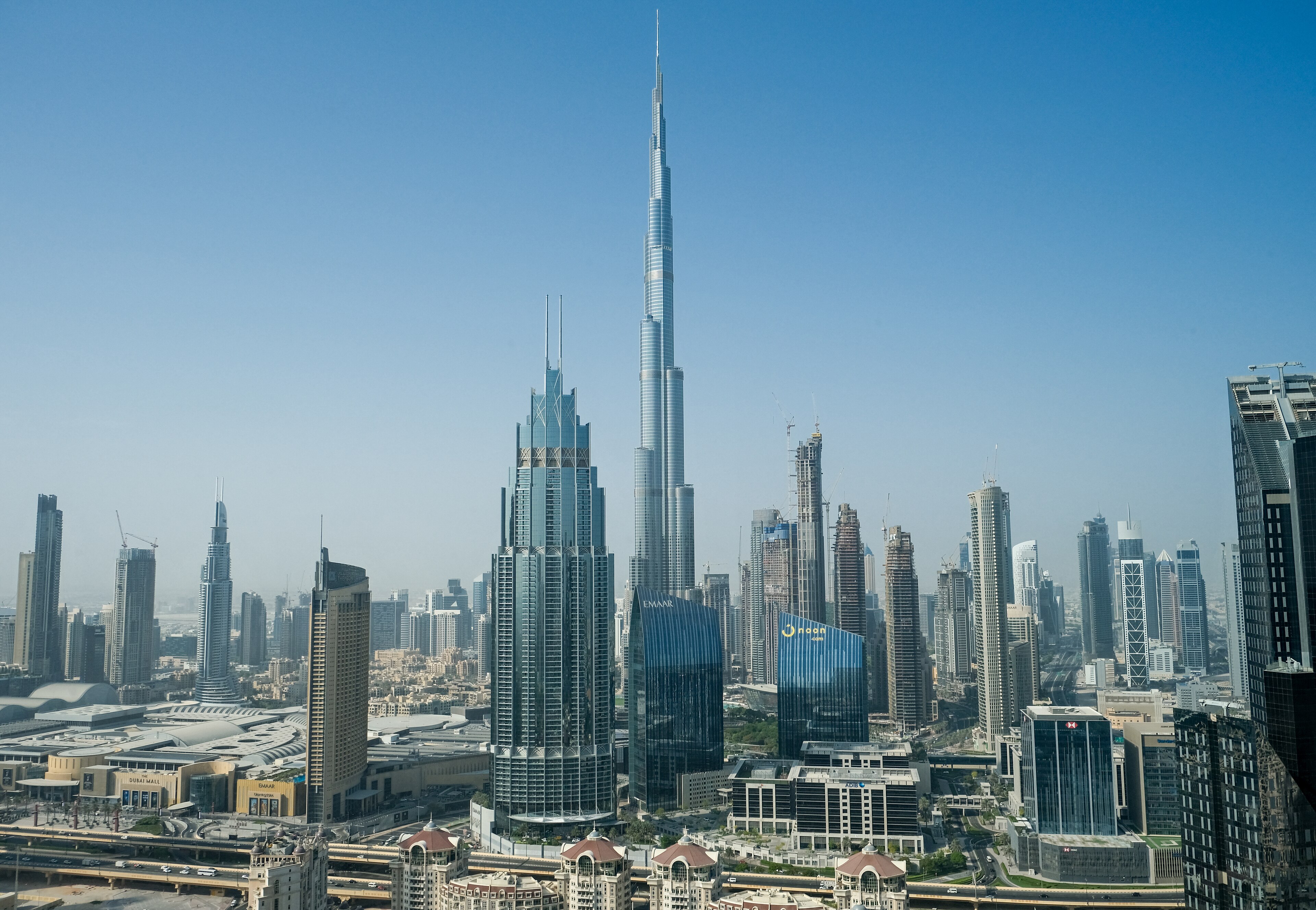
Why Dubai is Perfect for Your Celebration
- World-class luxury resorts and iconic venues with capacities from 50 to 5,000+ guests
- Exceptional international flight connectivity — guests can arrive direct from virtually any continent
- Diverse venue settings: beachfront, desert dunes, rooftop skyline, and palatial ballrooms
- Mature, highly professional event vendor ecosystem covering décor, catering, entertainment, and production
- Cool, dry weather from November to March makes outdoor celebrations genuinely comfortable
- Visa-on-arrival or e-visa availability for a wide range of nationalities simplifies guest travel
Compare Dubai with Other Top Destinations
Frequently Asked Questions
Is Dubai a good destination for a wedding with guests coming from multiple countries?
Yes. Dubai is particularly well-suited to international guest lists because Dubai International Airport offers direct flights from virtually every major region — South Asia, Europe, Africa, Southeast Asia, and the Americas. Most guests can reach Dubai without a connecting flight, which significantly reduces travel complexity. The city's cosmopolitan environment also means guests from diverse cultural backgrounds generally feel comfortable and well-catered for.
What is the best time of year to hold a wedding or event in Dubai?
The best season is November through March — the Cool / Mild Season. Temperatures during this period are genuinely comfortable (typically low-to-mid 20s°C), humidity is low, and rainfall is minimal. This makes outdoor ceremonies and garden receptions reliably pleasant. January and February are the coolest months; March remains good but temperatures begin rising toward month's end.
What kinds of venues are available for events in Dubai?
Dubai offers exceptional venue diversity within a single city: beachfront resort lawns with sea views, rooftop terraces overlooking the skyline, large-format hotel ballrooms for several hundred to several thousand guests, desert-setting open-air venues, and waterfront spaces along Dubai Creek and the Marina. Most luxury properties also have adjacent outdoor spaces for pre-function gatherings or cocktail receptions.
How large a guest list can Dubai venues realistically accommodate?
Dubai's venue inventory comfortably supports a very wide range — from intimate gatherings of 50–100 guests to large-scale celebrations of 2,000–3,000 or more. Several integrated resort complexes have multiple ballrooms and outdoor spaces that can be used simultaneously for different functions, making them well-suited to multi-day, multi-function celebrations with large guest counts.
How do guests get around Dubai once they arrive?
Dubai has a well-developed metro system connecting key districts, but for event groups the most practical arrangement is coordinated coach or minibus transfers between the airport, accommodation, and venue. Taxis and ride-hailing services are widely available and reliable. Road infrastructure is excellent, though peak-hour traffic on major routes can add time to transfers, so event-day schedules should include buffer time.
Is Dubai suitable for corporate events and galas, not just weddings?
Yes. Dubai is a strong choice for corporate galas, award ceremonies, product launches, and incentive events. Its large-format ballrooms and conference-integrated luxury hotels are well-equipped for high-production corporate functions, and the city's status as a global business hub means corporate guests from multiple regions can attend without unusual travel arrangements.
What is the local vendor and catering ecosystem like for events in Dubai?
Dubai's event vendor market is mature and internationally oriented. Specialist wedding planners, décor companies, floral designers, and audio-visual production firms with experience in large-scale celebrations are well-established. Catering is notably diverse — caterers experienced in Indian, Arabic, Mediterranean, and international cuisines are all accessible. Halal catering is the default standard at most venues, which simplifies planning for mixed guest groups.
Are there outdoor venue options in Dubai, and are they practical?
Yes, and they are genuinely practical during the November–March season. Beachfront resort lawns, desert-setting open-air venues, rooftop terraces, and poolside spaces are all commonly used for outdoor ceremonies and receptions during this period. Outside this window — particularly June through September — outdoor events are impractical due to extreme heat and humidity, and even April–May requires careful planning.
What should planners know about alcohol and entertainment regulations for private events in Dubai?
Alcohol is available at licensed venues — primarily hotels and private clubs — but is not universally available and cannot be served in public spaces. For celebrations where open-bar arrangements are important, planners must confirm licensing with each venue individually. Entertainment regulations for private events at licensed hotel venues are generally permissive, but planners should be aware of the broader UAE regulatory context and brief guests on public behaviour norms.
How far in advance should a Dubai event be booked?
November through March is Dubai's peak tourism season, so venue availability is competitive. For events during this window — particularly around New Year, February, and the Dubai Shopping Festival period — booking 12–18 months in advance is advisable for preferred venues. Events in shoulder months (October, early April) may have more flexibility, but early booking is still recommended given the depth of demand for Dubai's top properties.
Is Dubai safe for international guests attending a wedding or event?
Yes. Dubai consistently ranks among the safest cities globally, with very low crime rates and a well-managed public environment. The city's hospitality sector is highly experienced with large international guest groups. Guests should be aware of UAE cultural and legal norms — particularly around public behaviour and dress codes outside hotel premises — but within licensed event venues, the environment for celebrations is well-established and reliable.

Ready to explore venues in Dubai?
Dubai: Destination Wedding & Luxury Event Venues
◆Dubai is a globally recognised destination for luxury weddings, large-scale corporate events, and high-production celebrations. Its primary vibe is unambiguously glamorous — defined by iconic skyline backdrops, Palm Jumeirah beachfront resorts, and desert landscape settings. The city suits destination weddings, corporate galas, milestone celebrations, and incentive events particularly well. The optimal season runs from November through March, when temperatures are genuinely comfortable for both indoor and outdoor functions. Dubai is highly accessible for international guests, with one of the world's busiest hub airports offering direct connections from virtually every major city. It is a premium-tier destination — the hospitality infrastructure is world-class, and event production standards are consistently high.
Dubai at a Glance
| Category | Detail |
|---|---|
| Best For | Destination Weddings, Corporate Events, Milestone Celebrations, Incentive & Gala Events |
| Primary Vibe | Luxury & Glamour |
| Other Vibes | Cosmopolitan, Futuristic, Desert Grandeur, Beachfront Elegance |
| Best Season | Cool / Mild Season (Jan, Feb, Mar, Nov, Dec) |
Why Choose Dubai?
- Unmatched venue diversity: Dubai offers a genuinely rare combination of beachfront resort lawns, desert camp settings, rooftop skyline terraces, palatial ballrooms, and waterfront promenades — all within a single city, giving planners exceptional creative range.
- World-class international connectivity: Dubai International Airport is one of the highest-traffic airports on the planet, with direct flights from across South Asia, Europe, Africa, Southeast Asia, and the Americas. Guests from almost any origin can reach Dubai without a connecting flight, which meaningfully reduces travel friction for large, geographically dispersed guest lists.
- Mature, professional event production ecosystem: Dubai has hosted large-scale international events for decades. The local vendor market — covering décor, floral design, catering, audio-visual production, entertainment, and event management — is deep, competitive, and experienced with multi-day, multi-function celebrations at scale.
- Iconic visual settings: Few cities in the world offer the visual drama of Dubai's skyline, the Palm Jumeirah's crescent, or the open desert at dusk. These settings translate directly into distinctive, memorable event photography and guest experiences that are genuinely difficult to replicate elsewhere.
- Comfortable cool-season weather: Between November and March, Dubai's climate is genuinely pleasant — warm days, cool evenings, and very low rainfall — making outdoor ceremonies, garden receptions, and poolside events reliably comfortable without the logistical risk of monsoon or extreme heat.
- Safety and infrastructure reliability: Dubai consistently ranks among the safest cities globally, with excellent road infrastructure, reliable utilities, and a hospitality sector accustomed to managing large international guest groups with minimal friction.
Which Celebrations Work Best in Dubai?
- Destination Weddings: Dubai is particularly well-suited to destination weddings where the couple wants a high-glamour, internationally accessible setting. The combination of beachfront ceremony spaces, palatial ballrooms, and desert backdrop options gives couples genuine variety across different functions — mehendi, sangeet, ceremony, and reception can each occupy a visually distinct setting within the same city.
- Corporate Galas & Award Ceremonies: The city's large-format ballrooms and conference-integrated luxury hotels make it a natural fit for corporate galas, product launches, and award ceremonies. Dubai's status as a global business hub also means that corporate guests from multiple regions can attend without unusual travel arrangements.
- Incentive Events & Group Retreats: Dubai's combination of luxury accommodation, curated experiences (desert safaris, yacht charters, cultural tours), and high-end dining makes it a strong choice for incentive travel groups and executive retreats where the experience itself is part of the reward.
- Milestone Celebrations (Anniversaries, Landmark Birthdays): For significant personal milestones where the host wants to create a genuinely memorable experience for guests, Dubai's production capabilities and iconic settings deliver a level of spectacle that is hard to match in most other destinations.
- Pre-Wedding & Multi-Day Celebrations: The density of luxury properties and curated experiences means that a multi-day celebration — spanning welcome dinners, daytime activities, and the main event — can be planned entirely within Dubai without guests needing to travel between cities.
Venues & Event Spaces
Dubai's event venue landscape is among the most diverse of any single city in the world. Planners can choose from beachfront resort lawns with direct sea views, rooftop terraces overlooking the city skyline, large-format hotel ballrooms capable of seating several hundred to several thousand guests, and purpose-built event spaces within integrated resort complexes. Desert-setting venues — typically located on the outskirts of the city — offer a dramatically different aesthetic, with open-air setups under the stars and traditional Arabian décor elements. Waterfront venues along Dubai Creek and the Marina provide yet another visual register, combining urban energy with reflective water backdrops. Indoor ballrooms in Dubai's luxury hotel tier are generally equipped to a very high technical standard, with built-in audio-visual infrastructure, flexible staging configurations, and dedicated event coordination teams. Many properties also offer adjacent outdoor lawn or pool-deck spaces that can be used for pre-function gatherings, cocktail receptions, or smaller breakout events within the same venue footprint.
Best Time to Celebrate
The curated best season for Dubai events is the Cool / Mild Season: January, February, March, November, and December. During these months, daytime temperatures typically range from the low-to-mid 20s°C, with evenings cooling pleasantly — conditions that make outdoor ceremonies, garden receptions, and poolside events genuinely comfortable rather than merely tolerable. Rainfall is minimal and predictable, and the lower humidity levels of this period mean that guests in formal attire are not uncomfortable even at outdoor functions.
November and December are particularly popular for events because they combine good weather with the festive atmosphere of the city's peak tourism season, when Dubai is at its most animated. January and February represent the coolest months and are often considered the most reliably comfortable for outdoor celebrations. March remains pleasant, though temperatures begin to climb toward the end of the month.
The months outside this window present genuine challenges. April and May see temperatures rising rapidly into the mid-to-high 30s°C, with increasing humidity — outdoor events become uncomfortable and logistically demanding. June through September is the most challenging period: temperatures regularly exceed 40°C, humidity can be extreme, and outdoor events are effectively impractical without significant cooling infrastructure. Even indoor events during this period require careful management of guest movement between air-conditioned spaces. October is a transitional month — temperatures begin to moderate, but humidity can still be high, and it is generally considered a shoulder period rather than a reliably comfortable event month. Planners targeting outdoor elements should treat October with caution and have contingency plans in place.
Getting There & Local Connectivity
Dubai International Airport is one of the world's most connected aviation hubs, handling direct flights from across South Asia, the Middle East, Europe, Africa, Southeast Asia, East Asia, and the Americas. For most guest groups — whether travelling from India, the UK, the US, or elsewhere in the Gulf — Dubai is reachable on a direct flight, which significantly simplifies travel logistics for large, geographically diverse guest lists. A second airport, Al Maktoum International (Dubai World Central), serves additional routes and is located further from the city centre, so planners should factor transfer times into arrival logistics when guests are using both facilities.
Within the city, Dubai has a well-developed metro system (the Red and Green Lines) that connects key districts including the airport, Downtown Dubai, Dubai Marina, and Deira. For event groups, however, the more common arrangement is coordinated coach or minibus transfers between the airport, accommodation, and venue — the metro, while efficient for individual travel, is less practical for managing large groups in formal attire. Taxis and ride-hailing services are widely available and reliable. For guests staying at Palm Jumeirah properties, the Palm Monorail provides a useful link to the mainland metro network. Road infrastructure across the city is generally excellent, though peak-hour traffic on major arterials can add meaningful time to transfers, and planners should build buffer time into event-day schedules accordingly.
Local Vendor & Hospitality Ecosystem
Dubai's event vendor ecosystem is genuinely mature and internationally oriented. The city has hosted large-scale destination weddings, corporate conferences, and entertainment events for decades, and the vendor market has developed accordingly. Specialist wedding planners and event management companies with experience across South Asian, Western, and Middle Eastern celebration formats are well-established in the market. Floral designers, décor specialists, catering companies capable of handling multi-cuisine menus at scale, and high-end audio-visual production firms are all readily available and accustomed to working within the specific requirements of luxury hotel venues.
Catering in Dubai is notably diverse — the city's cosmopolitan population means that caterers experienced in Indian, Arabic, Mediterranean, and international cuisines are all accessible, which is particularly relevant for destination weddings with guests from multiple cultural backgrounds. Halal catering is the default standard across most venues, which simplifies planning for Muslim guests while remaining compatible with broader dietary requirements. The hospitality staff at Dubai's luxury properties are generally highly trained and experienced with large international groups, and many properties have dedicated in-house event coordination teams that work alongside external planners.
Entertainment options are similarly broad — from classical Indian performers and Bollywood acts to international DJs, live bands, and traditional Arabic entertainment — and the city's regulatory environment for events is well-established, with clear permitting processes for large gatherings.
Pros & Things to Consider
Why Dubai Works Well
- Exceptional international flight connectivity makes it genuinely easy for guests from multiple countries to attend
- Diverse venue settings — beachfront, desert, skyline, waterfront — within a single city give planners real creative flexibility
- Mature, professional vendor ecosystem with deep experience in large-scale, multi-day celebrations
- Cool, dry, and reliably comfortable weather from November through March for outdoor and indoor events
- Very high safety standards and reliable infrastructure reduce operational risk for event planners
- Wide range of luxury accommodation options means large guest groups can be housed at high quality within close proximity to venues
- Cosmopolitan, multicultural city environment means guests from diverse backgrounds generally feel comfortable and well-catered for
Things to Consider
- Premium cost tier: Dubai is an unambiguously high-cost destination — venue hire, catering, accommodation, and vendor fees all reflect the city's luxury positioning, and planners should approach budgeting with that reality clearly in mind.
- Alcohol regulations: Alcohol is available at licensed venues (primarily hotels and clubs), but it is not universally available and cannot be served in public spaces. For celebrations where open-bar arrangements are important, planners must confirm licensing carefully with each venue.
- Summer heat is a genuine constraint: Events planned outside the November–March window face real logistical challenges from heat and humidity, particularly for any outdoor elements. This limits the city's year-round flexibility compared to some other destinations.
- Peak-season demand: November through March is also Dubai's peak tourism season, meaning venue availability can be competitive and lead times for booking should be longer than in less popular destinations.
- Cultural and legal norms: Dubai operates under UAE law, which includes regulations around public behaviour, dress codes in certain areas, and content standards for entertainment. Most luxury hotel venues operate with considerable latitude for private events, but planners should be aware of the broader regulatory context and brief guests accordingly.
- Traffic and transfer logistics: The city's road network is excellent but can be congested during peak hours. For events with large numbers of guests moving between venues or from the airport, coordinated transport planning is essential rather than optional.
When Dubai May Not Be the Right Fit
- Events planned for summer months (June–September): If the event date is fixed in the June–September window and includes outdoor elements, Dubai's extreme heat makes this genuinely impractical. A destination with a more forgiving summer climate would serve those plans better.
- Guests with limited international travel experience or visa complexity: While Dubai offers visa-on-arrival or e-visa access for many nationalities, guests from certain countries face more complex visa processes. If a significant portion of the guest list comes from countries with restricted UAE visa access, the travel logistics can become a meaningful barrier.
- Celebrations where a strong local cultural or heritage narrative is central: Dubai's identity is cosmopolitan and contemporary rather than rooted in a deep, visible heritage tradition. Couples or hosts for whom a specific cultural landscape — a historic palace, a centuries-old temple town, a traditional craft heritage — is central to the event's meaning may find Dubai's aesthetic less resonant than destinations with a more layered historical character.
- Very small, intimate gatherings where the city's scale feels overwhelming: Dubai's event infrastructure is optimised for medium-to-large scale. For a very small, private celebration of 20–30 guests where intimacy and seclusion are the primary goals, the city's scale and energy can work against that atmosphere, and a smaller or more secluded destination might be a better fit.