
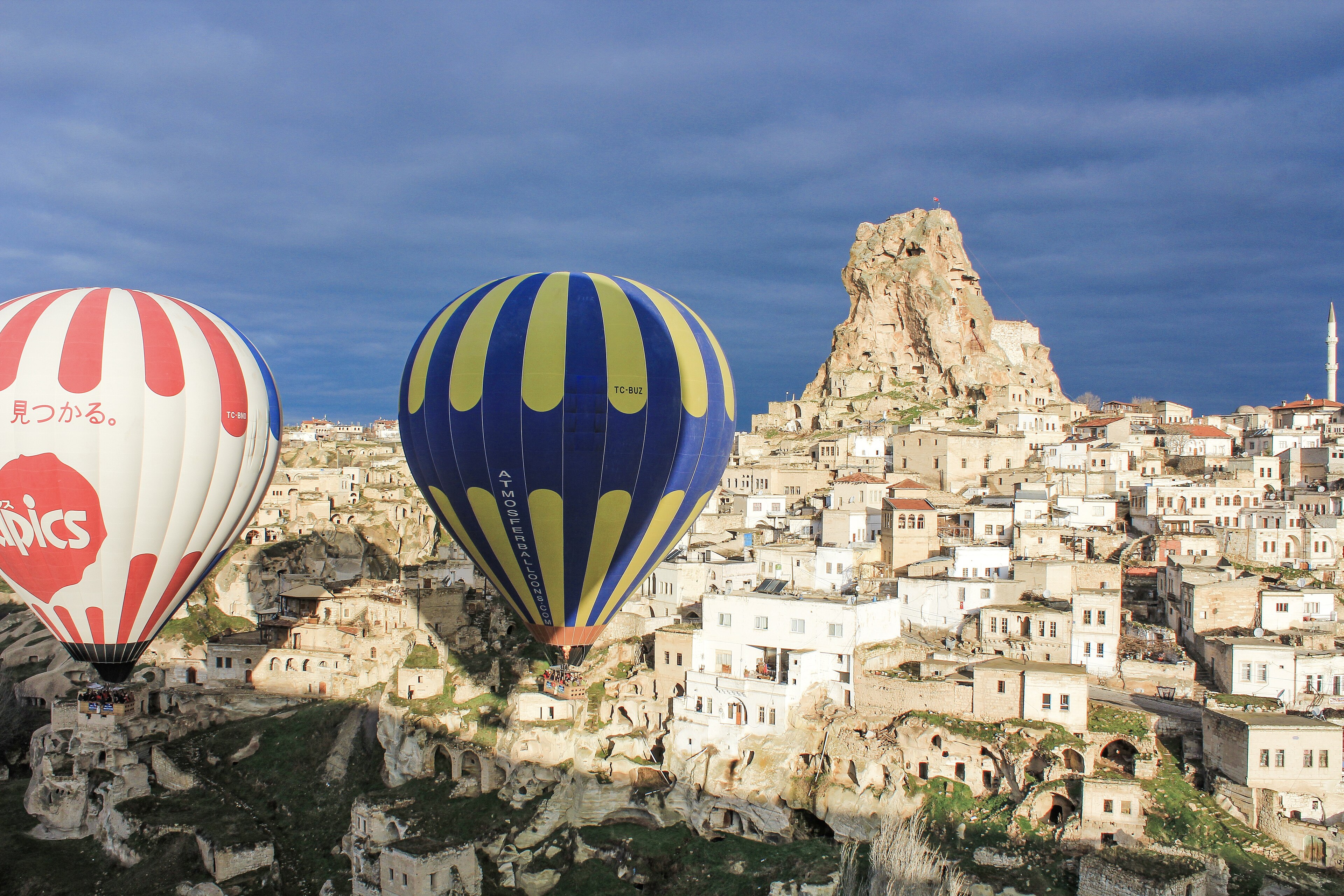
Why Cappadocia is Perfect for Your Celebration
- Iconic fairy chimney and cave landscapes create a naturally cinematic wedding backdrop
- Hot-air balloon flights at sunrise offer a once-in-a-lifetime celebration experience
- Boutique cave hotels provide intimate, exclusive-use settings for small to mid-size events
- Cool, dry season (Oct–Mar) delivers crisp, photogenic skies perfect for outdoor ceremonies
- Rich Anatolian cuisine and local wine from Cappadocia's own vineyards elevate event catering
- Deeply romantic, otherworldly atmosphere that is genuinely unique among global wedding destinations
Compare Cappadocia with Other Top Destinations
Frequently Asked Questions
Is Cappadocia a good destination for a wedding?
Yes, particularly for intimate and small-to-mid-size weddings. Cappadocia's fairy chimney landscape, cave hotel venues, and hot-air balloon experiences create a genuinely cinematic setting that is difficult to replicate anywhere else. It is best suited to couples prioritising atmosphere, photography, and a memorable guest experience over large-scale production or conventional ballroom formats.
How many guests can Cappadocia realistically accommodate for a wedding event?
Most venues in Cappadocia are boutique-scale and comfortably handle groups of 30 to 150 guests. Some larger cave hotel properties can stretch to around 150 for a seated dinner. Groups significantly above that number will find it challenging to source a single space that maintains the region's characteristic intimate atmosphere — splitting across multiple nearby properties is a common solution.
What is the best time of year to plan a wedding or celebration in Cappadocia?
October, November, January, February, and March are the strongest months. The cool, dry conditions make outdoor ceremonies comfortable, the landscape is at its most photogenic (autumn colours in Oct–Nov, possible snow in Jan–Feb), and the region is less crowded than in summer. June through August brings intense heat and heavy tourist traffic, making it the least suitable period for events.
How do guests get to Cappadocia for a destination event?
Most guests fly into either Nevşehir Kapadokya Airport or Kayseri Erkilet Airport, both of which receive regular domestic flights from Istanbul and Ankara. International guests typically connect through Istanbul, which has extensive global routes. From either airport, guests reach the main villages by road transfer — a journey of roughly 40 to 80 kilometres depending on the airport used.
What kinds of venues are available for events in Cappadocia?
The dominant venue type is the boutique cave hotel — properties carved into volcanic rock with terraced outdoor spaces, stone-vaulted dining rooms, and valley views. Restored Anatolian mansion properties in villages like Ürgüp and Uçhisar offer similar character with dedicated event lawns or rooftop terraces. Outdoor valley settings are also used for ceremonies. Large conventional ballroom spaces are not part of the local inventory.
Can hot-air balloon flights be incorporated into a wedding celebration?
Yes, and this is one of Cappadocia's most distinctive event features. Sunrise balloon flights over the valleys are a well-established part of the local tourism and event ecosystem. Many couples incorporate a group balloon flight into the wedding morning or as a pre-wedding activity for guests. Flights are most reliably available during the cool season; winter months can see weather-related cancellations, so a contingency plan is advisable.
How should accommodation be arranged for a large wedding guest group?
Because individual properties in Cappadocia are boutique-scale, larger groups typically spread across two or three nearby hotels within the same village cluster — Göreme, Ürgüp, and Uçhisar are all within a short drive of each other. Exclusive-use buyouts of a single small property are popular for very intimate groups. Local transfer companies are experienced at moving wedding parties between properties throughout a multi-day event.
Is the local vendor ecosystem in Cappadocia experienced enough for international destination weddings?
Yes. Cappadocia has hosted international destination weddings consistently for over a decade. Multilingual local planners, photographers familiar with the specific landscape and light conditions, florists, and catering teams experienced in event-scale production are all available. Anatolian cuisine and locally produced wine give catering a strong sense of place. Booking well in advance — ideally six to twelve months — is important, particularly for popular October and November weekends.
What makes Cappadocia's food and catering distinctive for a wedding event?
The region has a genuine culinary identity built around slow-cooked Anatolian dishes, clay-pot preparations, local cheeses, and wines from Cappadocia's own volcanic-soil vineyards. This gives event menus a real sense of place rather than generic international banquet food. Several cave hotel restaurants have strong culinary reputations, and external catering teams can handle off-site or outdoor event setups.
What activities can guests enjoy during a multi-day celebration in Cappadocia?
Beyond the signature hot-air balloon flights, guests can explore the region's open-air museums and ancient rock-cut churches, hike through Rose Valley and Pigeon Valley, visit underground cities, take guided ATV or horse-riding tours through the valleys, and experience traditional Turkish hammam sessions. The compact geography means most activities are within a short drive of any accommodation, making a full multi-day programme straightforward to organise.
Are there any genuine drawbacks to choosing Cappadocia for a destination wedding?
Yes. The main trade-offs are venue scale (groups above 150 guests will find options limited), travel complexity for international guests (a multi-leg journey through Istanbul is typical), and winter weather variability (January and February can bring freezing temperatures and occasional snow that require contingency planning for outdoor elements). Summer dates are also significantly less suitable due to heat and tourist crowds.

Ready to explore venues in Cappadocia?
Cappadocia: Destination Wedding & Celebration Venues in Central Anatolia
◆Cappadocia is best suited to intimate, romantic celebrations — destination weddings, elopements, anniversaries, and milestone birthdays — where the setting itself is the centrepiece. Its primary vibe is Romantic & Dreamy, shaped by a landscape of volcanic fairy chimneys, ancient cave dwellings, and open valleys that are genuinely unlike anywhere else on earth. The cool, dry months from October through March and January through March offer the most comfortable outdoor conditions and the clearest skies for hot-air balloon flights. Accessibility requires planning — most guests will connect through Ankara or Istanbul — but the region's well-developed boutique hospitality infrastructure handles small-to-mid-size groups with confidence. It is not a destination for very large-scale events or guests expecting a metropolitan convention-style setup.
Cappadocia at a Glance
| Attribute | Detail |
|---|---|
| Best For | Destination Weddings, Elopements, Anniversary Celebrations, Milestone Birthdays |
| Primary Vibe | Romantic & Dreamy |
| Other Vibes | Mystical, Intimate, Heritage-Rich, Adventurous |
| Best Season | Cool / Mild Season (Jan, Feb, Mar, Oct, Nov, Dec) |
Why Choose Cappadocia?
- A landscape that cannot be replicated: The region's fairy chimneys, rose-coloured valleys, and ancient cave churches form a backdrop that is immediately recognisable and deeply photogenic — no amount of décor can manufacture what the terrain provides naturally.
- Hot-air balloon experiences: Cappadocia is among the world's premier balloon destinations. Sunrise flights over the valleys are a signature experience that can be woven directly into a wedding morning or celebration itinerary, creating moments guests genuinely remember for life.
- Boutique cave hotels with exclusive-use potential: Many of the region's finest properties are small, architecturally distinctive, and well-suited to being taken over entirely by a wedding party — offering a level of privacy and immersion that large resort complexes rarely match.
- Anatolian culinary heritage: Local cuisine — slow-cooked clay-pot dishes, Cappadocian wines from the region's own volcanic-soil vineyards, and traditional mezes — gives event catering a genuine sense of place rather than generic international banquet food.
- Compact geography for guest logistics: The main villages of Göreme, Ürgüp, Uçhisar, and Avanos are all within a short drive of each other, making it straightforward to accommodate guests across multiple properties while keeping the group functionally together.
- Established international event infrastructure: Despite its remote feel, Cappadocia has hosted international destination weddings for well over a decade. Local planners, photographers, florists, and catering teams are experienced with the specific demands of multi-day celebration events.
Which Celebrations Work Best in Cappadocia?
- Destination Weddings: This is where Cappadocia is strongest. The combination of dramatic scenery, intimate venue scale, and a genuinely otherworldly atmosphere makes it particularly compelling for couples who want their wedding to feel like a journey rather than a banquet hall booking. Ceremonies in open valleys, on cave hotel terraces, or within ancient rock-cut spaces carry a weight and originality that is hard to find elsewhere.
- Elopements & Micro-Weddings: For couples planning a very small, private ceremony — perhaps just immediate family or a handful of close friends — Cappadocia's boutique properties are ideally scaled. Many cave suites and heritage mansions can accommodate a ceremony and dinner for under thirty guests with exceptional intimacy.
- Anniversary & Vow Renewal Celebrations: The romantic, timeless quality of the landscape makes it a natural fit for milestone anniversaries. A hot-air balloon flight, a private dinner on a terrace overlooking the valleys, and a stay in a carved-stone suite combine into an experience that feels genuinely celebratory without requiring large-scale event production.
- Milestone Birthdays: For a significant birthday — a fortieth, fiftieth, or sixtieth — Cappadocia offers the kind of experience-led celebration that a city hotel simply cannot replicate. The destination itself becomes the gift, and the combination of adventure (balloon flights, valley hikes, underground city visits) with excellent food and wine gives a group of friends or family a full programme across several days.
Venues & Event Spaces
Cappadocia's event venue landscape is defined almost entirely by its boutique heritage properties rather than large convention-style hotels. The dominant venue type is the cave hotel — properties carved directly into the volcanic tuff rock, often centuries old in their original form and sensitively restored into luxury or upper-midscale accommodation. These typically feature terraced outdoor spaces with panoramic valley views, stone-vaulted dining rooms, and intimate courtyards that work well for ceremonies, cocktail receptions, and seated dinners.
Beyond cave hotels, the region also offers restored Anatolian mansion properties — particularly in Ürgüp and Uçhisar — which combine traditional stone architecture with contemporary hospitality standards. Some of these have dedicated event lawns or rooftop terraces that can accommodate ceremonies and receptions for groups of up to roughly 150 guests, though the most atmospheric spaces tend to suit smaller gatherings more naturally.
For outdoor ceremonies, the valleys themselves — Rose Valley, Love Valley, Pigeon Valley — serve as extraordinary natural backdrops, and local planners regularly coordinate permitted outdoor setups within these landscapes. Underground spaces, including portions of the region's famous rock-cut churches and cellars, are occasionally used for highly distinctive dinner settings, subject to local permissions.
What Cappadocia does not offer is large-scale ballroom infrastructure. Groups requiring a single venue to seat 300 or more guests in a conventional banquet format will find the local inventory genuinely limited — this is a destination built for intimacy, not scale.
Best Time to Celebrate
The curated best season for events in Cappadocia is the Cool / Mild Season: January, February, March, October, November, and December. This recommendation reflects several practical realities specific to the destination.
During October and November, the landscape transitions into autumn tones — the valleys take on warm amber and ochre hues, temperatures are comfortable for outdoor ceremonies (typically ranging from around 8°C to 20°C), and the summer tourist crowds have thinned considerably, giving wedding parties a greater sense of exclusivity. Hot-air balloon operations run reliably during this period, and the light quality for photography is particularly strong.
January, February, and March bring the possibility of snow — and a snow-dusted fairy chimney landscape is genuinely spectacular for photography and for creating a fairytale atmosphere. Temperatures can drop below freezing overnight, which requires thoughtful planning for outdoor elements (heated marquees, timing of outdoor ceremonies to midday), but the visual reward is significant and the destination is at its least crowded. Balloon flights still operate on suitable days, though weather cancellations are more frequent in deep winter.
The months June, July, and August are the least suitable for events. Summer temperatures regularly exceed 30°C, outdoor ceremonies become uncomfortable in the middle of the day, and the region is at its most heavily visited by general tourists — reducing the sense of privacy and exclusivity that makes Cappadocia special for a celebration. Accommodation availability tightens and the overall atmosphere shifts toward mass tourism rather than intimate event hosting.
April and May are shoulder months — warming quickly and increasingly busy, but not yet at summer extremes. They are broadly acceptable for events but lack the crispness and exclusivity of the curated cool season. September sits similarly: still warm from summer, beginning to ease, but not yet at the comfortable plateau of October.
Getting There & Local Connectivity
Cappadocia is served by two airports: Nevşehir Kapadokya Airport (NAV), which is the closer of the two to the main villages, and Kayseri Erkilet Airport (ASR), which handles a broader range of domestic and some international routes. Both airports receive regular flights from Istanbul and Ankara, making the journey from Turkey's major hubs straightforward. International guests will typically route through Istanbul (IST or SAW), which has extensive global connections, before taking a domestic flight into the region.
There is no high-speed rail connection directly into Cappadocia. The nearest mainline railway station is in Kayseri, which is connected to Ankara and other major Turkish cities, but the journey from Kayseri to the Cappadocian villages requires an onward road transfer of roughly 80 kilometres. For most event guests, flying is the practical choice.
Within the region, local transport is almost entirely road-based. The main villages — Göreme, Ürgüp, Uçhisar, Avanos, Ortahisar — are all within a 20–30 minute drive of each other, and local transfer companies are well-practised at moving wedding groups between properties, airports, and activity sites. Private minibuses and coaches are readily available for group transfers. There is no urban metro or tram system, so all guest movement requires organised road transport — something event planners here factor in as standard.
Local Vendor & Hospitality Ecosystem
Cappadocia has developed a genuinely mature event vendor ecosystem over the past fifteen years, driven by consistent demand from international destination weddings. Local wedding planners with multilingual capability and experience coordinating multi-day events for international couples are available and generally well-regarded. Floral designers, photographers, and videographers who specialise in the specific light and landscape conditions of the region are established here — this is not a destination where couples need to import every vendor from a distant city.
Catering is a particular strength. The region's culinary identity — built around slow-cooked Anatolian dishes, clay-pot preparations, local cheeses, and wines produced from grapes grown in Cappadocia's own volcanic-soil vineyards — gives event menus a genuine sense of place. Several cave hotels operate their own restaurants with strong reputations, and external catering teams experienced in event-scale production are available for outdoor or off-site setups.
Entertainment options lean toward the culturally distinctive: traditional Turkish music, whirling dervish performances, and local folk dance are all available and genuinely rooted in the region's heritage rather than being purely tourist-facing novelties. For couples wanting a more contemporary entertainment programme, DJs and live bands can be sourced, though the selection is narrower than in a major city.
One practical consideration: because Cappadocia is a relatively small region, vendor availability during peak event weekends (particularly in October and November) can become constrained. Early booking — ideally six to twelve months in advance for a full wedding — is strongly advisable.
Pros & Things to Consider
Why Cappadocia Works Well
- Genuinely unique, globally recognisable landscape that elevates every photograph and every guest's memory of the event
- Boutique cave hotels offer a level of architectural intimacy and exclusivity that conventional resort destinations cannot replicate
- Hot-air balloon experiences provide a built-in, once-in-a-lifetime activity that doubles as a celebration highlight
- Cool season weather (Oct–Mar) is reliably comfortable for outdoor ceremonies and dramatically photogenic
- Mature local vendor ecosystem with experienced multilingual planners, photographers, and caterers
- Anatolian cuisine and local wine give event catering a strong, authentic sense of place
- Compact geography makes multi-property guest accommodation logistically manageable
Things to Consider
- Venue capacity is genuinely limited — groups larger than 150 guests will find it difficult to source a single space that accommodates everyone comfortably in the region's characteristic style
- International guests face a multi-leg journey (typically a long-haul flight to Istanbul, then a domestic connection), which adds travel complexity and cost for guests coming from outside Europe or the Middle East
- Winter months (Jan–Feb) can bring freezing overnight temperatures and occasional snow, requiring contingency planning for outdoor elements and potentially affecting balloon flight availability
- The region is heavily visited in summer, and while this is not the recommended event season, it does mean that the broader tourism infrastructure is calibrated around peak summer demand — some services thin out in deep winter
- Road-only local transport means all guest movement requires organised transfers; there is no public transit option for a group
- Vendor availability during popular October–November weekends can be constrained; early booking is essential
When Cappadocia May Not Be the Right Fit
- Large guest lists (200+): If your celebration requires a single venue to seat a very large group in a conventional banquet format, Cappadocia's boutique-scale inventory will likely fall short. The destination is built for intimacy, not scale.
- Guests with limited travel flexibility: For a guest list that includes many elderly guests, young children, or people who find multi-leg international travel difficult, the journey to Cappadocia — typically requiring at least one connection through Istanbul — may be a genuine barrier to attendance.
- Summer-only availability: If your dates are fixed in June, July, or August and cannot move, Cappadocia's summer heat, tourist crowds, and reduced sense of exclusivity make it a less compelling choice than it would be in the cool season.
- Couples seeking a metropolitan event experience: If the vision involves a large nightclub-style after-party, a wide choice of international entertainment acts, or the full infrastructure of a major city, Cappadocia's small-town, landscape-first character will feel limiting rather than liberating.