
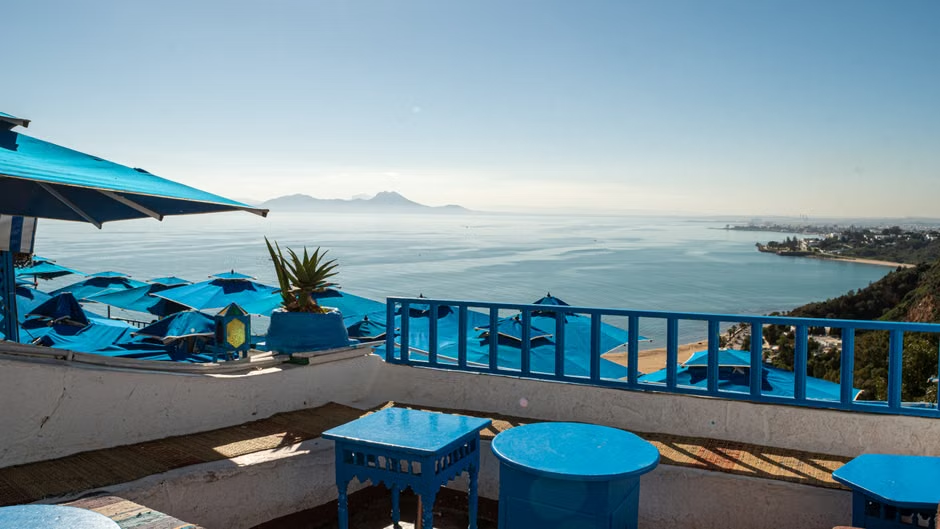
Why Sidi Bou Said / Carthage is Perfect for Your Celebration
- Iconic blue-and-white Andalusian village architecture creates a naturally photogenic setting unlike any other Mediterranean destination
- UNESCO-listed Carthage ruins provide a dramatic, historically resonant backdrop for ceremonies and receptions
- Clifftop terraces and riad-style courtyards offer intimate outdoor event spaces with panoramic Gulf of Tunis views
- Tunis-Carthage International Airport is just minutes away, making guest arrivals straightforward from European hubs
- The TGM light rail connects Sidi Bou Said and Carthage directly to central Tunis, simplifying group logistics
- Spring-to-autumn season (April–October) delivers reliably warm, dry Mediterranean weather ideal for outdoor celebrations

Top Venues in Sidi Bou Said / Carthage
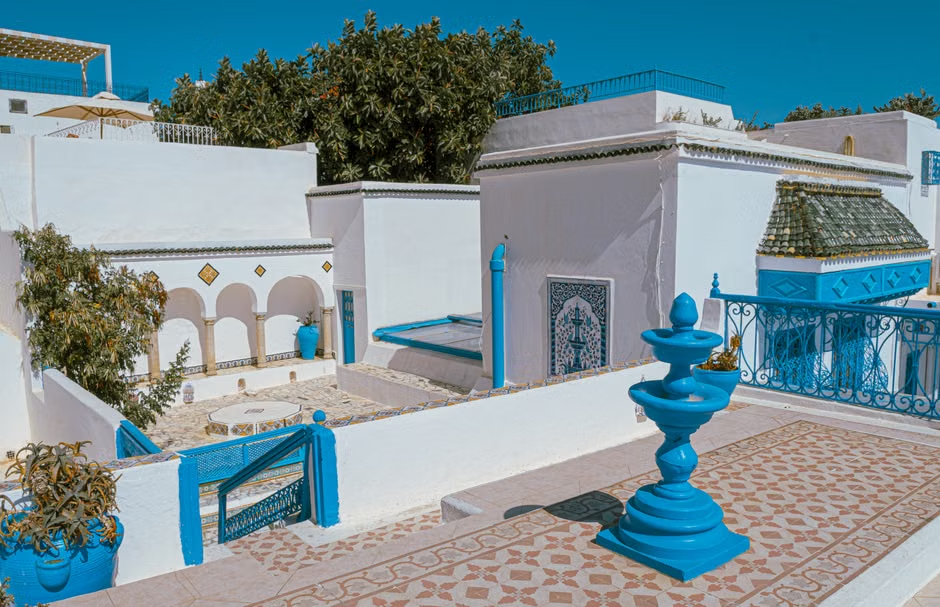
The Residence Tunis
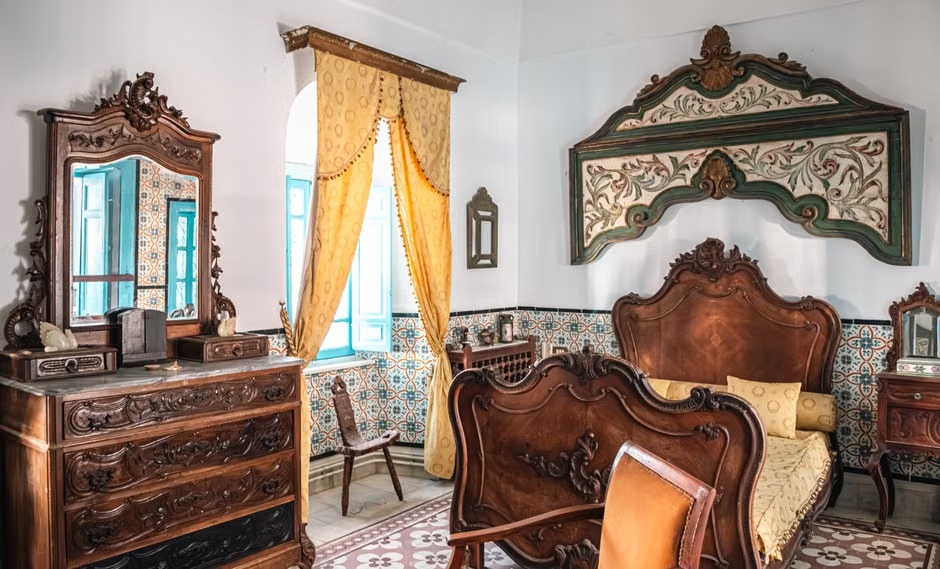
Dar Zarrouk
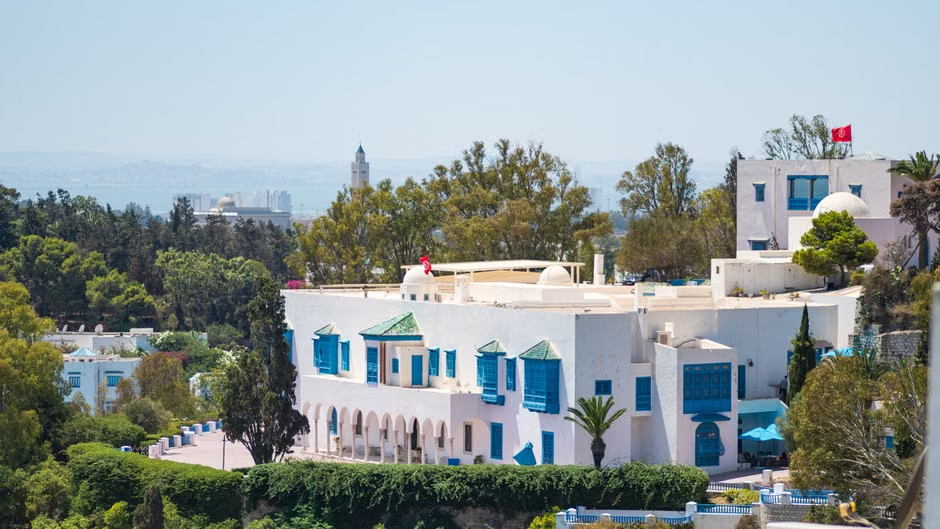
Hotel Sidi Bou Said
Compare Sidi Bou Said / Carthage with Other Top Destinations
Frequently Asked Questions
Is Sidi Bou Said / Carthage a good destination for an intimate destination wedding?
Yes, particularly for smaller, culturally immersive celebrations. The whitewashed Andalusian village of Sidi Bou Said and the UNESCO-listed ruins of Carthage create a setting that is genuinely historic and visually distinctive. The destination works best for guest lists of roughly 30–150, where the boutique venue character and clifftop scenery can be fully appreciated rather than overwhelmed by scale.
What guest group sizes can venues in Sidi Bou Said / Carthage realistically accommodate?
Most venues in the area are best suited to groups of 30–200 guests. Riad-style properties and clifftop heritage venues typically handle intimate gatherings of 30–100 very well. Larger resort properties on the nearby Gammarth and La Marsa coastal strip can extend capacity toward 200–400 for seated events. Very large celebrations above 300 guests will find the local inventory stretched.
Which airport do guests fly into for Sidi Bou Said and Carthage?
Tunis-Carthage International Airport (TUN) is the gateway, and it is exceptionally close — roughly 5–10 km from both Sidi Bou Said and Carthage. Guests from European cities including Paris, Rome, Frankfurt, London, and Madrid have direct services. Guests from further afield typically connect through a European hub or Tunis itself.
Is there a train or rail connection to Sidi Bou Said and Carthage?
Yes. The TGM light rail line runs directly along the coast, with dedicated stations at both Sidi Bou Said and the Carthage archaeological zones, connecting them to central Tunis. This makes it practical for guests staying in the capital to reach event venues without relying entirely on private transfers, and it is a genuinely useful option for day-to-day guest movement.
What is the best time of year to plan a wedding or event in Sidi Bou Said / Carthage?
April through October is the curated best season. Spring (April–May) offers warm, comfortable temperatures and excellent light. September and October are widely considered the sweet spot — summer crowds thin, temperatures ease from peak heat, and the sea remains warm. July and August are hot (regularly 32–35°C), so outdoor daytime events in those months require careful scheduling toward early morning or evening.
What kinds of event spaces are available in Sidi Bou Said and Carthage?
The area offers riad-style courtyard properties, clifftop garden terraces, traditional Tunisian dar houses that can be taken over privately, and sea-view restaurant terraces for cocktail receptions. The broader La Marsa and Gammarth coastal strip adds resort-style properties with outdoor lawns and banquet facilities. The destination does not have large purpose-built convention centres — events are designed around the architecture and landscape.
How easy is it for a large guest group to get around once they arrive?
Reasonably straightforward. The TGM rail line handles movement between the villages and central Tunis. For event-day group transfers, private minibuses are the standard approach — Sidi Bou Said's narrow lanes are not suited to large coaches. The destination's compact geography (Sidi Bou Said, Carthage, and the coastal strip all within roughly 10 km) keeps transfer times short for most guests.
Is the local vendor and catering ecosystem experienced enough for a destination wedding?
Yes, though it is smaller than major European or Indian wedding hubs. Local caterers are skilled in both traditional Tunisian cuisine and international menus. Photography, floral, and entertainment suppliers familiar with the destination are available. Working with a local event management company or destination management organisation with established supplier relationships is strongly advisable for any event of meaningful complexity.
Are there any accessibility considerations guests should know about in Sidi Bou Said?
Yes — this is worth flagging early. Sidi Bou Said village has cobblestone lanes, stepped terraces, and hillside topography that can be genuinely challenging for wheelchair users or guests with limited mobility. If a significant portion of your guest group has mobility limitations, the village's character becomes a practical constraint, and a flatter, purpose-built resort venue on the nearby coastal strip may be a better fit.
Do guests from all nationalities need a visa to enter Tunisia for an event?
Visa requirements vary significantly by nationality. Many European and North African nationals can enter Tunisia visa-free or obtain a visa on arrival, but guests from other regions — including parts of Asia, the Americas, and sub-Saharan Africa — may require advance visas. Event planners should verify entry requirements for every guest nationality well in advance of sending invitations, as processing times can vary.
What makes Sidi Bou Said / Carthage genuinely distinctive compared to other Mediterranean event destinations?
The combination of a living, inhabited Andalusian village with UNESCO World Heritage ancient ruins in the same 10 km corridor is rare anywhere in the Mediterranean. Sidi Bou Said's blue-and-white architecture is immediately recognisable and requires no additional styling to be visually striking. The proximity of Tunis-Carthage Airport — one of the shortest airport-to-destination transfers in the region — is a practical advantage that most comparable heritage destinations cannot match.

Ready to explore venues in Sidi Bou Said / Carthage?
Sidi Bou Said / Carthage: Destination Wedding & Event Venues in Tunisia
◆Sidi Bou Said and Carthage, located on the cliffs above the Gulf of Tunis in northern Tunisia, are best suited to intimate, culturally immersive celebrations — destination weddings, private milestone events, and small corporate retreats where atmosphere and heritage matter more than large-scale infrastructure. The primary vibe is Cultural & Timeless: whitewashed Andalusian architecture, cobalt-blue doorways, and the UNESCO-listed ruins of ancient Carthage create a setting that is genuinely historic. The best season runs from April through October, delivering warm, dry Mediterranean weather. Tunis-Carthage International Airport sits just minutes away, making the area accessible from European cities, though guests travelling from further afield will typically require a connecting flight through Tunis or another hub.
Sidi Bou Said / Carthage at a Glance
| Attribute | Detail |
|---|---|
| Best For | Destination Weddings, Intimate Celebrations, Cultural Events, Private Milestone Gatherings |
| Primary Vibe | Cultural & Timeless |
| Other Vibes | Mediterranean, Romantic, Heritage, Clifftop Scenic |
| Best Season | Spring (Apr, May, Jun, Jul, Aug, Sep, Oct) |
Why Choose Sidi Bou Said / Carthage?
- Unmatched visual identity: The blue-and-white Andalusian streetscape of Sidi Bou Said is one of the most photographed village settings in the Mediterranean — every corner of the village functions as a natural backdrop for ceremony and portrait photography without any additional styling.
- Ancient Carthage as a living backdrop: The Punic and Roman ruins of Carthage — a UNESCO World Heritage Site — sit within the same coastal ridge, offering a genuinely rare opportunity to hold events in the shadow of one of antiquity's most storied civilisations.
- Clifftop terraces and riad courtyards: The area's traditional architecture naturally produces intimate outdoor event spaces — jasmine-draped terraces, colonnaded courtyards, and garden lawns with panoramic Gulf of Tunis views — that feel private and curated rather than generic.
- Airport proximity: Tunis-Carthage International Airport is among the closest major international airports to any event destination in the Mediterranean, sitting roughly 5–10 km from both Sidi Bou Said and Carthage, which meaningfully reduces guest transfer times and fatigue.
- Direct rail access: The TGM light rail line connects Sidi Bou Said and Carthage directly to central Tunis, making it straightforward for guests staying in the capital to reach event venues without relying entirely on private transfers.
- Boutique scale and exclusivity: Because the destination is not a mass-market resort strip, events here tend to feel genuinely exclusive — the village character, the limited number of large hotels, and the riad-style properties all reinforce a sense of private occasion rather than a packaged event.
Which Celebrations Work Best in Sidi Bou Said / Carthage?
- Destination Weddings: The combination of clifftop scenery, heritage architecture, and a compact, walkable village makes this one of the stronger intimate wedding destinations in North Africa. Ceremonies on jasmine-terraced gardens overlooking the Gulf of Tunis are particularly well-suited to couples seeking a Mediterranean setting with genuine cultural depth rather than a resort-hotel aesthetic.
- Engagement & Pre-Wedding Celebrations: The village's photogenic lanes, café culture, and sea-view terraces make it a natural setting for engagement parties, mehendi evenings, or pre-wedding dinners where the location itself does much of the decorative work.
- Private Milestone Events: Significant birthdays, anniversaries, and family reunion gatherings suit the destination well — the scale of available venues aligns with groups of 30–150 guests, and the cultural richness of the area gives multi-day programmes genuine substance beyond the event itself.
- Cultural & Heritage-Themed Corporate Retreats: Small leadership retreats or incentive travel programmes that want a genuinely historic, non-generic Mediterranean setting — with site visits to Carthage, the Bardo Museum in Tunis, and the medina — find the area well-suited to combining programme content with memorable surroundings.
Venues & Event Spaces
The venue landscape in Sidi Bou Said and Carthage is defined by heritage character rather than large-scale convention infrastructure. The most distinctive spaces are riad-style properties and traditional Tunisian dar houses — multi-room courtyard residences with tiled floors, carved plasterwork, and garden terraces — that can be taken over entirely for a private event. Clifftop restaurants and café-terraces with sea views are commonly used for cocktail receptions and smaller seated dinners. The broader Gammarth and La Marsa coastal strip, within easy reach of both villages, adds a layer of larger resort-style properties with dedicated banquet halls, outdoor lawns, and pool-terrace event spaces capable of hosting larger guest counts. Outdoor garden ceremonies are the norm during the spring-to-autumn season, with covered or indoor alternatives available for evening receptions. The area does not have large purpose-built convention centres or ballrooms of the kind found in major capital cities — events here are typically designed around the architecture and landscape rather than neutral, scalable function rooms.
Best Time to Celebrate
The curated best season — April through October — aligns with the Mediterranean climate's most reliable window. Spring (April–May) is particularly pleasant: temperatures are warm but not intense, wildflowers are in bloom across the hillsides, and the light quality in the late afternoon is exceptional for outdoor photography. Early summer (June) extends this comfort before the heat builds. July and August are the hottest months, with temperatures regularly reaching the low-to-mid 30s°C — outdoor daytime events require careful scheduling (early morning or evening), but the long, dry days and warm evenings make sunset and night-time receptions genuinely spectacular. September and October bring a gradual cooling that many planners consider the sweet spot: the summer crowds thin, temperatures become more comfortable across the full day, and the sea remains warm enough for guests to enjoy the coastal setting fully.
The months November through March are outside the curated season for good reason: while Tunis winters are mild by northern European standards, rainfall increases noticeably, days are shorter, and the village can feel quiet to the point of being understaffed for event services. Outdoor ceremonies and garden receptions carry meaningful weather risk in this period, and the overall hospitality ecosystem operates at reduced capacity.
Getting There & Local Connectivity
Tunis-Carthage International Airport (TUN) is the primary gateway, and its proximity to both Sidi Bou Said and Carthage is a genuine logistical advantage — guests arriving from European cities (Paris, Rome, Frankfurt, London, Madrid, and others with direct services) can be at their accommodation within 20–30 minutes of landing. Guests travelling from North America, Asia, or sub-Saharan Africa will typically connect through a European hub or through Tunis itself, adding a leg to the journey.
Once guests are in the area, local movement is straightforward by Mediterranean standards. The TGM light rail — a historic narrow-gauge line running along the coast — connects Sidi Bou Said and Carthage's various archaeological zones to central Tunis, and is a practical option for guests staying in the capital. For event-day group movement, private minibuses and coaches are the standard approach, as the village lanes of Sidi Bou Said are narrow and not suited to large vehicle convoys. Taxis and ride-hailing services operate reliably in the greater Tunis area. The compact geography of the destination — Sidi Bou Said village, the Carthage sites, and the La Marsa/Gammarth coastal strip are all within a roughly 10 km corridor — means that guests rarely face long transfers between accommodation, event venues, and sightseeing.
Local Vendor & Hospitality Ecosystem
Tunisia has a well-established hospitality tradition rooted in both its own cultural heritage and decades of European tourism. In the Sidi Bou Said and Carthage area specifically, the vendor ecosystem is experienced with private events and destination celebrations, particularly for European and North African client groups. Local caterers are skilled in both traditional Tunisian cuisine — which is genuinely distinctive and a strong asset for multi-day event programmes — and in Mediterranean and international menus for mixed guest groups. Floral and décor suppliers in greater Tunis can source both locally grown blooms and imported arrangements, though lead times for complex international orders should be factored into planning timelines.
Event photography and videography professionals familiar with the specific light conditions and architectural character of Sidi Bou Said are available locally, and the destination has been used enough for editorial and commercial shoots that the creative community understands how to work within it. Music and entertainment — from traditional Tunisian oud and malouf ensembles to contemporary DJs — is readily available. The main planning consideration is that the ecosystem, while capable, is smaller and less standardised than what planners would find in a major European capital or a large Indian wedding destination — working with a local event management company or a destination management organisation (DMO) with established supplier relationships is strongly advisable for events of any complexity.
Pros & Things to Consider
Why Sidi Bou Said / Carthage Works Well
- Visually distinctive setting that requires minimal additional decoration — the architecture and landscape do the work
- UNESCO World Heritage status of Carthage adds genuine cultural gravitas to event programmes and guest experiences
- Airport proximity is exceptional — one of the shortest airport-to-destination transfers of any Mediterranean event location
- TGM rail access reduces dependence on private transfers for day-to-day guest movement
- Long, reliable spring-to-autumn season gives planners a wide booking window
- Tunisian cuisine is a genuine asset — distinctive, high-quality, and memorable for international guests
- Boutique scale creates a naturally exclusive atmosphere that larger resort destinations cannot replicate
Things to Consider
- Venue capacity is limited — the destination is best suited to guest lists of roughly 30–200; very large weddings (300+ guests) will find the local inventory stretched
- The village lanes of Sidi Bou Said are narrow and hilly, which can present accessibility challenges for elderly guests or those with mobility limitations
- The vendor ecosystem, while capable, is smaller than in major European or Indian wedding hubs — complex, multi-vendor events require earlier planning lead times and a reliable local coordinator
- Guests travelling from outside Europe or North Africa face a multi-leg journey, which can add fatigue and complexity for large international guest groups
- July and August heat (regularly 32–35°C) requires careful event scheduling — daytime outdoor ceremonies in peak summer need shade, hydration planning, and realistic timing adjustments
- Tunisia's visa requirements vary by nationality — event planners should verify entry requirements for all guest nationalities well in advance
When Sidi Bou Said / Carthage May Not Be the Right Fit
- Very large guest lists: If your celebration requires a single venue capable of seating 300 or more guests under one roof with full banquet infrastructure, the local inventory in Sidi Bou Said and Carthage is unlikely to meet that need comfortably — a larger capital-city hotel or purpose-built resort destination would serve better.
- Guests with significant mobility limitations: The cobblestone lanes, stepped terraces, and hillside topography of Sidi Bou Said village are genuinely challenging for wheelchair users or guests with limited mobility — a flat, purpose-built resort destination would be a more practical choice.
- Predominantly non-European international guest groups: If the majority of guests are travelling from South Asia, East Asia, or the Americas, the multi-leg journey to Tunis adds meaningful travel burden; a destination with stronger direct connectivity from those regions may reduce guest fatigue and no-shows.
- Planners who need a fully standardised, large-scale event infrastructure: If the event requires large convention-style ballrooms, extensive AV infrastructure, or a vendor ecosystem comparable to a major European or Gulf city, Sidi Bou Said and Carthage's boutique character will feel limiting rather than charming.