

Why Djerba is Perfect for Your Celebration
- Stunning beachfront and seafront resort settings ideal for outdoor ceremonies and receptions
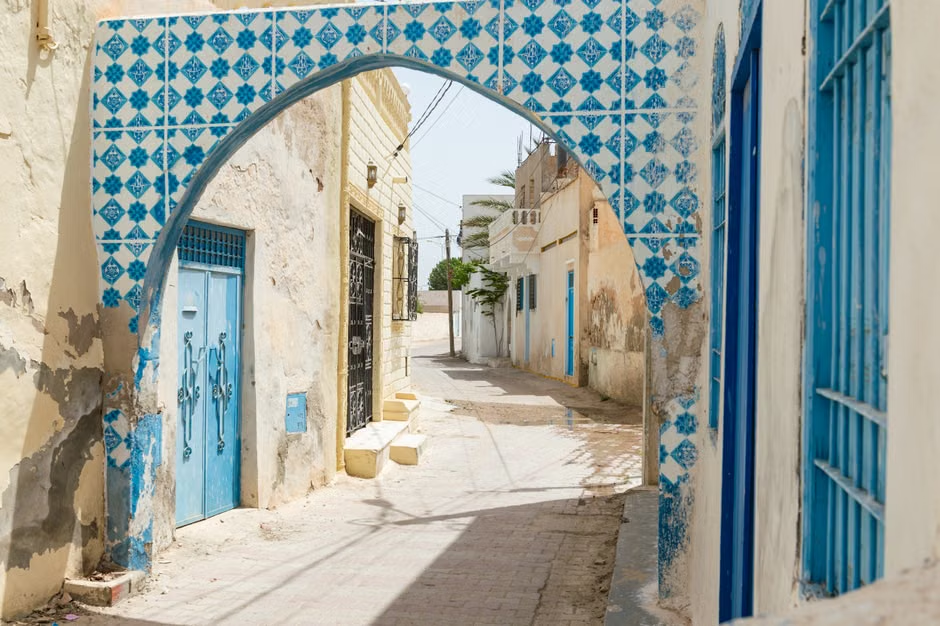
- Unique whitewashed Berber-Arab architecture creates a naturally photogenic, romantic backdrop
- Warm, reliably sunny summers (May–Sep) with long daylight hours perfect for evening events
- Island seclusion gives celebrations an exclusive, private-getaway feel for guests
- Rich local cuisine and traditional Tunisian hospitality add authentic cultural depth to events
- Direct charter and scheduled flights from major European cities make guest travel straightforward in summer

Top Venues in Djerba
Radisson Blu Palace Resort & Thalasso Djerba
Hasdrubal Thalassa & Spa Djerba
Hotel Dar Jerba
Hotel Sidi Slim
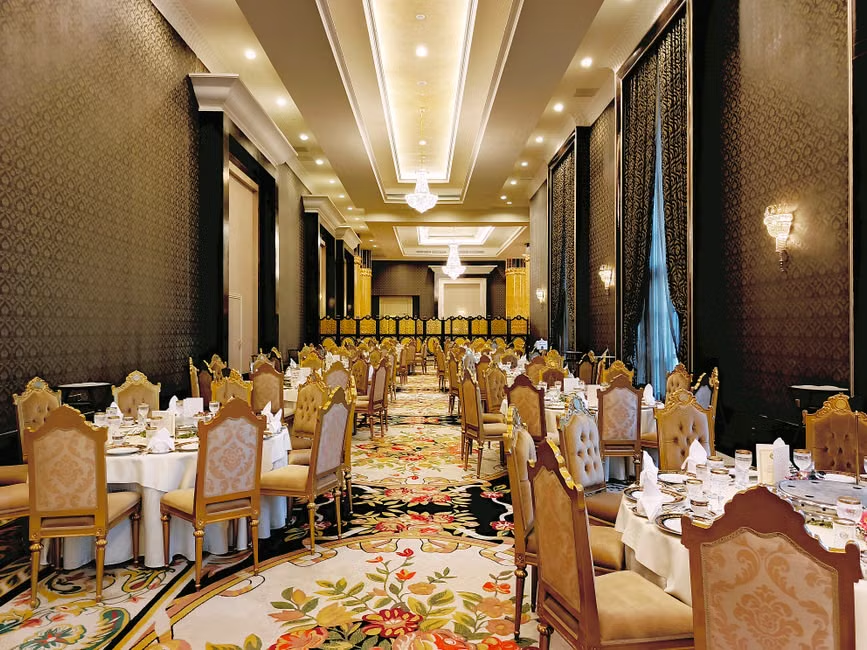
Hotel Arischa
Compare Djerba with Other Top Destinations
Frequently Asked Questions
Is Djerba a good destination for a wedding?
Yes. Djerba is particularly well-suited to romantic, intimate-to-mid-size destination weddings. Its beachfront resort settings, whitewashed Mediterranean architecture, and warm summer climate create a naturally beautiful backdrop. The island's seclusion adds a sense of occasion, and its Berber-Arab cultural heritage gives celebrations a distinctive character. Guest groups of roughly 50 to 300 are most comfortably accommodated within the existing resort and venue inventory.
What is the best time of year to hold a wedding or event in Djerba?
May through September is the recommended window. This period offers reliably warm, dry, and sunny weather with very low rainfall — ideal for outdoor ceremonies and evening receptions. May, June, and September are particularly pleasant, with comfortable temperatures and long daylight hours. July and August are the hottest months; outdoor events should be scheduled for late afternoon or evening to avoid peak midday heat.
How do guests get to Djerba for a destination event?
Djerba is served by Djerba–Zarzis International Airport, approximately 8 km from the main town of Houmt Souk. During summer, direct charter and scheduled flights operate from major European cities including Paris, London, Frankfurt, and Rome. Guests from further afield typically connect through Tunis or a European hub. The island is also reachable by road via a causeway from the mainland, or by ferry from Jorf.
What kinds of venues are available for events in Djerba?
The main venue options are beachfront and seafront resort properties in the tourist zone, which offer outdoor garden lawns, sea-view terraces, poolside areas, and indoor banquet halls. For smaller, more intimate gatherings, heritage-style properties and traditional courtyard spaces in and around Houmt Souk provide a distinctive architectural character. Fully standalone dedicated event venues are limited — most events are hosted within resort properties.
How many guests can Djerba realistically accommodate for a destination wedding?
Djerba's resort properties can generally accommodate events ranging from around 50 to 300 guests comfortably. Larger events approaching 400 or more guests may find the local venue inventory stretched, particularly if a single contiguous space is required. For very large celebrations, spreading guests across multiple resort properties or planning a multi-venue programme is a workable approach.
Is accommodation readily available for a large guest group in Djerba?
Yes, during the summer season. The island's tourist zone hosts a cluster of resort properties in close proximity to one another, making it practical to accommodate a large guest group across two or three properties within a short transfer distance. Coordinating room blocks across multiple resorts is a common approach for destination weddings, and local event coordinators are experienced in managing this.
What is local transport like for guests once they arrive in Djerba?
The island is compact — the airport, main tourist zone, Houmt Souk, and key attractions are all within roughly 20–30 minutes of one another by road. Taxis and rental cars are available, and resort shuttle services operate within the tourist zone. For wedding parties, private coach or minibus transfers between the airport, accommodation, and event venues are straightforward to arrange through local operators and are the most practical group transport solution.
Are local wedding and event planning services available in Djerba?
Yes. A number of local event coordinators and destination wedding specialists operate on the island, particularly those experienced with European couples. Core services — catering, floral decoration, audio-visual equipment, and basic event coordination — are available locally. For highly specialised requirements such as bespoke luxury décor or international entertainment, sourcing from Tunis or bringing in vendors from Europe is a common and workable approach.
What makes Djerba's food and catering distinctive for a celebration?
Tunisian cuisine is a genuine highlight. Local catering traditions emphasise fresh Mediterranean seafood, slow-cooked lamb and merguez, aromatic spice blends, and traditional pastries such as makroudh. Most resort properties have in-house banquet catering teams experienced in large-scale service, and local independent caterers can provide traditional food stations or themed menus that give celebrations a memorable, place-specific culinary character.
Is Djerba safe for international guests attending a wedding or event?
Generally yes. The island's tourist zones are well-managed and have a long-established track record of hosting international visitors safely. Standard travel precautions apply, and guests are advised to check their home country's current travel advisory for Tunisia before travelling. The hospitality sector is experienced with international guests, and English and French are widely spoken in resort and event settings.
Can cultural or traditional Tunisian elements be incorporated into a wedding in Djerba?
Yes, and this is one of Djerba's genuine strengths. Local traditions — including henna ceremonies, traditional Tunisian music and percussion, artisan craft experiences, and heritage-style décor drawing on Berber and Arab motifs — can be authentically incorporated into event programmes. Local coordinators familiar with both international wedding formats and Tunisian traditions are well-placed to help couples blend the two meaningfully.
Are there any significant limitations to planning an event in Djerba?
A few genuine ones: the island has no railway connection, so all guests arrive by air or road. Specialist luxury vendors may need to be sourced from Tunis or abroad. Outside the May–September season, resort operations are reduced and outdoor events become less reliable. Very large events (400+ guests) may find the venue inventory limiting. These are manageable constraints for most mid-size celebrations, but worth factoring into early planning.

Ready to explore venues in Djerba?
Djerba: Destination Wedding & Event Venues on Tunisia's Mediterranean Island
◆Djerba is Tunisia's largest island, situated in the southern Mediterranean, and is best suited to romantic, intimate-to-mid-size weddings, honeymoon celebrations, and social gatherings that benefit from a warm island setting, whitewashed architecture, and beachfront resort infrastructure. Its primary vibe is romantic and dreamy, shaped by turquoise waters, Berber-Arab cultural heritage, and a relaxed pace of life. The destination performs strongest during the summer months (May through September), when long sunny days and warm evenings make outdoor ceremonies and receptions genuinely comfortable. Guest accessibility is moderate — direct charter and scheduled flights from European cities are plentiful in summer, though guests travelling from South Asia or the Americas will typically require a connection. The hospitality ecosystem is well-developed within the main tourist zone, with a range of resort properties capable of hosting events of varying scales.
Djerba at a Glance
| Category | Detail |
|---|---|
| Best For | Destination Weddings, Honeymoon Celebrations, Social Gatherings, Intimate Receptions |
| Primary Vibe | Romantic & Dreamy |
| Other Vibes | Cultural & Heritage, Beachfront & Relaxed, Mediterranean Escape |
| Best Season | Summer (May, Jun, Jul, Aug, Sep) |
Why Choose Djerba?
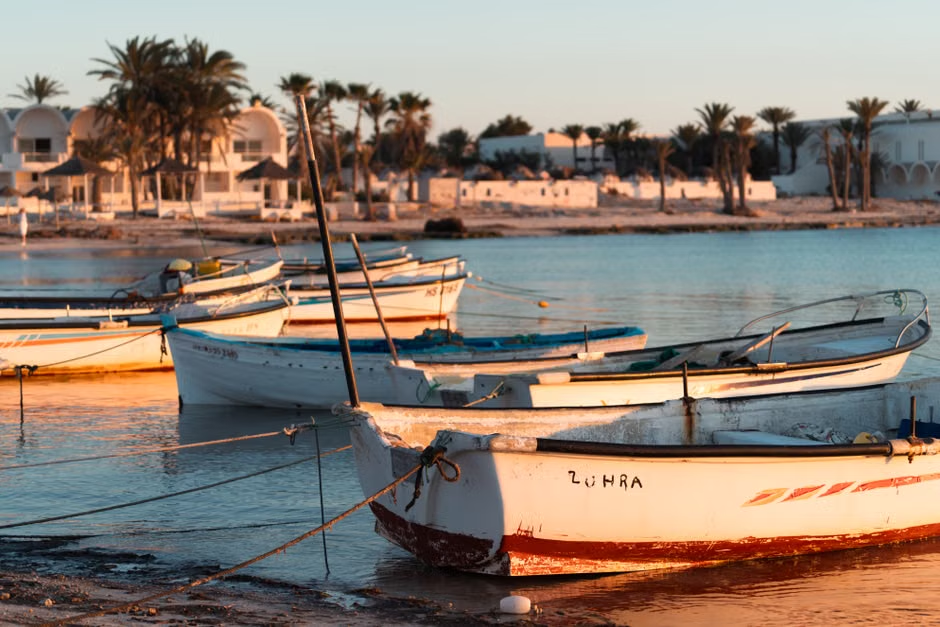
- Naturally photogenic island scenery: Djerba's whitewashed buildings, palm-lined beaches, and turquoise Mediterranean waters provide a backdrop that requires minimal decoration — the island itself is the setting.
- Beachfront and seafront resort infrastructure: The main tourist zone along the northern and eastern coastline hosts a cluster of well-equipped resorts with dedicated event spaces, outdoor lawns, and sea-view terraces suited to ceremonies and receptions.
- Rich Berber-Arab cultural heritage: The island's medina in Houmt Souk, traditional menzel architecture, and centuries-old synagogue at El Ghriba give events a distinctive cultural depth that purely beach destinations often lack.
- Reliable summer climate: From May through September, Djerba enjoys consistently warm, dry, and sunny weather with very low rainfall probability — a genuine operational advantage for outdoor event planning.
- Island seclusion and exclusivity: Being an island (connected to the mainland by a causeway and ferry), Djerba naturally creates a sense of arrival and separation from everyday life, which enhances the celebratory atmosphere for guests.
- Authentic Tunisian cuisine and hospitality: Local catering traditions — including slow-cooked lamb, fresh seafood, and traditional pastries — give celebrations a genuinely distinctive culinary character that guests remember.
Which Celebrations Work Best in Djerba?
- Destination Weddings: Djerba is particularly well-suited to couples seeking a romantic, culturally rich island setting for their wedding. Beachfront ceremonies at sunset, reception dinners on resort terraces, and the island's intimate scale all contribute to a memorable experience. Guest groups of roughly 50 to 300 are most comfortably accommodated within the existing resort inventory.
- Honeymoon Celebrations & Romantic Getaways: The island's relaxed pace, thalasso spa resorts, and Mediterranean scenery make it a natural fit for post-wedding celebrations or intimate couple retreats tied to a broader event programme.
- Social Gatherings & Milestone Celebrations: Birthday celebrations, anniversary parties, and family reunion events benefit from the island's combination of resort amenities, outdoor spaces, and a genuinely festive local atmosphere during summer.
- Cultural & Heritage-Themed Events: Groups interested in incorporating local Tunisian traditions — henna ceremonies, traditional music, artisan craft experiences — will find Djerba's living heritage culture a genuine asset rather than a staged add-on.
Venues & Event Spaces
Djerba's event venue landscape is anchored by its beachfront and seafront resort properties, which form the backbone of the island's hospitality infrastructure. These resorts typically offer a combination of indoor banquet halls, outdoor garden lawns, sea-view terraces, and poolside event areas — giving planners flexibility to design multi-day celebration programmes across different settings within a single property.
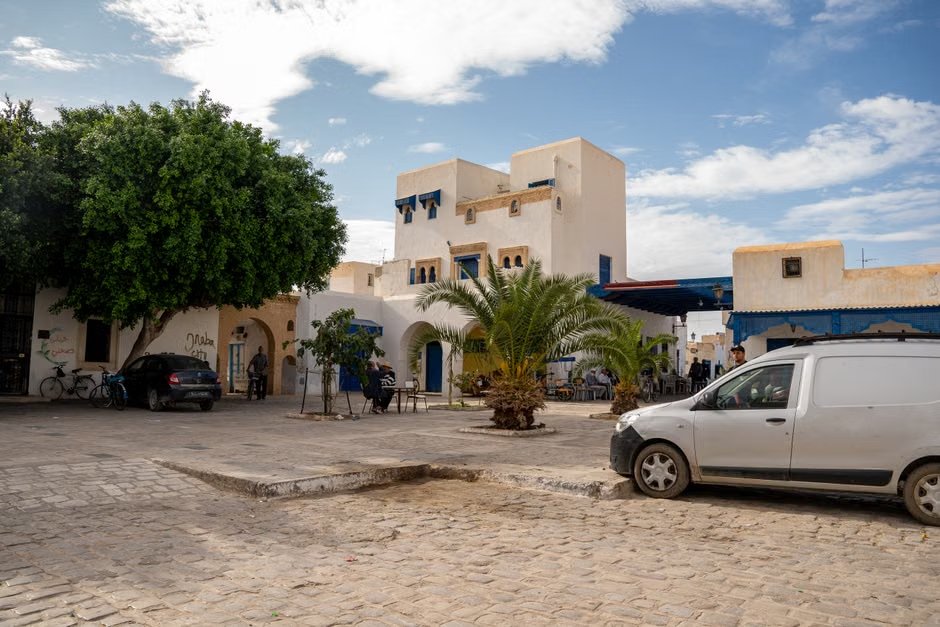
Beyond the main resort zone, the island also offers heritage-style properties in and around Houmt Souk, the island's main town, where traditional fondouks (historic merchant inns) and restored menzel courtyard houses can be adapted for intimate dinners, pre-wedding gatherings, or cultural evenings. These spaces are smaller in capacity but offer an authenticity and architectural character that larger resort ballrooms cannot replicate.
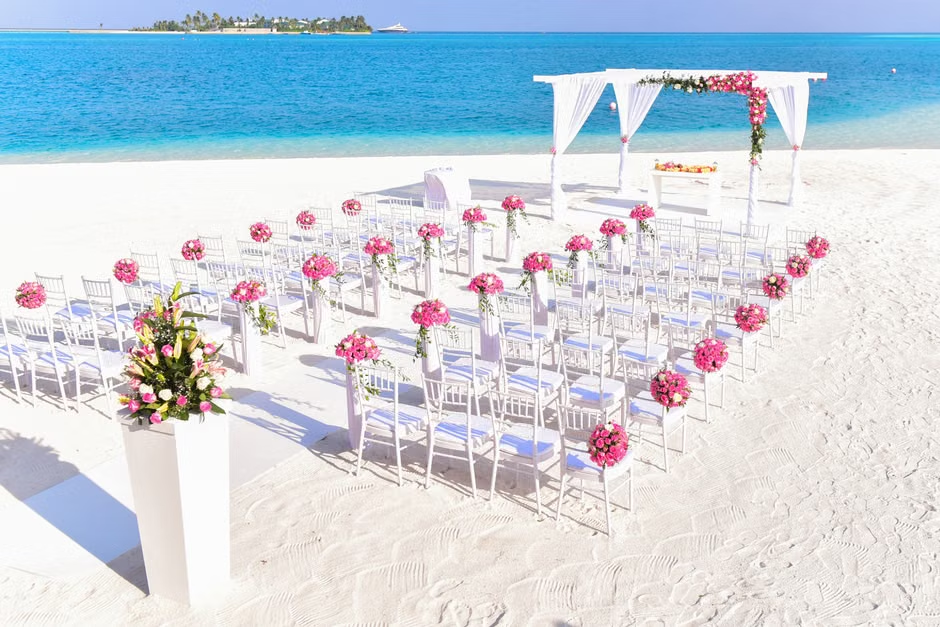
Outdoor beach settings — either within resort grounds or on semi-private stretches of coastline — are among the most sought-after ceremony locations on the island, particularly for sunset ceremonies facing the Mediterranean. Planners should note that fully private beach access typically requires coordination through a resort property rather than independent arrangement.
For larger events requiring significant indoor capacity, the main resort properties in the tourist zone are the most reliable option, as standalone dedicated event venues (conference centres, standalone banquet halls) are limited compared to more established mainland event cities.
Best Time to Celebrate
The curated best season for events in Djerba is Summer: May through September. This period offers the most reliable conditions for outdoor celebrations, with very low rainfall, warm daytime temperatures typically ranging from the mid-20s to low 30s Celsius, and long evenings that extend the usable outdoor window well into the night.
May and June are particularly pleasant — temperatures are warm but not oppressively hot, sea breezes keep outdoor spaces comfortable, and the island is active with hospitality services fully operational after the quieter winter period. July and August are the peak summer months, with the warmest temperatures and the highest concentration of resort guests; events during this period benefit from maximum service availability but should plan for the hottest midday hours. September offers a gentle transition — still warm and sunny, with slightly fewer crowds and a more relaxed atmosphere.
The months outside this window — October through April — are generally less suitable for outdoor celebrations. Autumn brings cooling temperatures and increasing rainfall probability from October onward. Winter months (December through February) can be genuinely cool, with temperatures dropping to the mid-teens Celsius, and many resort properties operate on reduced schedules or close partially during the low season. Spring (March–April) sees gradual warming but remains variable, with occasional rain and wind that make outdoor event planning less predictable. Planners targeting outdoor ceremonies or receptions should strongly favour the May–September window.
Getting There & Local Connectivity
Djerba is served by Djerba–Zarzis International Airport, located approximately 8 km from Houmt Souk, the island's main town. During the summer season, the airport receives a significant volume of direct charter and scheduled flights from major European cities — particularly from France, Germany, Italy, the UK, and Scandinavia — making it genuinely accessible for European guest groups without requiring a connection. Guests travelling from further afield (South Asia, the Americas, East Asia) will typically connect through a hub such as Tunis-Carthage, Paris, or another major European gateway.
The island is also accessible from the Tunisian mainland via a road causeway connecting to the town of Zarzis, and by a traditional ferry service from Jorf on the mainland to Ajim on the island's western shore. For guests arriving by road from Tunis or other Tunisian cities, the journey is manageable but lengthy — Tunis is roughly 500 km away, making air travel the practical choice for most guests.
Within the island, local transport options include taxis, rental cars, and resort shuttle services. The island is relatively compact — the main tourist zone, Houmt Souk, and key attractions are all within a 20–30 minute drive of one another — making group logistics manageable once guests have arrived. For large wedding parties, coordinating private coach or minibus transfers between the airport, accommodation, and event venues is straightforward and commonly arranged through local operators.
Local Vendor & Hospitality Ecosystem
Djerba has a well-established tourism and hospitality ecosystem, shaped by decades of serving European leisure travellers. This means that core event services — catering, floral decoration, audio-visual equipment, and basic event coordination — are available locally and are generally of reliable quality within the resort zone.
Local catering is a genuine strength: Tunisian cuisine, with its emphasis on fresh seafood, slow-cooked meats, aromatic spices, and traditional pastries, gives event menus a distinctive and memorable character. Many resort properties have in-house catering teams experienced in handling large banquet-style service, and local independent caterers can supplement for traditional or themed food stations.
For more specialised event requirements — high-end floral design, international entertainment acts, bespoke lighting installations, or luxury décor — planners may find the local vendor pool somewhat limited compared to larger, more established event cities. In these cases, bringing in specialist vendors from Tunis or from Europe is a common and workable approach, though it adds a logistical layer to planning.
Wedding planning services on the island have grown in recent years, with a number of local event coordinators and destination wedding specialists operating on the island, particularly those catering to European couples. English and French are widely spoken in the hospitality sector, which eases communication for international planners.
Pros & Things to Consider
Why Djerba Works Well
- Genuinely beautiful Mediterranean island setting with natural romantic appeal
- Reliable, warm, and dry summer climate ideal for outdoor ceremonies and receptions
- Beachfront resort properties with dedicated event infrastructure and in-house catering
- Rich Berber-Arab cultural heritage adds authentic depth and distinctive character to celebrations
- Island seclusion creates a natural sense of occasion and exclusivity for guests
- Good direct flight connectivity from Europe during the summer season
- Compact island geography makes group logistics and transfers manageable
Things to Consider
- Guests travelling from outside Europe will typically require a connecting flight, adding travel time and complexity
- The island has no railway connection — all ground transport relies on road access or the ferry crossing
- Specialist event vendors (luxury décor, international entertainment) may need to be sourced from Tunis or abroad
- Peak summer months (July–August) can be very hot during midday hours, requiring careful scheduling of outdoor elements
- Some resort properties operate on reduced schedules outside the May–September season, limiting options for off-season events
- Standalone dedicated event venues are limited — most large-scale events are hosted within resort properties rather than purpose-built event spaces
When Djerba May Not Be the Right Fit
- Very large guest lists (400+): The island's resort inventory, while solid for mid-size events, may not comfortably accommodate very large wedding parties requiring a single venue with 400 or more guests under one roof — a mainland city with larger convention or banquet infrastructure may serve better.
- Guests primarily travelling from South Asia or the Americas: Without a direct flight connection from these regions, guests face a multi-leg journey that adds significant travel time and cost — destinations with better intercontinental connectivity may be more practical for such guest profiles.
- Off-season or winter celebrations: Couples set on an outdoor ceremony or reception in the cooler months (November through March) will find Djerba's climate and reduced resort operations a genuine constraint — a year-round warm destination would be a stronger fit.
- Events requiring highly specialised or luxury-tier vendor services on-island: If the event brief demands a very high level of bespoke décor, international entertainment, or specialist technical production that cannot be sourced locally, the logistical complexity of importing everything from Tunis or Europe may make a more vendor-mature destination a more efficient choice.