
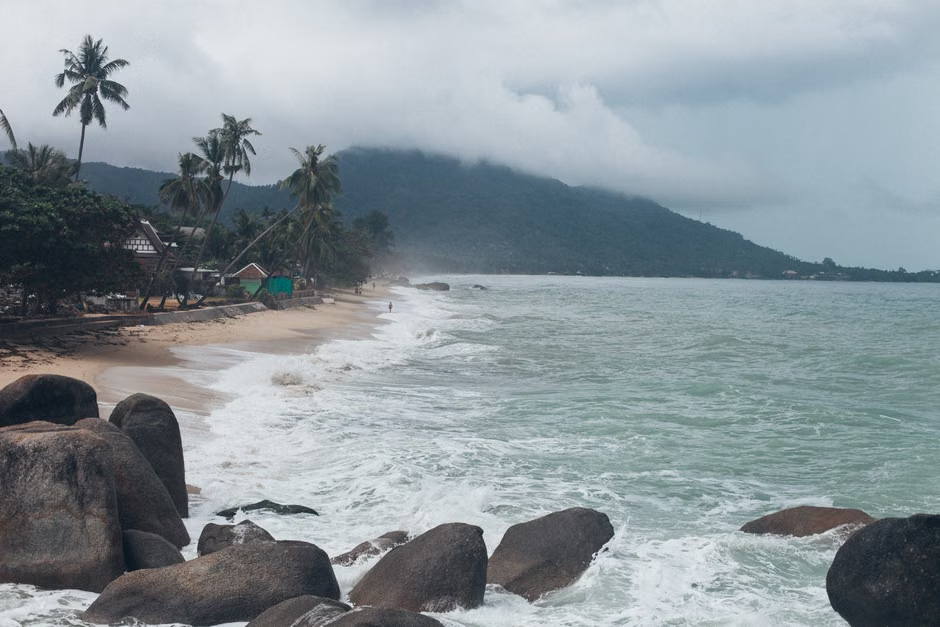
Why Koh Samui is Perfect for Your Celebration
- Stunning beachfront ceremony settings with natural white sand and turquoise sea backdrops
- Mature luxury resort infrastructure with dedicated wedding planning teams and in-house catering
- Private villa estates available for exclusive buyouts, ideal for intimate celebrations
- Dry season months (Jan–Apr, Jul–Aug) offer reliably sunny, low-humidity conditions for outdoor events
- International airport (USM) with direct regional connections makes guest arrival straightforward
- Rich local vendor ecosystem — florists, photographers, caterers, and entertainment specialists experienced in destination weddings
Compare Koh Samui with Other Top Destinations
Frequently Asked Questions
Is Koh Samui a good destination for a wedding?
Yes. Koh Samui is one of Southeast Asia's most established destination wedding locations, with a mature vendor ecosystem, luxury beachfront resorts with dedicated wedding teams, and genuinely stunning natural settings. It is particularly well-suited to intimate-to-mid-sized weddings of up to around 300–400 guests, and the dry season months offer reliably photogenic outdoor conditions.
What is the best time of year to hold a wedding or event in Koh Samui?
The best time is the dry season: January, February, March, April, July, and August. January through April are the most reliably sunny and low-humidity months. July and August are also generally suitable. The northeast monsoon (October–December, peaking in November) brings heavy rainfall and should be avoided for outdoor events without robust indoor contingency arrangements.
How do guests get to Koh Samui?
Koh Samui has its own airport — Samui Airport (USM) — with direct regional flights from Bangkok, Singapore, Hong Kong, and Kuala Lumpur, among other hubs. Guests from further afield typically connect through Bangkok or Singapore. An alternative is flying into Surat Thani on the mainland and taking a ferry or high-speed catamaran to the island, though this adds travel time.
What kinds of event venues are available in Koh Samui?
The island offers beachfront resort lawns, clifftop terraces with sea views, jungle-garden pavilions, private pool villa estates, open-sided covered pavilions, and air-conditioned ballrooms. Private villa buyouts are also well-established for smaller, fully exclusive celebrations. The variety of outdoor and indoor-contingency settings is genuinely broad for an island destination of this size.
How large a guest group can Koh Samui realistically accommodate for a destination wedding?
Koh Samui comfortably suits events of up to roughly 300–400 guests. Larger resort properties can host receptions at this scale, and nearby accommodation across Chaweng, Bophut, and Maenam can absorb a distributed guest list. Very large events of 500 or more guests may find the local venue and accommodation inventory less suited to their needs.
Is there a local wedding vendor ecosystem in Koh Samui, or do couples need to bring vendors from elsewhere?
Koh Samui has a well-developed local vendor market built over more than a decade of destination wedding activity. Specialist florists, photographers, videographers, caterers, entertainment providers, and event stylists with international experience are all available locally. Most larger luxury resorts also have in-house wedding coordination teams experienced in managing international clients.
How do guests get around the island once they arrive?
Most destination wedding groups use pre-arranged private minibus or van transfers coordinated through their resort or a local transport provider. Taxis and songthaews (shared pickup truck taxis) are widely available for independent movement, but coordinating large groups across the island is most practical with pre-booked private transfers. Many luxury resorts include transfer coordination in their event packages.
Is Koh Samui suitable for a milestone birthday celebration, not just a wedding?
Yes. The island's resort and private villa infrastructure is well-suited to milestone birthday events — sunset dinners, pool parties, multi-day celebration packages, and private villa gatherings are all commonly arranged. The tropical setting and luxury hospitality options give a birthday celebration a genuine sense of occasion that is difficult to replicate in a standard city hotel environment.
What should couples know about the monsoon season when planning an outdoor event?
Koh Samui's heaviest rainfall comes during the northeast monsoon, which peaks in October and November and extends into December — unlike much of mainland Thailand, where the wet season peaks earlier. Events planned in these months face genuine weather risk for outdoor settings. Couples should ensure fully covered or indoor contingency spaces are confirmed in advance if their dates fall in this window.
Is English widely spoken in Koh Samui's hospitality sector?
Yes. English is widely spoken across Koh Samui's tourism and hospitality industry — at resorts, restaurants, and among most established local vendors. This significantly reduces the communication friction that can complicate event planning in less internationally-oriented destinations, and makes the island particularly accessible for couples and guests planning from abroad.
Can a couple hold an exclusive private event in Koh Samui without booking an entire resort?
Yes. Koh Samui has a well-developed private villa rental market where entire properties — with private pools, tropical gardens, and often direct beach or sea-view access — can be exclusively hired for a celebration. This is a popular option for smaller, more intimate groups who want full privacy without the scale of a large resort event.

Ready to explore venues in Koh Samui?
Koh Samui: Destination Wedding & Celebration Venues on Thailand's Tropical Island
◆Koh Samui is Thailand's premier tropical island destination for romantic destination weddings, milestone birthday celebrations, and intimate private events. Its primary strength lies in beachfront luxury resort settings, a well-established international hospitality infrastructure, and a dry season (January through April, and July through August) that delivers reliably sunny, photogenic conditions for outdoor ceremonies. The island suits small-to-mid-sized guest groups particularly well — typically up to 300–400 guests — and is most accessible to guests travelling from within Asia, though direct regional connections make it reachable from further afield. It is a genuinely mature destination wedding market, not an emerging one, which means experienced local vendors and resort wedding teams are readily available.
Koh Samui at a Glance
| Category | Detail |
|---|---|
| Best For | Destination Weddings, Birthday Celebrations, Honeymoon Extensions, Intimate Private Events |
| Primary Vibe | Romantic & Dreamy |
| Other Vibes | Tropical, Luxurious, Relaxed, Scenic |
| Best Season | Dry Season (Jan, Feb, Mar, Apr, Jul, Aug) |
Why Choose Koh Samui?
- Exceptional natural scenery: White-sand beaches, turquoise Gulf of Thailand waters, and lush coconut-palm interiors provide a naturally photogenic backdrop that few island destinations in Asia can match for sheer visual impact at a ceremony or reception.
- Mature luxury resort infrastructure: Koh Samui hosts a significant concentration of internationally branded and independently operated luxury resorts with dedicated wedding departments, in-house catering, and on-site event coordination — reducing the logistical burden on couples planning from abroad.
- Private villa and exclusive buyout options: Beyond large resorts, the island has a well-developed private villa rental market, allowing smaller groups to secure fully exclusive properties with their own pools, gardens, and beach access for a genuinely private celebration.
- Direct international air access: Samui Airport (USM) receives direct flights from Bangkok, Singapore, Hong Kong, Kuala Lumpur, and other regional hubs, making guest assembly more straightforward than many comparable island destinations that require a ferry connection from the mainland.
- Experienced local vendor ecosystem: Florists, photographers, videographers, entertainment providers, and specialist wedding caterers with international experience are well-established on the island, meaning couples are not dependent solely on resort in-house services.
- Diverse event space typology: From clifftop infinity-pool terraces and beachfront lawns to jungle-garden pavilions and open-air ballrooms, the variety of event space formats available across the island is genuinely broad for a destination of its size.
Which Celebrations Work Best in Koh Samui?
- Destination Weddings: This is Koh Samui's strongest suit. The combination of dramatic natural settings, luxury resort infrastructure, and experienced wedding vendors makes it one of Southeast Asia's most capable destination wedding locations. Beachfront ceremonies at sunset are particularly iconic here, and the island's scale suits intimate-to-mid-sized weddings well.
- Milestone Birthday Celebrations: The island's resort and villa infrastructure is well-suited to private birthday events — pool parties, sunset dinners, and multi-day celebration packages are commonly arranged. The tropical setting adds a genuine sense of occasion that a city hotel cannot replicate.
- Honeymoon Extensions: Many couples who marry elsewhere in Thailand or Asia choose Koh Samui as a natural honeymoon extension, and the island's romantic resort offerings — private pool villas, couples' spa experiences, sunset cruises — are genuinely strong in this category.
- Intimate Private Retreats & Anniversary Celebrations: For smaller groups marking significant anniversaries or personal milestones, the island's private villa market and boutique resort options provide a level of exclusivity and personalisation that suits these occasions well.
Venues & Event Spaces
Koh Samui's event space landscape is dominated by beachfront and hillside resort properties, ranging from large internationally branded luxury resorts with multiple dedicated event lawns and ballrooms to smaller boutique properties with more intimate garden or pool-deck settings. The island also has a well-developed private villa sector, where entire properties — typically featuring private pools, tropical gardens, and direct beach or sea-view access — can be exclusively hired for a celebration.
Outdoor ceremony settings are the island's signature offering: beachfront lawns set directly on white sand, clifftop terraces with panoramic Gulf of Thailand views, and jungle-garden pavilions surrounded by tropical foliage are all genuinely available across the island's resort portfolio. Indoor or covered event spaces — open-sided pavilions, air-conditioned ballrooms, and covered terraces — are also available at larger properties, providing a practical contingency for the island's occasional rain showers even during the dry season.
For groups requiring accommodation for a larger guest list, the island's concentration of resorts in areas such as Chaweng, Bophut, Maenam, and Taling Ngam means that multiple properties in close proximity can be used in combination, with guests distributed across nearby hotels while the main event is hosted at a single venue.
Best Time to Celebrate
The curated best season for Koh Samui events is the Dry Season: January, February, March, April, July, and August. This classification reflects the island's somewhat unusual weather pattern — Koh Samui sits on the eastern side of the Gulf of Thailand and receives its heaviest rainfall not during the typical Thai monsoon (May–October) but during the northeast monsoon, which peaks between October and December. This means the island's dry season does not follow the same calendar as much of mainland Thailand.
January through April are generally the most reliably dry and sunny months, with lower humidity, calm seas, and excellent visibility — ideal for outdoor beach ceremonies, sunset receptions, and water-based activities for guests. July and August are also included in the dry season classification: while there is some increase in rainfall compared to the January–April window, these months are generally manageable for events, with sunshine predominating and rain typically falling in short afternoon showers rather than sustained downpours.
May and June represent an early transitional period — rainfall begins to increase and conditions become less predictable, making outdoor event planning riskier without robust contingency arrangements. September and October are the island's most challenging months, with the northeast monsoon bringing heavy, sustained rainfall, rough seas, and occasional tropical storm activity — outdoor events during this period carry significant weather risk. November and December are also affected by the northeast monsoon, with November historically being one of the wettest months on the island; December can be transitional but remains unpredictable. Couples planning events in these months should have fully covered or indoor contingency spaces confirmed in advance.
Getting There & Local Connectivity
Koh Samui is served by its own domestic and regional airport — Samui Airport (USM) — located close to the island's main Chaweng area, making the final leg of the journey unusually convenient for an island destination. Direct flights connect Samui to Bangkok (both Suvarnabhumi and Don Mueang airports), Singapore, Hong Kong, Kuala Lumpur, and a number of other regional hubs, meaning guests from across Asia can reach the island without a mainland ferry transfer. Guests travelling from further afield — Europe, the Americas, or Oceania — will typically connect through Bangkok or Singapore.
An alternative route for guests who prefer it, or for those whose flight connections make it practical, is to fly into Surat Thani on the mainland and take a ferry or high-speed catamaran to the island — a journey of roughly one to two hours depending on the service. This route is less convenient for large groups but is a genuine option.
Once on the island, local transport for event groups is typically arranged through resort transfers, private minibus hire, or taxi/songthaew (shared pickup truck taxi) services. The island has no public rail or metro system, and while songthaews are affordable and widely used by independent travellers, coordinating large guest groups across the island is most practically done through pre-arranged private transfers. Most luxury resorts offer in-house transfer coordination as part of their event packages, which simplifies logistics considerably for destination wedding groups.
Local Vendor & Hospitality Ecosystem
Koh Samui has one of the most developed destination wedding vendor ecosystems in Southeast Asia outside of Bali. The island has been a recognised destination wedding market for well over a decade, and this maturity shows in the depth and specialisation of local suppliers. Wedding florists with international training, photographers and videographers experienced in both Western and Asian ceremony styles, specialist event caterers capable of handling multi-course international menus or traditional Thai banquets, and entertainment providers ranging from fire dancers to live bands are all genuinely available locally.
Most of the island's larger luxury resorts have dedicated in-house wedding coordination teams who manage the full event lifecycle — from initial planning and vendor coordination to day-of logistics — which is a significant advantage for couples planning from overseas. These teams are generally experienced in working with international clients and are accustomed to managing the specific requirements of destination weddings, including legal documentation guidance for symbolic ceremonies (note: legal marriage registration in Thailand has specific requirements that couples should verify independently with relevant authorities).
The broader hospitality ecosystem — hotel staff, restaurant teams, spa operators, and activity providers — is well-oriented toward international guests, with English widely spoken across the tourism and hospitality sector. This reduces the communication friction that can complicate event planning in less internationally-oriented destinations.
Pros & Things to Consider
Why Koh Samui Works Well
- Genuinely stunning natural settings — white-sand beaches and turquoise sea provide a ceremony backdrop that is difficult to replicate artificially
- Mature, internationally experienced wedding vendor market with deep local expertise
- Own international airport reduces the logistical complexity typical of island destinations
- Wide range of resort types and sizes means the destination suits both intimate villa weddings and larger resort celebrations
- Strong dry season window (Jan–Apr, Jul–Aug) gives couples meaningful flexibility in date selection
- English widely spoken across the hospitality sector, reducing planning friction for international couples
Things to Consider
- Island access adds a travel step: Even with its own airport, Koh Samui requires a flight or ferry that mainland Thailand destinations do not — guests with limited travel experience or mobility considerations may find this more demanding.
- Monsoon season is genuinely disruptive: The northeast monsoon (October–December, with November particularly severe) brings heavy rainfall and rough seas that make outdoor events genuinely risky — not merely inconvenient. Couples considering these months need robust indoor contingency plans.
- Scale limitations for very large guest lists: While the island can comfortably host events of up to 300–400 guests, very large celebrations (500+ guests) may find the local venue inventory and accommodation concentration less suited to their needs than a major mainland city.
- Island pricing premium: As a mature international resort destination, Koh Samui carries a cost premium relative to many mainland Thailand or other Southeast Asian alternatives — this is a genuine planning consideration even if specific figures are not discussed here.
- Flight connectivity for non-Asian guests: While regional connectivity is strong, guests travelling from Europe, the Americas, or Africa will face longer journeys with connections, which may affect attendance rates for a large international guest list.
When Koh Samui May Not Be the Right Fit
- Large-scale events (500+ guests): Couples planning very large celebrations may find that the island's venue inventory and concentrated accommodation options are better suited to mid-sized groups — a major mainland city with larger convention and banquet infrastructure may serve very large guest lists more comfortably.
- Events planned during the northeast monsoon (October–December): If a couple's preferred dates fall in this window and outdoor settings are non-negotiable, Koh Samui's weather risk during these months is genuine and significant — a destination with a more favourable climate in those months would be a more reliable choice.
- Guest groups with limited international travel experience or mobility constraints: The island's access — requiring a flight to Samui Airport or a mainland ferry connection — adds a logistical layer that may be challenging for elderly guests or those unfamiliar with multi-leg international travel.
- Couples seeking a culturally immersive heritage or historical setting: Koh Samui's identity is primarily tropical resort and beach — it does not offer the palace architecture, ancient temples as event backdrops, or deep historical heritage that some other Asian destinations provide. Couples for whom cultural heritage is the primary aesthetic priority may find a better match elsewhere.