
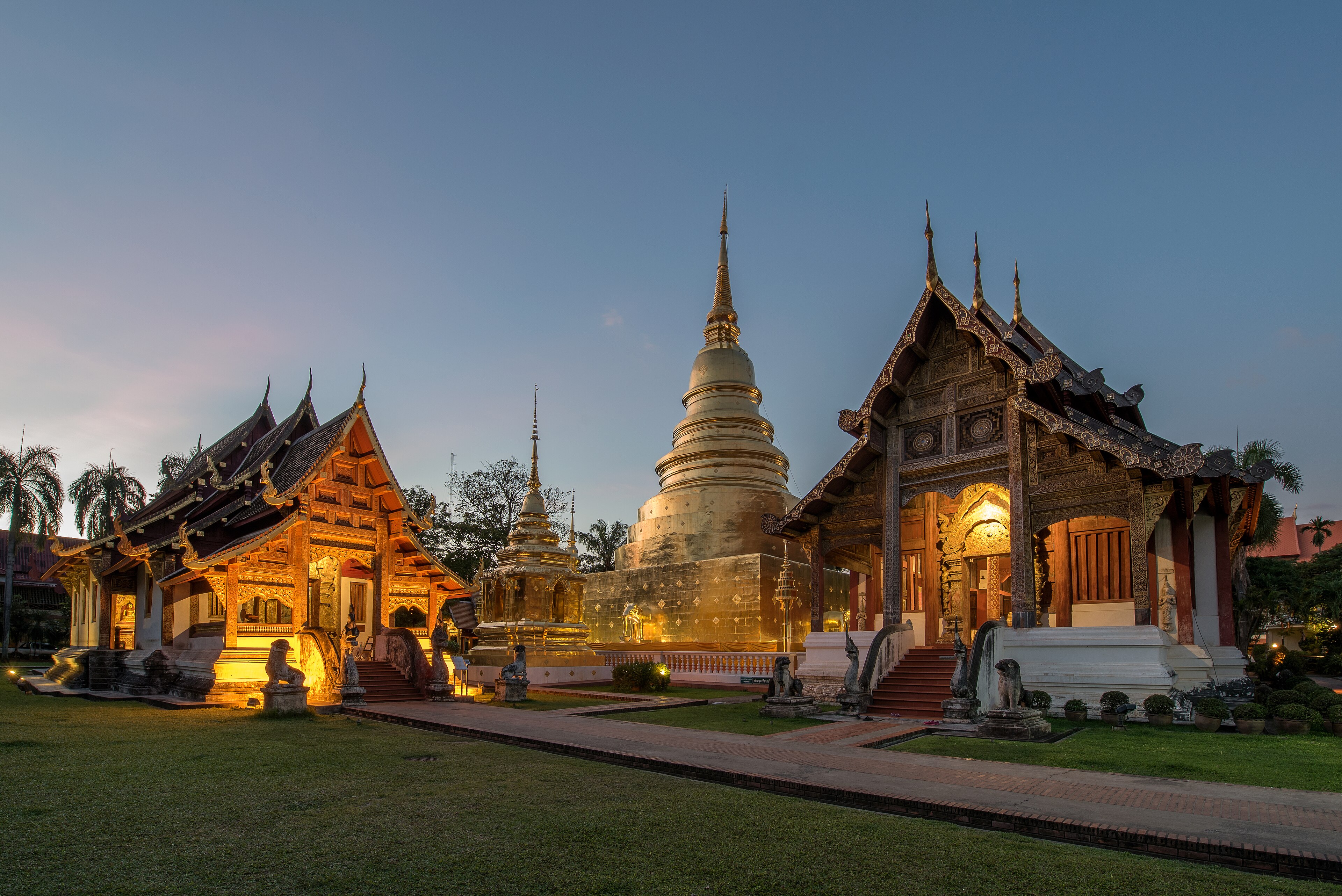
Why Chiang Mai is Perfect for Your Celebration
- Authentic Lanna-style venues and heritage resorts offer a visually distinctive backdrop unlike any beach or city destination
- Cool, dry weather from November to February creates near-perfect outdoor event conditions
- Mature luxury hospitality sector with internationally managed resorts capable of handling full wedding productions
- Rich local vendor ecosystem — florists, caterers, photographers, and traditional performers deeply experienced with destination events
- Proximity to mountain landscapes, rice paddies, and ancient wats provides extraordinary ceremony and photo settings
- Relatively compact city layout makes guest logistics and group movement straightforward during multi-day celebrations
Compare Chiang Mai with Other Top Destinations
Frequently Asked Questions
Is Chiang Mai a good destination for a wedding?
Yes. Chiang Mai is particularly well-suited to destination weddings in the intimate-to-medium range — typically 30 to 300 guests. Its combination of Lanna heritage resorts, hillside luxury properties, and riverside venues gives couples a culturally distinctive setting, and the local vendor ecosystem has genuine, long-standing experience with destination wedding production.
What is the best time of year to hold a wedding or event in Chiang Mai?
November, December, January, and February are the optimal months. This cool, dry season brings mild daytime temperatures, clear skies, and minimal rainfall — ideal conditions for outdoor ceremonies and evening receptions. The Yi Peng lantern festival in November also adds a memorable cultural backdrop for events timed around it.
Are there months I should definitely avoid for an outdoor event in Chiang Mai?
Yes. March through May should be avoided for outdoor events due to severe smoke and haze from regional agricultural burning — air quality can reach hazardous levels during this period. June through October is the monsoon season, with frequent heavy rainfall that creates significant risk for outdoor ceremonies and receptions.
How do guests typically get to Chiang Mai for a destination event?
Most guests fly into Chiang Mai International Airport (CNX), which is just a few kilometres from the city centre. Flights from Bangkok are frequent and take under an hour, making it straightforward for domestic Thai guests and international guests connecting through Bangkok. An overnight sleeper train from Bangkok is also available for guests who prefer it.
What kinds of venues are available for events in Chiang Mai?
Chiang Mai offers Lanna-style heritage resorts with teak pavilions and garden lawns, riverside luxury hotels with ballrooms and outdoor terraces, boutique Old City heritage properties suited to intimate gatherings, and contemporary hotel banquet facilities for larger indoor events. Private villa compounds and standalone garden estates are also available for exclusive buyouts.
How large a guest list can Chiang Mai venues realistically accommodate?
Most of Chiang Mai's event venues comfortably handle gatherings of 50 to 300 guests. Some of the larger internationally managed hotel properties can accommodate up to 500–800 guests for banquet-style events. For very large celebrations requiring a single space for 800 or more guests, the local inventory may be limiting.
Is accommodation readily available for a large group of guests attending an event in Chiang Mai?
Generally yes, during the cool season. Chiang Mai has a substantial hotel inventory across multiple tiers, and the city's compact layout means guests can be accommodated across several nearby properties without excessive travel between accommodation and event venues. Early booking is strongly advisable for the November–February peak season.
What makes Chiang Mai's local vendor ecosystem well-suited to destination events?
Chiang Mai has hosted international destination weddings for over two decades, producing a mature local ecosystem of experienced wedding planners, floral designers (benefiting from the region's own flower-growing industry), traditional Lanna cultural performers, and catering specialists. This depth of experience reduces the coordination risk that can affect less-established destination markets.
What cultural or experiential elements can guests enjoy during a multi-day celebration in Chiang Mai?
Guests can engage with ancient temple visits, traditional Thai cooking classes, ethical elephant sanctuary experiences, artisan markets, Lanna cultural performances, and mountain trekking — all within easy reach of the city. This range of activities makes Chiang Mai a genuinely compelling multi-day destination rather than simply a backdrop for a single event.
Is Chiang Mai safe for international guests attending a destination event?
Yes. Chiang Mai is generally considered very safe for international visitors. The city has a long history of welcoming international tourists and event guests, and the hospitality sector is experienced in managing the needs of diverse international groups. Standard travel precautions apply, as they would in any destination.
What is the local transport situation for guests moving between venues and hotels during an event?
Chartered minivans are the most practical option for coordinated group movement, particularly for venues in the Mae Rim valley or along the Sankampaeng Road corridor, which are 20–30 minutes from the city centre. Ride-hailing apps also operate in Chiang Mai for individual guest use. Shuttle coordination is advisable for any event spread across multiple locations.
Can Chiang Mai accommodate non-wedding celebrations like corporate retreats or anniversary events?
Yes. Chiang Mai is well-suited to senior leadership retreats, incentive travel groups, and milestone celebrations like significant anniversaries or birthday events. The combination of quality resort meeting facilities, strong guest programming options, and a relaxed but refined cultural atmosphere makes it a credible choice for events where experience and setting matter as much as logistics.

Ready to explore venues in Chiang Mai?
Chiang Mai: Destination Wedding & Cultural Celebration Venues in Northern Thailand
◆Chiang Mai is Northern Thailand's premier destination for culturally immersive weddings, private celebrations, and milestone events. Its primary strength lies in the combination of authentic Lanna heritage architecture, mountain and valley scenery, and a well-developed luxury hospitality sector — making it particularly well-suited to intimate weddings, honeymoon extensions, anniversary celebrations, and curated corporate retreats. The cool, dry season from November through February delivers the most reliable outdoor event conditions. The city is accessible via its own international airport with direct connections from Bangkok and several regional hubs. Across all scales, Chiang Mai generally offers a more boutique, culturally distinctive experience than a large metropolitan venue city.
Chiang Mai at a Glance
| Attribute | Detail |
|---|---|
| Best For | Destination Weddings, Honeymoon Celebrations, Anniversary Events, Intimate Corporate Retreats |
| Primary Vibe | Cultural & Timeless |
| Other Vibes | Boutique & Intimate, Mountainside & Scenic, Heritage & Artisan |
| Best Season | Cool / Mild Season (Jan, Feb, Nov, Dec) |
Why Choose Chiang Mai?
- Genuinely distinctive venue typology: Chiang Mai offers Lanna-style heritage resorts, riverside boutique properties, and hillside luxury retreats that are architecturally and culturally unlike anything available in beach or metropolitan destinations — giving events a visual identity that photographs and feels entirely its own.
- Mature luxury hospitality infrastructure: The city hosts internationally managed properties with dedicated event and wedding planning teams, capable of coordinating multi-day celebrations, guest accommodation blocks, and full production requirements without relying on ad-hoc arrangements.
- Rich local vendor ecosystem: Chiang Mai has a long-established community of florists, traditional Lanna performers, artisan decorators, and experienced destination-wedding photographers who work regularly with international and domestic event clients.
- Exceptional cool-season climate: Between November and February, daytime temperatures are mild and evenings are genuinely cool — conditions that make outdoor ceremonies, garden receptions, and evening events comfortable and visually stunning under clear skies.
- Compact, navigable city layout: Unlike sprawling metropolitan destinations, Chiang Mai's key event zones — the Old City moat area, the Nimman Road district, the Mae Ping riverside, and the Mae Rim valley — are all within manageable distance of one another, simplifying guest logistics across multi-venue celebrations.
- Cultural depth for guest programming: Beyond the event itself, guests can engage with temple visits, traditional Thai cooking classes, elephant sanctuary experiences, and night markets — giving destination celebrations a genuine multi-day itinerary that keeps guests engaged and makes the trip feel worthwhile.
Which Celebrations Work Best in Chiang Mai?
- Destination Weddings: Chiang Mai is particularly well-suited to intimate-to-medium-scale destination weddings — typically in the range of 30 to 300 guests — where the couple wants a culturally rich, visually distinctive setting rather than a generic ballroom. Heritage resorts and hillside properties offer ceremony lawns, pavilions, and garden spaces that frame the surrounding landscape naturally.
- Honeymoon Celebrations & Romantic Getaways: The city's concentration of boutique luxury properties, spa culture, and scenic mountain surroundings makes it a natural fit for post-wedding honeymoon stays or intimate anniversary celebrations. Several properties are specifically designed around privacy and romantic seclusion.
- Anniversary & Milestone Events: For smaller, curated gatherings — a significant anniversary, a family reunion with a celebratory dinner, or a milestone birthday — Chiang Mai's boutique properties and private dining venues offer a level of personalisation and atmosphere that larger convention-city hotels rarely match.
- Corporate Retreats & Incentive Travel: Chiang Mai's combination of quality meeting facilities within luxury resorts, strong guest programming options, and a relaxed but refined atmosphere makes it a credible choice for senior leadership retreats, incentive travel groups, and team-building events that benefit from a culturally immersive setting.
- Pre- or Post-Wedding Celebrations: The city's range of restaurants, rooftop venues, and cultural experience spaces makes it well-suited to hosting pre-wedding dinners, mehendi-equivalent gatherings, or post-wedding brunches as part of a multi-day celebration itinerary.
Venues & Event Spaces
Chiang Mai's event venue landscape is defined by variety across a relatively compact geography. The most distinctive category is the Lanna heritage resort — properties built around traditional Northern Thai architecture, with teak pavilions, lotus ponds, and landscaped gardens that serve as natural ceremony and reception settings. These are typically found along the Sankampaeng Road corridor and in the Mae Rim valley north of the city.
The Mae Ping riverside hosts several internationally branded luxury hotels with ballrooms, outdoor terraces, and riverside lawns capable of accommodating larger guest lists. These properties combine the scenic river backdrop with the full-service infrastructure of a major hotel group.
Within and around the Old City moat area, a cluster of boutique heritage hotels occupies restored colonial and Lanna-era buildings. These are best suited to intimate gatherings — private dining events, small ceremonies, and exclusive buyouts — where atmosphere and architectural character matter more than raw capacity.
The Nimman Road and Huay Kaew Road districts offer more contemporary hotel properties with modern ballroom and banquet facilities, better suited to events where a larger, more flexible indoor space is the priority.
Beyond hotels, Chiang Mai has a growing number of standalone event venues — converted heritage houses, garden estates, and private villa compounds — that can be hired exclusively for celebrations, offering a level of privacy and customisation that a shared hotel property cannot always match.
Best Time to Celebrate
The Cool / Mild Season (November, December, January, February) is the clear optimal window for events in Chiang Mai. During these months, daytime temperatures typically sit in the low-to-mid 20s Celsius, evenings can drop to a genuinely cool 12–15°C, and rainfall is minimal. Skies are generally clear, which is critical for outdoor ceremonies and evening receptions where lighting and photography quality depend on atmospheric conditions. This is also the period when the surrounding mountain landscape is at its greenest following the monsoon, and when the city's cultural calendar — including the Yi Peng lantern festival in November — adds an additional layer of experiential richness for guests.
March through May represents the most problematic period for events. This is Chiang Mai's notorious smoke and haze season, driven by agricultural burning across the region. Air quality can deteriorate significantly — sometimes reaching hazardous levels — which makes outdoor events uncomfortable or impractical, affects photography, and can be a genuine health concern for guests with respiratory sensitivities. This season should be avoided for any event with outdoor components.
June through October is the monsoon season. Rainfall is frequent and can be heavy, particularly in July, August, and September. While indoor events remain feasible, outdoor ceremonies and garden receptions carry meaningful weather risk. Humidity is high throughout, which affects guest comfort and can complicate floral and décor arrangements. Some venues offer covered outdoor structures that partially mitigate rain risk, but the season is generally not recommended for destination events.
Getting There & Local Connectivity
Chiang Mai is served by its own international airport — Chiang Mai International Airport (CNX) — located just a few kilometres from the city centre. Direct flights operate from Bangkok (both Suvarnabhumi and Don Mueang airports) with very high frequency, making the journey from Bangkok under an hour by air. Regional connections exist to several other Southeast Asian cities, though guests travelling from further afield will typically connect through Bangkok. For Indian guests specifically, connections through Bangkok are the standard routing, with the Bangkok–Chiang Mai leg being straightforward and frequent.
Chiang Mai is also the northern terminus of Thailand's main railway line from Bangkok. The overnight sleeper train from Bangkok is a popular option for guests who prefer a scenic, leisurely journey, though the travel time of approximately 12–13 hours means it is more suited to leisure travellers than time-pressed guests. The railway station sits close to the city centre.
Within the city, local transport for event groups typically relies on chartered minivans or songthaew (shared red trucks) for group movement between venues, hotels, and activity sites. Ride-hailing apps operate in Chiang Mai and provide a convenient option for individual guests. For events spread across the Mae Rim valley or Sankampaeng Road corridor — both of which are 20–30 minutes from the city centre — coordinated shuttle arrangements are advisable to ensure guest punctuality and comfort.
Local Vendor & Hospitality Ecosystem
Chiang Mai has one of the most developed destination-event vendor ecosystems in Southeast Asia outside of Bangkok and Bali. The city has hosted international destination weddings for well over two decades, and the local vendor community reflects that maturity. Wedding planners and event coordinators with specific experience in destination celebrations — including cross-cultural ceremonies, legal documentation for international couples, and multi-day itinerary management — are well-represented.
Floral and décor suppliers in Chiang Mai benefit from the region's own flower-growing industry (the Mae Rim and Doi Inthanon areas are significant flower-producing zones), which means fresh, locally sourced floral arrangements are both high quality and reliably available during the cool season. Traditional Lanna decorative elements — hand-woven textiles, lacquerware, and carved teak accents — can be sourced locally and add an authentic cultural dimension to event styling.
Catering at the major hotel properties is handled in-house to international standards, with the ability to accommodate diverse dietary requirements. For events at standalone venues, a number of established external catering companies operate in the city with experience in large-format event service.
Entertainment and cultural performance options are genuinely distinctive here: traditional Lanna dance troupes, classical Thai music ensembles, and lantern-release ceremonies (subject to local regulations and timing) are all available through established local suppliers and add a layer of cultural authenticity that is difficult to replicate elsewhere.
Pros & Things to Consider
Why Chiang Mai Works Well
- Architecturally and culturally distinctive venues that give events a strong visual identity
- Excellent cool-season climate with reliable outdoor event conditions from November to February
- Mature, experienced local vendor and hospitality ecosystem with genuine destination-event expertise
- Compact city layout simplifies multi-venue guest logistics
- Strong guest programming options (temples, markets, nature, cooking, wellness) support multi-day celebration itineraries
- Direct international airport with frequent Bangkok connections keeps travel straightforward for most guest profiles
- Genuine cultural depth — the destination itself is a draw, not just a backdrop
Things to Consider
- Smoke season is a hard constraint: March through May is genuinely unsuitable for outdoor events due to agricultural burning and air quality — this is not a minor inconvenience but a significant planning risk that must be taken seriously.
- Scale ceiling for very large events: Chiang Mai's venue inventory is well-suited to events up to roughly 300–500 guests. Very large-scale celebrations requiring 800+ guests in a single space may find the local inventory limiting compared to a major metropolitan convention city.
- International guest routing: Guests travelling from outside Asia will almost always need to connect through Bangkok, adding a leg to the journey. This is manageable but worth communicating clearly in guest travel guidance.
- Monsoon season outdoor risk: June through October carries meaningful rain risk for outdoor components — events during this window need robust contingency planning or fully indoor venue options.
- Language: While English is widely spoken in the hospitality sector, communication with local vendors outside the hotel ecosystem may occasionally require a Thai-speaking coordinator or planner as an intermediary.
When Chiang Mai May Not Be the Right Fit
- Events planned for March, April, or May: If the event date falls in the smoke season, Chiang Mai's outdoor venues — which are among its strongest assets — become impractical, and air quality concerns may affect guest experience and health. A different season or destination would serve better.
- Very large-scale celebrations (600+ guests): Couples or hosts needing a single venue to accommodate a very large guest list in one space may find Chiang Mai's boutique-oriented inventory insufficient. A larger metropolitan destination with purpose-built convention and banquet infrastructure would be more appropriate.
- Guests with very limited travel flexibility: For a guest list that is predominantly based in a location with no convenient routing through Bangkok, the multi-leg journey to Chiang Mai may be a meaningful barrier to attendance. Destinations with more direct international connectivity would reduce guest travel friction.
- Monsoon-season outdoor events without full indoor backup: If the event must take place between June and October and the venue plan relies heavily on outdoor spaces, Chiang Mai's monsoon rainfall patterns create a level of weather risk that may not be acceptable without a fully covered or indoor alternative in place.