
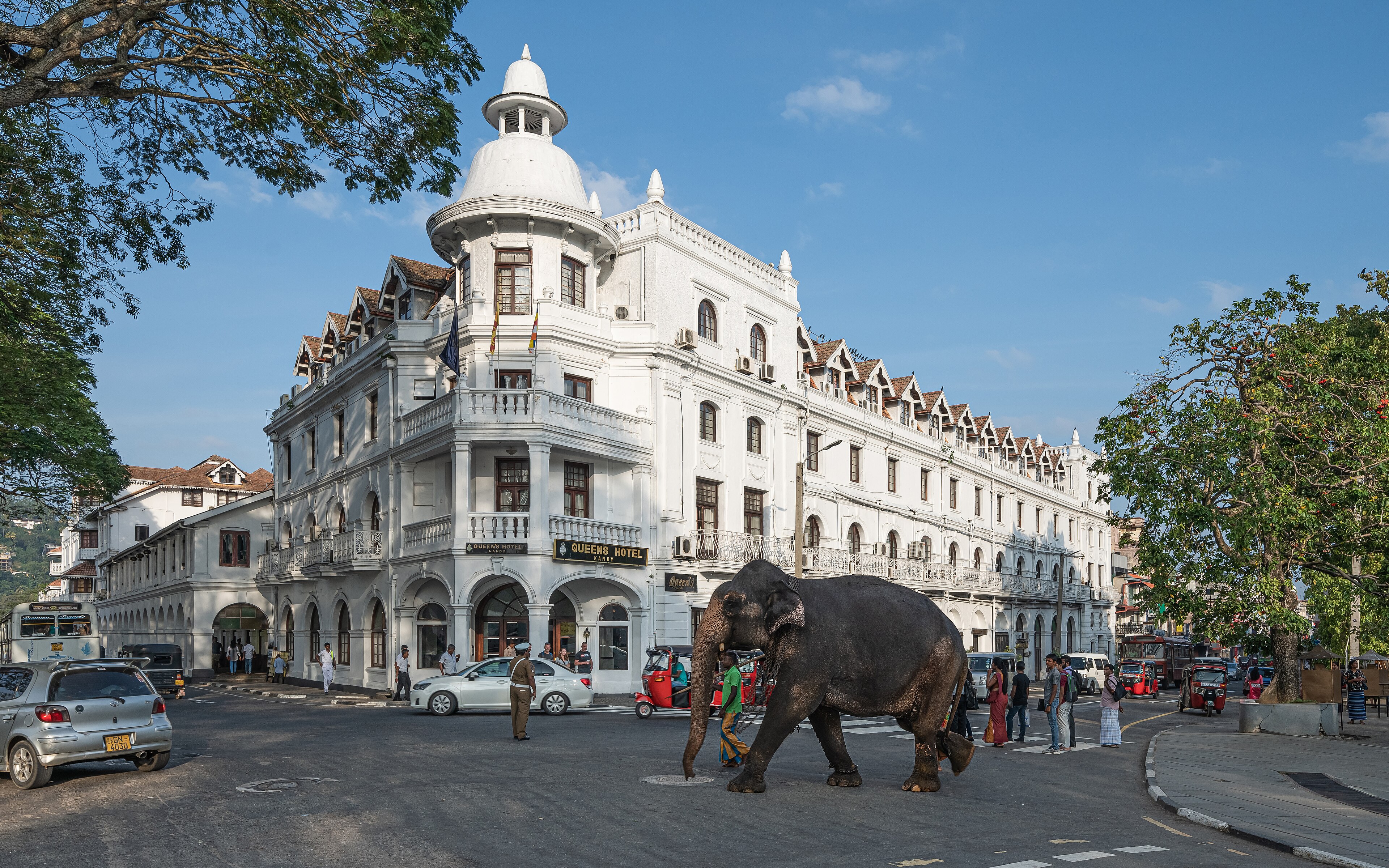
Why Kandy is Perfect for Your Celebration
- Home to the Temple of the Tooth Relic — one of Buddhism's most sacred sites — lending deep ceremonial gravitas to any celebration
- Kandy Lake provides a stunning natural centrepiece for lakeside ceremonies and photography
- Royal Botanic Gardens at Peradeniya (just 6 km away) offer extraordinary floral backdrops unique to this destination
- Cool highland climate during Jan–Mar and Aug–Sep makes outdoor events genuinely comfortable
- Strong local tradition of Kandyan dance, drumming, and ceremonial arts available for authentic cultural entertainment
- A range of heritage hotels and colonial-era properties that cannot be replicated in lowland Sri Lanka
Compare Kandy with Other Top Destinations
Frequently Asked Questions
Is Kandy a good destination for a traditional Sri Lankan wedding?
Yes, Kandy is arguably the strongest destination in Sri Lanka for a traditional or culturally rooted wedding. As the country's last royal capital and the home of the Temple of the Tooth Relic, it carries deep ceremonial significance. Kandyan dance troupes, traditional drummers, and local officiants experienced in Buddhist and Kandyan wedding customs are readily available, making authentic cultural celebrations genuinely practical to organise here.
What guest group sizes can Kandy's venues realistically support?
Kandy's event properties are generally best suited to groups of around 80 to 400 guests. Several riverside and hillside resorts have banquet halls and outdoor lawns capable of hosting seated dinners and receptions in this range. For very large events exceeding 400–500 guests, the local venue inventory becomes limited and multi-venue logistics may be required.
What is the best time of year to hold a celebration in Kandy?
January, February, March, August, and September are the recommended months. These are Kandy's cooler, drier periods when outdoor events are most practical and guest comfort is highest. The June–July South-West Monsoon and the October–November North-East Monsoon influence bring sustained rainfall that makes outdoor celebrations unreliable. April and May carry rising humidity and storm risk.
How do guests typically travel to Kandy from overseas?
International guests arrive via Bandaranaike International Airport near Colombo, then travel onward to Kandy — approximately 115 km away, typically a three-hour journey by road or a scenic train ride. Most event planners arrange coordinated coach or private vehicle transfers from the airport for groups. The train journey through the highlands is scenic and popular, but requires advance booking for groups.
What kinds of venues are available in Kandy for events?
Kandy offers riverside resorts with outdoor lawns and banquet halls, colonial-era heritage hotels with lakeside or hilltop positions, hillside boutique properties suitable for full buyouts, and garden venues with access to the region's exceptional tropical flora. The venue character is generally intimate and atmospheric rather than large-scale convention-style, which suits groups prioritising setting and experience.
Can guests be accommodated within Kandy itself, or do they need to stay elsewhere?
Most guests can be accommodated within Kandy city and its immediate surroundings. The city has a range of hotels from heritage properties in the city centre to riverside and hillside resorts within a short drive. For very large guest lists, accommodation may need to be spread across multiple properties, which is manageable given the city's compact geography and good local transport options.
What local entertainment options are available for a celebration in Kandy?
Kandy has one of Sri Lanka's strongest local performing arts ecosystems. Traditional Kandyan dance troupes, fire performers, and ceremonial drummers are professionally organised and widely available for event bookings. The city also offers temple visits, Royal Botanic Gardens excursions, and cultural walking tours as guest experience activities — all genuinely distinctive to this destination.
Is Kandy suitable for a corporate retreat or milestone celebration, or mainly for weddings?
Kandy works well for both. Its highland setting, cultural richness, and mid-scale hospitality properties make it a strong choice for corporate retreats, significant anniversary celebrations, and milestone family gatherings where a distinctive, immersive environment is the priority. The city's manageable scale means groups feel genuinely embedded in the destination rather than passing through it.
What should event planners know about local transport within Kandy during an event?
Kandy's city centre is compact, but many event properties sit on hillside or riverside roads that are narrow and not always accessible to large coaches. Planners should arrange a fleet of minibuses or smaller vehicles for guest transfers between accommodation, venues, and the railway station. Tuk-tuks and taxis are plentiful for individual guest movement but need coordination for group logistics.
Are there any periods when Kandy is particularly busy and accommodation is hard to secure?
Yes. The Esala Perahera — one of Asia's largest Buddhist processions, typically held in July and August — draws very large crowds to Kandy, and accommodation fills well in advance during this period. Major Sri Lankan public holidays and school vacation periods also create demand spikes. For any event planned during these windows, booking accommodation and venues at least six to twelve months ahead is strongly advisable.
How mature is Kandy's wedding and events vendor ecosystem?
Kandy has a well-developed vendor ecosystem for events, shaped by decades of high-volume tourism and a strong local ceremonial culture. In-house hotel catering teams, local floral suppliers drawing on the highland flower-growing region, experienced Kandyan performing arts vendors, and a capable photography community all operate regularly here. Colombo-based destination wedding planners also work in Kandy frequently and can manage end-to-end coordination.

Ready to explore venues in Kandy?
Kandy: Destination Wedding & Cultural Event Venues in Sri Lanka
◆Kandy is Sri Lanka's cultural and spiritual heartland — a highland city built around a sacred lake, a UNESCO-listed royal temple complex, and a living tradition of Kandyan ceremonial arts. It suits intimate to mid-scale weddings, cultural festivals, social celebrations, and milestone events where atmosphere and heritage matter more than sheer scale. The best months to plan are January through March and August through September, when the highland climate is at its most comfortable. Guest access requires a scenic but moderately long journey from Colombo's international airport, making it best suited to groups willing to travel for a genuinely distinctive setting.
Kandy at a Glance
| Attribute | Detail |
|---|---|
| Best For | Cultural Weddings, Festival Celebrations, Social Gatherings, Milestone Events |
| Primary Vibe | Cultural & Timeless |
| Other Vibes | Scenic Highland, Heritage, Spiritual |
| Best Season | Cool / Mild Season (Jan, Feb, Mar, Aug, Sep) |
Why Choose Kandy?
- Unmatched ceremonial heritage: The Temple of the Tooth Relic (Sri Dalada Maligawa) and the surrounding royal precinct give Kandy a depth of sacred and historical significance that is genuinely rare — couples and families seeking a celebration rooted in cultural meaning will find few settings in South Asia that compare.
- Kandy Lake as a natural event centrepiece: The artificial lake at the heart of the city, built by the last Kandyan king, provides a naturally photogenic backdrop for ceremonies, receptions, and pre-event photography that requires no additional decoration to be striking.
- Royal Botanic Gardens at Peradeniya: Located approximately 6 km from the city centre, these are among the finest botanical gardens in Asia — a genuinely extraordinary backdrop for outdoor events, floral arrangements, and pre-wedding shoots.
- Living tradition of Kandyan performing arts: Local troupes of Kandyan dancers, traditional drummers, and fire performers are readily available for authentic cultural entertainment — this is not a staged tourist product but a living art form with deep local roots.
- Cool highland climate during peak season: At roughly 500 metres above sea level, Kandy is meaningfully cooler than Sri Lanka's coastal lowlands, making outdoor events during January–March and August–September genuinely comfortable for guests.
- Intimate scale and privacy: Kandy's hospitality properties tend toward mid-scale, riverside, and hillside settings rather than large convention-style hotels — well-suited to groups that value atmosphere and exclusivity over maximum capacity.
Which Celebrations Work Best in Kandy?
- Cultural and traditional weddings: Kandy is particularly well-suited to weddings that incorporate Buddhist, Kandyan, or Sri Lankan ceremonial traditions. The proximity to sacred sites, the availability of traditional officiants, and the city's own ceremonial identity make it a natural fit for couples who want their wedding to feel genuinely rooted in place.
- Festival and Perahera-themed celebrations: The Esala Perahera — one of Asia's grandest Buddhist processions, held annually in July/August — draws on a tradition of pageantry that can inspire the aesthetic and entertainment choices for large social celebrations and milestone events held in the city.
- Social gatherings and milestone events: Anniversary celebrations, significant birthdays, family reunions, and corporate retreats that prioritise a distinctive, culturally rich environment over urban convenience find Kandy a compelling choice. The city's manageable scale means a group can feel genuinely immersed rather than lost in a large metropolis.
- Intimate destination weddings: For couples bringing a smaller guest list — typically under 200 — Kandy's riverside and hillside properties offer the kind of exclusive, scenically dramatic setting that makes a destination wedding feel meaningfully different from a city hotel event.
Venues & Event Spaces
Kandy's event venue landscape is defined by riverside resorts, colonial-era heritage hotels, and hillside properties with panoramic views over the city and surrounding highlands. The most characteristic venue types include:
- Riverside resorts: Several of Kandy's larger properties sit directly on the Mahaweli River, offering outdoor lawns, open-air terraces, and banquet halls with natural water frontage — a setting that is both scenic and practically useful for multi-day event programmes.
- Heritage and colonial-era hotels: A handful of properties in and around the city centre occupy buildings with genuine historical character — high ceilings, period architecture, and lakeside or hilltop positions that provide a sense of occasion without requiring elaborate theming.
- Hillside boutique properties: The hills surrounding Kandy are dotted with smaller boutique hotels and guesthouses that can be taken over entirely for intimate celebrations, offering privacy and elevated views that larger urban venues cannot replicate.
- Outdoor garden and lawn spaces: The botanical richness of the Kandy region means that many properties have genuinely lush garden settings suitable for outdoor ceremonies, cocktail receptions, and evening dinners under open skies during the dry season months.
- Banquet and function halls: Larger properties in the city offer dedicated banquet facilities capable of hosting seated dinners and receptions for groups of 150–400 guests, with in-house catering and audio-visual infrastructure.
Best Time to Celebrate
The curated best season for Kandy is the Cool / Mild Season: January, February, March, August, and September. Here is why each window works, and what makes the remaining months less suitable:
- January – March: This is Kandy's most reliably dry and comfortable stretch. Daytime temperatures typically sit in the low-to-mid twenties Celsius, evenings are pleasantly cool, and rainfall is at its lowest. Outdoor ceremonies and garden receptions are genuinely practical, and guests travelling from Sri Lanka's coastal areas or from overseas will find the highland climate a refreshing contrast. Visibility across the surrounding hills is typically excellent, making this the strongest window for photography and outdoor events.
- August – September: A secondary dry window that coincides with the tail end of the South-West Monsoon's retreat from the highlands. August in particular carries cultural significance — the Esala Perahera typically concludes in early August, and the city retains a festive energy. Conditions are generally good for events, though occasional showers remain possible and contingency planning for outdoor elements is advisable.
- April – May (avoid for outdoor events): The inter-monsoon period brings rising humidity, occasional thunderstorms, and temperatures that feel noticeably heavier than the January–March window. Not impossible for indoor events, but outdoor celebrations carry meaningful weather risk.
- June – July (South-West Monsoon): Kandy receives significant rainfall during the South-West Monsoon. While the city is somewhat sheltered compared to the western coast, sustained rain and overcast skies make outdoor events unreliable. The Esala Perahera in July/August is a major draw but also means the city is extremely busy and accommodation is at a premium.
- October – December (North-East Monsoon influence): Rainfall returns to the highlands during this period, with October and November typically the wettest months of the second half of the year. December sees some improvement but remains unpredictable. Indoor events are manageable; outdoor celebrations require robust contingency arrangements.
Getting There & Local Connectivity
The primary international gateway for guests travelling to Kandy is Bandaranaike International Airport (CMB) near Colombo, which handles the vast majority of international arrivals to Sri Lanka. The journey from the airport to Kandy city centre is approximately 115 km and typically takes around three hours by road, depending on traffic through Colombo and the winding highland approach. This is a meaningful travel commitment for guests, particularly those arriving on long-haul flights, and event planners should factor in arrival-day rest time when scheduling programmes.
The Kandy Railway Station is well-connected to Colombo by direct train services, and the scenic rail journey through the highlands is widely regarded as one of the most beautiful train rides in Asia — a genuine experience in itself that many guests appreciate. For groups, pre-booking train carriages or coordinating coach transfers from Colombo is the most practical approach.
Within Kandy, the city centre is compact and walkable for guests staying near the lake, but hillside and riverside properties may require short vehicle transfers for guests moving between venues, the city centre, and the railway station. Tuk-tuks, taxis, and private hire vehicles are readily available. For larger groups, coordinating a fleet of minibuses or coaches for the duration of the event is strongly advisable, as Kandy's narrow highland roads can create bottlenecks for uncoordinated individual travel.
Local Vendor & Hospitality Ecosystem
Kandy has a well-established hospitality ecosystem shaped by decades of high-volume tourism and a strong local tradition of ceremonial events. Key characteristics include:
- Experienced event catering: The city's larger hotels have in-house catering teams experienced in both Sri Lankan and international menus for events. Local catering companies can supplement with traditional Kandyan cuisine, which is a genuine point of differentiation for culturally themed celebrations.
- Kandyan performing arts vendors: Troupes of traditional Kandyan dancers, drummers, and fire performers are genuinely plentiful and professionally organised — this is one of the strongest local entertainment ecosystems for cultural events anywhere in Sri Lanka.
- Floral and decoration suppliers: The proximity to Sri Lanka's highland flower-growing regions means that fresh tropical and temperate flowers are available in abundance and at reasonable lead times. Local decorators are experienced in both traditional Kandyan wedding aesthetics and contemporary event styling.
- Photography and videography: A strong local and Colombo-based photography community serves Kandy regularly, with particular expertise in highland and heritage settings. The city's scenic diversity — lake, temple, gardens, hills — gives photographers a rich working environment.
- Coordination and planning support: While Kandy does not have the same density of specialist destination wedding planners as Colombo, several Colombo-based agencies operate regularly in Kandy and can manage end-to-end logistics. Local hotel event teams are generally experienced and can coordinate vendors effectively.
Pros & Things to Consider
Why Kandy Works Well
- Genuinely distinctive cultural and heritage setting that cannot be replicated in Sri Lanka's coastal or urban destinations
- Cool highland climate during the best season makes outdoor events comfortable for guests of all ages
- Strong local tradition of ceremonial arts provides authentic entertainment options
- Compact city centre means guests staying near the lake can access key venues, the temple precinct, and local experiences on foot
- Scenic rail journey from Colombo is itself a memorable guest experience
- Botanical richness of the surrounding region provides extraordinary natural backdrops for photography and outdoor events
Things to Consider
- Distance from the international airport: The approximately three-hour journey from Colombo airport is a genuine logistical consideration, particularly for guests on tight international connections or those with mobility limitations.
- Limited very large-scale venue capacity: Kandy's properties are generally best suited to groups of up to 300–400 guests. Events requiring 500+ seated guests may find the local venue inventory stretched.
- Monsoon season weather risk: Outside the curated best months, rainfall is a real and recurring factor. Outdoor event plans must include robust indoor contingency options.
- Narrow highland roads: Guest transport logistics require careful coordination — the roads approaching many hillside properties are narrow and not well-suited to large coaches, requiring smaller vehicles and more complex logistics.
- Peak season accommodation pressure: During the Esala Perahera (July/August) and major Sri Lankan public holidays, accommodation across the city fills quickly and rates rise. Early booking is essential for any event planned during these windows.
When Kandy May Not Be the Right Fit
- Very large guest lists (500+): If your event requires a single venue capable of seating 500 or more guests under one roof with full event infrastructure, Kandy's current hospitality inventory may not comfortably support this without significant logistical complexity.
- Guests with limited travel flexibility: For a guest list that includes a high proportion of elderly guests, guests with mobility challenges, or international guests on tight schedules, the three-hour road journey from Colombo airport may be a meaningful barrier to comfortable attendance.
- Outdoor events planned outside the best season: If your preferred dates fall between June and July or October and November, and your event concept is primarily outdoor, Kandy's monsoon rainfall patterns make this a genuinely risky choice without a fully weatherproofed indoor alternative.
- Events prioritising urban nightlife or contemporary entertainment infrastructure: Kandy is a heritage and nature destination — its strengths are cultural, scenic, and ceremonial. Groups seeking a celebration centred on contemporary nightlife, large-scale entertainment production, or urban convenience will find Colombo or a coastal resort destination a more natural fit.