
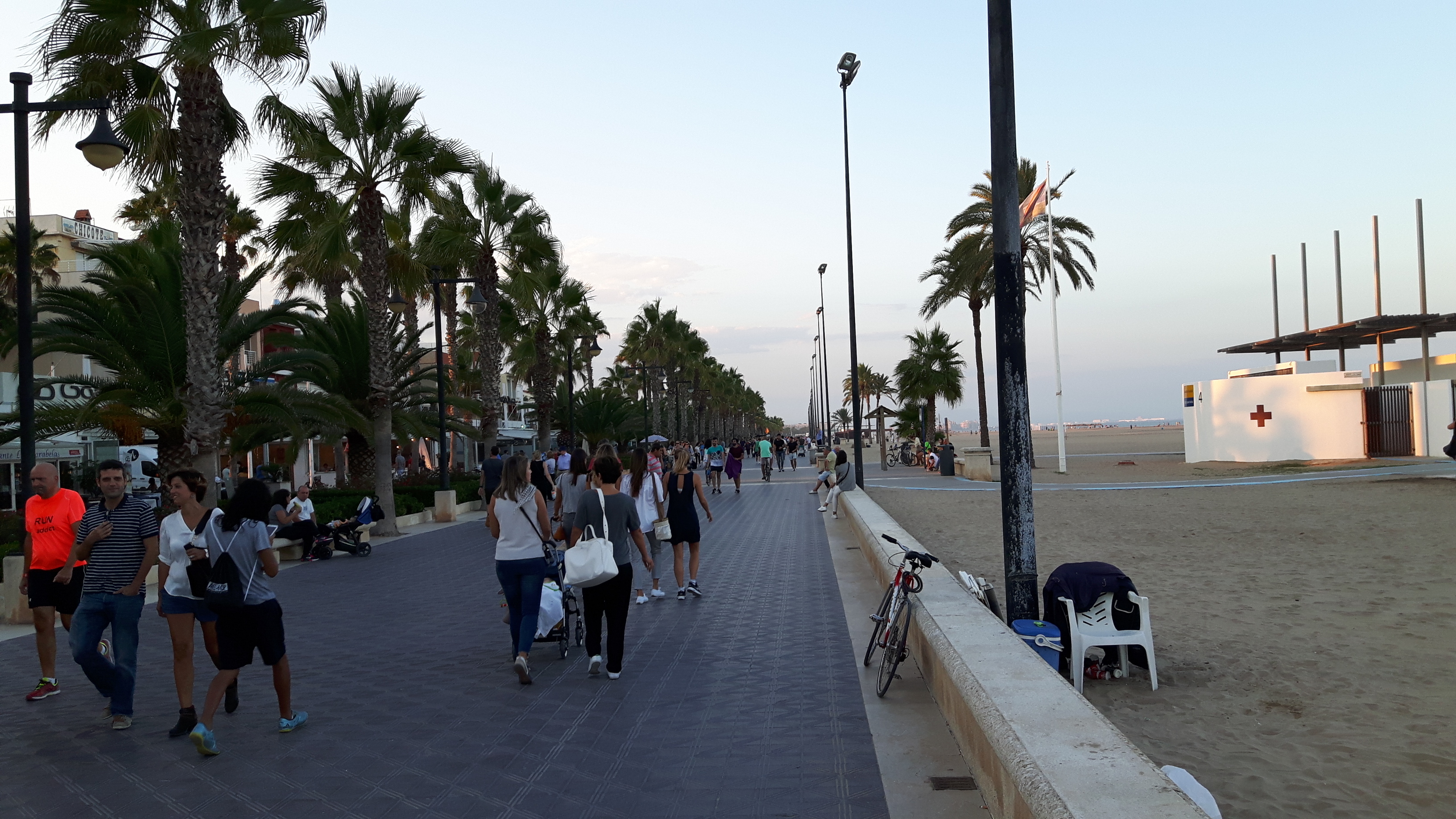
Why Valencia is Perfect for Your Celebration
- Birthplace of paella — world-class local gastronomy elevates every celebration banquet
- City of Arts and Sciences provides a dramatic, iconic backdrop for corporate and gala events
- Warm, long summer days (May–Sep) allow extended outdoor ceremonies and receptions
- Excellent international air connectivity via VLC airport with direct routes across Europe
- High-speed AVE rail links Madrid and Barcelona guests in under two hours
- Mature event and hospitality industry with experienced local vendors, caterers, and planners

Compare Valencia with Other Top Destinations
Frequently Asked Questions
Is Valencia a good destination for an international destination wedding?
Yes. Valencia is particularly well-suited to destination weddings for couples with a European or internationally dispersed guest list. The city offers genuine venue diversity — beachfront, historic old town, and contemporary hotel settings — combined with world-class local gastronomy, excellent air and rail connectivity, and a mature wedding planning ecosystem experienced in working with international clients.
What guest group sizes can Valencia venues realistically accommodate?
Valencia's hotel and event venue stock is generally well-suited to celebrations in the 50–600 guest range. Beachfront resort venues and city-centre hotel ballrooms comfortably handle mid-to-large weddings and corporate galas. For very large events exceeding 800–1,000 guests requiring a single integrated space, the Feria Valencia convention complex is the primary option, though most private celebrations operate well within the hotel venue range.
What is the best time of year to hold a celebration in Valencia?
May through September is the recommended window. This period offers reliably warm, sunny weather with low rainfall, long daylight hours, and late sunsets — all of which make outdoor ceremonies and al-fresco receptions genuinely practical. September is particularly attractive as temperatures remain warm while peak tourist pressure begins to ease, improving accommodation availability for large guest groups.
How do guests typically travel to Valencia for an event?
Most European guests fly directly into Valencia Airport (VLC), which is approximately 8 km from the city centre and connected by metro. Guests from Madrid or Barcelona frequently use the AVE high-speed rail, with journey times of roughly 1 hour 40 minutes and 1 hour 35 minutes respectively. The combination of air and rail options makes Valencia genuinely accessible for a geographically spread guest list.
What kinds of venues are available for events in Valencia?
Valencia offers a genuinely diverse range: beachfront resort hotels along the Las Arenas and Malvarrosa coastline, luxury city-centre hotel ballrooms, historic mansions and palaces in the old town (Ciutat Vella), contemporary hotels near the City of Arts and Sciences, and rooftop terraces across the city. For very large-scale events, the Feria Valencia convention complex provides industrial-scale capacity beyond what hotel venues alone can offer.
Is Valencia suitable for corporate events and gala dinners?
Yes, and it is one of Valencia's stronger use cases. The city has a well-established MICE infrastructure, experienced AV and production vendors, and the City of Arts and Sciences complex — which is frequently used for exclusive corporate evening buyouts — provides a dramatic, internationally recognisable backdrop. The local catering industry is also well-equipped for large-format corporate banquets.
How easy is it to arrange accommodation for a large guest group in Valencia?
Valencia has a substantial hotel stock across multiple tiers, making it feasible to accommodate large groups — but early booking is essential, particularly for summer events. July and August are peak leisure tourism months, and hotel room blocks at upper-tier properties fill quickly. Engaging a local event coordinator or DMC to manage accommodation blocking 12–18 months in advance is strongly advisable for groups of 100 or more.
What makes Valencia's local food and catering scene distinctive for events?
Valencia is the birthplace of paella and has a deeply embedded culinary identity built around rice dishes, fresh Mediterranean seafood, and local wines from the Utiel-Requena and Valencia DO regions. Local event caterers can authentically incorporate these traditions into bespoke menus, giving celebrations a genuine sense of place rather than generic international banquet food — a meaningful differentiator for guests who care about the dining experience.
Are there any periods I should avoid when planning a Valencia event?
Mid-March (Las Fallas festival) should generally be avoided for private events — the city is at maximum capacity, accommodation is scarce and expensive, and the noise and crowd levels are intense. October and November carry a documented risk of the gota fría weather phenomenon, which can bring sudden heavy rainfall — outdoor events in this window need robust indoor contingency plans. December through February is cooler and wetter, limiting outdoor options significantly.
How mature is Valencia's local event planning and vendor ecosystem?
Very mature by European standards. Valencia has hosted the America's Cup, Formula 1 street races, and major international trade fairs, which built a professional-grade events industry with experienced AV, production, logistics, floral, and catering vendors. Multilingual wedding and event planners are readily available. The main practical note is that top-tier vendors book up well in advance during peak summer months, so early engagement is important.
What is local transport like for a guest group once they arrive in Valencia?
Valencia's city centre is compact and largely flat, making it walkable between many hotel and venue locations. The metro network efficiently connects the airport, main hotel districts, the beach, and the City of Arts and Sciences. For event groups, private coach transfers are straightforward to arrange given the city's well-maintained road network. Taxis and ride-hailing services are plentiful throughout the city.
Does Valencia suit smaller, more intimate celebrations as well as large events?
Yes. While Valencia handles large-format events well, the city also has a strong offering for intimate celebrations. Historic mansions and boutique venues in the Ciutat Vella old town, rooftop terraces in the Ruzafa neighbourhood, and smaller beachfront restaurant-venues cater well to groups of 20–80 guests seeking a more personal, character-rich setting rather than a large hotel ballroom.

Ready to explore venues in Valencia?
Valencia: Destination Wedding & Event Venues on the Mediterranean Coast
◆Valencia is a well-connected, cosmopolitan Mediterranean city in eastern Spain, particularly well-suited to destination weddings, corporate galas, festivals, and large-format celebrations. Its primary vibe is chic and cosmopolitan — a city that balances a historic old town, a world-famous modern architectural district, and a beachfront, all within a compact, navigable area. The best season runs from May through September, when long sunny days and warm temperatures make outdoor ceremonies and receptions genuinely reliable. Guests travelling from across Europe benefit from direct flights into Valencia Airport and high-speed rail from Madrid and Barcelona, making group logistics straightforward. The local hospitality and vendor ecosystem is mature and internationally experienced.
Valencia at a Glance
| Attribute | Detail |
|---|---|
| Best For | Destination Weddings, Corporate Events, Festivals & Galas, Social Celebrations |
| Primary Vibe | Chic & Cosmopolitan |
| Other Vibes | Mediterranean & Coastal, Heritage & Cultural, Festive & Vibrant |
| Best Season | Summer (May, Jun, Jul, Aug, Sep) |
Why Choose Valencia?
- Iconic architectural backdrop: The City of Arts and Sciences — a futuristic complex of opera house, science museum, and oceanarium — provides a genuinely dramatic, internationally recognisable setting for corporate events, gala dinners, and large receptions that few European cities can match.
- Gastronomic identity: Valencia is the birthplace of paella and a city with a deeply embedded food culture. Local caterers and chefs bring an authenticity and quality to event banquets that is a genuine differentiator, not a generic claim.
- Beachfront and old town diversity: Within a short distance, planners can access beachfront resort venues at Las Arenas, historic palaces and mansions in the old town (Ciutat Vella), and contemporary hotel ballrooms — giving a single event group multiple distinct settings across a multi-day celebration.
- Excellent multi-modal connectivity: Valencia Airport (VLC) operates direct routes to major European hubs, while the AVE high-speed rail network connects the city to Madrid in approximately 1 hour 40 minutes and to Barcelona in approximately 1 hour 35 minutes — making it genuinely easy for a geographically dispersed guest list to converge.
- Mature event industry: As Spain's third-largest city and a regular host of international trade fairs (including the Formula 1 European Grand Prix era and the America's Cup), Valencia has a well-developed professional events, AV, catering, and logistics vendor base that handles large-scale and complex briefs reliably.
- Festival culture as a built-in experience: The city's deep tradition of public celebration — most famously Las Fallas in March, but also Semana Santa, Moros y Cristianos, and summer beach festivals — means that the local culture genuinely embraces large-scale communal events, and this energy translates into an enthusiastic hospitality attitude toward private celebrations.
Which Celebrations Work Best in Valencia?
- Destination Weddings: Valencia suits couples seeking a European Mediterranean wedding with genuine cultural depth rather than a purely resort-style setting. The combination of beachfront ceremony options, historic old-town venues, and high-quality local gastronomy creates a multi-layered experience for guests travelling from abroad.
- Corporate Events & Conferences: The city's established MICE (Meetings, Incentives, Conferences, Exhibitions) infrastructure, anchored by the Feria Valencia convention centre and a range of hotel ballrooms, makes it a strong choice for product launches, incentive trips, and corporate galas. The City of Arts and Sciences is particularly popular for exclusive evening buyouts.
- Festivals & Large-Scale Celebrations: Valencia's own festival DNA makes it a natural fit for large, multi-day private festivals, milestone birthday celebrations, and anniversary events that want to borrow the city's inherently festive atmosphere.
- Social Gatherings & Milestone Events: Smaller, intimate social celebrations — anniversary dinners, family reunions, significant birthday parties — benefit from the city's restaurant culture, rooftop terraces, and boutique venue options in the old town and Ruzafa neighbourhood.
Venues & Event Spaces
Valencia's venue landscape is genuinely diverse across several distinct typologies. Beachfront resort hotels along the Las Arenas and Malvarrosa coastline offer outdoor ceremony lawns, terraces directly overlooking the Mediterranean, and indoor ballrooms for larger receptions — particularly well-suited to summer weddings where the sea view is a central aesthetic element. Luxury city-centre hotels in and around the historic centre and the Jardines del Real area provide grand ballrooms, rooftop spaces, and garden courtyards that work well for formal gala dinners and corporate events. The City of Arts and Sciences district hosts several contemporary hotels with event facilities that leverage the dramatic architectural surroundings for evening receptions and cocktail events. Historic mansions and palaces within the Ciutat Vella (old town) offer intimate, heritage-character spaces for smaller weddings and private dinners. Outdoor terraces and rooftop venues are widely available across the city's mid-range and upper-tier hospitality stock, particularly suited to the long summer evenings. For very large-scale events, the Feria Valencia exhibition and convention complex provides industrial-scale capacity that the city's hotel stock alone cannot match.
Best Time to Celebrate
The curated best season for Valencia events runs from May through September, and this recommendation is grounded in specific, practical reasons beyond simply "good weather." From May onwards, average daytime temperatures climb into the mid-to-upper 20s Celsius, evening temperatures remain warm enough for outdoor receptions without heating requirements, and rainfall is statistically low — making outdoor ceremonies genuinely reliable rather than weather-dependent gambles. June, July, and August offer the longest daylight hours, with sunset falling late enough that outdoor golden-hour ceremonies and al-fresco dinners are a realistic part of the event schedule rather than a rushed afterthought. September retains most of summer's warmth while the peak tourist crowds begin to thin, which can ease accommodation availability and give a large guest group more of the city to themselves.
The months outside this window carry genuine trade-offs. October and November are transitional — temperatures are still mild by northern European standards, but the risk of the gota fría (cold drop) weather phenomenon, which can bring intense, localised rainfall to the Valencian coast in autumn, is a real planning consideration for outdoor events. December through February brings cooler temperatures (regularly dropping to 10–12°C at night), shorter days, and a higher frequency of overcast and rainy periods — outdoor ceremonies become impractical, and the city's Mediterranean character is considerably less accessible. March and April are improving but still transitional, with shower risk remaining elevated; March also coincides with Las Fallas, which brings enormous crowds and significantly reduced hotel availability across the city — a major logistical complication for a private event group trying to block accommodation.
Getting There & Local Connectivity
By air: Valencia Airport (VLC) sits approximately 8 km from the city centre and is served by a wide range of European carriers on direct routes from major hubs including London, Paris, Amsterdam, Frankfurt, Rome, and many others. For guests travelling from outside Europe, connections through Madrid (MAD) or Barcelona (BCN) are straightforward and frequent. The airport is connected to the city centre by metro (Line 3 and Line 5), making independent arrival easy for guests without a group transfer.
By high-speed rail: Valencia's Joaquín Sorolla station is the terminus for AVE high-speed services, with journey times of approximately 1 hour 40 minutes from Madrid and 1 hour 35 minutes from Barcelona. The historic Nord Station handles regional and local rail services. For a guest list drawn primarily from Spain's major cities, rail is often the most convenient option and avoids the airport transfer entirely.
Local movement: Valencia's city centre is compact and walkable, and the metro network covers the main hotel districts, the beach, and the City of Arts and Sciences efficiently. For event groups, private coach transfers between hotels, ceremony venues, and reception spaces are widely available and straightforward to organise given the city's flat topography and well-maintained road network. Taxis and ride-hailing services are plentiful. For multi-day events where guests are spread across several hotels, a dedicated shuttle circuit is a common and practical solution.
Local Vendor & Hospitality Ecosystem
Valencia's vendor ecosystem for events is well-developed and internationally oriented, reflecting the city's long history as a host of major international events. Catering and gastronomy is a particular strength — the city has a deep pool of professional catering companies, many of whom specialise in large-format event service and can authentically incorporate Valencian culinary traditions (rice dishes, fresh seafood, local wines from the Utiel-Requena and Valencia DO regions) into bespoke menus. Floral and décor suppliers are plentiful, with a strong local flower market tradition. AV and production companies with experience in large corporate and entertainment events are well-represented, partly as a legacy of the city's trade fair and motorsport event history. Wedding planners and event coordinators with multilingual capability (Spanish, English, and often French or German) are available and accustomed to working with international client groups. The city's hotel concierge and events teams at the upper-tier properties are generally experienced in coordinating multi-vendor, multi-day celebrations. One genuine consideration: during peak summer months and major local festivals, the most in-demand vendors book up well in advance, and early engagement — ideally 12–18 months ahead for a large event — is advisable.
Pros & Things to Consider
Why Valencia Works Well
- Genuinely diverse venue typology — beach, old town, modern architectural district, and convention-scale spaces all within a compact city
- World-class local gastronomy anchored by an authentic culinary identity, not generic hotel banquet food
- Excellent multi-modal connectivity for international and domestic guests alike
- Long, reliable summer season with late sunsets ideal for outdoor evening events
- Mature, internationally experienced event vendor and hospitality ecosystem
- A city that genuinely celebrates — the local cultural attitude toward large communal events is enthusiastic and experienced
Things to Consider
- Peak season accommodation pressure: July and August are high-demand months for leisure tourism across Valencia; securing a hotel room block for a large guest group requires early commitment, and rates at this time of year reflect peak demand.
- Las Fallas (mid-March) conflict: If any part of a multi-day event falls in mid-March, the city is at maximum capacity for the Las Fallas festival — accommodation is extremely scarce and expensive, and the city's noise and crowd levels are intense. This is not a suitable window for a private celebration requiring a calm, controlled environment.
- Autumn gota fría risk: October and November carry a real, documented risk of sudden, heavy rainfall events specific to the Valencian coast. Outdoor events in this window require robust contingency planning.
- Language: While English is widely spoken in the hospitality sector, Valencia is a bilingual city (Spanish and Valencian), and guests with no Spanish may find navigating independently outside the main tourist areas less straightforward than in a more internationally-oriented capital.
- City noise and urban character: Valencia is a lively, urban Mediterranean city. Guests expecting a secluded, countryside-retreat atmosphere will find the city's energy and density a contrast — this is a destination that suits those who want to be in the city, not away from it.
When Valencia May Not Be the Right Fit
- Outdoor events planned for October–February: If the event concept is heavily dependent on outdoor spaces — garden ceremonies, terrace receptions, beach dinners — the autumn and winter months carry meaningful weather risk that is difficult to fully mitigate without indoor backup spaces.
- Guests requiring very short travel times from non-European origins: While European connectivity is excellent, guests travelling from South Asia, the Americas, or East Asia face long-haul journeys with at least one connection. For a guest list that is primarily non-European, a destination with more direct long-haul access may reduce travel fatigue.
- Events requiring a secluded, private countryside or rural setting: Valencia is fundamentally an urban and coastal destination. Couples or planners seeking a remote vineyard estate, a mountain retreat, or a deeply rural setting will find the city's character a poor match for that brief — the surrounding Valencian Community does have rural areas, but the city itself is not that experience.
- Very large-scale events (1,000+ guests) requiring a single integrated venue: While the Feria Valencia convention complex can handle very large numbers, the city's hotel and heritage venue stock is better suited to events in the 100–600 guest range. Extremely large celebrations requiring a single, self-contained resort campus with all accommodation and event space under one roof may find the local inventory less ideal than purpose-built resort destinations.