
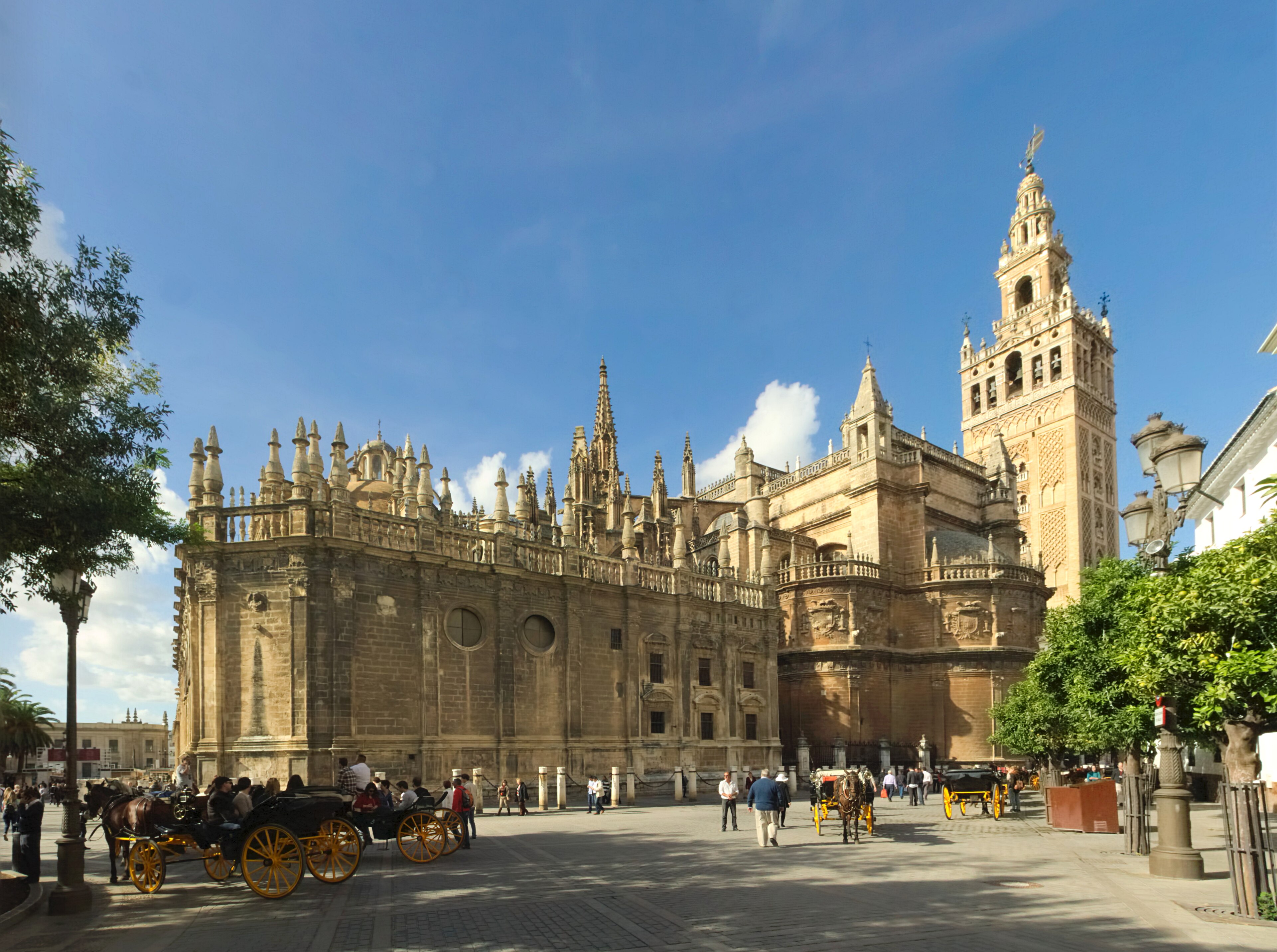
Why Seville is Perfect for Your Celebration
- UNESCO World Heritage historic centre provides a genuinely iconic ceremony backdrop
- Abundance of historic palaces, carmenes, and cortijos available as private event venues
- Excellent spring season (Apr–Jun, Sep–Oct) with warm, stable weather perfect for outdoor receptions
- High-speed rail from Madrid and direct European flights make guest travel straightforward
- Mature local events industry with experienced wedding planners, caterers, and flamenco entertainment
- Authentic Andalusian cuisine and world-class sherry and wine culture elevate every celebration
Compare Seville with Other Top Destinations
Frequently Asked Questions
Is Seville a good destination for a wedding?
Yes. Seville is one of Europe's strongest destination-wedding cities, combining UNESCO-listed Moorish and baroque architecture with a mature local events industry, reliable spring weather, and excellent guest connectivity. It suits both intimate ceremonies and large multi-day celebrations, with a wide range of venue types from palace hotels to private rural cortijos.
What is the best time of year to hold a wedding or event in Seville?
April, May, June, September, and October are the recommended months. These periods offer warm, stable weather with comfortable evening temperatures ideal for outdoor receptions. July and August should be avoided for outdoor events due to extreme heat regularly exceeding 38°C. November through March brings cooler temperatures and increased rainfall, limiting outdoor viability.
How do guests typically travel to Seville for a destination event?
Most guests arrive via Seville Airport (SVQ), approximately 10 km from the city centre, which handles direct flights from major European cities. Guests from Madrid or Málaga can also travel by AVE high-speed rail to Seville Santa Justa station — Madrid is approximately two and a half hours away. The city is also accessible by road from across southern Spain and Portugal.
What kinds of venues are available for events in Seville?
Seville offers a genuinely varied venue landscape: grand palace hotels with ballrooms and colonnaded courtyards, converted heritage properties such as former convents and aristocratic mansions, rural cortijos (country estates) on the city's outskirts, rooftop terraces with skyline views, and purpose-built banquet and conference facilities in larger hotels. There is a strong match between the venue stock and the city's cultural character.
How large a guest list can Seville realistically accommodate?
Seville comfortably supports events from intimate gatherings of 30–50 guests up to large celebrations of 400–600 guests across its palace hotels and dedicated event venues. For very large events exceeding 600 guests in a single space, the local inventory becomes more constrained, and early venue booking is essential. The city's overall hotel stock can accommodate large guest lists across multiple properties.
Is flamenco entertainment available for private events in Seville?
Yes. Seville is the heartland of flamenco, and professional flamenco companies, dancers, and guitarists are readily available for private event hire. This is a genuinely local art form rather than a tourist add-on, and experienced local event planners can arrange performances that are authentic and appropriately scaled to the event format.
Do I need a local wedding planner to organise an event in Seville?
Working with a local planner is strongly advisable, particularly for international couples. While English-speaking vendors exist, not all local caterers, florists, and entertainment providers operate in English. A local coordinator also navigates venue access rules in the historic centre, manages city-centre logistics for large groups, and handles the longer lead times required during peak spring months.
What makes Seville's spring season particularly suitable for outdoor celebrations?
April through June and September through October bring warm, predominantly clear days with temperatures typically between 18°C and 30°C, long daylight hours, and low rainfall. Evening temperatures remain comfortable for outdoor receptions. The city is also visually at its most spectacular during spring, with orange blossom in bloom and the surrounding countryside green — a significant asset for event photography.
How easy is it for guests to get around Seville once they arrive?
The historic city centre is compact and largely walkable, with most hotels and venues within easy reach on foot or by taxi. Seville has a tram and metro network for broader movement. For events at rural cortijos or venues outside the centre, private coach hire is standard practice and well-supported by local operators experienced in wedding and event group transfers.
Is Seville suitable for corporate events and incentive travel programmes?
Yes. Seville's palace hotels and historic venues provide a high-impact setting for corporate dinners, product launches, and incentive travel groups. The city's combination of cultural experiences — flamenco, Andalusian cuisine, guided heritage tours — makes it a strong choice for incentive programmes where the destination experience is as important as the event itself.
What should I be aware of when planning an event during Seville's Feria de Abril?
The Feria de Abril (typically late April) is one of Spain's largest festivals and creates an extraordinary atmosphere in the city. However, hotel availability tightens significantly during this week, prices rise, and the city is very busy. Couples planning events around this period should book venues and accommodation at least 12–18 months in advance and work with a local planner familiar with the festival calendar.

Ready to explore venues in Seville?
Seville: Destination Wedding & Cultural Event Venues in Andalusia
◆Seville is one of southern Europe's strongest destination-wedding and cultural-celebration cities, combining UNESCO-listed Moorish and baroque architecture with a mature hospitality industry and reliable spring weather. The city suits intimate ceremonies, large multi-day weddings, corporate galas, and milestone celebrations particularly well. Its best season runs from April through June and again in September and October — warm, stable, and visually spectacular. Guests travelling from across Europe and beyond benefit from direct international flights into Seville Airport and high-speed rail from Madrid, making logistics straightforward for mixed-nationality guest lists. The overall character is cultural, grand, and deeply atmospheric rather than beach-resort casual.
Seville at a Glance
| Attribute | Detail |
|---|---|
| Best For | Destination Weddings, Cultural Celebrations, Corporate Galas, Milestone Events |
| Primary Vibe | Cultural & Timeless |
| Other Vibes | Romantic, Grand, Festive, Heritage-Rich |
| Best Season | Spring (Apr, May, Jun, Sep, Oct) |
Why Choose Seville?
- Unrivalled architectural backdrop: The Real Alcázar, the Cathedral of Seville, and the historic Barrio Santa Cruz provide a genuinely cinematic setting that few European cities can match for ceremony photography and atmosphere.
- Diverse private venue stock: The city and its surroundings offer a wide range of event-ready spaces — from grand palace hotels and converted convents to private cortijos (country estates) and traditional Andalusian carmenes with tiled courtyards.
- Strong spring season: April through June and September through October deliver warm, largely rain-free days with comfortable evening temperatures, making outdoor receptions and garden ceremonies reliably feasible.
- Mature events and wedding industry: Seville has a well-established ecosystem of local wedding planners, florists, caterers specialising in Andalusian cuisine, and entertainment providers including professional flamenco companies — reducing the coordination burden for international couples.
- Excellent guest connectivity: Seville Airport handles direct routes from major European hubs, and the AVE high-speed rail line connects the city to Madrid in approximately two and a half hours, making it accessible for guests arriving from multiple directions.
- Cultural richness as an event asset: Flamenco performances, sherry tastings, tapas trails, and proximity to the Doñana National Park give guests a genuinely immersive Andalusian experience beyond the event itself — a strong draw for destination celebrations.
Which Celebrations Work Best in Seville?
- Destination Weddings: Seville is particularly well-suited to couples seeking a European destination wedding with genuine cultural depth. The combination of historic venues, reliable spring weather, and a professional local vendor ecosystem makes multi-day wedding weekends very achievable here.
- Cultural Celebrations & Festivals: The city's own calendar — including Semana Santa (Holy Week) and the Feria de Abril — demonstrates how deeply embedded large-scale celebration is in Seville's identity. Private events timed around (or inspired by) these cultural moments carry an authenticity that is hard to replicate elsewhere.
- Corporate Galas & Incentive Events: Seville's palace hotels and historic venues provide a high-impact setting for corporate dinners, product launches, and incentive travel programmes. The city's conference infrastructure and hotel capacity support groups of several hundred guests comfortably.
- Milestone Celebrations (anniversaries, significant birthdays): The grandeur of Seville's architecture and the warmth of Andalusian hospitality make it a compelling backdrop for landmark personal celebrations — particularly for guests who want an experience that feels genuinely special rather than a standard hotel ballroom.
- Elopements & Intimate Ceremonies: Smaller boutique heritage hotels and private courtyard spaces in the Santa Cruz quarter cater well to couples seeking an intimate, highly personal ceremony without the scale of a full destination wedding.
Venues & Event Spaces
Seville's venue landscape is one of its greatest strengths. The city offers a genuinely varied inventory of event spaces across different scales and styles:
- Palace hotels: Several of Seville's grandest hotels occupy historic palace buildings, offering ballrooms, colonnaded courtyards, and formal gardens that can accommodate ceremonies and receptions for large guest lists.
- Converted heritage properties: Former convents, aristocratic mansions, and Moorish-influenced townhouses have been sensitively converted into boutique event venues, particularly concentrated in and around the Santa Cruz and Arenal neighbourhoods.
- Cortijos and country estates: Within a short drive of the city centre, rural Andalusian estates — known as cortijos — offer expansive outdoor lawns, olive groves, and rustic interiors suited to relaxed, countryside-style celebrations.
- Rooftop and terrace spaces: Several of Seville's hotels and standalone venues offer rooftop terraces with views over the city's skyline, the Giralda tower, and the Guadalquivir river — particularly atmospheric for evening cocktail receptions during the spring season.
- Dedicated banquet and conference facilities: Larger hotels in the Los Remedios, Heliópolis, and Cartuja Island areas provide purpose-built banquet halls and conference suites suited to corporate events and large-scale receptions requiring flexible layout options.
Best Time to Celebrate
The curated best season for Seville — April, May, June, September, and October — reflects the city's genuine climate sweet spot for outdoor and semi-outdoor events.
- April and May are widely considered the finest months in Seville. Temperatures typically sit between 18°C and 28°C, skies are predominantly clear, and the city is in full bloom. April also coincides with the Feria de Abril, which creates an extraordinarily festive atmosphere — though couples should be aware that hotel availability tightens significantly during this period and advance planning is essential.
- June remains excellent for events, with longer daylight hours and temperatures that are warm but not yet at the extreme levels of high summer. Evening receptions benefit from long, golden sunsets over the Guadalquivir.
- September and October offer a second strong window. The intense summer heat has passed, temperatures return to a comfortable 22°C–30°C range, and the city is generally less crowded than in spring. October in particular is often cited by local planners as an underrated month for outdoor celebrations.
- July and August are genuinely problematic for outdoor events. Seville is one of the hottest cities in continental Europe during these months, with temperatures regularly exceeding 38°C and occasionally reaching 44°C. Outdoor ceremonies and receptions become impractical, and guests — particularly those unaccustomed to extreme heat — may find the experience uncomfortable. Indoor, air-conditioned events are possible but lose much of what makes Seville's venues distinctive.
- November through March brings cooler temperatures (typically 8°C–18°C), increased rainfall, and shorter days. While not impossible for indoor events, this period lacks the outdoor viability and visual splendour that define Seville's appeal as a celebration destination.
Getting There & Local Connectivity
Seville is well-connected by both air and rail, making it a practical choice for guests travelling from across Europe and beyond.
- By air: Seville Airport (SVQ) is located approximately 10 km from the city centre and handles direct routes from major European cities including London, Paris, Amsterdam, Frankfurt, and several others. For guests travelling from further afield, connections via Madrid or Barcelona are straightforward.
- By high-speed rail: Seville Santa Justa station is the terminus of Spain's AVE high-speed network, connecting the city to Madrid in approximately two and a half hours and to Málaga in under two hours. This makes rail a genuinely competitive option for guests based in central or southern Spain.
- Local transport: The city centre is compact and walkable, with most historic venues, hotels, and the main event districts within easy reach on foot or by taxi. Seville also has a well-regarded tram and metro system for broader city movement. For groups travelling to cortijos or rural venues outside the city, private coach hire is the standard and practical solution — local operators are experienced in handling wedding and event group transfers.
- Driving: Seville sits on Spain's main southern motorway network, making it accessible by road from Málaga, Cádiz, Córdoba, and Portugal. However, the historic city centre has significant pedestrian zones and parking restrictions, so guests staying centrally are generally better served by public transport or taxis than by private cars.
Local Vendor & Hospitality Ecosystem
Seville has a genuinely mature and well-developed events and hospitality ecosystem, shaped by decades of hosting both large-scale cultural festivals and international destination weddings.
- Wedding and event planners: The city has a strong community of professional wedding planners, many of whom specialise in international couples and are experienced in managing multi-day celebrations across multiple venues. English-speaking planners are readily available.
- Catering and cuisine: Andalusian cuisine — built around fresh seafood, jamón ibérico, gazpacho, and an exceptional range of local wines and sherries — is a genuine asset for event menus. Seville's catering companies are experienced in adapting traditional cuisine for large-scale event service without losing quality.
- Entertainment: Professional flamenco companies, classical guitarists, and traditional Andalusian folk musicians are available for hire and are a distinctive feature of celebrations in this city. This is not a generic add-on but a genuinely local art form with deep roots in the region.
- Floristry and décor: The city's florists are experienced in working with the architectural character of Seville's venues — particularly the tiled courtyards and colonnaded spaces that define many of the most popular event spaces.
- Accommodation capacity: Seville's hotel stock is substantial enough to accommodate large guest lists across a range of property types and price points, with the historic centre, Los Remedios, and Triana neighbourhoods all offering good concentrations of accommodation within easy reach of the main event districts.
Pros & Things to Consider
Why Seville Works Well
- Genuinely iconic architectural setting — few European cities offer this density of UNESCO-listed heritage as a backdrop
- Reliable, warm spring season with long daylight hours ideal for outdoor ceremonies and evening receptions
- Mature, professional local events industry with strong experience handling international guest lists
- Excellent rail and air connectivity reduces travel friction for guests from across Europe
- Rich cultural programme (flamenco, cuisine, local festivals) gives guests a memorable experience beyond the event itself
- Diverse venue stock from grand palace hotels to intimate courtyard spaces and rural cortijos
Things to Consider
- Extreme summer heat: July and August are genuinely unsuitable for outdoor events — couples with flexibility should firmly avoid these months for any celebration with an outdoor component.
- Peak-season demand: April (particularly Feria de Abril week) and May are extremely popular, which means venue availability tightens and lead times for booking need to be longer than in many comparable destinations.
- Language barrier for some vendors: While English-speaking planners are available, not all local vendors operate in English — working through a local coordinator is strongly advisable rather than attempting to manage vendor relationships directly from abroad.
- City-centre logistics for large groups: The historic centre's pedestrian zones and narrow streets can complicate coach access and large-group movement — venue selection and transfer planning need to account for this early in the planning process.
- International flight options from some origins: While European connectivity is strong, guests travelling from North America, Asia, or the Middle East will typically need a connection via Madrid or another European hub — direct long-haul options into SVQ are limited.
When Seville May Not Be the Right Fit
- Summer-only availability: If your event dates are fixed in July or August and include significant outdoor elements, Seville's extreme heat makes this a genuinely poor fit — a coastal or higher-altitude Andalusian alternative would serve better.
- Very large guest lists requiring a single venue: While Seville has substantial hotel and venue capacity, couples planning events for 600 or more guests in a single space may find the local inventory more constrained than in larger European convention cities.
- Guests with very limited European travel experience: For a guest list that is predominantly unfamiliar with European travel logistics, the combination of a connecting flight and a city where Spanish is the primary language may add friction — destinations with simpler direct-flight access from the guests' home country might be more practical.
- Couples seeking a beach or coastal setting: Seville is an inland river city — it does not offer a beachfront or coastal setting. Couples for whom a sea view or beach ceremony is central to their vision would be better served by Cádiz, Marbella, or another Andalusian coastal destination.