
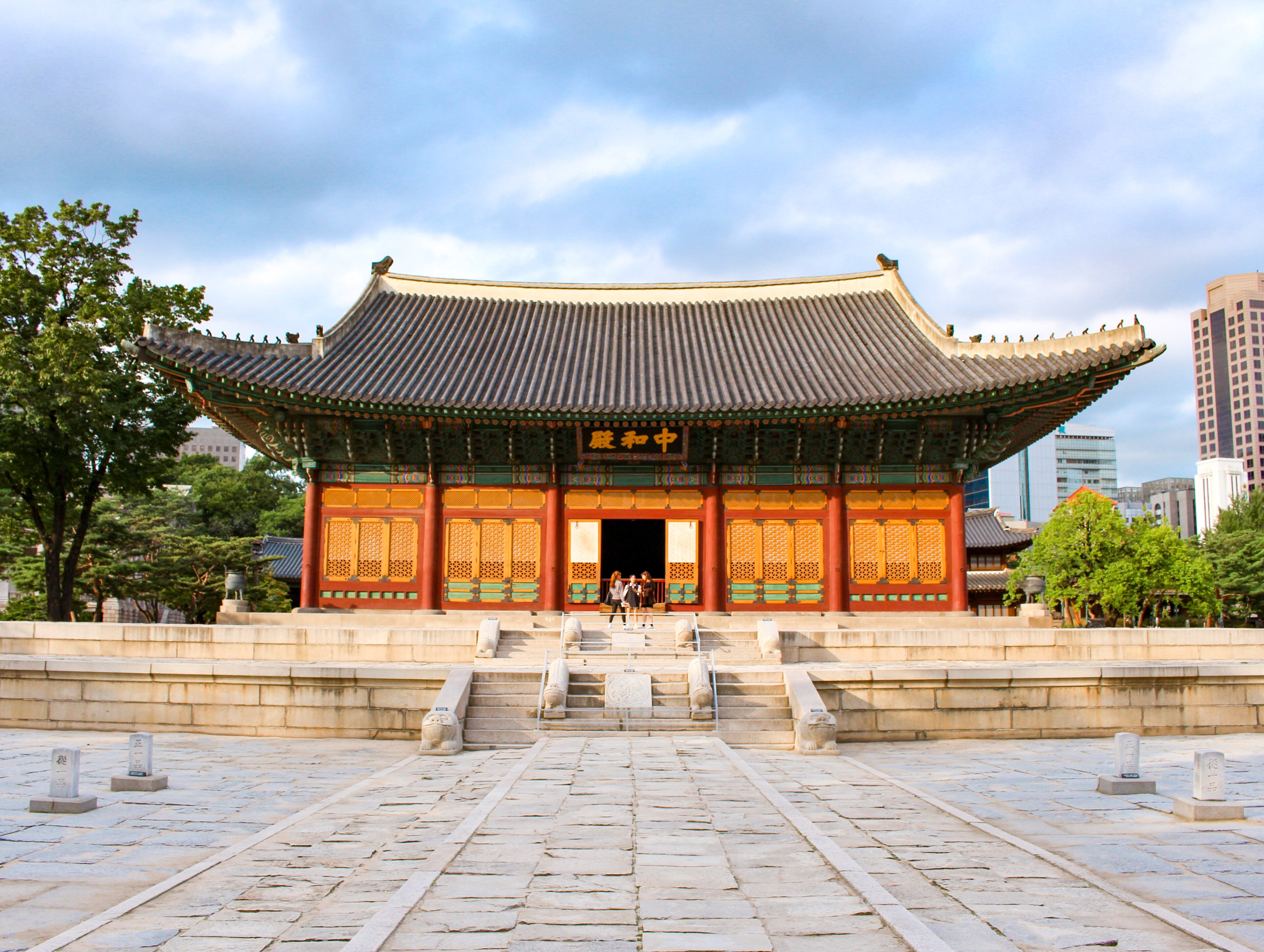
Why Seoul is Perfect for Your Celebration
- World-class international airport (ICN) with direct flights from across Asia, Europe, and North America
- Diverse venue portfolio — from grand hotel ballrooms and rooftop terraces to traditional hanok courtyards and riverside event spaces
- Spring cherry blossoms (April–May) and autumn foliage (September–October) create naturally stunning backdrops
- Sophisticated local vendor ecosystem: experienced wedding planners, K-beauty stylists, high-end caterers, and AV production teams
- Iconic cultural landmarks — Gyeongbokgung Palace, Bukchon Hanok Village — offer unique pre-event photography and cultural experiences
- Excellent intra-city transport (metro, taxis, private coaches) makes guest logistics straightforward even for large groups
Compare Seoul with Other Top Destinations
Frequently Asked Questions
Is Seoul a good destination for an international wedding?
Yes. Seoul is particularly well-suited to international weddings with globally dispersed guest lists. Incheon International Airport offers direct connections from most major cities across Asia, Europe, and North America, making travel straightforward for guests. The city's luxury hotel infrastructure, experienced wedding vendor ecosystem, and the option to incorporate Korean cultural elements — hanbok, palace backdrops, traditional ceremonies — give celebrations here a genuinely distinctive character.
What guest group sizes can Seoul venues realistically accommodate?
Seoul's venue inventory covers a wide range. Intimate gatherings of 30–80 guests are well-served by boutique hotel spaces, hanok courtyards, and private dining venues. Mid-size events of 100–500 guests are the sweet spot for most major hotel ballrooms. Large-scale events of 500–1,500+ guests can be accommodated at the city's major convention-linked hotel properties and purpose-built convention centres, particularly in the Gangnam and COEX area.
What is the best time of year to hold a celebration in Seoul?
April–May and September–October are the strongest windows. Spring brings cherry blossoms and mild temperatures ideal for outdoor elements; autumn delivers vivid foliage and similarly comfortable conditions. Both seasons offer low humidity and reliable weather. June–August (monsoon season) and December–February (sub-zero winter) are the periods to avoid for event planning, as both create significant logistical and comfort challenges.
How do guests typically get from the airport to Seoul's event venues?
Incheon International Airport is connected to central Seoul by the AREX express train, which reaches Seoul Station in approximately 43 minutes — a smooth, reliable option for individual guests. For group transfers, private coach hire is commonly arranged by event coordinators. Taxis and ride-hailing apps are also widely available. Gimpo Airport, closer to the city, handles domestic and some short-haul regional arrivals.
What kinds of venues are available for events in Seoul?
Seoul offers genuine variety: grand hotel ballrooms (particularly in Gangnam and central Seoul), rooftop terraces with Han River or city skyline views, traditional hanok courtyards for smaller intimate ceremonies, riverside outdoor spaces in the Han River parks, and large convention-linked event halls for corporate-scale gatherings. The range covers both modern luxury aesthetics and traditional Korean cultural settings.
Is Seoul safe for international guests attending a wedding or event?
Yes. Seoul consistently ranks among Asia's safest major cities, with very low crime rates. International guests can move around independently — including late at night in entertainment districts — with a high degree of confidence. The city's metro system is well-lit, clearly signposted in English, and operates until late, making independent guest movement straightforward.
How mature is Seoul's wedding and event vendor ecosystem for international clients?
Very mature. Seoul has a long-established culture of elaborate weddings, producing a competitive market of experienced planners, photographers, florists, and stylists. K-beauty bridal makeup and hair artists are internationally recognised. Major hotel catering teams regularly handle large-scale international events. For smaller independent vendors, English proficiency can vary, so working with a bilingual local coordinator is strongly advisable for international clients.
Do international guests need a visa to attend an event in Seoul?
It depends on nationality. South Korea has visa-free agreements with a large number of countries — including most EU nations, the US, UK, Australia, and many Asian countries — for stays up to 30–90 days. However, guests from certain countries will require advance visa arrangements. Event planners should communicate visa requirements clearly to all international guests well ahead of the event date.
What cultural experiences can be built into a Seoul event itinerary for guests?
Seoul offers rich options: hanbok (traditional Korean dress) experiences, guided tours of Gyeongbokgung and Changdeokgung palaces, visits to Bukchon Hanok Village, K-food tasting tours, traditional tea ceremonies, and performances of Korean music and dance. These can be organised as pre-wedding day activities, post-event excursions, or integrated into the event programme itself to give international guests a genuinely distinctive cultural experience.
How does Seoul's spring cherry blossom season affect event planning?
Cherry blossom season (typically late March to mid-April) is one of Seoul's most visually spectacular periods and a genuinely strong backdrop for celebrations. However, it is also one of the city's busiest tourism periods — hotel availability tightens significantly, and preferred properties book up well in advance. Couples planning a spring event should begin venue and accommodation bookings at least 9–12 months ahead to secure first-choice options.
What is local transport like for moving a large guest group around Seoul during an event?
Excellent. Seoul's metro system is one of the world's most extensive, reaching all major hotel districts, venue areas, and cultural sites. For group movements, private coach hire is well-organised and commonly used for wedding and corporate event logistics. Taxis are plentiful and metered. For events spanning multiple days, a dedicated transport coordinator managing group shuttles between accommodation, venues, and excursion sites is standard practice among experienced Seoul event planners.

Ready to explore venues in Seoul?
Seoul: Destination Wedding & Event Venues in South Korea
◆Seoul is South Korea's capital and one of Asia's most capable event destinations — best suited to cosmopolitan weddings, corporate conferences, brand activations, and milestone celebrations. Its primary vibe is chic and contemporary, layered with genuine cultural depth from Joseon-era palaces and traditional hanok architecture. Spring (April–May) and early autumn (September–October) are the standout seasons, offering mild weather and spectacular natural scenery. The city is exceptionally well-connected internationally via Incheon International Airport, and its internal transport infrastructure makes guest logistics straightforward. Hospitality standards are world-class, and the local vendor ecosystem is mature and internationally experienced.
Seoul at a Glance
| Category | Detail |
|---|---|
| Best For | Destination Weddings, Corporate Events, Brand Activations, Milestone Celebrations & Festivals |
| Primary Vibe | Chic & Cosmopolitan |
| Other Vibes | Cultural & Heritage, Modern & Urban, Romantic (seasonal) |
| Best Season | Spring (Apr, May, Sep, Oct) |
Why Choose Seoul?
- Exceptional international air access: Incheon International Airport consistently ranks among the world's best-connected and most efficient airports, with direct routes from across Asia, Europe, the Middle East, and North America — making it genuinely easy for a globally dispersed guest list to converge on Seoul.
- Unmatched venue diversity: Seoul offers a range of event spaces that few Asian cities can match — grand hotel ballrooms in Gangnam, rooftop terraces with Han River views, traditional hanok courtyards in Bukchon, palace grounds near Gyeongbokgung, and purpose-built convention centres like COEX — all within a single city.
- Seasonal natural beauty: Spring cherry blossoms along the Han River and in parks like Yeouido, and vivid autumn foliage across Bukhansan and the palace grounds, provide naturally photogenic backdrops that require no additional decoration investment.
- Mature, internationally experienced vendor ecosystem: Seoul has a deep pool of wedding planners, event production companies, K-beauty stylists, florists, and high-end caterers who regularly work with international clients and multilingual guest groups.
- Seamless intra-city logistics: Seoul's metro system is one of the world's most extensive and reliable, supplemented by taxis, private coaches, and ride-hailing apps — making it straightforward to move large guest groups between hotels, venues, and cultural excursions.
- Cultural richness as an event asset: Pre-event or post-event programming — hanbok experiences, palace tours, K-food tastings, DMZ visits — gives international guests a genuinely distinctive cultural itinerary that elevates the overall celebration experience.
Which Celebrations Work Best in Seoul?
- Destination Weddings: Seoul suits couples who want a cosmopolitan, culturally layered wedding — particularly those with international guest lists who value excellent flight connectivity, luxury hotel accommodation, and the option to blend modern elegance with traditional Korean aesthetics (hanbok, hanok settings, palace backdrops).
- Corporate Events & Conferences: The city is a natural fit for large-scale corporate gatherings. COEX and major hotel convention centres offer substantial capacity, and Seoul's status as a global technology and business hub lends credibility and prestige to corporate events held here.
- Brand Activations & Product Launches: Seoul's position at the centre of global K-culture — fashion, beauty, music, food — makes it a particularly powerful location for brand events targeting Asian or globally trend-conscious audiences.
- Milestone Celebrations (Anniversaries, Reunions, Milestone Birthdays): The combination of luxury hotel infrastructure, fine dining, and unique cultural experiences makes Seoul well-suited to high-end private celebrations for groups of any size.
- Festivals & Cultural Events: Seoul's existing calendar of public festivals — lantern festivals, cherry blossom events, cultural performances — can be woven into a private event programme, adding authentic local colour without additional production cost.
Venues & Event Spaces
Seoul's event venue landscape is genuinely diverse across both style and scale. At the top end, the city's major luxury hotels offer grand ballrooms capable of hosting several hundred to over a thousand guests, with full in-house catering, AV infrastructure, and dedicated event coordination teams. Many of these properties also have smaller, more intimate private dining rooms and garden terraces suited to pre-wedding dinners or executive gatherings.
Beyond hotel ballrooms, Seoul offers a range of more distinctive settings. Traditional hanok (Korean wooden house) courtyards in neighbourhoods like Bukchon and Jeonju-style cultural villages provide an authentically Korean aesthetic for smaller, more intimate ceremonies. Rooftop venues and sky-lounge spaces — particularly in Gangnam and Yeouido — offer dramatic city skyline and Han River views that are especially striking at dusk and after dark. The Han River parks themselves host outdoor events during the spring and autumn seasons, with the natural scenery serving as a backdrop.
For large-scale corporate or convention-style events, purpose-built convention centres adjacent to major hotels provide exhibition halls, breakout rooms, and auditorium-style spaces with professional technical infrastructure. Private villa-style properties and boutique cultural spaces in areas like Seongbuk-dong and Hannam-dong cater to smaller, more exclusive gatherings where privacy and a curated aesthetic are priorities.
Best Time to Celebrate
The curated best season for Seoul events is Spring (April, May) and early Autumn (September, October) — and both windows have distinct, concrete advantages beyond simply "pleasant weather."
April and May bring Seoul's famous cherry blossom season, with trees along the Han River, in Yeouido Park, and around the palace grounds in full bloom typically from late March through mid-April, transitioning into fresh green foliage through May. Temperatures are mild (typically 10°C–22°C), humidity is low, and outdoor events are genuinely comfortable. Natural light during this period is soft and flattering, making it a particularly strong season for photography-focused celebrations.
September and October offer Seoul's autumn foliage season — the city's hillside parks and palace grounds turn vivid shades of red, orange, and gold, providing a dramatically different but equally photogenic backdrop. Temperatures are again mild and comfortable (typically 12°C–24°C), and the lower humidity compared to summer makes outdoor events far more pleasant for guests.
The seasons to avoid are clear. June through August brings Seoul's monsoon season (known locally as jangma), with heavy, unpredictable rainfall, high humidity, and temperatures regularly exceeding 30°C — conditions that make outdoor events risky and can disrupt logistics. December through February brings genuinely cold winters, with temperatures frequently dropping below 0°C and occasional snowfall — manageable for indoor events but challenging for any outdoor component and potentially off-putting for guests travelling from warmer climates. March is a transitional shoulder month — temperatures are rising but can still be cold and windy, and cherry blossoms are not yet reliably in bloom — making it a less predictable choice compared to April.
Getting There & Local Connectivity
Seoul is served by Incheon International Airport, one of Asia's premier international hubs, located approximately 60 km west of central Seoul. The airport offers direct connections to most major cities across Asia, as well as long-haul routes to Europe, North America, the Middle East, and beyond — making it genuinely accessible for international guest lists without requiring complex multi-leg journeys for most travellers. A second airport, Gimpo International Airport, handles primarily domestic routes and some short-haul regional flights, and is located much closer to the city centre.
The AREX (Airport Railroad Express) connects Incheon Airport directly to Seoul Station in central Seoul in approximately 43 minutes (express service), making the airport transfer smooth and predictable even for large groups. From Seoul Station, the city's extensive metro network — one of the world's largest and most reliable — reaches virtually every major hotel district, venue area, and cultural site. Taxis are plentiful, metered, and generally affordable. Private coach hire for group transfers is well-organised and commonly used for wedding and corporate event logistics.
For guests travelling domestically within South Korea, Seoul Station is the hub of the KTX high-speed rail network, connecting the capital to Busan, Daegu, Daejeon, and other major cities in under two to three hours — making it feasible for Korean domestic guests to travel in on the day of an event without requiring overnight accommodation.
Local Vendor & Hospitality Ecosystem
Seoul's hospitality and event vendor ecosystem is among the most developed in Asia. The city has a long-established culture of elaborate wedding ceremonies — Korean weddings are traditionally significant social events — which has produced a deep, competitive market of wedding planners, florists, photographers, videographers, and stylists who are experienced in managing complex, multi-day celebrations.
K-beauty expertise is a genuine differentiator: Seoul's bridal hair and makeup artists are internationally recognised, and many studios in areas like Gangnam and Hongdae specifically cater to international clients with multilingual staff. Catering options range from traditional Korean banquet cuisine to international fine dining, with major hotel kitchens capable of producing large-scale multi-course meals to a consistently high standard.
Event production companies in Seoul are well-equipped for technically demanding events — large-format LED installations, live streaming, simultaneous interpretation, and high-end AV production are all readily available. The city's status as a global technology hub means that cutting-edge event technology (immersive experiences, digital activations) is more accessible here than in many other Asian event destinations.
Language can be a consideration: while English proficiency is generally good among hospitality professionals in major hotels and established event companies, it is less consistent among smaller independent vendors. Working with a local event coordinator who can bridge language and cultural expectations is strongly advisable for international clients.
Pros & Things to Consider
Why Seoul Works Well
- World-class international airport connectivity — genuinely easy for global guest lists
- Exceptional venue diversity across styles, scales, and aesthetics
- Spring and autumn seasons offer naturally stunning, photogenic backdrops
- Mature, internationally experienced wedding and event vendor ecosystem
- Very safe city with low crime rates — guests can move around independently with confidence
- Excellent digital infrastructure — fast internet, seamless mobile connectivity throughout the city
- Rich cultural programming options for guest itineraries (palaces, hanbok, K-food, entertainment districts)
Things to Consider
- Monsoon season (June–August): Heavy rainfall and high humidity make this period genuinely unsuitable for outdoor events and can complicate logistics — the best seasons are specific and should be planned around carefully.
- Winter cold (December–February): Sub-zero temperatures are a real deterrent for guests from warmer climates and eliminate outdoor event options almost entirely.
- Language barrier for smaller vendors: Outside major hotels and established event companies, English proficiency is variable — independent coordination support is advisable for international clients.
- Distance from Incheon Airport to city centre: The approximately 60 km transfer, while smooth via AREX, adds meaningful travel time for guests arriving on tight schedules — particularly relevant for multi-day events with staggered arrivals.
- Visa requirements: South Korea has visa-free agreements with many countries, but guests from certain nations will require advance visa arrangements — this needs to be communicated clearly to international guests well ahead of the event date.
- Peak season demand: Cherry blossom season (late March–April) is one of Seoul's busiest tourism periods — hotel availability tightens and advance booking lead times for preferred properties are longer than at other times of year.
When Seoul May Not Be the Right Fit
- Outdoor-focused events in summer: If the celebration concept centres on outdoor ceremonies or garden receptions and the dates fall between June and August, Seoul's monsoon rains and high humidity create genuine operational risk — a different season or destination would be more reliable.
- Guests primarily from a single nearby region with limited Seoul flight access: While Incheon is exceptionally well-connected globally, guests travelling from certain smaller cities in South or Southeast Asia may face indirect routing — worth checking for the specific guest origin profile before committing.
- Celebrations requiring a tropical or beach setting: Seoul is an inland, four-season city — it offers no beach, coastal, or tropical environment. Couples or planners whose vision is fundamentally tied to a seaside or resort-island aesthetic will find Seoul a poor match regardless of season.
- Very small, ultra-private gatherings seeking seclusion: Seoul is a dense, busy metropolis — while private venues exist, the city's urban energy is ever-present. Those seeking a genuinely secluded, nature-immersed celebration away from city life may find Seoul's character at odds with that vision.