
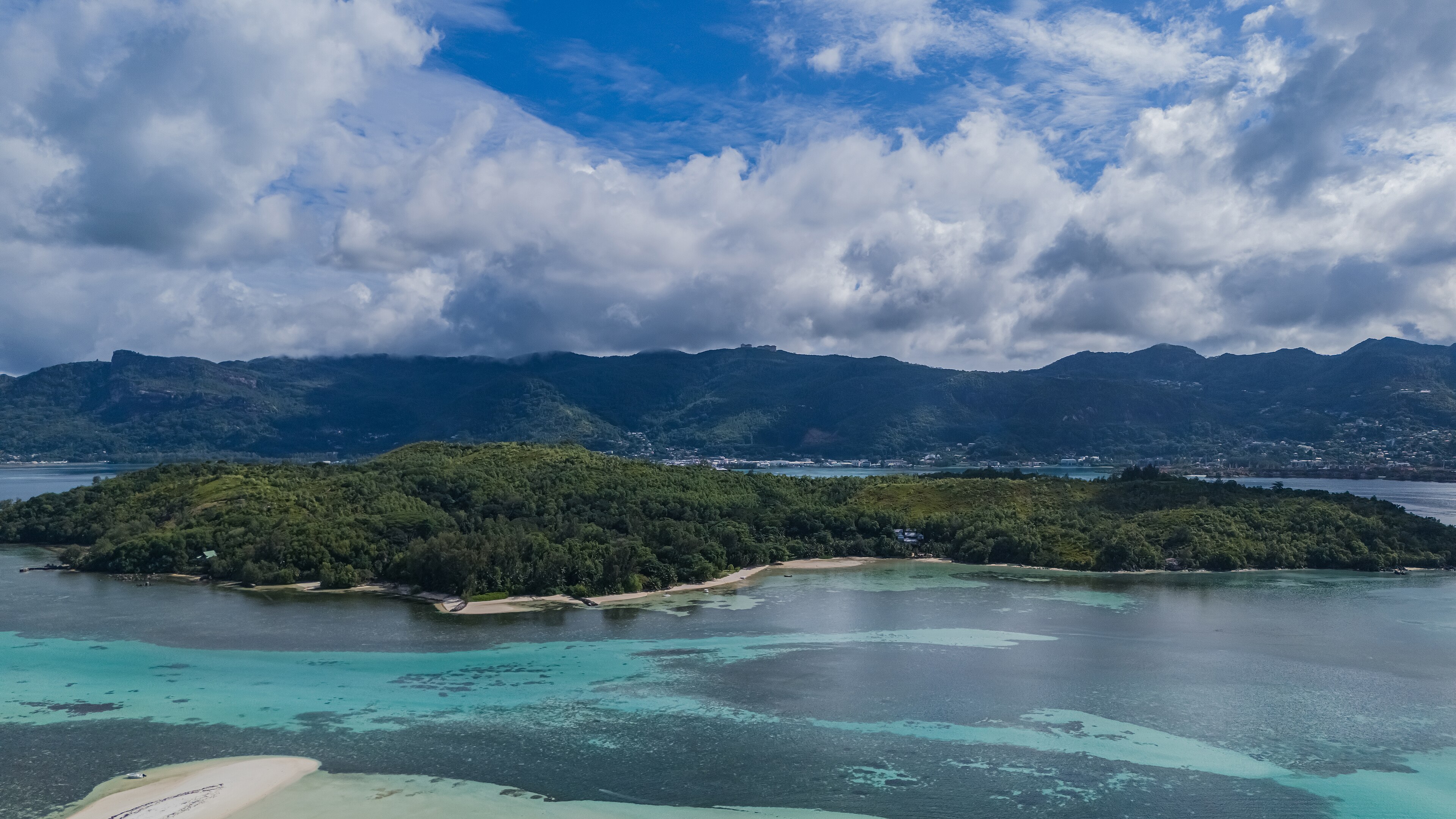
Why Cerf Island is Perfect for Your Celebration
- Naturally private island setting — no day-trippers or public crowds during your event
- Sainte Anne Marine National Park surroundings offer snorkelling, glass-bottom boat rides and marine experiences for guests
- Pristine white-sand beaches serve as ready-made ceremony backdrops with zero decoration required
- Dry season (Apr, May, Oct, Nov) delivers calm seas and clear skies perfectly suited to outdoor beach ceremonies
- Extremely limited accommodation capacity ensures events remain intimate and exclusive by design
- Short boat transfer from Mahé keeps the island feel without requiring a long domestic flight

Compare Cerf Island with Other Top Destinations
Frequently Asked Questions
Is Cerf Island a good destination for a small destination wedding?
Yes. Cerf Island is particularly well-suited to intimate destination weddings, typically for groups under 60 guests. Its private island setting within a protected marine national park, pristine beaches, and naturally secluded atmosphere make it one of the more distinctive small-wedding environments in the Indian Ocean region. The trade-off is that scale is genuinely limited — it is not suited to large celebrations.
How do guests actually get to Cerf Island?
Guests fly into Seychelles International Airport (SEZ) on Mahé, which has direct international connections from major hubs including Dubai, Doha, and Paris. From Mahé, a road transfer to an east-coast jetty is followed by a short boat ride — typically around 10 to 20 minutes — to Cerf Island. There is no rail network in Seychelles; all ground movement is by road and boat.
What is the best time of year to hold an event on Cerf Island?
The best months are April, May, October, and November — the two inter-monsoon dry season windows. These periods bring calmer seas, lower humidity, reduced rainfall, and clearer skies, all of which are important for outdoor beach events and for the boat transfer from Mahé. The northwest monsoon (Dec–Mar) and southeast trade wind season (Jun–Sep) both introduce meaningful weather and sea-condition risks.
What kinds of event spaces are available on Cerf Island?
Event spaces are entirely outdoor or semi-open — beachfront areas, natural clearings, and open-air dining terraces associated with the island's boutique resort. There are no enclosed ballrooms or large banquet halls. Temporary structures such as canopies and floral arches are typically brought in for ceremonies and receptions. This makes the island ideal for al fresco celebrations but unsuitable for events requiring climate-controlled indoor space.
How many guests can realistically be accommodated for an event on Cerf Island?
Cerf Island's accommodation and event infrastructure is suited to small groups — generally up to around 50 to 60 guests for a combined stay-and-celebrate arrangement. For larger groups where some guests stay on Mahé and transfer by boat for the event, numbers can be slightly higher, but logistics become considerably more complex. The island is not designed for large-scale events.
Do guests need to stay on Cerf Island itself, or can they stay on Mahé?
Both options are workable. Guests who stay on Cerf Island enjoy the full immersive experience, but capacity is limited. Many event groups arrange for the couple and closest family to stay on the island while other guests stay on Mahé and transfer by chartered boat for the event. This requires careful scheduling around sea conditions and transfer timing, and is best coordinated by an experienced local planner.
Are there activities for guests beyond the wedding or event itself?
Yes. The Sainte Anne Marine National Park surrounding Cerf Island offers snorkelling, glass-bottom boat excursions, reef exploration, and nature walks on the island itself. These activities are a genuine draw for guests and make a multi-day stay feel well-rounded rather than purely event-focused. The marine environment is actively conserved, so the reef and wildlife quality is generally high.
How mature is the local vendor and event planning ecosystem for celebrations on Cerf Island?
Specialist vendors — florists, photographers, caterers, planners — are based on Mahé and regularly work on Cerf Island and other nearby islands. The Seychelles hospitality industry is oriented toward the international luxury and destination wedding market, so experienced professionals are available. The key consideration is that all equipment and supplies must be transported by boat, which adds logistical complexity and makes early planning and longer lead times essential.
What are the main logistical challenges of planning an event on Cerf Island?
The primary challenges are the multi-stage guest journey (international flight + road transfer + boat), the boat-only access for all equipment and supplies, limited on-island connectivity (Wi-Fi and mobile coverage are restricted), and the absence of enclosed backup spaces if weather turns. Working with a planner experienced in Seychelles island events and building in contingency time for sea-condition variability are the most important mitigation steps.
Is Cerf Island suitable for a corporate retreat or incentive event?
Yes, for small senior teams. The island's exclusivity, natural setting, and marine park activities make it a genuinely distinctive choice for a high-end corporate off-site or incentive trip. The scale constraint — typically under 60 participants for a stay-based event — is actually an asset for this format, where intimacy and memorability matter more than capacity. Technical production requirements should be kept modest given the boat-access logistics.
Are there any environmental or conservation rules that affect events on Cerf Island?
Yes. Cerf Island sits within the Sainte Anne Marine National Park, a protected area with rules around waste management, noise levels, and activities that could disturb the reef or wildlife. Event planners must work within these constraints from the outset — they are manageable and well-understood by experienced local operators, but they do affect choices around music volume, lighting, waste disposal, and the use of certain decorative materials such as balloons or non-biodegradable confetti.

Ready to explore venues in Cerf Island?
Cerf Island: Destination Wedding & Intimate Event Venues in Seychelles
◆Cerf Island is a small, protected island within the Sainte Anne Marine National Park, a short boat ride from Mahé, Seychelles. It is best suited to intimate, exclusive celebrations — particularly small destination weddings, honeymoon-adjacent gatherings, and private social events — where seclusion, natural beauty, and a genuinely remote tropical setting matter more than scale or urban convenience. The island's accommodation capacity is deliberately limited, making it inherently unsuitable for large guest lists but exceptionally well-matched to couples and hosts who want total privacy. The dry season months of April, May, October, and November offer the most reliable conditions for outdoor events. Accessibility requires international travel to Mahé followed by a short boat transfer, so guest logistics need careful coordination.
Cerf Island at a Glance
| Attribute | Detail |
|---|---|
| Best For | Intimate destination weddings, private social celebrations, honeymoon experiences, small corporate retreats |
| Primary Vibe | Peaceful & Secluded |
| Other Vibes | Tropical, Romantic, Exclusive, Nature-Immersive |
| Best Season | Dry Season (Apr, May, Oct, Nov) |
Why Choose Cerf Island?
- Genuine natural seclusion: Cerf Island sits within a protected marine national park, meaning the surrounding waters and reef ecosystems are conserved. There are no large resort complexes, no commercial beach clubs, and no day-trip crowds during a private event — the island's atmosphere is inherently exclusive.
- Pristine beachfront ceremony settings: The island's beaches are undeveloped and naturally photogenic, with soft white sand, clear turquoise water, and granite boulders characteristic of the Seychelles — a backdrop that requires minimal decoration and creates striking imagery.
- Marine park activities for guests: The Sainte Anne Marine National Park offers snorkelling, glass-bottom boat excursions, and reef exploration directly from the island's shores, giving guests meaningful activities beyond the event itself.
- Short transfer from Mahé: Unlike more remote Seychelles islands that require domestic flights, Cerf Island is accessible by a brief boat ride from Mahé, where Seychelles International Airport (SEZ) receives direct international flights. This keeps the island-escape feel without adding a domestic flight leg.
- Intimate scale by design: The island's limited accommodation means any event held here is naturally small and curated — a genuine advantage for couples who want their celebration to feel personal rather than hotel-packaged.
- Conservation-led environment: The island's protected status means the natural environment is actively maintained, so the lush tropical vegetation, birdlife, and reef health that make it visually exceptional are not degraded by over-tourism.
Which Celebrations Work Best in Cerf Island?
- Intimate destination weddings: Cerf Island is particularly well-suited to small wedding ceremonies and receptions — typically under 60 guests — where the couple prioritises a private, scenic, and emotionally resonant setting over a large ballroom or a high-capacity venue. The beach, the reef, and the tropical forest all serve as natural ceremony spaces.
- Private social celebrations: Milestone birthdays, anniversaries, and vow renewals translate exceptionally well to this setting. The island's seclusion means a small group can feel as though they have an entire tropical environment to themselves.
- Honeymoon-adjacent experiences: While not a standalone event type, many couples extend their wedding stay or plan a post-wedding retreat on Cerf Island, using the marine park and beach environment as the centrepiece of a private honeymoon experience.
- Small corporate retreats and incentive trips: For organisations seeking a genuinely distinctive and memorable off-site experience for a small senior team, Cerf Island's exclusivity and natural setting offer something that a standard hotel conference room cannot replicate. The scale constraint is actually an asset for this use case.
Venues & Event Spaces
Event infrastructure on Cerf Island is intentionally minimal and nature-integrated. The primary venue typology is a boutique island resort with beachfront bungalows and open-air dining and gathering spaces. Outdoor beach lawns and natural clearings serve as ceremony and reception areas, typically set up with temporary structures — canopies, floral arches, and lighting — that are removed after the event to preserve the environment. There are no large banquet halls, convention centres, or multi-function ballrooms on the island; the entire event experience is oriented around the outdoors and the natural landscape. This makes Cerf Island a strong fit for al fresco ceremonies, sunset beach receptions, and candlelit dinners under open skies, but it is not suited to events that require enclosed, climate-controlled ballroom space for large numbers of guests. Event planners working here typically coordinate closely with the island's resort team and bring in specialist vendors from Mahé for catering, floristry, and technical production.
Best Time to Celebrate
The curated best season for events on Cerf Island is the dry season: April, May, October, and November. These months represent the two inter-monsoon transition periods in the Seychelles, when neither the northwest nor the southeast monsoon is dominant. Practically, this means calmer seas (important for the boat transfer from Mahé and for any water-based guest activities), lower humidity than the wet season, reduced rainfall, and clearer skies that make outdoor ceremonies and photography significantly more reliable.
April and May mark the end of the northwest monsoon and the beginning of the calmer inter-monsoon period. Temperatures are warm but not oppressively so, and the transition brings settled weather that is well-suited to beach events. October and November similarly fall between the southeast trade wind season and the onset of the northwest monsoon, offering another window of calm, clear conditions.
The months to approach with caution are December through March (northwest monsoon), which bring heavier rainfall, higher humidity, and occasionally rough seas that can complicate boat transfers and make outdoor events unpredictable. June through September (southeast trade wind season) brings stronger winds and choppier waters around the island, which can affect guest comfort during transfers and outdoor receptions, and overcast skies reduce the visual quality of the setting that makes Cerf Island so distinctive. Neither monsoon period makes events impossible, but both introduce meaningful logistical and atmospheric risks that the dry season months avoid.
Getting There & Local Connectivity
All guests arrive via Seychelles International Airport (SEZ) on Mahé, which receives direct international flights from major hubs including Dubai, Doha, Paris, Nairobi, and several other international gateways. From Mahé, guests travel by road to one of the jetties on the island's east coast, then take a short boat transfer — typically 10 to 20 minutes — to Cerf Island. This two-stage journey is manageable for small groups but requires careful scheduling, particularly for guests arriving on different flights or at different times of day.
There is no rail network in Seychelles, so all ground movement on Mahé is by road. Taxis and private transfers are the standard mode of transport for event guests. Once on Cerf Island itself, the island is small enough to navigate on foot; there are no roads or vehicles on the island. This is part of its charm but also a practical consideration — guests with mobility limitations should be factored into logistics planning. For groups staying on Mahé and commuting to Cerf Island for the event, boat scheduling becomes a central coordination task, and event planners typically arrange dedicated charter transfers rather than relying on scheduled services.
Local Vendor & Hospitality Ecosystem
The vendor ecosystem directly on Cerf Island is very limited by design — the island's conservation status and small permanent population mean that most specialist event services are sourced from Mahé and transported across. Mahé, as the main island and capital of Seychelles, has an established hospitality and events industry oriented around the destination wedding and luxury tourism market. Florists, photographers, wedding planners, catering teams, and audio-visual production companies with experience in outdoor tropical events are available on Mahé and regularly work on Cerf Island and other nearby islands.
The key practical implication is that logistics coordination is more complex than at a mainland destination: equipment, food, staff, and supplies all need to be transported by boat, and timing must account for sea conditions and transfer schedules. Experienced local planners who know the marine park's operational rhythms are a significant asset. The island's own resort team typically plays a central coordinating role for events held on the property, and working closely with them from the earliest planning stages is strongly advisable. The overall hospitality standard in Seychelles is oriented toward the international luxury market, so service quality expectations are generally high, but the logistical complexity of island events means that lead times and contingency planning matter more here than at a conventional hotel venue.
Pros & Things to Consider
Why Cerf Island Works Well
- Genuinely private and secluded — no public beach access or uninvited foot traffic during events
- Naturally spectacular setting that reduces the need for heavy decoration or theming
- Protected marine park surroundings provide memorable guest experiences beyond the event itself
- Short boat transfer from Mahé keeps the remote-island feel accessible without a domestic flight
- Dry season windows (Apr–May, Oct–Nov) offer reliably calm seas and clear skies for outdoor events
- Conservation-maintained environment means the natural beauty is actively preserved, not degraded
Things to Consider
- Very limited guest capacity: The island's accommodation and event infrastructure is suited to small groups only — typically well under 100 guests. Larger celebrations cannot be accommodated without significant logistical complexity.
- Complex multi-stage travel for guests: International flights to Mahé plus a road transfer plus a boat transfer is a meaningful journey, particularly for older guests or those with mobility considerations.
- No enclosed event spaces: All event areas are outdoor or semi-open. Adverse weather — even outside the main monsoon months — can affect plans, and contingency arrangements are limited.
- Vendor logistics require specialist coordination: Everything from catering to floristry to audio-visual equipment must be transported by boat, adding planning complexity and lead time requirements.
- Limited connectivity on the island: Wi-Fi and mobile coverage on Cerf Island is limited compared to a mainland city hotel, which may matter for guests who need to stay connected during a multi-day event.
- Conservation constraints: The marine national park setting comes with environmental rules around waste, noise, and activity that event planners must respect — this is appropriate and manageable but requires awareness from the outset.
When Cerf Island May Not Be the Right Fit
- Large guest lists: If your celebration involves more than 50–60 guests, Cerf Island's accommodation and event space capacity will be a genuine constraint. A destination with larger resort infrastructure would serve a bigger group more comfortably.
- Guests with significant travel limitations: The combination of long-haul international flights, road transfers, and a boat crossing can be challenging for elderly guests, young children, or anyone with mobility or health considerations — a more accessible destination may be more appropriate.
- Events planned during monsoon or trade wind season: If your dates fall between December and March (northwest monsoon) or June and September (southeast trades), the risk of rough seas, heavy rain, and overcast conditions is meaningfully higher, and the outdoor-only nature of the venue makes weather disruption more consequential than at an indoor-capable venue.
- Events requiring extensive technical production: Large-scale audio-visual setups, elaborate stage structures, or complex catering operations that depend on reliable power, refrigeration, and equipment access are significantly harder to execute on a small island with no road access and boat-only logistics.