
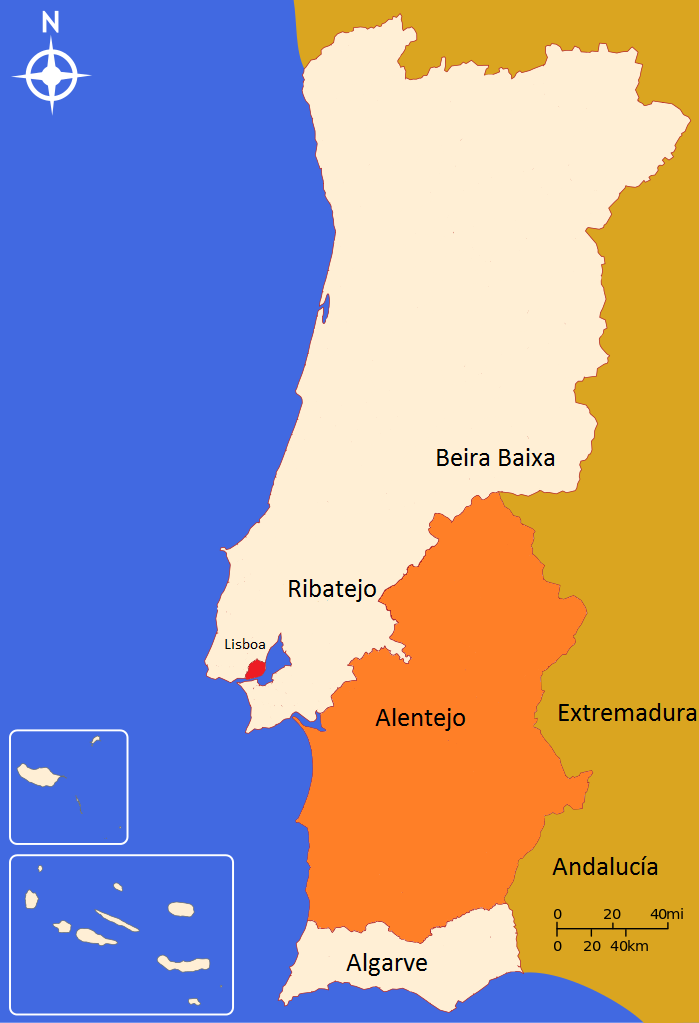
Why Alentejo is Perfect for Your Celebration
- Stunning quinta (estate) and vineyard venues with private grounds — ideal for exclusive buyouts
- Golden-hour landscapes of cork oak plains and olive groves create extraordinary photography backdrops
- World-renowned Alentejo wines and regional cuisine offer a genuinely memorable guest experience
- Medieval hilltop villages like Monsaraz and Marvão provide dramatic, historic ceremony settings
- Spring and early autumn deliver warm, dry days and cool evenings — near-perfect outdoor event conditions
- Relative seclusion from mass tourism ensures privacy and an unhurried, intimate atmosphere

Compare Alentejo with Other Top Destinations
Frequently Asked Questions
Is Alentejo a good destination for a destination wedding?
Yes, particularly for intimate and mid-sized weddings. Alentejo is one of Portugal's strongest destination wedding regions, offering private estate buyouts, world-class regional wine and food, and dramatic natural landscapes. It suits couples prioritising seclusion, authenticity, and a multi-day guest experience over urban scale or large ballroom capacity.
What guest group sizes do Alentejo venues realistically support?
Most Alentejo estate and quinta venues are best suited to groups of 30–200 guests. Some larger properties can accommodate up to 250 guests across indoor and outdoor spaces combined. The region is not well-matched to very large celebrations of 300 or more guests within a single venue — its strength lies firmly in the intimate-to-mid-size range.
How do guests typically get to Alentejo for a wedding or event?
Most guests fly into Lisbon's international airport, which is well-connected from across Europe and beyond. From Lisbon, Alentejo is typically a 1.5–2 hour drive. Coordinated private road transfers or hire cars are the standard approach, as public transport within the region is limited. Event planners should build guest transfer logistics into their planning from the outset.
What is the best time of year to hold a wedding or celebration in Alentejo?
April, May, June, September, and October are the strongest months. Spring brings wildflowers and comfortable temperatures; early autumn offers warm days, golden light, and the harvest season character of the vineyards. July and August are typically too hot for comfortable outdoor events, and winter months see reduced venue availability and cooler, wetter conditions.
What kinds of venues are available for events in Alentejo?
The dominant venue type is the rural estate — working wine quintas and historic herdades with private grounds, outdoor terraces, restored barn reception spaces, and on-site guest accommodation. Historic urban properties in towns like Évora (including converted convents and manor houses) offer a more formal heritage setting. Boutique village hotels in hilltop locations provide intimate options for smaller gatherings.
Can guests stay on-site at Alentejo event venues?
Yes, and this is one of the region's defining advantages. Many estate properties offer on-site accommodation — typically ranging from a handful of rooms to 20–40 keys — allowing the core wedding party or a close group of guests to stay within the venue itself. For larger guest lists, additional accommodation in nearby towns will need to be arranged and shuttle transfers organised.
How developed is the local wedding and events vendor ecosystem in Alentejo?
Alentejo has a well-established boutique vendor ecosystem built around a decade of international destination weddings. Most established estate venues work with experienced local coordinators, caterers, florists, and photographers. Specialist suppliers — large AV production, international entertainment — are typically sourced from Lisbon and brought in, which is standard practice and manageable with advance planning.
Is Alentejo suitable for corporate retreats and incentive travel events?
Yes. The combination of private estate accommodation, exceptional regional food and wine, outdoor activities (horse riding, hiking, vineyard tours), and genuine seclusion makes Alentejo a strong choice for small executive retreats and incentive groups. It works best for groups of up to around 50–80 participants seeking an authentic, off-the-beaten-path European experience.
What makes Alentejo's food and wine offering distinctive for a celebration?
Alentejo is one of Portugal's most celebrated wine regions, and many estate venues pour their own labels throughout events. Regional cuisine — slow-roasted meats, hand-crafted cheeses, olive oils, and traditional bread-based dishes — gives celebrations a genuinely distinctive culinary identity. Local caterers are typically skilled at both traditional feasts and contemporary European menus, and the food experience is consistently cited as a highlight by guests.
Are there any practical challenges to planning an event in Alentejo?
The main practical considerations are: coordinating road transfers for all guests (public transport is minimal in rural areas); the extreme summer heat in July–August if outdoor events are planned; and sourcing some specialist vendors from Lisbon. Mobile and internet connectivity can also be limited on more remote estates — worth verifying with individual properties if reliable connectivity is essential.
Is Alentejo safe for international guests travelling for a wedding or event?
Yes. Portugal consistently ranks among Europe's safest countries, and Alentejo specifically is a very safe, welcoming region with low crime rates. International guests — including solo travellers and families — generally find the region comfortable and easy to navigate, with English widely spoken at established hospitality properties.

Ready to explore venues in Alentejo?
Alentejo: Destination Wedding & Event Venues in Portugal's Vineyard Heartland
◆Alentejo is Portugal's largest and most rural interior region, best suited to intimate, private weddings, small corporate retreats, and social celebrations where seclusion, natural beauty, and authentic regional culture matter more than urban scale. Its primary vibe is peaceful and secluded — rolling cork oak plains, medieval hilltop villages, and working wine estates define the landscape. Spring (April through June) and early autumn (September and October) deliver the most comfortable outdoor conditions. Accessibility is straightforward via Lisbon's international airport, though guests will need coordinated road transfers once in the region. The destination sits at a mid-to-upper cost tier for Portugal, driven by exclusive estate buyouts and boutique luxury properties.
Alentejo at a Glance
| Category | Detail |
|---|---|
| Best For | Intimate weddings, elopements & micro-weddings, social celebrations, corporate retreats |
| Primary Vibe | Peaceful & Secluded |
| Other Vibes | Rustic-Luxe, Heritage, Vineyard Romance, Authentically Portuguese |
| Best Season | Spring (Apr, May, Jun, Sep, Oct) |
Why Choose Alentejo?
- Exclusive estate and quinta venues: Alentejo's working wine estates and historic farm properties can typically be booked on a full-buyout basis, giving hosts and guests a genuinely private, self-contained celebration environment that is rare in more urbanised destinations.
- World-class wine and regional cuisine: Alentejo is one of Portugal's most celebrated wine regions, and its food culture — slow-roasted meats, hand-crafted cheeses, olive oils, and bread-based traditions — gives every celebration a distinctive, memorable culinary identity that guests rarely forget.
- Dramatic, photogenic landscapes: The combination of golden plains, cork and olive groves, wildflower meadows in spring, and medieval stone villages produces extraordinary natural backdrops for ceremonies and photography without requiring elaborate decoration.
- Medieval hilltop villages as ceremony settings: Villages such as Monsaraz, Marvão, and Estremoz offer historic churches, castle ruins, and cobbled squares that lend a timeless, cinematic quality to ceremonies and pre-event gatherings.
- Genuine seclusion from mass tourism: Unlike Portugal's coastal hotspots, Alentejo remains relatively undiscovered by large-scale tourism, which means events here feel genuinely private and unhurried — a meaningful advantage for couples and hosts who value exclusivity.
- Manageable scale for intimate guest lists: The region's venue inventory is particularly well-matched to groups of 30–200 guests, where the intimacy of an estate setting is an asset rather than a limitation.
Which Celebrations Work Best in Alentejo?
- Intimate weddings and elopements: Alentejo is arguably at its strongest for small-to-medium weddings (typically 30–150 guests) where the couple wants a private estate, a distinctive regional identity, and a multi-day experience for guests rather than a single-evening ballroom event. The estate buyout model suits this format perfectly.
- Micro-weddings and elopements: The region's boutique heritage properties and smaller quintas are genuinely well-suited to very small ceremonies — even just the couple and a handful of witnesses — with the landscape providing all the drama needed.
- Social celebrations (milestone birthdays, anniversaries, family reunions): A private estate with accommodation, a pool, vineyards, and catering on-site is an ideal setting for a multi-day family or friend-group gathering. The self-contained nature of many properties means guests rarely need to leave the estate.
- Corporate retreats and incentive travel: Alentejo's combination of seclusion, high-quality food and wine, outdoor activities (horse riding, hiking, birdwatching), and boutique luxury accommodation makes it a strong choice for small executive retreats and incentive groups seeking an off-the-beaten-path European experience.
- Pre-wedding and post-wedding events: The region's relaxed pace and scenic countryside make it well-suited to welcome dinners, day-after brunches, and multi-day wedding weekends where guests are encouraged to explore the area between events.
Venues & Event Spaces
Alentejo's event venue landscape is dominated by rural estate properties — working wine quintas, historic herdades (large farm estates), and converted agricultural buildings that blend rustic stone architecture with contemporary comfort. These properties typically offer a combination of indoor reception halls (often in restored barns or manor houses), outdoor terraces and lawns, swimming pools, and on-site accommodation for guests, making them genuinely self-contained celebration environments.
Beyond the estate model, the region also offers historic urban properties in towns such as Évora — including converted convents and palaces that provide a more formal, heritage-rich setting with banqueting rooms and cloistered gardens. These suit couples who want the character of a medieval city alongside the Alentejo countryside experience.
For smaller, more intimate gatherings, boutique heritage hotels in hilltop villages provide characterful rooms, terraces with panoramic views, and a sense of stepping back in time. Outdoor ceremony spaces — whether a vineyard row, a castle terrace, or a wildflower meadow — are a defining feature of the Alentejo event experience, and most venues are designed with this in mind.
It is worth noting that Alentejo does not have large-scale convention centres or hotel ballrooms capable of hosting events of several hundred guests in a single space — the venue inventory is genuinely oriented toward intimate and mid-sized celebrations, and this is a deliberate characteristic of the destination rather than a gap.
Best Time to Celebrate
The curated best season for Alentejo events is Spring (April, May, June) and early Autumn (September, October), and the reasoning is specific to the region's climate and landscape character.
April and May are widely considered the most beautiful months in Alentejo. Wildflowers — including poppies, lavender, and cistus — carpet the plains, temperatures are warm but not oppressive (typically 18°C–26°C during the day), and evenings are comfortable for outdoor dining. The landscape is at its greenest and most photogenic.
June extends the spring window but temperatures begin climbing toward the upper 20s and occasionally low 30s by late June. It remains a strong month for events, particularly earlier in the month, and the long daylight hours (sunset after 9pm) are a genuine asset for outdoor ceremonies and golden-hour photography.
September and October bring the post-harvest period — the vineyards are active with grape picking in September, which adds a distinctive seasonal character to any celebration. Temperatures moderate from the summer peak back into the comfortable 20s, the light takes on a warm amber quality, and the landscape, while drier and more golden than spring, has its own dramatic beauty.
July and August are genuinely challenging for outdoor events in Alentejo. The region regularly records temperatures above 38°C and occasionally above 40°C — among the hottest conditions in mainland Europe. While some venues have shaded terraces and pools, planning an outdoor ceremony or reception in peak summer requires careful mitigation and is generally not recommended for guest comfort.
November through March brings cooler temperatures (often dropping to single digits overnight), increased rainfall, and a quieter, more subdued landscape. Many rural estate properties operate at reduced capacity or close for the season during this period. While an intimate indoor celebration is possible, the outdoor estate experience that defines Alentejo is significantly diminished.
Getting There & Local Connectivity
The primary international gateway for Alentejo is Lisbon's Humberto Delgado Airport, one of Europe's well-connected hubs with direct flights from across Europe, North America, and beyond. From Lisbon, the Alentejo region is typically a 1.5 to 2-hour drive depending on the specific destination within the region — Évora is among the closest major towns, while properties near Beja or the Spanish border are further.
Rail connections exist between Lisbon and Évora, though services are infrequent and the journey involves a change at Casa Branca, making it less practical for groups with luggage. For most event guests, coordinated road transfers — either private minibuses or a fleet of hire cars — are the standard and recommended approach. This is a logistical consideration that event planners should build into their guest communication and budget planning from the outset.
Within the region itself, public transport between towns and rural estates is minimal. Guests staying on-site at a buyout estate property will have little need for local transport, but those staying in nearby towns will require shuttle arrangements to and from the venue. This is a well-understood characteristic of rural estate events in Alentejo, and most experienced local event coordinators factor it in as standard.
Road quality on main routes (the A6 motorway from Lisbon to Évora and the IP2 south) is good. Smaller rural roads leading to individual estates can be narrow and unpaved in sections — worth noting for guests arriving in standard saloon cars rather than higher-clearance vehicles.
Local Vendor & Hospitality Ecosystem
Alentejo has developed a mature but boutique event vendor ecosystem over the past decade, driven largely by the growth of destination weddings from the UK, France, Germany, and Scandinavia. Most established estate venues work with a preferred or recommended list of local suppliers — florists, caterers, photographers, musicians, and wedding coordinators — who understand the specific logistical character of rural estate events.
Regional catering is a genuine strength. Alentejo's food culture is deeply rooted and distinctive — local caterers and estate kitchens are typically skilled at delivering large-format traditional feasts (açorda, migas, slow-roasted lamb and pork, regional cheeses and charcuterie) as well as more contemporary European menus. Wine service, naturally, is exceptional, with estates often pouring their own labels throughout the event.
For more specialist requirements — international DJs, large-scale floral installations, bespoke lighting rigs, or high-end audiovisual production — some suppliers will need to be sourced from Lisbon or Porto and brought in for the event. This is standard practice for the region and not a barrier, but it does require advance planning and coordination.
English-language communication with vendors and venue staff is generally good at established properties, particularly those with experience hosting international weddings. In smaller, more local businesses, Portuguese remains the primary working language, and having a bilingual local coordinator is a practical advantage.
Pros & Things to Consider
Why Alentejo Works Well
- Genuinely private, exclusive estate venues that can be fully bought out for a multi-day celebration
- Exceptional regional food and wine culture that elevates the guest experience without additional effort
- Stunning, photogenic landscapes across multiple seasons — wildflowers in spring, golden plains in autumn
- Medieval villages and historic architecture provide ceremony settings of real character and drama
- Relatively undiscovered by mass tourism, ensuring events feel exclusive and unhurried
- Strong existing ecosystem of experienced destination wedding vendors familiar with international couples
- Very safe destination with a stable, welcoming local culture and reliable infrastructure on main routes
Things to Consider
- Summer heat (July–August) is extreme and can make outdoor events genuinely uncomfortable or unsafe without significant mitigation
- Rural location means all guests require coordinated road transfers — this adds logistical complexity and cost that must be planned carefully
- Venue capacity is generally capped at the intimate-to-mid-size range; very large guest lists (300+) are difficult to accommodate within a single estate property
- Some specialist vendors (large AV production, international entertainment) must be sourced from Lisbon and transported in, requiring advance planning
- Mobile and internet connectivity can be limited on more remote rural estates — worth verifying with individual properties if reliable connectivity is essential for the event
- Winter months see reduced venue availability and a significantly different (less outdoor-friendly) landscape character
When Alentejo May Not Be the Right Fit
- Very large guest lists: If your celebration requires a single venue to seat and accommodate 300 or more guests comfortably, Alentejo's estate inventory is unlikely to meet that need without significant compromise — a larger urban destination would serve better.
- Peak summer outdoor events: Couples committed to an outdoor ceremony or reception in July or August should carefully consider the extreme heat conditions typical of Alentejo in those months — guest comfort and safety are genuine concerns.
- Guests with limited mobility or travel flexibility: The rural road transfers, unpaved estate driveways, and uneven cobbled village streets can present real challenges for elderly guests or those with mobility limitations — worth assessing honestly against your specific guest profile.
- Events requiring large-scale urban infrastructure: If the celebration concept depends on proximity to a city's nightlife, shopping, or large hotel blocks for overflow accommodation, Alentejo's rural character works against it — Lisbon or Porto would be more appropriate bases.