
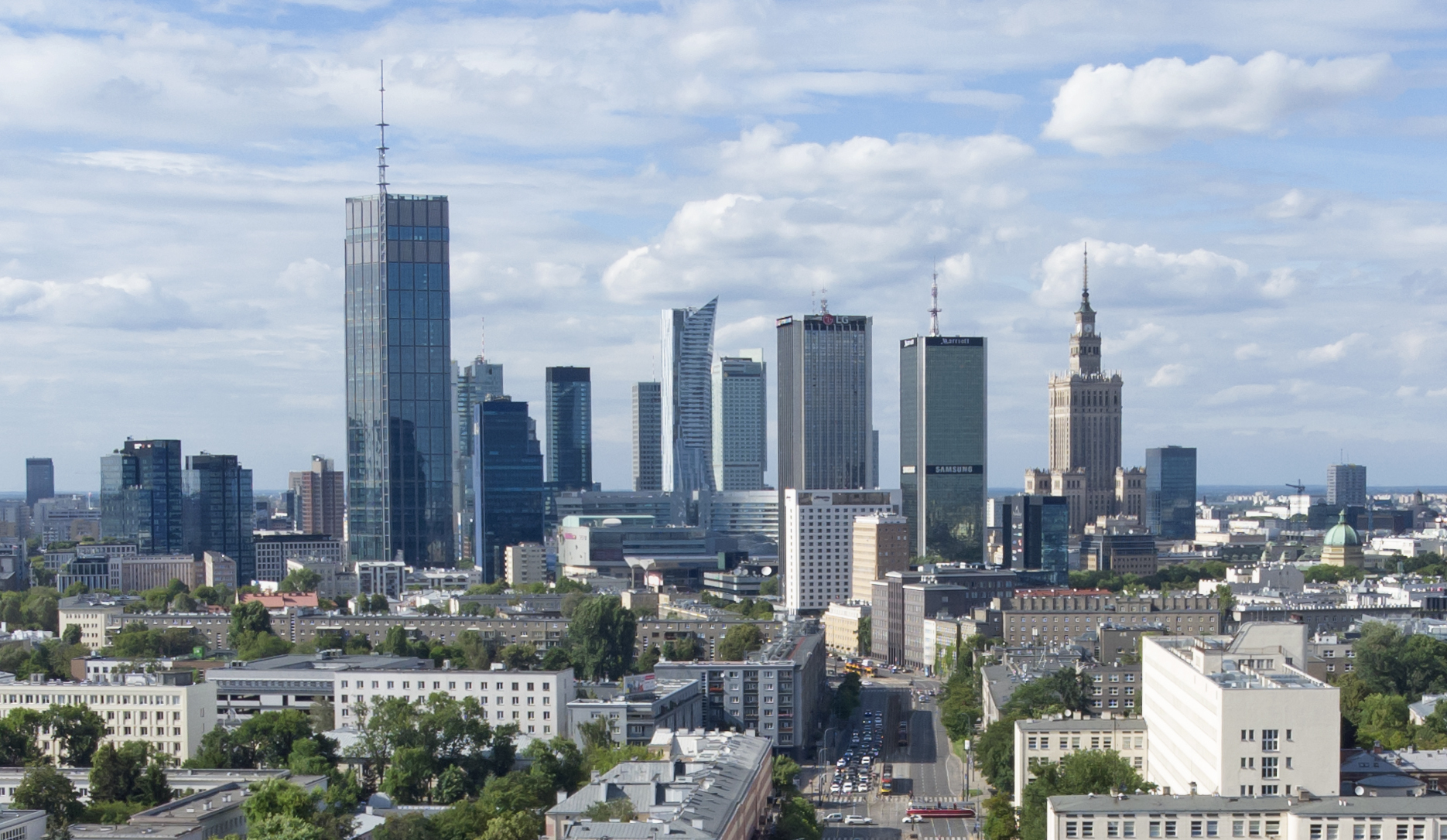
Why Warsaw is Perfect for Your Celebration
- Diverse venue portfolio — from reconstructed baroque palaces to sleek contemporary hotel ballrooms
- Excellent European air connectivity via Warsaw Chopin Airport (WAW), making international guest travel straightforward
- Long summer days (May–Sep) provide extended outdoor event windows with warm, pleasant temperatures
- Mature local vendor ecosystem: experienced caterers, florists, AV specialists, and event planners accustomed to large-scale international events
- UNESCO-listed Old Town provides a dramatic, photogenic backdrop for ceremonies and couple portraits
- Strong hotel inventory across multiple tiers ensures accommodation for varied guest-group sizes

Compare Warsaw with Other Top Destinations
Frequently Asked Questions
Is Warsaw a good destination for a wedding celebration?
Yes, particularly for couples who want a cosmopolitan European capital setting with genuine historic character. Warsaw's reconstructed Old Town, heritage hotel ballrooms along the Royal Route, and riverside outdoor spaces create a distinctive backdrop. The city works especially well for destination weddings with international guest lists, given its strong air and rail connectivity from across Europe.
What is the best time of year to hold an event in Warsaw?
May through September is the curated best season. This period offers warm temperatures (typically 14–26°C), long daylight hours — up to 16–17 hours in midsummer — and reliable conditions for both outdoor and indoor events. September remains pleasant with lower tourist density. Outside this window, cold temperatures and short days make outdoor celebrations impractical.
How easy is it for international guests to travel to Warsaw?
Very straightforward for guests coming from Europe. Warsaw Chopin Airport (WAW) operates direct flights to most major European cities, and Warsaw Central Station has direct rail connections to Berlin, Vienna, Prague, and Kraków. A direct rail link connects the airport to the city centre in around 20 minutes. Guests from outside Europe will typically need at least one connection.
What kinds of venues are available for events in Warsaw?
Warsaw offers genuine variety: grand heritage hotel ballrooms along the Royal Route with period architecture, large contemporary hotel convention centres suited to several hundred guests, converted industrial and loft-style spaces in districts like Praga and Powiśle, and riverside outdoor terraces popular for summer receptions. The city suits both formal gala-style events and more creative, festival-style briefs.
Can Warsaw accommodate a large guest list for a wedding or corporate event?
Yes. Warsaw has a strong hotel inventory across multiple tiers and neighbourhoods, meaning large groups can be accommodated across several centrally located properties. Several of the city's hotel convention centres can host receptions of several hundred guests in a single ballroom. Private coach transfers between accommodation and event venues are standard practice and straightforward to arrange.
How developed is Warsaw's event vendor ecosystem?
Highly developed. As a major European capital and frequent host of international conferences, Warsaw has an experienced pool of event planners, caterers, florists, AV and production companies, and photographers. English is spoken to a high standard across the hospitality sector, which significantly reduces coordination friction for international planners working with multilingual guest lists.
Is Warsaw suitable for corporate events and conferences?
Yes — this is arguably Warsaw's strongest event category. The city regularly hosts international summits, product launches, and large-scale conferences. Convention-capable hotels with full AV infrastructure, professional multilingual staff, and strong air connectivity make it a natural choice for companies bringing together European or global teams for multi-day corporate programmes.
What makes Warsaw's Old Town significant for event planning?
Warsaw's Old Town is a UNESCO World Heritage Site — a meticulously reconstructed baroque quarter that was almost entirely destroyed in World War II and rebuilt from historical records. Castle Square, the Royal Castle, and the Old Town Market Place provide a dramatic, historically resonant backdrop for ceremonies and couple portraits that is genuinely distinctive among European capitals.
What is getting around Warsaw like for a large event group?
Straightforward. Warsaw has two metro lines, an extensive tram and bus network, and widely available ride-hailing services. For event groups, private coach transfers between accommodation clusters and venues are the standard approach and easy to arrange. Most event-relevant areas — the Old Town, Royal Route, and city centre hotel district — are within a compact, manageable radius.
Are there outdoor event spaces available in Warsaw?
Yes, particularly during the May–September season. Riverside terraces along the Vistula are popular for summer cocktail receptions, and several hotel properties have outdoor terraces or garden areas. Warsaw's parks — including the grounds near Łazienki Palace — also host outdoor events. Outside the summer season, outdoor options become significantly less reliable due to cold and limited daylight.
Is Warsaw safe for international guests attending a celebration?
Yes. Warsaw is generally considered very safe by European capital standards. The city has a low rate of serious crime, a well-functioning public transport system, and a hospitality sector experienced in hosting international visitors. Standard urban awareness is advisable, as in any major city, but safety is not typically a concern raised by event planners or guests.

Ready to explore venues in Warsaw?
Warsaw: Destination Wedding & Corporate Event Venues in Poland's Capital
◆Warsaw is Poland's capital and largest city — a cosmopolitan, historically layered destination that suits corporate events, milestone celebrations, destination weddings, and cultural festivals particularly well. Its primary vibe is chic and cosmopolitan: a city that rebuilt itself from near-total wartime destruction and now pairs a UNESCO-listed reconstructed Old Town with a confident modern skyline. The best season for events runs from May through September, when long daylight hours and warm temperatures make both outdoor and indoor celebrations practical. Warsaw is well-connected by air and rail across Europe, making it genuinely accessible for international guest lists, and its hospitality infrastructure is mature and event-ready.
Warsaw at a Glance
| Category | Detail |
|---|---|
| Best For | Corporate Events, Destination Weddings, Festivals & Cultural Celebrations, Milestone Parties |
| Primary Vibe | Chic & Cosmopolitan |
| Other Vibes | Historic & Cultural, Urban & Elegant |
| Best Season | Summer (May, Jun, Jul, Aug, Sep) |
Why Choose Warsaw?
- Genuine venue diversity: Warsaw offers a rare combination of reconstructed baroque palace spaces, grand heritage hotels along the Royal Route, sleek contemporary hotel convention centres, and riverside outdoor settings — giving planners real choice across styles and guest capacities.
- Outstanding European connectivity: Warsaw Chopin Airport (WAW) operates direct flights to most major European cities and several intercontinental routes, while Warsaw Central Station connects the city by rail to Berlin, Vienna, Prague, and Kraków. Guests from across Europe can typically reach the city in under three hours.
- Long, luminous summer days: During the peak event season (May–September), Warsaw enjoys up to 16–17 hours of daylight, extending outdoor ceremony and reception windows well into the evening without artificial lighting.
- UNESCO Old Town as a photographic and ceremonial backdrop: The meticulously reconstructed Royal Castle, Castle Square, and Old Town Market Place provide a dramatic, historically resonant setting for ceremonies, couple portraits, and pre-event gatherings that few European capitals can match for sheer visual impact.
- Mature vendor and hospitality ecosystem: As a major European capital and frequent host of international conferences and summits, Warsaw has a well-developed network of experienced event caterers, florists, AV and production companies, and multilingual event coordinators.
- Strong accommodation inventory: The city's hotel stock spans multiple tiers and neighbourhoods, meaning large guest groups can be accommodated across several properties within easy reach of a central event venue, without guests needing to travel far.
Which Celebrations Work Best in Warsaw?
- Corporate Events & Conferences: Warsaw is arguably at its strongest for corporate gatherings. The city regularly hosts international summits, product launches, and large-scale conferences. Its convention-capable hotels, professional AV infrastructure, and multilingual hospitality staff make it a natural fit for companies bringing together European or global teams.
- Destination Weddings: Couples seeking a European capital setting with genuine historic character — rather than a purely beach or countryside backdrop — will find Warsaw compelling. The Old Town, riverside promenades, and palace-adjacent venues create a distinctive aesthetic, and the city's restaurant and nightlife scene supports multi-day wedding programmes well.
- Festivals & Cultural Celebrations: Warsaw's own cultural calendar is dense in summer — music festivals, open-air cinema, and public events fill the city — making it an energetic backdrop for private celebrations that want to tap into that atmosphere. Private festival-style events in the city's parks and outdoor venues are increasingly popular.
- Milestone Parties & Anniversary Celebrations: The combination of elegant hotel ballrooms, fine-dining options, and the city's cosmopolitan energy makes Warsaw well-suited to significant birthday celebrations, anniversary dinners, and family reunion events for guests travelling from across Europe.
Venues & Event Spaces
Warsaw's event venue landscape is genuinely varied. At the top end, grand heritage hotels along the Royal Route — the historic boulevard connecting the Old Town to the Łazienki Palace park — offer ballrooms and salons with period architecture and high ceilings suited to formal ceremonies and gala dinners. Several of these properties have been operating as luxury hospitality venues for over a century and carry a sense of occasion that is difficult to replicate in purpose-built convention spaces.
The city centre also has a strong cluster of large-format contemporary hotel convention centres capable of hosting several hundred guests in a single ballroom, with full AV infrastructure, breakout rooms, and adjacent accommodation blocks — particularly well-suited to corporate events and large wedding receptions. Beyond hotels, Warsaw has a growing number of converted industrial and loft-style event spaces in districts like Praga and Powiśle, which suit more creative, festival-style briefs. Outdoor riverside terraces along the Vistula are popular for summer cocktail receptions and informal celebrations, particularly between June and August when the weather is reliably warm.
Best Time to Celebrate
The curated best season for Warsaw events runs from May through September, and this reflects the city's climate genuinely well. May brings mild temperatures (typically 14–20°C), longer days, and the city's parks and gardens at their most photogenic — cherry blossoms and chestnut trees in full bloom make outdoor ceremonies particularly attractive. June, July, and August are the warmest months, with average highs of 22–26°C and daylight lasting until 9–10 pm, which is practically significant for outdoor receptions and evening photography. September remains warm enough for outdoor events in the first half of the month, with the added benefit of lower tourist density and a slightly more relaxed city atmosphere.
Outside this window, the picture changes considerably. October sees temperatures drop quickly and rainfall increase, making outdoor elements unreliable. November through March is genuinely cold — temperatures regularly fall below zero, snowfall is common, and the short grey days (as few as 8 hours of daylight in December) make outdoor celebrations impractical and create a logistical burden for guests travelling in winter conditions. April can be pleasant but is characterised by unpredictable cold snaps and variable rainfall, making it a shoulder month rather than a reliable event window. Planners who need a winter event in Warsaw should plan entirely around indoor venues and factor in the possibility of weather-related travel disruption for guests.
Getting There & Local Connectivity
Warsaw Chopin Airport (WAW) is the city's primary international gateway, located approximately 10 km from the city centre and connected by a direct rail link (the SKM suburban railway) that reaches Warsaw Central Station in around 20 minutes. The airport handles a large volume of European routes and several intercontinental connections, making it genuinely convenient for guests arriving from across Europe, the Middle East, and beyond. A second airport, Warsaw Modlin, serves some low-cost carriers and is located further from the city — guests using Modlin should factor in a longer transfer time.
Warsaw Central Station sits in the heart of the city and is a major node on the European rail network, with direct international services to Berlin, Vienna, Prague, and Budapest, as well as frequent domestic high-speed connections to Kraków, Gdańsk, Wrocław, and Poznań. For guests travelling within Poland, rail is often the most comfortable and reliable option.
Within the city, Warsaw has an extensive public transport network — two metro lines, trams, and buses — that covers most event-relevant neighbourhoods efficiently. For large guest groups, private coach transfers between accommodation clusters and event venues are straightforward to arrange and are the standard approach for wedding and corporate event logistics. Ride-hailing apps operate widely and English-language support is generally available through hospitality staff.
Local Vendor & Hospitality Ecosystem
Warsaw's status as a major European capital means its event vendor ecosystem is well-developed and internationally experienced. The city has a strong pool of wedding planners and event management companies accustomed to working with international clients, multilingual guest lists, and cross-border logistics. Catering at the higher end of the market is genuinely strong — Warsaw has a thriving fine-dining scene, and many of the city's top restaurants and hotel kitchens have experience delivering large-format event catering to a high standard.
Floral design, AV and production, lighting, and entertainment vendors are plentiful and competitive. The city's regular hosting of international conferences and trade events means that technical production companies in particular are well-equipped and experienced. Photography and videography professionals with experience in both heritage and contemporary settings are widely available. English is spoken to a high standard across the hospitality sector, which reduces coordination friction for international planners significantly.
Pros & Things to Consider
Why Warsaw Works Well
- Exceptional European air and rail connectivity makes guest travel straightforward from most of the continent
- Genuine venue diversity — from baroque heritage ballrooms to modern convention centres and riverside outdoor spaces
- Long summer days (May–Sep) provide extended outdoor event windows and excellent natural light for photography
- Mature, internationally experienced vendor and hospitality ecosystem with strong English-language capability
- UNESCO Old Town and Royal Route provide a distinctive, photogenic setting unavailable in most modern European capitals
- Strong hotel inventory across multiple tiers allows large guest groups to be accommodated centrally
Things to Consider
- The event season is genuinely seasonal — outside May–September, cold temperatures and short days significantly limit outdoor options and can complicate guest travel
- Warsaw's aesthetic is urban and cosmopolitan rather than naturally scenic; guests expecting countryside, coastal, or mountain backdrops will not find them within the city itself
- The city centre can be busy with tourists and business travellers during peak summer months, which may affect venue availability and accommodation rates — early planning is advisable
- For very large outdoor events (several hundred guests in a garden or park setting), Warsaw's venue options are more limited than destinations with dedicated resort complexes or estate grounds
- Guests travelling from outside Europe may face longer journey times and fewer direct flight options compared to more globally connected hubs
When Warsaw May Not Be the Right Fit
- Outdoor-focused winter celebrations: If your event concept depends on outdoor ceremonies, garden receptions, or open-air dining, Warsaw between October and April is a genuinely poor fit — temperatures, daylight hours, and weather reliability all work against it.
- Guests primarily travelling from outside Europe: While Warsaw is well-connected within Europe, guests flying in from South Asia, Southeast Asia, or the Americas will typically face long journeys with at least one connection. A destination with stronger intercontinental air links may serve a globally dispersed guest list better.
- Events requiring large dedicated resort or estate grounds: Warsaw is a dense urban capital. If the brief calls for a sprawling private estate, a beachfront resort, or a countryside manor with extensive grounds exclusively for the event group, the city's venue inventory is not the strongest match — other European destinations offer this more readily.
- Celebrations seeking a purely natural or scenic landscape backdrop: Warsaw's appeal is urban, historic, and cultural. Couples or planners whose vision centres on mountains, coastline, vineyards, or open countryside will find the city's setting limiting, and a different European destination would be a more natural fit.