
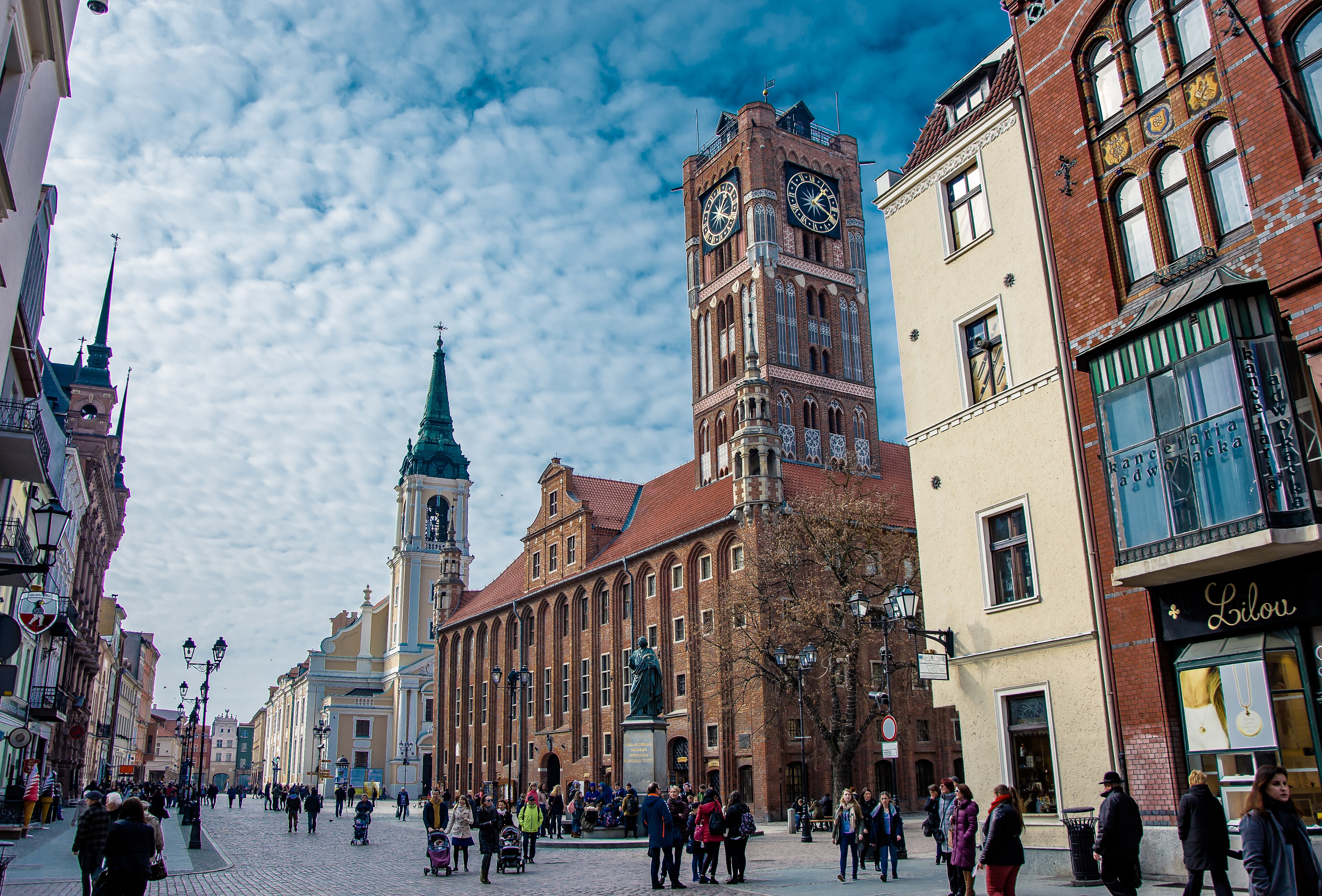
Why Toruń is Perfect for Your Celebration
- UNESCO World Heritage Gothic Old Town provides a uniquely dramatic, ready-made event backdrop
- Historic tenement houses, medieval courtyards, and riverside promenades offer diverse ceremony settings
- Summer months bring long daylight hours — ideal for outdoor receptions and evening riverside gatherings
- Intimate city scale suits mid-sized celebrations without the logistical complexity of a major metropolis
- Strong rail connections to Warsaw, Gdańsk, and Poznań make guest travel straightforward from across Poland
- Authentic Central European cultural character — gingerbread-making heritage, Copernicus associations — adds memorable local flavour to events

Compare Toruń with Other Top Destinations
Frequently Asked Questions
Is Toruń a good destination for a wedding?
Yes, particularly for couples seeking a culturally rich, heritage-driven setting. Toruń's UNESCO-listed Gothic Old Town provides a genuinely distinctive backdrop for ceremonies and receptions. It suits intimate to mid-sized weddings — typically up to around 200–300 guests — best, given the scale of the local venue and hospitality infrastructure. Couples who value architectural character and authentic European atmosphere over large-scale resort facilities will find it especially well-matched.
What is the best time of year to hold a celebration in Toruń?
Summer — May through September — is the clear optimal window. Warm temperatures, long daylight hours (sunset after 9 pm in June and July), and reliably drier conditions make outdoor courtyard ceremonies and riverside receptions genuinely viable. May and September offer pleasant shoulder-season conditions with fewer tourists. Outside this window, the continental winter (November–March) brings sub-zero temperatures and grey skies that make outdoor event elements impractical.
How do guests typically travel to Toruń?
Rail is the most practical option for guests travelling from within Poland — Toruń Główny station has direct connections to Warsaw, Gdańsk, Poznań, and Bydgoszcz, with Warsaw journeys typically taking two to three hours. International guests generally fly into Warsaw Chopin Airport and continue by train. The nearest regional airport is in Bydgoszcz, roughly 50 km away, with a more limited route network than Warsaw.
What kinds of event spaces are available in Toruń?
The most characterful spaces are within or adjacent to the Old Town — riverside hotels with banqueting rooms, restored historic tenement buildings with private reception halls, and outdoor courtyards suited to summer ceremonies. More conventional hotel conference and banqueting facilities exist in the central districts for events prioritising capacity. The venue inventory is generally best matched to events in the 50–300 guest range.
How easy is it for a large guest group to get around Toruń once they arrive?
Quite straightforward for moderate-sized groups. The Old Town is compact and largely walkable, so guests can typically move between ceremony venues, reception spaces, and hotels on foot. For transfers from the railway station or airport, taxis and ride-hailing services are available. Groups requiring coordinated transfers can arrange local coach or minibus hire through regional operators.
Are local wedding and event vendors available in Toruń?
Yes, a local vendor ecosystem exists — including florists, photographers, musicians, and catering professionals — and the city's hotels have experience hosting private celebrations. For highly specialised requirements such as large-scale production, international cuisine specialists, or multilingual destination wedding planners, it is common to supplement with vendors from Warsaw, Gdańsk, or Poznań. This is manageable but worth factoring into planning timelines.
What makes Toruń culturally distinctive as an event destination?
Several things set it apart: its UNESCO-listed Gothic Old Town is one of the best-preserved medieval urban ensembles in Europe; it is the birthplace of astronomer Nicolaus Copernicus; and it has a centuries-old gingerbread-making tradition — Toruń's <em>pierniki</em> are among Poland's most famous. These elements can be woven into event catering, guest experiences, and local excursions to give celebrations a genuinely memorable cultural identity.
Can Toruń accommodate a large wedding of 400 or more guests?
This is where the destination has real limitations. The local venue and accommodation inventory is most comfortably suited to events up to around 200–300 guests. Very large celebrations of 400 or more would likely find the infrastructure stretched — both in terms of single-venue capacity and the volume of nearby accommodation available to house a large guest group. Couples planning at that scale may find a larger Polish city better suited.
Is Toruń suitable for social celebrations other than weddings?
Yes. The city's heritage setting and manageable scale make it well-suited to milestone birthday celebrations, significant anniversaries, family reunion gatherings, and smaller corporate retreats or cultural events. The Old Town's walkability and the range of cultural experiences available — historic sites, local food traditions, riverside promenades — give non-wedding guest groups plenty to engage with around the formal event programme.
What should event planners be aware of when planning a summer event in Toruń's Old Town?
The Old Town is a popular tourist destination during summer, which means public spaces around venues can be busy, particularly in July and August. Event planners should factor this into scheduling — for example, timing outdoor ceremony or cocktail elements to avoid peak tourist hours — and coordinate with venues on access and crowd management. May and September offer a slightly quieter environment within the overall best-season window.

Ready to explore venues in Toruń?
Toruń: Destination Wedding & Cultural Event Venues in Poland
◆Toruń is a mid-sized Polish city on the Vistula River whose UNESCO-listed Gothic Old Town makes it one of Central Europe's most distinctive settings for cultural weddings, milestone celebrations, and social gatherings. Its primary vibe is Cultural & Timeless — brick Gothic churches, medieval market squares, and Hanseatic townhouses provide a naturally dramatic backdrop that requires little additional decoration. The city suits intimate to mid-sized events best, typically up to around 200–300 guests, given the scale of its hospitality infrastructure. Summer (May through September) is the clear optimal window, with long daylight hours and warm temperatures. International guests will typically route through Warsaw or Bydgoszcz, making rail travel the most practical arrival method for many.
Toruń at a Glance
| Category | Detail |
|---|---|
| Best For | Cultural Weddings, Social Celebrations, Milestone Events, Intimate Gatherings |
| Primary Vibe | Cultural & Timeless |
| Other Vibes | Romantic, Heritage, Riverside |
| Best Season | Summer (May, Jun, Jul, Aug, Sep) |
Why Choose Toruń?
- UNESCO World Heritage backdrop: Toruń's Old Town is one of the best-preserved Gothic urban ensembles in Europe, giving events an architectural grandeur that is genuinely rare and requires no artificial theming to achieve.
- Authentic cultural identity: The city's associations with astronomer Nicolaus Copernicus, its centuries-old gingerbread-making tradition, and its Hanseatic merchant heritage give celebrations a distinctive local narrative that guests remember long after the event.
- Riverside setting: The Vistula riverfront provides scenic promenades and open-air spaces that work particularly well for summer evening receptions and photography.
- Manageable city scale: Toruń is compact enough that guests can walk between the ceremony venue, reception space, and accommodation — reducing the logistical complexity that larger cities often impose on event planners.
- Strong rail connectivity: Direct train services to Warsaw, Gdańsk, Poznań, and Bydgoszcz mean that guests travelling from across Poland can reach the city without needing to fly, making domestic guest travel straightforward.
- Relatively uncrowded event calendar: Compared to major Polish cities, Toruń sees fewer large-scale international events competing for venue space and hospitality resources, which can translate into greater flexibility for event planners during the summer season.
Which Celebrations Work Best in Toruń?
- Cultural Weddings: Couples seeking a ceremony and reception steeped in genuine historical atmosphere — Gothic church interiors, cobblestone courtyards, candlelit medieval halls — will find Toruń particularly well-suited. The city's architecture does much of the aesthetic work naturally.
- Intimate Weddings & Elopements: The city's boutique hotel stock and characterful Old Town venues are especially well-matched to smaller guest lists of 30–120 people, where the intimacy of the setting becomes an asset rather than a limitation.
- Milestone Social Celebrations: Significant anniversaries, landmark birthdays, and family reunion gatherings benefit from Toruń's combination of memorable setting, walkable city layout, and the cultural programme the Old Town naturally offers guests between formal event moments.
- Corporate & Cultural Events: The city's university presence and cultural institutions make it a credible host for smaller corporate retreats, cultural symposia, and professional gatherings that benefit from a heritage-rich environment rather than a generic conference-hotel setting.
Venues & Event Spaces
Toruń's event venue landscape is defined primarily by its historic built environment. The most characterful spaces are found within or immediately adjacent to the Old Town — these include riverside hotels with banqueting facilities, restored tenement buildings with private dining and reception rooms, and hotel properties whose architecture reflects the city's Gothic and Baroque heritage. Outdoor courtyard spaces within the Old Town are available for summer receptions, and the Vistula riverfront offers scenic open-air settings for cocktail hours and informal gatherings.
The city also has more conventional hotel conference and banqueting facilities in its central districts, suited to events that prioritise capacity and logistical convenience alongside atmosphere. For larger outdoor receptions, some venues can arrange marquee or temporary structure setups in their grounds or adjacent green spaces during the summer months. Overall, the venue inventory is best suited to events in the 50–300 guest range; very large-scale events of 500 or more guests would find the local infrastructure stretched.
Best Time to Celebrate
The curated best season for Toruń is Summer: May through September, and this reflects the city's continental climate in a meaningful way. During these months, average daytime temperatures range from roughly 17°C in May to a peak of around 22–24°C in July and August, with long daylight hours — sunset in June and July falls after 9 pm — that make outdoor evening receptions genuinely viable and visually spectacular against the illuminated Gothic skyline.
May and September are particularly pleasant shoulder months within this window: temperatures are comfortable, the city is less crowded with summer tourists, and the light has a softer quality that works well for outdoor photography. July and August are the warmest and most reliably dry months, though they also coincide with peak tourist season in the Old Town, which can mean busier public spaces around the venue.
Outside this window, the picture changes significantly. October sees temperatures drop quickly and early frost is possible, making outdoor elements unreliable. November through March brings a genuine Central European winter — temperatures regularly fall below zero, grey skies are the norm, and the city's outdoor spaces lose much of their appeal for event purposes. April can be unpredictable, with cold snaps and rain still common. For any event with outdoor components — courtyard ceremonies, riverside cocktail hours, garden receptions — the May–September window is not merely preferred but practically necessary.
Getting There & Local Connectivity
The nearest commercial airport to Toruń is Bydgoszcz Ignacy Jan Paderewski Airport, located approximately 50 km from the city centre. This airport handles a modest number of domestic and European routes, so international guests travelling from outside Poland will typically need to connect through Warsaw Chopin Airport or another major European hub before continuing to Bydgoszcz or travelling onward to Toruń by rail.
Rail is generally the most practical and comfortable arrival method for guests coming from within Poland. Toruń Główny railway station sits close to the city centre and is served by direct connections to Warsaw, Gdańsk, Poznań, and Bydgoszcz, with journey times from Warsaw typically in the range of two to three hours depending on the service. For guests arriving from abroad, a Warsaw arrival followed by an onward train to Toruń is a well-established and reliable route.
Within the city, Toruń's compact Old Town is largely walkable, which is a genuine advantage for event groups — guests can move between ceremony venues, reception spaces, and hotels on foot without needing to arrange group transport for every movement. For transfers from the railway station or airport, taxis and ride-hailing services are available. For larger groups requiring coordinated transfers, local coach and minibus hire is available through regional operators.
Local Vendor & Hospitality Ecosystem
Toruń has a functioning local events and hospitality ecosystem, though it operates at a smaller scale than Poland's major event cities. The city's hotels — particularly those in and around the Old Town — have experience hosting weddings and private celebrations, and their in-house catering teams are generally capable of delivering Polish and broader European cuisine to a good standard for events of moderate size.
Local wedding and event vendors — florists, photographers, musicians, and catering specialists — are available, and the city's university population contributes to a creative services sector that includes design and styling professionals. However, for highly specialised requirements (destination wedding planners with multilingual capability, large-scale floral installations, international cuisine specialists, or very large audio-visual production teams), couples and planners may find it necessary to bring in vendors from Warsaw, Gdańsk, or Poznań. This is a common and manageable approach, but it is worth factoring into planning timelines and logistics.
The city's gingerbread-making heritage — Toruń's pierniki are among the most famous in Poland — offers a genuinely distinctive local catering and favour element that can add authentic cultural character to a celebration. Several local producers and workshops can incorporate this into event catering or guest gift packages.
Pros & Things to Consider
Why Toruń Works Well
- UNESCO-listed Gothic Old Town provides an architectural backdrop of genuine European distinction
- Compact, walkable city layout simplifies guest logistics between venues and accommodation
- Long summer daylight hours enable extended outdoor evening receptions
- Strong domestic rail connections make guest travel from across Poland straightforward
- Authentic local cultural identity — Copernicus heritage, gingerbread tradition — adds memorable character to events
- Relatively uncrowded event market compared to major Polish cities, offering planners more flexibility
Things to Consider
- International flight connectivity is limited — guests arriving from outside Europe will typically need at least one connection, and the nearest airport handles a modest route network
- Venue capacity is best suited to events up to around 200–300 guests; very large celebrations may find the local inventory insufficient
- Specialist event vendors for complex or high-production events may need to be sourced from larger Polish cities, adding logistical coordination
- The Old Town is a popular tourist destination in summer, meaning public spaces around venues can be busy during peak season — event planners should account for this in scheduling and crowd management
- Winter months are genuinely cold and grey, making the destination strongly seasonal for outdoor-component events
When Toruń May Not Be the Right Fit
- Very large guest lists: If your celebration requires venue capacity for 400 or more guests with full accommodation on-site, Toruń's current hospitality infrastructure is unlikely to meet that need comfortably without significant logistical complexity.
- Predominantly international guest lists: If the majority of your guests are travelling from outside Europe or from regions with no convenient connection to Bydgoszcz or Warsaw, the multi-leg journey to Toruń may create meaningful travel fatigue and accessibility challenges.
- Events planned for November through March: The city's continental winter makes outdoor elements — courtyard ceremonies, riverside receptions, garden cocktail hours — genuinely impractical during these months, and the overall atmosphere of the destination is significantly less appealing than in summer.
- Events requiring a large, mature destination-wedding vendor ecosystem: Couples who need a full suite of locally-based, highly experienced destination wedding specialists — multilingual planners, large-scale production teams, international cuisine caterers — may find Toruń's local vendor market requires supplementing from outside the city, which adds planning complexity.