
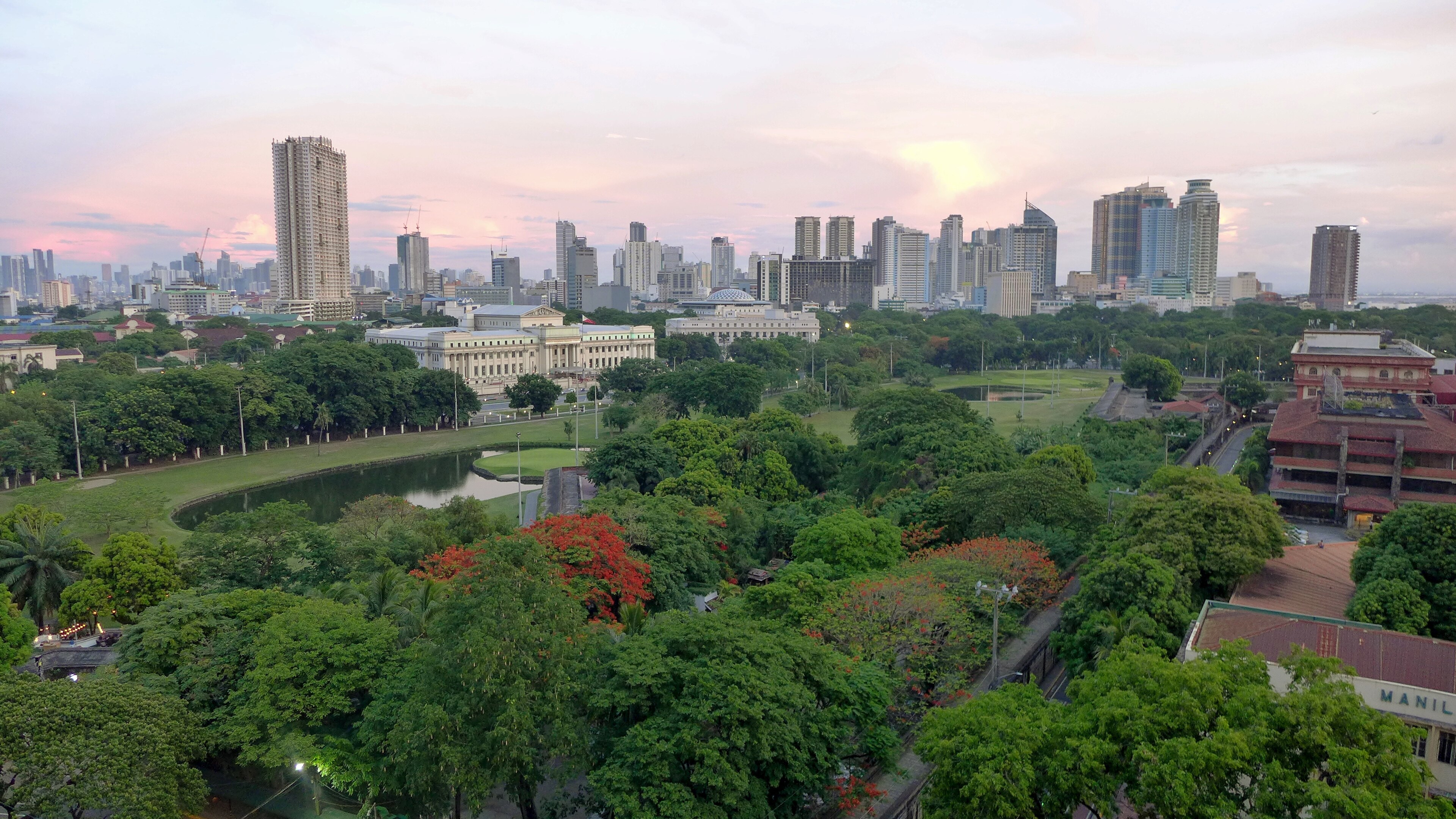
Why Manila is Perfect for Your Celebration
- Home to a dense cluster of internationally branded luxury hotels with grand ballrooms capable of hosting 500–1,500+ guests
- Ninoy Aquino International Airport (MNL) offers direct connections to major Asian, Middle Eastern, and Pacific cities — exceptional guest accessibility
- Mature, professional events industry with experienced wedding planners, caterers, florists, and AV production companies
- Iconic heritage churches in Intramuros and across Metro Manila provide dramatic, historic ceremony backdrops
- Dry season (Dec–May) delivers reliably clear weather, perfectly aligned with peak wedding and corporate event calendars
- Diverse venue typology — waterfront ballrooms, rooftop terraces, garden estates, and heritage colonial spaces — within a single metropolitan area

Compare Manila with Other Top Destinations
Frequently Asked Questions
Is Manila a good destination for a wedding?
Yes. Manila is one of the Philippines' strongest wedding destinations, combining heritage church ceremonies — particularly in the historic walled city of Intramuros — with grand hotel ballroom receptions. The city has a deeply experienced wedding vendor community, excellent international guest accessibility via Ninoy Aquino International Airport, and a wide range of venues that can accommodate both intimate and very large celebrations.
What is the best time of year to hold an event in Manila?
The dry season — January through May, and December — is the strongly recommended window. These months bring minimal rainfall, clear skies, and negligible typhoon risk. December and January are particularly popular, combining reliable weather with the festive energy of the Philippine holiday season. June through October should generally be avoided for outdoor events due to typhoon season.
How large a guest list can Manila venues realistically accommodate?
Manila can comfortably accommodate very large guest lists. Several of the city's grand hotel ballrooms and resort-casino complexes can host 1,000 to 2,000+ guests in a single space. For more intimate celebrations of 100–300 guests, there are also numerous mid-scale ballrooms and heritage venues. The city's venue inventory is broad enough to suit most scales of celebration.
How easy is it for international guests to travel to Manila?
Very easy. Ninoy Aquino International Airport (MNL) is one of Southeast Asia's major international hubs, with direct flights from cities across East Asia, Southeast Asia, the Middle East, Australia, and North America. Domestic guests from other Philippine cities also have frequent connections. Manila's airport accessibility is a genuine strength for events with a geographically diverse guest list.
What kinds of venues are available for events in Manila?
Manila offers a wide typology: grand hotel ballrooms in internationally branded luxury properties, heritage colonial venues in Intramuros, waterfront and garden spaces along Manila Bay, integrated resort-casino complexes with multiple event halls, and modern rooftop and skyline venues in BGC and Makati. Planners can typically find a space that matches both the event's scale and its desired aesthetic.
How should we handle guest transport within Metro Manila during an event?
Chartered coaches and hotel shuttle services are the most practical solutions for moving groups between the airport, hotels, and venues. Ride-hailing platforms also operate extensively across the city. The key planning consideration is Manila's significant road traffic — generous time buffers are essential, especially for airport transfers and inter-venue movements. Choosing accommodation close to the primary venue greatly simplifies logistics.
Is Manila suitable for corporate events and conferences?
Yes, particularly well-suited. The Makati CBD and Bonifacio Global City districts concentrate internationally branded hotels with large, technically equipped convention and ballroom facilities. Manila is a natural fit for regional conferences, product launches, incentive travel programs, and corporate galas. The city's English-language business culture and mature events industry make coordination straightforward for international corporate clients.
What makes Manila's local hospitality and vendor ecosystem strong for events?
Manila has a long-established culture of large, elaborate celebrations — particularly weddings and debut parties — which has built a deep, specialized vendor community. Experienced event planners, caterers, florists, photographers, and AV production companies are widely available. English is the business language across the sector, and Filipino hospitality culture is widely noted for its warmth and attentiveness — a genuine asset for guest experience.
Are there heritage or culturally significant ceremony venues in Manila?
Yes. The walled city of Intramuros contains several historic churches dating to the Spanish colonial era, including San Agustin Church — a UNESCO World Heritage Site — which is among the most sought-after ceremony venues in the Philippines. Beyond Intramuros, historic churches are found across Metro Manila's various districts, offering architecturally significant backdrops that are genuinely rare in Southeast Asia.
Can Manila accommodate multi-day wedding or event programs?
Yes, and it is well-suited to them. The city's integrated resort-casino complexes and large luxury hotels can host multiple event components — welcome dinners, ceremonies, receptions, and farewell brunches — across consecutive days, often within a single property or a small cluster of nearby venues. The mature local events industry is experienced in coordinating complex, multi-day programs.
What should we be aware of when planning an outdoor event in Manila?
The primary consideration is the typhoon season (June–October), during which outdoor events face genuine weather risk including heavy rain and potential travel disruptions. Even within the dry season, Manila's urban density means outdoor spaces are typically hotel terraces, garden lawns, or waterfront areas rather than open countryside. Air quality can also vary on high-traffic days, which is worth factoring into outdoor event planning.

Ready to explore venues in Manila?
Manila: Destination Wedding & Corporate Event Venues in the Philippines
◆Manila is the Philippines' capital and Southeast Asia's most event-ready metropolitan destination — a city defined by a Chic & Cosmopolitan vibe, an exceptionally mature events industry, and a hospitality infrastructure that can comfortably scale from intimate gatherings to large-scale celebrations of 2,000 or more guests. It suits weddings, corporate events, social galas, and festivals particularly well. The dry season (January through May, and December) is the clear window for outdoor and semi-outdoor events, while the city's grand indoor ballrooms make year-round planning possible for those willing to work around the typhoon calendar. Ninoy Aquino International Airport provides outstanding international connectivity, making Manila one of the most accessible event destinations in Asia for guests traveling from across the region and beyond.
Manila at a Glance
| Attribute | Detail |
|---|---|
| Best For | Weddings, Corporate Events, Social Galas, Festivals & Concerts |
| Primary Vibe | Chic & Cosmopolitan |
| Other Vibes | Heritage & Colonial, Waterfront & Urban, Festive & Celebratory |
| Best Season | Dry Season (Jan, Feb, Mar, Apr, May, Dec) |
Why Choose Manila?
- Unmatched venue density: Metro Manila concentrates an extraordinary number of internationally branded luxury hotels, heritage properties, resort-casino complexes, and dedicated event halls within a single metropolitan area — giving planners genuine choice across scale, style, and setting.
- Heritage ceremony backdrops: The walled city of Intramuros and historic churches across Metro Manila — some dating to the Spanish colonial era — provide dramatic, architecturally significant ceremony settings that are genuinely rare in Southeast Asia.
- World-class airport access: Ninoy Aquino International Airport (MNL) is one of the busiest airports in Southeast Asia, with direct connections to major hubs across Asia, the Middle East, North America, and the Pacific — making it straightforward for international guests to attend.
- Mature, professional events ecosystem: Manila has a deep bench of experienced wedding planners, event production companies, florists, caterers, and AV specialists who routinely handle large, complex, multi-day celebrations — the vendor infrastructure is genuinely sophisticated.
- Waterfront and skyline settings: The Manila Bay waterfront, the Entertainment City resort strip, and the Bonifacio Global City skyline offer visually striking backdrops for both outdoor ceremonies and indoor receptions with panoramic views.
- English-language ease: English is widely spoken and used as a business language throughout Metro Manila, which significantly reduces logistical friction for international guests and overseas event planners coordinating remotely.
Which Celebrations Work Best in Manila?
- Weddings: Manila is among the Philippines' strongest wedding destinations, combining heritage church ceremonies in Intramuros with grand hotel ballroom receptions. The city's Catholic cultural tradition means the local wedding industry is exceptionally well-developed, with vendors experienced in multi-day, multi-venue celebrations.
- Corporate Events & Conferences: The city's concentration of internationally branded hotels with large, technically equipped convention facilities makes it a natural fit for regional conferences, product launches, incentive travel programs, and corporate galas. BGC and Makati in particular are purpose-built for business-event hosting.
- Social Galas & Milestone Celebrations: Debut parties (a significant Filipino cultural tradition for 18th birthdays), anniversary galas, and family reunions are well-served by Manila's range of ballroom and banquet spaces, which can accommodate intimate gatherings of 100 as comfortably as large celebrations of 1,000+.
- Festivals & Large-Scale Events: Manila's resort-casino complexes and dedicated event arenas can host festivals, concerts, and brand activations at a scale that few other Philippine cities can match, with integrated accommodation, F&B, and production infrastructure on a single campus.
Venues & Event Spaces
Manila's event venue landscape is genuinely diverse. At the top end, international luxury hotel groups operate grand ballrooms capable of hosting several hundred to over a thousand guests, typically with in-house catering, dedicated event coordination teams, and full technical production support. The Entertainment City resort-casino strip along Manila Bay adds a distinct category: large-scale integrated resort complexes with multiple ballrooms, outdoor terraces, and entertainment facilities on a single campus — well-suited to multi-day celebrations or events that want accommodation, dining, and entertainment under one roof.
Heritage venues in and around Intramuros — the 16th-century walled city — offer a colonial architectural character that is architecturally distinctive and particularly popular for ceremony settings. Garden estates and waterfront venues along Roxas Boulevard and the CCP Complex provide outdoor lawn and terrace options with Manila Bay views, especially appealing during the dry season when the weather is reliably clear. Ortigas Center and Bonifacio Global City (BGC) add a modern, urban-skyline character, with rooftop venues and contemporary hotel ballrooms that suit corporate and social events with a sleek aesthetic. Across all these typologies, Manila's venue inventory is broad enough that planners can typically find a space that matches both the event's scale and its desired visual character.
Best Time to Celebrate
The dry season — January through May, and December — is the strongly preferred window for events in Manila, and particularly for any celebration with an outdoor or semi-outdoor component. During these months, rainfall is minimal, skies are generally clear, and the risk of typhoon disruption is negligible. December and January are especially popular for weddings and year-end corporate events, combining pleasant weather with the festive atmosphere of the Philippine holiday season.
February through April represents the heart of the dry season: reliably sunny, with low humidity relative to the rest of the year, making outdoor ceremonies and garden receptions genuinely comfortable. May begins to warm considerably and humidity starts to build toward the end of the month, but it remains within the dry season window and is still a workable choice for events that are primarily indoors.
The typhoon season, running roughly from June through October, is the period to avoid for any event with outdoor elements. The Philippines sits in one of the world's most active typhoon corridors, and Metro Manila is periodically affected by direct hits or the outer bands of major storms during this window — bringing heavy rainfall, flooding in low-lying areas, and potential disruption to travel. Even in years when Manila itself is not directly struck, the general weather pattern during these months involves frequent heavy rain, high humidity, and unpredictable conditions that make outdoor event planning genuinely risky. November is a transitional month: the typhoon season is winding down, but residual rain and occasional late-season storms mean it carries more weather risk than the confirmed dry-season months and is best treated as a shoulder period rather than a safe planning window.
Getting There & Local Connectivity
Ninoy Aquino International Airport (MNL) is one of Southeast Asia's major international gateways, with direct flights from cities across East Asia, Southeast Asia, the Middle East, Australia, and North America. For guests traveling from within the Philippines, Manila is also the country's primary domestic aviation hub, with frequent connections from Cebu, Davao, Iloilo, and other regional cities. This makes Manila genuinely easy to reach for both international and domestic guests — a meaningful advantage for large guest lists drawn from multiple origins.
Within Metro Manila, local transport for event groups requires some planning. The city's urban rail network (LRT and MRT lines) connects key districts but is not well-suited to large groups traveling together with luggage or formal attire. For event purposes, chartered coaches, hotel shuttle services, and ride-hailing platforms (which operate extensively across Metro Manila) are the practical solutions for moving guests between the airport, hotels, and venues. Traffic congestion is a genuine feature of Metro Manila's daily reality — particularly during peak hours — and event planners routinely build generous travel buffers into schedules, especially for airport transfers and inter-venue movements. Choosing accommodation close to the primary event venue significantly reduces logistical complexity for guests.
Local Vendor & Hospitality Ecosystem
Manila's events and hospitality ecosystem is among the most developed in Southeast Asia. The city has a long-established culture of large, elaborate celebrations — particularly weddings and debut parties — which has driven the growth of a deep, specialized vendor community. Professional wedding planners and event coordinators with experience managing multi-day, multi-venue programs are widely available. Catering at the hotel level is generally of high international standard, and independent catering companies with experience in large-scale Filipino and international cuisine are plentiful.
Floral design, event styling, photography, videography, live entertainment, and AV production are all well-represented by experienced local professionals. The city's strong English-language business culture means that communication with vendors is straightforward for international clients, and many Manila-based event companies are accustomed to working with overseas couples or corporate clients coordinating remotely. The hospitality culture in the Philippines — characterized by the concept of Filipino warmth and hospitality — is a genuine differentiator: guests consistently note the attentiveness and personal care that characterizes service at Manila's better hotels and event venues.
Pros & Things to Consider
Why Manila Works Well
- Exceptional international airport connectivity — one of Asia's busiest hubs, making guest travel straightforward from most origins
- Enormous range of venue types and scales, from intimate heritage spaces to grand resort-casino ballrooms for 2,000+
- Deeply experienced local events industry with specialists across every discipline — planners, caterers, florists, AV, entertainment
- English widely spoken across the hospitality and events sector, reducing friction for international clients and guests
- Dry season (Dec–May) provides a long, reliable weather window aligned with peak wedding and corporate event calendars
- Strong Filipino hospitality culture — service quality at the city's better properties is a genuine asset for guest experience
- Heritage church ceremony options in Intramuros and across Metro Manila are architecturally distinctive and culturally significant
Things to Consider
- Traffic congestion: Metro Manila's road traffic is among the heaviest in Southeast Asia — inter-venue transfers and airport pickups require generous time buffers, and poor scheduling can genuinely disrupt event timelines
- Typhoon season risk (Jun–Oct): Events planned during this window face real weather uncertainty, including potential travel disruptions for guests flying in — indoor-only events can manage this, but outdoor plans are genuinely risky
- Urban sprawl: Metro Manila is a very large, spread-out city — guests staying in different districts may face significant travel times between accommodation and venues if accommodation is not carefully coordinated
- Noise and urban character: Manila is a dense, busy metropolis — couples or planners seeking a quiet, secluded, or nature-immersed setting will find the city's character works against that aesthetic
- Air quality variability: As with many large Asian cities, air quality in Metro Manila can vary, particularly during dry-season months when dust and vehicle emissions are more concentrated — worth noting for outdoor events
When Manila May Not Be the Right Fit
- Outdoor-focused events during Jun–Oct: If the event concept depends heavily on outdoor ceremonies, garden receptions, or open-air settings, and the date falls within the typhoon season window, Manila's weather risk is a genuine concern that may make a different destination more appropriate.
- Guests with limited international flight access: While Manila is well-connected from most of Asia and the Middle East, guests traveling from parts of Europe, Africa, or South America may face long journeys with connections — for a guest list drawn primarily from those regions, a destination closer to them may reduce travel fatigue.
- Intimate, secluded, or nature-immersed celebrations: Couples seeking a private island, a jungle retreat, a mountain setting, or a genuinely secluded venue away from urban density will find Manila's metropolitan character a poor match — other Philippine destinations (or other countries) would serve that vision better.
- Events requiring a single, walkable venue cluster: Manila's size means that if the guest list is spread across multiple hotels in different districts, coordinating group movements can become logistically complex — destinations with a more compact, walkable event zone may be easier to manage for certain event formats.