
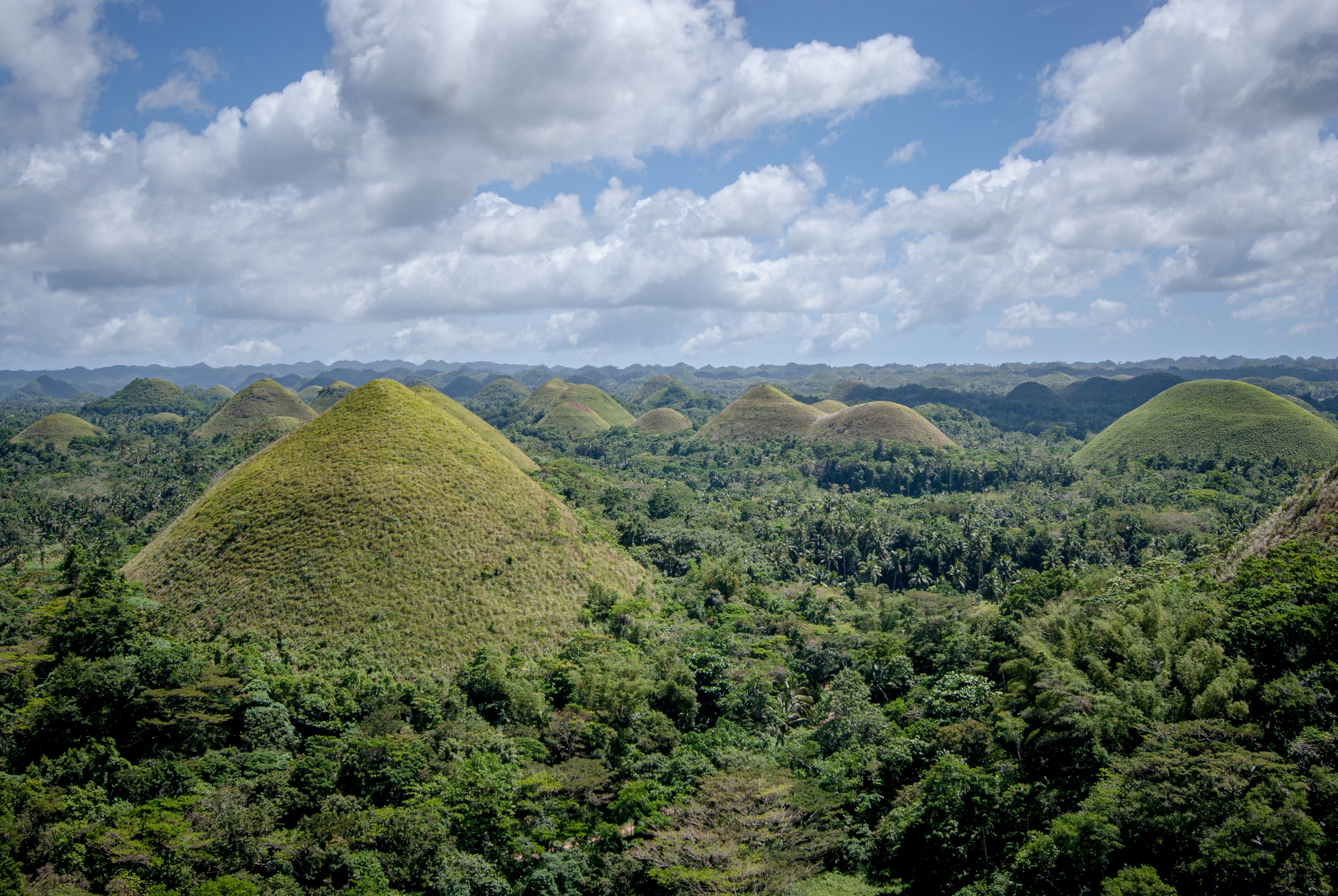
Why Bohol is Perfect for Your Celebration
- Iconic Chocolate Hills and pristine beaches create a one-of-a-kind wedding backdrop
- Beachfront and garden resorts offer intimate, private event settings
- Dry season (Jan–May, Dec) delivers reliably clear skies for outdoor ceremonies
- Warm Filipino hospitality and experienced local event vendors
- Bohol–Panglao International Airport enables direct domestic connections from Manila and Cebu
- Island exclusivity gives destination weddings a genuine 'escape' feel for guests

Compare Bohol with Other Top Destinations
Frequently Asked Questions
Is Bohol a good destination for a wedding?
Yes. Bohol is particularly well-suited to intimate destination weddings, typically in the range of 50–250 guests. The concentration of beachfront and garden resort venues on Panglao Island means couples can host the ceremony, reception, and guest accommodation within a short radius. The island's natural scenery — beaches, lush tropical landscapes, and the iconic Chocolate Hills nearby — creates a genuinely distinctive backdrop that sets it apart from standard hotel ballroom weddings.
What is the best time of year to hold a celebration in Bohol?
The dry season — January through May and December — is the optimal window. These months bring minimal rainfall, calm seas, and reliable sunshine, making outdoor ceremonies and receptions low-risk. January and February are particularly comfortable climatically. The wet season (June–November) coincides with the Philippine typhoon season and carries real weather and travel disruption risk for outdoor events.
How do guests get to Bohol for a destination event?
Most guests arrive via Bohol–Panglao International Airport (TAG), which handles direct domestic flights from Manila and Cebu City. An alternative is the fast inter-island ferry from Cebu City, which takes approximately two hours and runs multiple times daily. Guests from other Philippine cities typically connect through Manila or Cebu. Pre-arranged group transfers from the airport or ferry port are strongly recommended for event groups.
What kinds of venues are available for events in Bohol?
The primary venue types are beachfront resorts with outdoor ceremony lawns and sea-facing reception pavilions, garden and poolside event spaces within resort properties, and indoor banquet halls in Tagbilaran City for more formal or air-conditioned receptions. Some properties also offer riverside and inland nature settings along the Loboc River corridor for couples seeking a jungle-canopy atmosphere distinct from the beach aesthetic.
How large a guest list can Bohol venues realistically accommodate?
Most Bohol resort venues comfortably handle events in the 50–300 guest range. Some larger resort properties can stretch to around 400 guests for a reception. Very large gatherings of 500 or more guests may find the local venue inventory limiting — no single property is typically set up for that scale, and splitting across multiple venues adds coordination complexity.
Is accommodation readily available for a large guest group in Bohol?
Yes, for mid-scale groups. Panglao Island has a strong cluster of resort properties that can collectively accommodate a destination wedding guest group, particularly if accommodation is booked well in advance during the dry season. For very large groups (200+ rooms), a mix of properties will likely be needed, and early block-booking is essential given the island's overall room inventory.
What is local transport like for guests once they arrive in Bohol?
Local transport options include tricycles, multicabs, and private van hire. Bohol does not have the ride-hailing app density of a major city, so pre-arranged group transfers are strongly recommended for event guests. Most resort properties can coordinate airport and ferry port transfers. The drive between Tagbilaran City and the Panglao Island resort cluster takes roughly 20–30 minutes on well-maintained roads.
Are local event vendors in Bohol experienced with destination weddings?
Generally, yes. Bohol's decades as a major Philippine tourism destination have produced a local vendor base — including wedding coordinators, florists, photographers, and caterers — experienced in destination event delivery. Many resort properties have in-house event teams that manage end-to-end coordination. English is widely spoken across the hospitality sector, reducing communication friction for planning and on-the-day coordination.
What makes Bohol's catering and food offering distinctive for events?
Bohol's strongest catering asset is fresh seafood and Filipino cuisine — a genuine local advantage for events where food experience matters. Resort kitchens can typically deliver international menu options as well. Specialist international cuisine providers (dedicated Indian, Middle Eastern, or European caterers) are more limited locally and may need to be sourced from Cebu or Manila for events with specific culinary requirements.
Is Bohol suitable for non-wedding celebrations like birthdays or anniversaries?
Yes. Milestone birthday celebrations and romantic anniversaries are a natural fit for Bohol's island setting. The destination's intimate scale, beachfront resort venues, and genuine 'escape' character make it particularly well-suited to smaller, meaningful gatherings — a 40th or 50th birthday group, or a vow renewal for a close circle — where the experience of the destination itself is part of the celebration.
What should I be aware of when planning an outdoor event in Bohol?
The primary consideration is timing relative to the typhoon season. Events planned between June and November face real risk of heavy rainfall, strong winds, and disrupted guest travel — outdoor ceremonies during this window require robust contingency plans. Within the dry season, wind off the sea can be a factor for beach ceremonies, and most experienced local coordinators will advise on tent or canopy options as a standard precaution.

Ready to explore venues in Bohol?
Bohol: Destination Wedding & Celebration Venues in the Philippines
◆Bohol is a tropical island province in the Central Visayas region of the Philippines, best suited to intimate destination weddings, romantic anniversaries, and milestone birthday celebrations. Its primary vibe is romantic and dreamy — shaped by white-sand beaches, lush inland scenery including the iconic Chocolate Hills, and warm Filipino hospitality. The dry season (January through May and December) is the clear window for outdoor events, offering reliably clear skies and calm seas. Guest travel requires a domestic flight or inter-island ferry connection, making it a genuine destination experience rather than a quick city hop. The overall event ecosystem is well-developed for a mid-scale island destination, with a range of beachfront and garden resort venues capable of hosting intimate to moderately large gatherings.
Bohol at a Glance
| Category | Detail |
|---|---|
| Best For | Destination Weddings, Romantic Anniversaries, Milestone Birthdays, Intimate Celebrations |
| Primary Vibe | Romantic & Dreamy |
| Other Vibes | Nature-Immersed, Tropical Escape, Laid-Back Luxury |
| Best Season | Dry Season (Jan, Feb, Mar, Apr, May, Dec) |
Why Choose Bohol?
- Unmatched natural scenery: The Chocolate Hills, Panglao Island's white-sand beaches, and the Loboc River provide a genuinely distinctive visual backdrop that few island destinations in Southeast Asia can replicate — your event photographs will look unlike anywhere else.
- Beachfront and garden resort diversity: Panglao Island, just a short bridge-crossing from Tagbilaran, concentrates a strong cluster of resort properties with dedicated event lawns, beachfront ceremony spaces, and indoor banquet facilities, giving planners real flexibility in format and scale.
- Improved air connectivity: The relatively new Bohol–Panglao International Airport (TAG) handles direct domestic routes from Manila and Cebu, meaningfully reducing the travel burden for guests compared to older routing through Cebu City.
- Genuine island exclusivity: Hosting an event in Bohol gives guests a true destination experience — the island feel, the ferry crossings, the tropical environment — without requiring international travel, which keeps the logistics manageable for a Philippine-based guest list.
- Experienced local hospitality ecosystem: Bohol has been a major Philippine tourism destination for decades, meaning local vendors — caterers, florists, event coordinators, photographers — are accustomed to working with destination event clients and international-standard expectations.
- Dry season reliability: With six months of genuinely dry, low-humidity weather (January through May and December), Bohol offers a longer planning window than many tropical island destinations, reducing the risk of weather disruption for outdoor ceremonies.
Which Celebrations Work Best in Bohol?
- Destination Weddings: Bohol is particularly well-suited to intimate destination weddings of 50–250 guests. The combination of beachfront ceremony spaces, lush garden settings, and resort accommodation clustered on Panglao Island means couples can host the ceremony, reception, and guest accommodation all within a short radius — a significant logistical advantage for a multi-day celebration.
- Romantic Anniversaries & Vow Renewals: The island's inherently romantic character — sunsets over calm seas, private beach access, candlelit resort dining — makes it a natural fit for milestone anniversaries and vow renewal ceremonies, particularly for smaller, more intimate gatherings.
- Milestone Birthday Celebrations: A 30th, 40th, or 50th birthday celebrated in Bohol carries the novelty and memorability of a genuine island escape. Resort buyouts or dedicated event spaces can accommodate a close group of friends and family in a setting that feels genuinely special rather than a standard hotel ballroom.
- Corporate Retreats & Team Events: While not Bohol's primary identity, the island's resort infrastructure and range of outdoor activities (island-hopping, river cruises, wildlife encounters) make it a credible option for smaller corporate retreats seeking an experiential, team-bonding format rather than a conference-room setting.
Venues & Event Spaces
Bohol's event venue landscape is concentrated primarily on Panglao Island, connected to the Bohol mainland by a causeway and home to the province's strongest cluster of resort properties. The dominant venue type is the beachfront resort — properties with direct beach access, outdoor ceremony lawns facing the sea, and covered or semi-open reception pavilions that allow events to flow between indoor and outdoor spaces depending on weather.
Beyond pure beachfront settings, several resorts offer garden and poolside event spaces — lush tropical gardens with manicured lawns that work particularly well for daytime ceremonies and cocktail receptions. These settings tend to photograph beautifully against Bohol's natural greenery and are a popular choice for couples who want a tropical feel without the logistical complexity of a beach setup (sand, tides, wind).
In Tagbilaran City itself — Bohol's provincial capital — there are hotel-based indoor banquet halls and function rooms that suit more formal receptions or events requiring air-conditioned comfort throughout. These are generally more practical for larger guest counts or events where guests are less mobile.
For couples seeking something more distinctive, some properties offer riverside and inland nature settings — particularly along the Loboc River corridor — that provide a lush, jungle-canopy atmosphere quite different from the beach aesthetic. These are less common as dedicated event venues but can be arranged through resort partnerships and local operators for unique ceremony experiences.
Best Time to Celebrate
The dry season — January through May and December — is the clear optimal window for events in Bohol. During these months, rainfall is minimal, humidity is relatively lower than the wet season, and the sea conditions around Panglao are calm and clear. Outdoor ceremonies on the beach or in resort gardens carry a low risk of weather disruption, and the natural light during this period is particularly flattering for photography — golden-hour sunsets over the Bohol Sea are a genuine highlight of dry-season events.
January and February are among the most comfortable months climatically — temperatures are warm but not oppressive, and the northeast monsoon keeps conditions dry and breezy. March and April are slightly warmer and drier still, with April being one of the sunniest months of the year. May sits at the tail end of the dry season and can see the first hints of pre-monsoon humidity, but remains generally suitable for events. December is a popular month for destination weddings given the festive atmosphere and the return of dry conditions after the typhoon season.
The wet season (June through November) brings the southwest monsoon and, critically, the Philippine typhoon season. Bohol sits within the typhoon belt, and while not every year sees a direct hit, the risk of significant rainfall, strong winds, and disrupted ferry and flight connections during this period is real and should not be underestimated for event planning purposes. Outdoor events during these months carry meaningful weather risk, and even indoor events can be affected by guest travel disruptions if a typhoon passes through the region.
Getting There & Local Connectivity
The primary gateway for most guests is Bohol–Panglao International Airport (TAG), which handles direct domestic flights from Manila and Cebu City. For guests traveling from other Philippine cities, a connection through either Manila or Cebu is typically required. The airport's relatively recent upgrade to international-capable infrastructure has meaningfully improved the destination's accessibility compared to the older Tagbilaran Airport it replaced.
An alternative — and popular — arrival route is the inter-island fast ferry from Cebu City's Pier 1 to Tagbilaran Port. The crossing takes approximately two hours and runs multiple times daily, making it a practical option for guests based in Cebu or those connecting through Mactan–Cebu International Airport. For larger guest groups, coordinating a mix of air and ferry arrivals is common and manageable with advance planning.
Once on the island, local transport is primarily by tricycle (for short distances), multicab, and private van hire. For destination events, most resort properties can arrange group transfers from the airport or ferry port, and local transport operators are experienced in handling wedding and event group logistics. The road between Tagbilaran City and Panglao Island is well-maintained and the crossing takes roughly 20–30 minutes by road. Moving between Panglao's resort cluster and Tagbilaran City is straightforward, though guests should expect that Bohol does not have the ride-hailing app density of a major city — pre-arranged transfers are strongly recommended for large groups.
Local Vendor & Hospitality Ecosystem
Bohol has a mature and well-developed tourism and hospitality ecosystem relative to its size as an island province. Decades of domestic and international tourism have produced a local vendor base that is genuinely experienced in destination event delivery — including wedding coordinators, florists, photographers, caterers, and entertainment providers who regularly work with clients planning events from Manila or abroad.
Resort properties on Panglao Island typically have in-house event teams that can manage end-to-end coordination, which is a significant advantage for couples who prefer a single point of contact rather than assembling a vendor team independently. Many resorts have established relationships with preferred external vendors for specialist services (bespoke floral design, live music, fireworks, etc.).
Catering quality in Bohol is generally strong, with a particular strength in fresh seafood and Filipino cuisine — a genuine local advantage for events where food experience is a priority. International cuisine options are available through resort kitchens, though the depth of specialist international catering (e.g. dedicated Indian, Middle Eastern, or European cuisine specialists) is more limited than in a major metropolitan destination.
English is widely spoken across the hospitality sector, which significantly reduces communication friction for event planning and on-the-day coordination.
Pros & Things to Consider
Why Bohol Works Well
- Genuinely distinctive natural scenery — Chocolate Hills, white-sand beaches, and lush tropical landscapes create memorable event backdrops
- Concentrated resort cluster on Panglao Island simplifies logistics for multi-day events with accommodation needs
- Long dry season window (six months) gives planners flexibility in scheduling
- Experienced local event vendor ecosystem with English-speaking professionals
- Improved air connectivity via Bohol–Panglao International Airport reduces travel friction
- Island exclusivity creates a genuine destination experience that guests remember
- Strong fresh seafood and Filipino cuisine catering as a local strength
Things to Consider
- Multi-leg travel is required for most guests — Bohol is not a quick drive or single-flight hop for the majority of a Philippine-based guest list, which can affect attendance rates for larger events
- Typhoon season (June–November) creates real weather and travel disruption risk — events during this window require contingency planning and may face last-minute complications
- Venue capacity is generally suited to intimate-to-mid-scale events; very large gatherings (500+ guests) may find the local venue inventory limiting
- Specialist international catering and high-end production vendors (large-scale AV, bespoke décor fabricators) may need to be sourced from Cebu or Manila, adding logistics complexity
- Local transport infrastructure, while adequate, requires pre-arrangement for large groups — spontaneous movement around the island is less convenient than in a city destination
When Bohol May Not Be the Right Fit
- Very large guest lists (500+): Bohol's resort and venue inventory is well-suited to intimate and mid-scale events, but couples expecting to host 500 or more guests may find that no single venue can comfortably accommodate the full group, and splitting across multiple properties adds coordination complexity.
- Guests with limited travel flexibility: If a significant portion of the guest list includes elderly guests, young children, or individuals who find multi-leg travel (flight plus ferry, or multiple connections) difficult, the island's accessibility requirements may create attendance challenges that a more centrally-located destination would avoid.
- Events planned during June–November: Couples with fixed dates in the wet season or typhoon window should carefully weigh the weather and travel disruption risk. Bohol's outdoor venue strengths are significantly diminished during this period, and the typhoon risk is a genuine planning concern rather than a minor caveat.
- Events requiring large-scale specialist production: If the event concept depends heavily on bespoke large-scale production elements — elaborate stage builds, specialist international cuisine, high-end décor fabrication — the local vendor ecosystem may require significant supplementation from Cebu or Manila, which adds both cost and logistical complexity that a major city destination would not.