
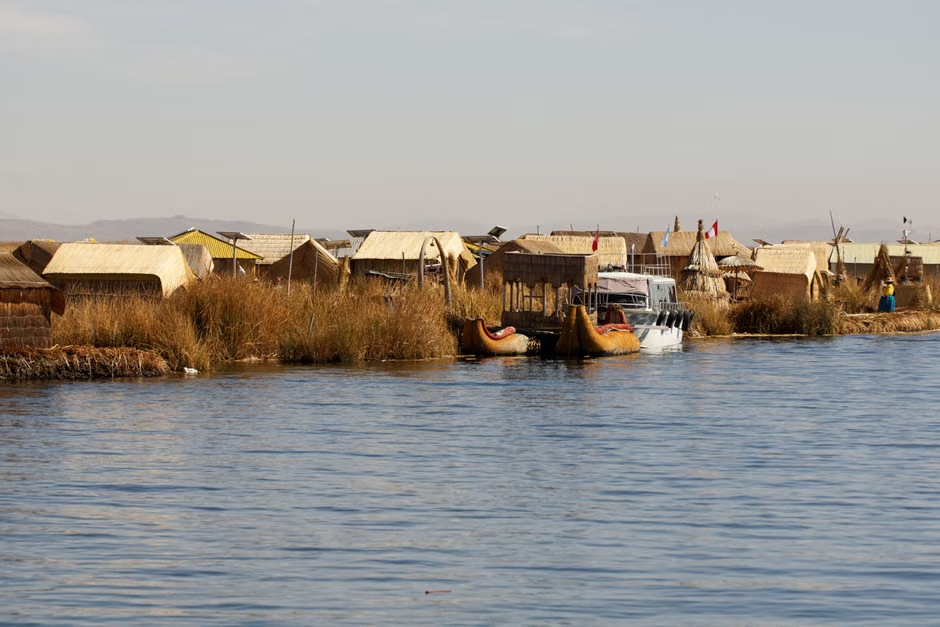
Why Puno / Lake Titicaca is Perfect for Your Celebration
- Lake Titicaca — the world's highest navigable lake — provides a one-of-a-kind ceremonial and scenic backdrop
- Rich Andean and Aymara cultural traditions can be authentically woven into wedding ceremonies and celebrations
- The floating Uros reed islands offer a genuinely unique venue experience found nowhere else on earth
- Dry season (May–Sep) delivers clear blue skies and crisp air ideal for outdoor lakeside events and photography
- Puno's Candelaria Festival heritage means the city has deep roots in large-scale cultural celebration and performance
- Intimate guest groups benefit from the destination's exclusivity — this is not a mass-tourism event circuit

Compare Puno / Lake Titicaca with Other Top Destinations
Frequently Asked Questions
Is Puno / Lake Titicaca a good destination for a wedding?
Yes, particularly for intimate, culturally immersive weddings. Puno suits couples who want a ceremony with genuine meaning and a one-of-a-kind natural setting — the sacred lake, Andean traditions, and floating reed islands create an atmosphere that is deeply distinctive. Guest lists of roughly 20–80 people are the most practical fit given the local venue inventory.
What is the best time of year to hold an event in Puno?
The dry season — May through September — is strongly recommended. This window offers stable, clear skies, minimal rainfall, and excellent photography conditions. June and July nights can be very cold at this altitude, so outdoor evening events need appropriate planning. The rainy season (November–March) brings frequent afternoon downpours that make outdoor events unreliable.
How do guests get to Puno for a destination event?
Most guests fly into Inca Manco Cápac International Airport in Juliaca — approximately 45 km from Puno — via Lima or Cusco, then transfer by road (roughly 45–60 minutes). An alternative is the scenic Andean Explorer train from Cusco, which takes a full day but is an experience in itself. There are no direct international flights into Juliaca.
How many guests can venues in Puno realistically accommodate?
Most event-capable properties in Puno comfortably handle groups of 50–150 guests. The largest single venue can accommodate up to around 200 guests for a reception. For larger groups, accommodation will need to be spread across multiple properties, and this requires early coordination — particularly during the busy dry season.
What kinds of venues are available for events in Puno?
The venue mix includes lakeside island resorts, waterfront city hotels with function rooms and terraces, and — for smaller, more immersive ceremonies — the Uros floating reed islands and communities on Taquile and Amantaní islands. Outdoor terraces with lake views are available at the better-appointed properties and are genuinely usable during the dry season.
Is altitude a concern for guests attending an event in Puno?
Yes — this is one of the most important planning considerations. Puno sits above 3,800 metres, and altitude sickness (headaches, fatigue, nausea) is common among guests arriving from sea level. Hosts should communicate this clearly in advance, build in 24–48 hours of acclimatisation time before the main event day, and consider having basic altitude remedies available for guests.
Can Andean cultural traditions be incorporated into a ceremony in Puno?
Yes, authentically. Puno is the heartland of Aymara and Quechua culture, and local musicians, dancers, and community members can participate in ceremonies in a genuinely meaningful way — not as a staged tourist performance. Traditional blessings, Andean music, and textile arts are all available through local cultural coordinators.
What is the local vendor and event planning ecosystem like in Puno?
Puno has a functioning hospitality and tourism infrastructure, but the pool of specialist event vendors — dedicated planners, florists, AV production teams — is small. Most experienced hosts work with a Cusco- or Lima-based event coordinator who has established Puno supplier relationships. Local catering, cultural performers, and boat operators are reliably available during the dry season.
How is internet and mobile connectivity in Puno for event guests?
Connectivity is limited by Peruvian standards. City-centre hotels generally offer Wi-Fi, but speeds can be inconsistent. On the lake islands, connectivity is minimal to non-existent. Guests and planners should not rely on consistent internet access for real-time coordination during the event — offline contingency planning is advisable.
Is Puno suitable for social celebrations like milestone birthdays or anniversaries?
Yes, particularly for groups seeking an extraordinary, experience-led celebration rather than a conventional banquet format. The lake setting, cultural richness, and sense of occasion that comes with travelling to a genuinely remote destination make Puno well-suited to milestone events where the journey and the place are as meaningful as the celebration itself.
What local transport is available for moving a guest group around Puno?
Private vehicle hire and taxis are the primary options for ground transport within the city. Lake crossings to island venues require advance coordination with local boat operators — this is manageable but needs to be planned well ahead, especially for larger groups. There is no metro or rapid transit; all group movement depends on private arrangements.

Ready to explore venues in Puno / Lake Titicaca?
Puno / Lake Titicaca: Destination Wedding & Cultural Event Venues
◆Puno and Lake Titicaca suit small-to-intimate celebrations where cultural authenticity and dramatic natural scenery are the primary draw. The destination's strongest suit is culturally immersive weddings, social gatherings, and milestone events that benefit from a one-of-a-kind Andean backdrop — the world's highest navigable lake, indigenous Aymara and Quechua traditions, and the iconic floating Uros reed islands. The dry season (May through September) is the clear window for events, offering stable skies and manageable temperatures. Accessibility is genuinely limited — guests typically fly into Juliaca and transfer by road — and altitude acclimatisation is a real planning consideration. This is not a high-volume event circuit; it rewards hosts who prioritise meaning and uniqueness over scale and convenience.
Puno / Lake Titicaca at a Glance
| Category | Detail |
|---|---|
| Best For | Intimate Weddings, Cultural Celebrations, Social Gatherings, Milestone Events |
| Primary Vibe | Cultural & Timeless |
| Other Vibes | Scenic, Spiritual, Andean Heritage |
| Best Season | Dry Season (May, Jun, Jul, Aug, Sep) |
Why Choose Puno / Lake Titicaca?
- Unmatched natural setting: Lake Titicaca — at approximately 3,812 metres above sea level — is the world's highest navigable lake, providing a ceremonial backdrop of extraordinary scale and spiritual resonance that no constructed venue can replicate.
- Living indigenous culture: The Aymara and Quechua communities around the lake maintain traditions — textile arts, music, ritual ceremony, and the famous Uros floating reed islands — that can be authentically incorporated into a celebration rather than staged as a tourist performance.
- Exclusivity by geography: Because Puno is genuinely remote and requires deliberate travel, events here attract guests who are fully committed to the experience. The destination self-selects for intimate, meaningful gatherings rather than large, logistically casual ones.
- Dry-season photography conditions: The May–September window delivers consistently clear skies, low humidity, and extraordinary high-altitude light — conditions that produce exceptional event and portrait photography against the lake and the altiplano horizon.
- Deep celebration heritage: Puno is home to the Virgen de la Candelaria Festival, one of South America's largest and most elaborate cultural celebrations. The city has genuine infrastructure for large-scale performance, music, and communal festivity that can be drawn upon for events.
- Lakeside and island venue diversity: From island resort properties to waterfront hotels to the reed islands themselves, the destination offers a range of venue types that are genuinely unlike anything available in a conventional city event market.
Which Celebrations Work Best in Puno / Lake Titicaca?
- Intimate destination weddings: Puno is particularly well-suited to couples seeking a ceremony with deep cultural and spiritual meaning. The lake's sacred status in Andean cosmology, combined with the possibility of incorporating Aymara blessing rituals and traditional music, makes it a genuinely distinctive wedding setting. Guest lists of 20–80 people are the most practical fit for the local venue inventory.
- Cultural and heritage celebrations: Milestone birthdays, anniversaries, and family reunions that are designed around an immersive cultural experience — rather than a conventional banquet format — find Puno's indigenous heritage and landscape a natural fit.
- Social gatherings and retreats: Small corporate or social groups seeking an extraordinary off-grid experience — combining the lake, local communities, and Andean landscape — can use Puno's hospitality infrastructure effectively during the dry season.
- Spiritual and ceremonial events: The lake holds profound significance in Andean mythology as the birthplace of the Inca civilisation. Events with a spiritual, reflective, or ceremonial dimension — whether secular or religious — benefit from this context in a way that few other destinations can offer.
Venues & Event Spaces
Puno's event venue landscape is shaped by its geography and scale. The most distinctive spaces are lakeside and island resort properties, where event terraces and function rooms open directly onto views of Lake Titicaca — a setting that is inherently ceremonial. Waterfront hotels in the city itself offer more conventional banquet and reception facilities, typically suited to groups of up to 150–200 guests. For smaller, more immersive experiences, the Uros floating reed islands and the communities of Taquile and Amantaní island can serve as extraordinary outdoor ceremony locations, though they require careful logistical coordination. The city also has a small number of cultural centres and heritage buildings that can accommodate private events. Outdoor lawns and terraces are available at the better-appointed properties, and the dry-season climate makes these genuinely usable for evening receptions. Hosts should note that the venue inventory here is smaller and less standardised than in Peru's larger event cities — the strength lies in uniqueness and setting, not in volume or turnkey event infrastructure.
Best Time to Celebrate
The dry season — May through September — is the clear and strongly recommended window for events in Puno. During these months, rainfall is minimal, skies are typically clear and intensely blue at altitude, and daytime temperatures are cool but comfortable (generally 10°C–18°C). Nights can be cold, particularly in June and July, which is worth factoring into outdoor evening event planning — guests should be prepared for temperatures that can drop close to or below freezing after dark at this elevation.
The rainy season runs from November through March, with the heaviest precipitation typically falling in January and February. Afternoon and evening downpours during this period are frequent and can be heavy, making outdoor events unreliable and some lake crossings more difficult. April is a transitional month with unpredictable weather. October is generally drying out and can work as a shoulder-season option, though it carries more weather risk than the core dry months. The Candelaria Festival in early February, while spectacular, coincides with the height of the rainy season — a consideration for any event planned around that cultural moment.
Getting There & Local Connectivity
The primary gateway for guests travelling to Puno is Inca Manco Cápac International Airport in Juliaca, approximately 45 kilometres from Puno city centre. The airport receives domestic flights from Lima and Cusco, and the road transfer to Puno takes roughly 45–60 minutes. There are no direct international flights into Juliaca — international guests will connect through Lima. Flight frequency is moderate rather than high, so guests should plan itineraries with buffer time, particularly during peak dry-season travel months when seats can be limited.
An alternative and scenic arrival route is by train from Cusco — the Andean Explorer service connects the two cities through dramatic altiplano landscape and is itself a notable experience, though journey times are long (typically a full day). Road travel from Cusco by private transfer is also common and takes approximately 6–7 hours.
Within Puno, local transport for event groups is manageable at small scale — taxis, private transfers, and boat services on the lake are all available. Moving a large guest group across the lake to island venues requires advance coordination with local boat operators. There is no metro or rapid transit system; ground logistics for groups depend on private vehicle hire. Altitude acclimatisation is a genuine guest welfare consideration — Puno sits above 3,800 metres, and guests arriving from sea level should ideally allow 24–48 hours before any strenuous activity or a full event day.
Local Vendor & Hospitality Ecosystem
Puno's vendor ecosystem is smaller and more specialised than Peru's larger event cities. The destination has a functioning tourism and hospitality infrastructure built around its status as a major cultural and natural attraction, which means catering, accommodation, and basic event services are available and reasonably reliable during the dry season. However, the pool of dedicated event planners, specialist florists, high-end catering companies, and audio-visual production teams is limited compared to Lima or Cusco. Hosts planning events here typically benefit from working with a Cusco- or Lima-based event coordinator who has established relationships with Puno's local suppliers.
Local cultural performers — traditional Andean musicians, dancers, and artisans — are genuinely available and add authentic value to celebrations. Catering can draw on Peruvian culinary traditions, including lake fish (particularly trout and kingfish from Titicaca), which is a genuine local speciality. International cuisine options are more limited. Accommodation for larger guest groups may require spreading guests across multiple properties, as no single venue in Puno has the room inventory of a large resort city. This is worth planning for early, particularly during the dry season when the destination's hotels are at their busiest.
Pros & Things to Consider
Why Puno / Lake Titicaca Works Well
- Genuinely one-of-a-kind natural and cultural setting — Lake Titicaca is irreplaceable as a backdrop
- Authentic Andean and Aymara cultural elements can be meaningfully incorporated into ceremonies
- Dry-season weather is stable and produces exceptional photography conditions
- The destination's remoteness creates a sense of occasion and commitment among guests
- Island and lakeside venue options are unlike anything available in conventional event markets
- Local cultural performance traditions (music, dance, textile arts) are genuinely rich and available
Things to Consider
- Altitude at over 3,800 metres is a real health and comfort consideration — some guests may experience altitude sickness, and this must be factored into event scheduling and guest communications
- Accessibility is genuinely limited — no direct international flights, a 45 km transfer from the nearest airport, and long overland journey times from Cusco
- The local event vendor ecosystem is small; specialist suppliers may need to be brought in from Cusco or Lima, adding logistical complexity
- Accommodation inventory is limited — large guest lists (100+) will require careful multi-property coordination
- Evenings can be very cold even in the dry season, which constrains outdoor evening event formats
- Internet and mobile connectivity in Puno and especially on the lake islands is limited — guests and planners should not rely on consistent digital access
When Puno / Lake Titicaca May Not Be the Right Fit
- Large guest lists: If your event requires accommodating 200 or more guests under one roof with full banquet facilities, Puno's current venue inventory is unlikely to meet that need comfortably — a larger Peruvian city would serve better.
- Guests with altitude sensitivity: If your guest group includes elderly guests, young children, or individuals with cardiovascular or respiratory conditions, the high altitude (3,800+ metres) poses genuine health risks that may make this destination unsuitable without careful medical planning.
- Tight travel schedules: If guests are travelling internationally and have limited time, the multi-leg journey to Puno (international flight to Lima, domestic connection to Juliaca, road transfer) may be too demanding — particularly if the event itself is only one or two days.
- Rainy season events: Any event planned between November and March faces a high probability of significant afternoon and evening rainfall that will disrupt outdoor elements — the destination's strongest features (lake views, outdoor terraces, island venues) are substantially diminished in the wet season.