
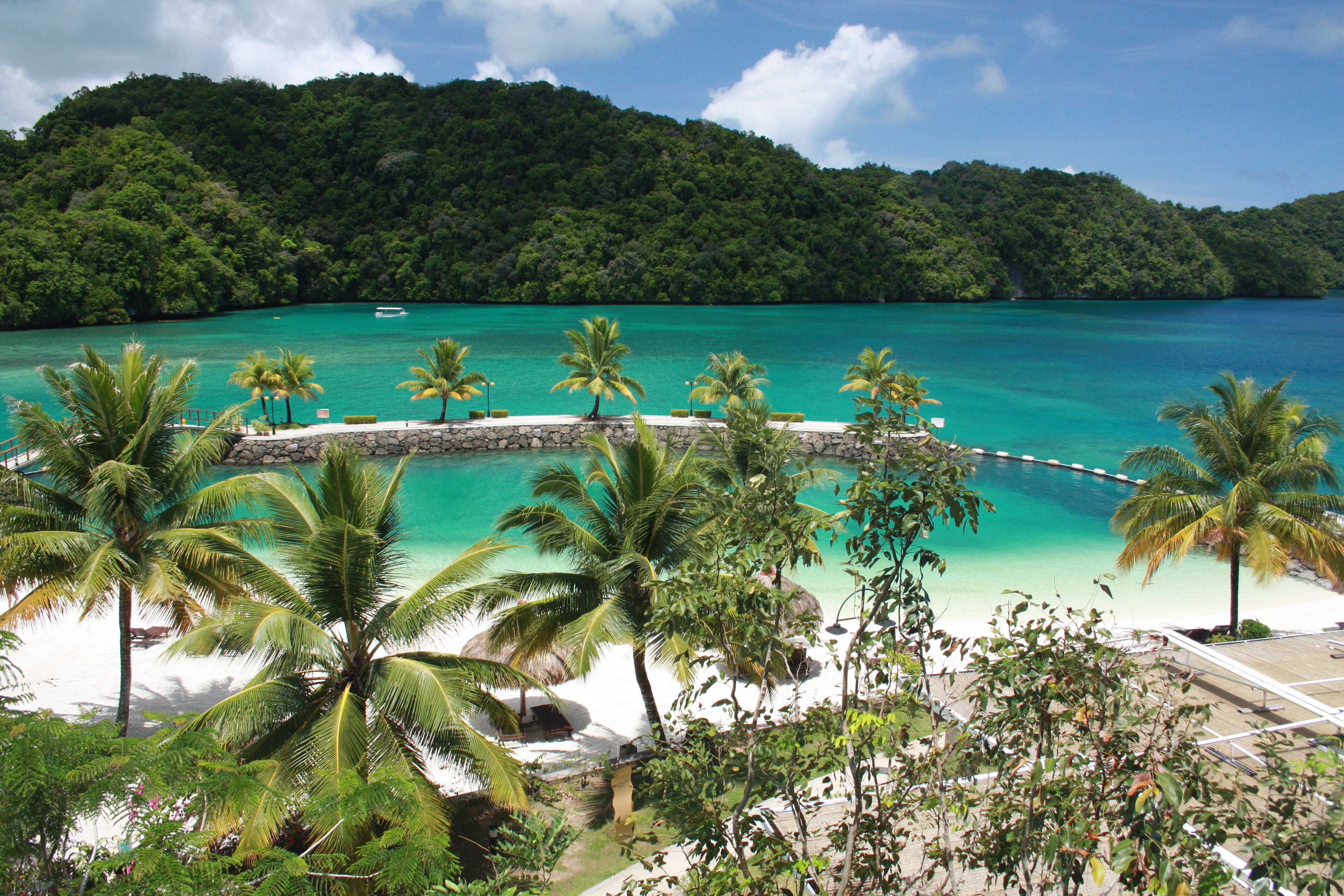
Why Koror is Perfect for Your Celebration
- Iconic Rock Islands and UNESCO-listed marine scenery create unmatched natural ceremony backdrops
- Dry season (Jan–Apr, Dec) delivers calm seas, clear skies, and excellent visibility for outdoor events
- Boutique resort properties offer exclusive buyouts for intimate, private celebrations
- World-renowned dive sites and marine experiences give guests extraordinary pre- and post-event activities
- Koror's cosmopolitan character supports international menus, multilingual hospitality, and globally-minded event planning
- Jellyfish Lake and the Rock Islands Southern Lagoon provide once-in-a-lifetime excursion experiences for wedding guests

Compare Koror with Other Top Destinations
Frequently Asked Questions
Is Koror a good destination for an intimate wedding?
Yes. Koror is particularly well-suited to intimate weddings, typically for groups under 150 guests. The boutique resort properties, UNESCO-listed Rock Islands scenery, and English-speaking hospitality infrastructure create a genuinely rare and exclusive experience. The destination rewards couples who prioritise natural spectacle and privacy over large-scale production.
What is the best time of year to hold a wedding or event in Koror?
The dry season — January, February, March, April, and December — is the strongly recommended window. During these months, rainfall is minimal, skies are reliably clear, and sea conditions are calm enough for boat transfers and marine excursions. The wet season (June–October) brings heavy rain and rough seas that can significantly disrupt outdoor events and guest activities.
How do guests typically travel to Koror?
Guests fly into Roman Tmetuchl International Airport, which is close to Koror's city center. International connections are available primarily through Manila, Guam, Tokyo, and Seoul. Most guests will require at least one connecting flight, so planners should recommend arriving a day before the event to allow for potential travel delays.
What size guest group can Koror realistically accommodate for an event?
Koror's boutique resort inventory comfortably supports events of roughly 30–200 guests. Intimate groups of 20–100 are particularly well-served, as resort properties can often be partially or fully bought out. Events exceeding 200–250 guests will find the local venue capacity stretched and should plan carefully with resort coordinators well in advance.
What kinds of event venues are available in Koror?
The dominant venue type is the island resort — featuring open-air terraces, beachfront lawns, overwater decks, and indoor dining spaces. Some properties sit on private islands or peninsulas, offering natural exclusivity. The venue character is nature-integrated and boutique rather than grand or palatial, making it ideal for couples who want scenic outdoor settings over formal ballroom environments.
What activities are available for wedding guests during their stay in Koror?
Koror offers some of the world's most celebrated marine experiences: diving and snorkelling at world-class sites, swimming with jellyfish in Jellyfish Lake, kayaking through the Rock Islands Southern Lagoon, and island-hopping by boat. These activities give guests a shared, memorable itinerary that extends well beyond the event itself and is a genuine draw for international attendees.
Is local transport easy to arrange for a wedding group in Koror?
Yes, within the destination. Koror is compact, and resort shuttles and private taxis are readily available for land transfers. For Rock Islands excursions and inter-island movement, boat charters are the standard mode and are easily arranged through resort concierge services. There is no public rail network, so private group transport is the practical norm.
How experienced is Koror's local vendor ecosystem with destination weddings?
Koror has a growing but specialised vendor ecosystem. Resort in-house event teams are generally experienced with international destination weddings. Local catering highlights Pacific and Asian-influenced menus with excellent fresh seafood. Specialist items — elaborate floral installations, bespoke décor, specific imported goods — may require advance planning and importation from Manila or Tokyo due to the destination's remote supply chains.
Is English widely spoken in Koror, and will international guests find it easy to navigate?
Yes. English is an official language of Palau and is widely spoken across the hospitality sector, in resort properties, restaurants, and tour operations. International guests — particularly those from English-speaking countries and Japan — generally find Koror easy to navigate. The USD-denominated economy also removes currency conversion complexity for many international visitors.
What makes Koror distinctive compared to other tropical island wedding destinations?
Koror's defining distinction is the Rock Islands Southern Lagoon — a UNESCO World Heritage Site — which provides a ceremony and photography backdrop of global rarity. Combined with Jellyfish Lake, world-class dive sites, and a genuinely cosmopolitan island character, Koror offers an experience that is difficult to replicate. It suits couples who want their wedding destination to be a genuine adventure, not just a scenic backdrop.

Ready to explore venues in Koror?
Koror: Destination Wedding & Celebration Event Venues in Palau
◆Koror is Palau's main urban and commercial hub, situated in the western Pacific and best suited to intimate weddings, milestone birthday celebrations, and exclusive social events. Its primary vibe is chic and cosmopolitan — a polished island sophistication layered over extraordinary natural scenery, including the UNESCO-listed Rock Islands Southern Lagoon. The dry season (January through April, and December) is the clear window for outdoor events, with calm seas and reliable sunshine. Guest travel requires international connections through Manila, Guam, or Tokyo, making advance planning essential, but the destination rewards that effort with a genuinely rare and memorable experience.
Koror at a Glance
| Category | Detail |
|---|---|
| Best For | Intimate Weddings, Milestone Birthdays, Social Celebrations, Honeymoon Extensions |
| Primary Vibe | Chic & Cosmopolitan |
| Other Vibes | Tropical, Adventurous, Romantic, Exclusive |
| Best Season | Dry Season (Jan, Feb, Mar, Apr, Dec) |
Why Choose Koror?
- Unrivalled natural scenery: The Rock Islands Southern Lagoon — a UNESCO World Heritage Site — provides a ceremony and photography backdrop that is genuinely impossible to replicate anywhere else in the world. Limestone mushroom islands, turquoise lagoons, and hidden coves frame every outdoor event with extraordinary visual drama.
- Intimate scale suits exclusive events: Koror's resort inventory is deliberately boutique in character. Properties can typically be partially or fully bought out for a wedding group, giving couples a level of privacy and exclusivity that larger, more mass-market destinations rarely offer.
- World-class guest experiences: Beyond the event itself, guests have access to some of the planet's most celebrated dive sites, snorkelling in Jellyfish Lake, kayaking through the Rock Islands, and cultural visits to Palauan heritage sites — making the trip genuinely memorable for every attendee, not just the couple.
- English-speaking hospitality infrastructure: English is an official language of Palau, and the hospitality sector is well-accustomed to serving international guests, which significantly reduces the logistical friction that can arise in non-English-speaking island destinations.
- USD-denominated economy: Palau uses the US Dollar, eliminating currency conversion complexity for guests travelling from many international origins and simplifying vendor payments for event planners.
- Genuine cosmopolitan character: Despite its small size, Koror supports a range of international dining, a growing events and catering sector, and resort properties experienced in hosting destination weddings for guests from Japan, Australia, the United States, and across Asia-Pacific.
Which Celebrations Work Best in Koror?
- Intimate destination weddings: Koror is particularly well-suited to small, curated wedding groups — typically under 150 guests — where the couple prioritises a unique natural setting, privacy, and a multi-day experience over large-scale production. The island environment naturally encourages a relaxed, immersive celebration rather than a formal ballroom event.
- Milestone birthday celebrations: A significant birthday — a 30th, 40th, or 50th — gains enormous memorability in Koror. The combination of a boutique resort buyout, marine excursions, and a tropical setting makes for a celebration that guests will reference for years. Group sizes of 20–80 are particularly well-served.
- Social gatherings and reunion events: Friend groups or extended families seeking a shared adventure-meets-celebration experience find Koror compelling. The destination's activity ecosystem (diving, snorkelling, island-hopping) gives a social group a shared itinerary that bonds the group beyond the event itself.
- Honeymoon extensions: While not a standalone event type, Koror is a natural honeymoon extension for couples who have married elsewhere and want a remote, romantic, and visually spectacular retreat. Several resort properties cater specifically to couples seeking privacy and natural immersion.
Venues & Event Spaces
Koror's event venue landscape is defined by its resort properties rather than purpose-built convention or banquet facilities. The dominant venue type is the island resort — typically set on or adjacent to the water, with open-air terraces, beachfront lawns, and indoor dining spaces that can be configured for ceremonies and receptions. Several properties sit on their own private islands or peninsulas, offering a natural exclusivity that is difficult to achieve in mainland destinations.
Outdoor ceremony spaces are the signature offering: clifftop platforms overlooking the lagoon, overwater decks, and garden lawns framed by tropical vegetation are all available across the resort inventory. Indoor spaces tend to be more modest in scale — suited to seated dinners of 50–200 guests rather than large-format productions — which reinforces Koror's natural fit with intimate, curated events rather than mass-attendance celebrations.
Beyond the resorts, Koror's town area contains smaller function venues and restaurant spaces that can accommodate private dining events, rehearsal dinners, and post-event brunches. The overall venue ecosystem is best described as boutique and nature-integrated, rather than grand or palatial — couples seeking dramatic architectural grandeur may find the inventory more limited than in larger destination cities, but those prioritising natural spectacle and exclusivity will find it genuinely exceptional.
Best Time to Celebrate
The dry season — January, February, March, April, and December — is the strongly preferred window for events in Koror, and the reasoning goes well beyond simply "the weather is nicer." During these months, the prevailing northeast trade winds keep rainfall minimal and skies reliably clear, which is critical for outdoor ceremonies and photography. Equally important, sea conditions during the dry season are calm enough for boat transfers to the Rock Islands and for water-based guest excursions — activities that are central to the Koror experience and that become genuinely difficult or unsafe during the wet season.
The wet season (roughly June through October) brings heavy, sustained rainfall, rough seas, and significantly reduced visibility both above and below the water. Outdoor events during this period carry a high risk of disruption, and the marine excursions that make Koror distinctive for guests become unreliable. May and November are transitional months — rainfall increases noticeably, and while some events proceed without issue, the risk profile is meaningfully higher than in the core dry season months.
Within the dry season, February and March are often considered the most reliably settled months, with the lowest average rainfall and the calmest sea states. December and January can occasionally see brief rain episodes associated with the tail end of the wet season, but these are typically short-lived and do not materially affect event planning. April marks the gradual transition toward wetter conditions, and events planned for late April should build in contingency for afternoon showers.
Getting There & Local Connectivity
Koror is served by Roman Tmetuchl International Airport, located close to the city center — one of the few genuine logistical advantages of Koror's compact geography. The airport receives international flights primarily from Manila (Philippines), Guam (USA), Tokyo (Japan), and Seoul (South Korea), meaning that most international guests will require at least one connecting flight. Direct connections from major hubs in Australia, Europe, or mainland USA are not currently available, which is the single most significant logistical consideration for event planners assembling a geographically diverse guest list.
For guests travelling from Asia-Pacific origins — Japan, South Korea, Taiwan, the Philippines, and Australia — the journey is considerably more straightforward, and Koror has historically drawn the majority of its international visitors from these markets. Event planners should factor in the connecting flight requirement when setting guest travel timelines and should typically recommend guests arrive at least a day before the event to account for potential delays.
Once in Koror, local movement is manageable. The city itself is compact and navigable by taxi or resort shuttle. For excursions to the Rock Islands, boat transfers are the standard mode of transport, and most resort properties either operate their own boats or have established relationships with local marine tour operators. There is no public rail network, and public bus services are limited — for a wedding or event group, private vehicle and boat charters are the practical norm and are readily available through resort concierge services.
Local Vendor & Hospitality Ecosystem
Koror's vendor ecosystem is smaller and more specialised than that of larger destination wedding cities, which has both advantages and trade-offs. On the positive side, the vendors who do operate in the destination wedding space — florists, photographers, marine charter operators, and catering teams — are generally experienced with international clients and accustomed to the specific demands of island events. Several resort properties have in-house event coordination teams with genuine destination wedding experience.
Catering in Koror reflects the destination's international character: resort kitchens typically offer a blend of Pacific, Asian, and Western menus, and can accommodate dietary requirements common among international guest groups. Locally sourced seafood is a genuine highlight and a natural fit for event menus. Imported goods and specialist items (specific floral varieties, particular beverage brands, bespoke décor) may need to be planned well in advance, as supply chains to a remote Pacific island are less flexible than in mainland destinations.
Photography and videography vendors with destination wedding portfolios are available, and the natural scenery means that even moderately skilled photographers produce exceptional results. For highly specialised production elements — large-scale floral installations, elaborate lighting rigs, live entertainment beyond local musicians — planners should expect to either source from Manila or Tokyo and factor in shipping and logistics lead times.
Pros & Things to Consider
Why Koror Works Well
- UNESCO-listed natural scenery provides a ceremony backdrop of global rarity
- English-speaking destination with USD economy reduces logistical friction for international planners
- Boutique resort scale naturally supports intimate, exclusive events with high privacy
- Dry season delivers reliably excellent outdoor conditions across five months of the year
- Guest experience ecosystem (diving, Rock Islands, Jellyfish Lake) is genuinely world-class and memorable
- Compact city geography means airport, resorts, and event venues are all in close proximity
Things to Consider
- International connectivity requires connecting flights for most guests, adding travel time and complexity
- Venue capacity is inherently limited — events exceeding 200–250 guests will find the local inventory stretched
- Specialist décor, floral, and production items may require advance importation with significant lead times
- The wet season (June–October) is a genuine operational risk for outdoor events, not merely a comfort consideration
- The destination's remote location means that last-minute vendor substitutions or supply changes are harder to manage than in a mainland city
When Koror May Not Be the Right Fit
- Large guest lists: Couples expecting more than 200–250 guests will find that Koror's boutique resort inventory does not comfortably scale to that size without significant logistical complexity. A destination with larger purpose-built event infrastructure would serve those needs better.
- Guests with limited travel flexibility: If a significant portion of the guest list is based in Europe, mainland USA, or Africa, the multi-leg journey to Koror — often 20+ hours of travel — may be a genuine barrier to attendance. Planners should honestly assess the guest list's travel tolerance before committing.
- Wet season event dates: Any event planned between June and October faces a materially elevated risk of heavy rainfall, rough seas, and disrupted marine excursions. If the event date is fixed in this window, a destination with more weather-resilient indoor infrastructure would be a more reliable choice.
- Events requiring grand architectural venues: Couples seeking palatial ballrooms, heritage palace settings, or large-scale architectural grandeur will find Koror's venue character — which is defined by natural scenery and resort integration rather than built heritage — a poor match for that aesthetic vision.