
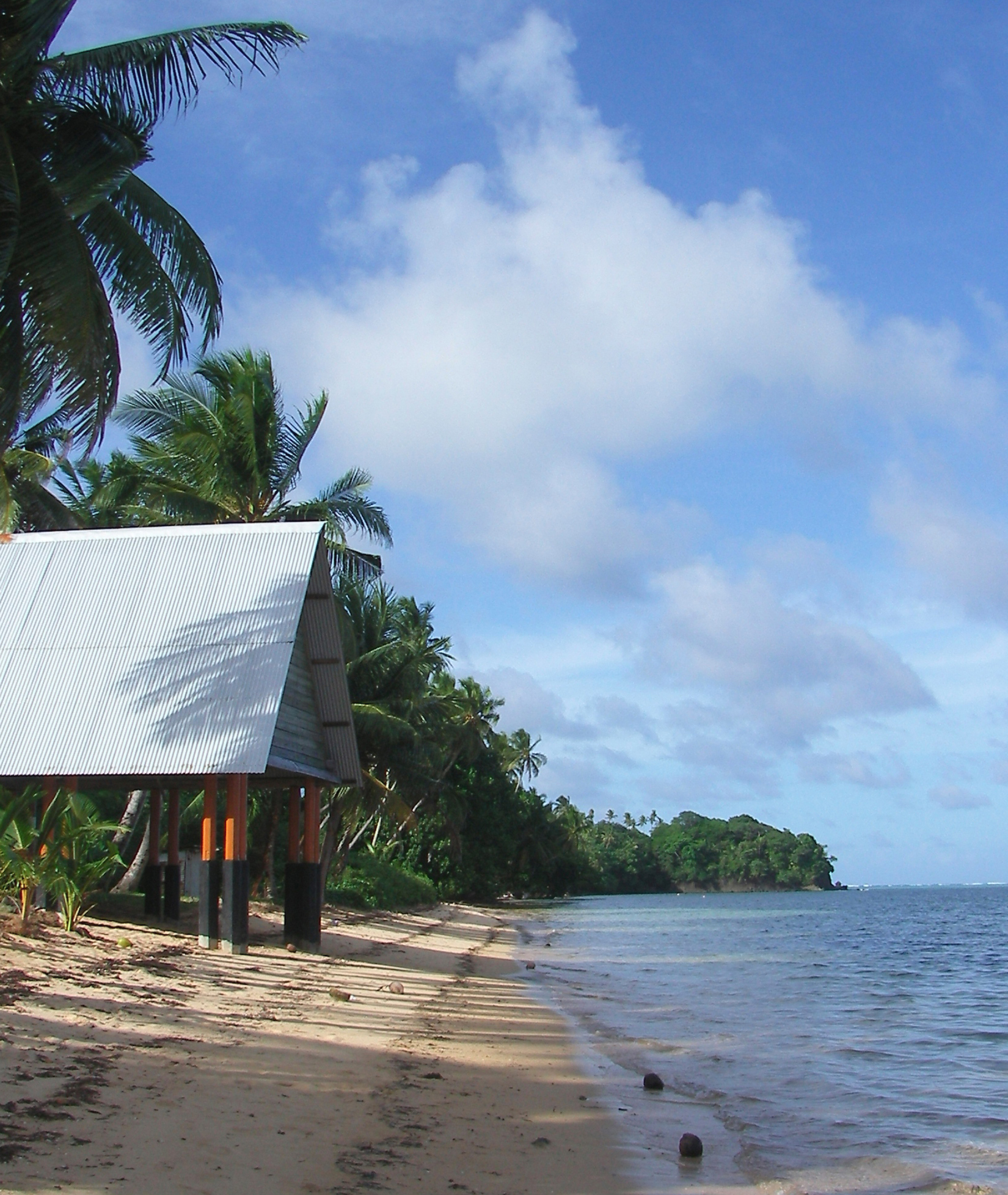
Why Babeldaob is Perfect for Your Celebration
- Extraordinary natural backdrops — volcanic hills, ancient Badrulchau stone monoliths, and mangrove-fringed coastlines unique to Palau
- Genuine seclusion and privacy; Babeldaob sees very few tourists, making celebrations feel truly exclusive
- Dry season (Jan–Apr, Dec) offers calmer weather and clearer skies ideal for outdoor ceremonies
- Proximity to Palau's world-renowned marine biodiversity adds once-in-a-lifetime guest experiences (diving, snorkelling)
- Small-island intimacy suits boutique gatherings and elopements where personal, unhurried service matters most
- Cultural depth — Palauan traditions, ancient terraced hillsides, and living heritage add meaningful context to celebrations

Compare Babeldaob with Other Top Destinations
Frequently Asked Questions
Is Babeldaob a good destination for an intimate wedding ceremony?
Yes, particularly for small, intimate ceremonies. Babeldaob's jungle, coastal, and archaeological settings create a genuinely extraordinary backdrop for couples prioritising privacy and natural beauty over large-scale infrastructure. It works best for guest lists under roughly 100 people, where the boutique scale of local hospitality becomes an asset rather than a constraint.
What is the best time of year to hold an event on Babeldaob?
The dry season — January, February, March, April, and December — is the only reliably suitable window for outdoor celebrations. These months bring reduced rainfall, calmer seas, and more manageable humidity. The wet season (May through November) carries significant rainfall and typhoon risk that makes outdoor events genuinely unreliable, so planners should treat the dry season window as firm.
How do guests get to Babeldaob, and how long does the journey typically take?
Guests fly into Roman Tmetuchl International Airport, which is located on Babeldaob island itself. The airport receives international connections primarily from Manila, Guam, Taipei, Seoul, and Tokyo. Most guests from Europe, the Americas, South Asia, or Australia will require at least one connecting flight, with total travel times typically ranging from 12 to 24 hours depending on origin.
What kinds of event venues and spaces are available on Babeldaob?
Babeldaob's strongest venues are outdoor and semi-outdoor — jungle clearings, hillside terraces with ocean views, waterfront resort lawns, and open-air dining pavilions. Purpose-built large ballrooms or convention-style banquet halls are not a feature of the local landscape. The destination suits couples who want to work with natural topography rather than conventional event infrastructure.
How large a guest group can Babeldaob realistically accommodate for a celebration?
The local hospitality stock comfortably supports gatherings up to roughly 100–150 guests when accommodation across the Koror–Babeldaob corridor is factored in. Beyond that range, the available venue and accommodation inventory becomes strained. Babeldaob is genuinely best suited to boutique gatherings rather than large-format events.
How do guests move around Babeldaob once they arrive?
There is no public transport or rail system in Palau. All guest ground movements rely on pre-arranged private transfers — typically chartered minibuses or 4WD vehicles organised through local operators or resort properties. Babeldaob is connected to Koror by road via the Japan–Palau Friendship Bridge, and boat transfers are available for coastal movements and island-hopping activities.
Are local wedding and event vendors available on Babeldaob?
The local vendor ecosystem is functional but limited in scale and specialisation. Resort properties in the Koror–Babeldaob corridor have established supplier relationships for catering and basic event services. However, specialist wedding vendors — large-format florists, professional lighting and AV companies, entertainment agencies — are not available locally in depth, and planners often need to source key vendors from Guam, Manila, or further afield.
Is Babeldaob safe for international guests attending a celebration?
Yes. Palau is consistently rated among the safest nations in the Pacific, with very low crime rates and a welcoming, English-speaking environment. International guests generally find the island easy to navigate from a safety perspective, which meaningfully reduces logistical anxiety for planners managing guests arriving from multiple countries.
What makes Babeldaob distinctive as a celebration destination compared to more conventional Pacific resort islands?
Babeldaob offers a combination that is genuinely rare: ancient cultural heritage (the Badrulchau stone monoliths), dense tropical jungle, mangrove coastlines, and proximity to world-class marine environments — all with very limited tourist traffic. Celebrations here feel private and unrepeatable in a way that more developed resort destinations typically cannot deliver.
Can guests enjoy activities beyond the celebration itself while visiting Babeldaob?
Yes, and this is one of the destination's genuine strengths. Palau's surrounding waters are among the most biodiverse marine environments on Earth, offering world-class diving and snorkelling. On land, jungle trekking, kayaking through mangroves, and visits to the Badrulchau stone monoliths provide meaningful itinerary depth for guests across the celebration period.
What should planners know about internet and communication connectivity on Babeldaob?
Connectivity is limited outside the Koror area. Mobile and internet coverage across Babeldaob's more remote areas is patchy, which can affect real-time coordination during events. Planners should discuss communication infrastructure with their venue or local operator well in advance and build contingency into any logistics that depend on reliable connectivity on the day.

Ready to explore venues in Babeldaob?
Babeldaob: Destination Wedding & Celebration Venues in Palau
◆Babeldaob is Palau's largest island and one of the most genuinely remote, nature-immersed celebration destinations in the Pacific. Its primary strength is extraordinary natural seclusion — dense tropical jungle, ancient volcanic hillsides, mangrove coastlines, and the culturally significant Badrulchau stone monoliths create a setting that is essentially impossible to replicate elsewhere. It suits intimate weddings, elopements, small social gatherings, and milestone birthday celebrations where privacy and natural drama matter more than large-scale infrastructure. The dry season (January through April, and December) is the only reliably suitable window for outdoor events. Accessibility requires long-haul travel for most guests, and the local hospitality ecosystem is boutique in scale — this destination rewards couples who prioritise uniqueness and intimacy over convenience and volume.
Babeldaob at a Glance
| Category | Detail |
|---|---|
| Best For | Intimate Weddings, Elopements, Social Gatherings, Milestone Birthdays |
| Primary Vibe | Nature & Wilderness |
| Other Vibes | Cultural Heritage, Coastal Seclusion, Adventure |
| Best Season | Dry Season (Jan, Feb, Mar, Apr, Dec) |
Why Choose Babeldaob?
- Unmatched natural scenery: Babeldaob's combination of volcanic hills, ancient terraced hillsides, mangrove estuaries, and Pacific coastline produces ceremony backdrops that are genuinely one-of-a-kind — no other destination in Micronesia offers this particular layering of jungle, archaeology, and ocean in one place.
- Cultural depth through living heritage: The Badrulchau stone monoliths — ancient basalt pillars of uncertain origin scattered across the island's north — lend a sense of deep time and mystery that adds meaningful cultural texture to any celebration held nearby.
- True privacy and exclusivity: Babeldaob receives very limited tourist traffic compared to Palau's more visited Koror area. Groups celebrating here are unlikely to share their surroundings with large crowds, making the experience feel genuinely private.
- World-class marine experiences for guests: Palau's surrounding waters are among the most biodiverse marine environments on Earth. Guests can dive or snorkel UNESCO-recognised reef systems, adding a dimension to the celebration itinerary that few destinations anywhere can match.
- Dry season reliability: The January–April and December window delivers the island's most stable weather — lower rainfall, calmer seas, and manageable humidity — making outdoor ceremonies and receptions genuinely feasible during these months.
- Safety and political stability: Palau is consistently rated among the safest nations in the Pacific, with low crime and a welcoming attitude toward international visitors, which meaningfully reduces logistical anxiety for event planners managing guests from multiple countries.
Which Celebrations Work Best in Babeldaob?
- Intimate destination weddings: Babeldaob is particularly well-suited to small, meaningful ceremonies — typically under 80–100 guests — where the couple wants a setting that feels genuinely remote and personal rather than resort-packaged. The jungle and coastal environments provide natural ceremony spaces that require minimal decoration to feel extraordinary.
- Elopements and micro-weddings: For couples travelling with only their closest family or a handful of witnesses, Babeldaob's seclusion and the logistical self-selection of a long-haul Pacific journey naturally produce a guest list of people who are genuinely committed to being there. The island's quietness amplifies the intimacy of very small celebrations.
- Milestone birthday celebrations: A significant birthday — a 30th, 40th, or 50th — celebrated in a place as unusual and far-flung as Babeldaob carries a story that guests will recount for years. The island's adventure activities (kayaking, jungle trekking, reef diving) integrate naturally into a multi-day birthday itinerary.
- Social gatherings and reunion trips: Small groups of friends or extended families who share an interest in nature, diving, or off-the-beaten-path travel will find Babeldaob a compelling gathering point. The shared experience of reaching and exploring such a remote destination tends to bond groups in ways that more conventional venues do not.
Venues & Event Spaces
Babeldaob's venue landscape is defined by its natural environment rather than purpose-built event infrastructure. Outdoor spaces — jungle clearings, hillside terraces with ocean views, and mangrove-adjacent waterfront areas — form the most distinctive settings for ceremonies and receptions. The island's proximity to Koror (connected by the Japan–Palau Friendship Bridge) means that resort properties in the broader Koror–Babeldaob corridor are the primary accommodation and event-hosting options for groups. These tend to be mid-scale resort properties with outdoor event lawns, open-air dining pavilions, and waterfront terraces rather than large ballrooms or convention-style banquet halls. For groups requiring indoor, climate-controlled event space, options are limited — the destination's strength lies firmly in its outdoor and semi-outdoor settings. Planners should expect to work creatively with natural topography and to engage local operators for tent structures, generator power, and catering logistics in more remote parts of the island.
Best Time to Celebrate
The dry season — spanning January, February, March, April, and December — is the only window that reliably supports outdoor celebrations on Babeldaob. During these months, rainfall is significantly reduced compared to the rest of the year, humidity is at its most manageable (though still tropical), and sea conditions around the island are generally calmer, making boat transfers and water-based guest activities more predictable. Skies are clearer, which matters both for photography and for the comfort of guests travelling from temperate climates who may be unaccustomed to intense tropical conditions.
The wet season — broadly May through November — brings heavy and often sustained rainfall, elevated humidity, and a meaningful risk of tropical cyclones and typhoons, particularly between July and October. Outdoor events during this period face a high probability of disruption, and the island's limited infrastructure means that contingency options (large indoor backup spaces, rapid logistics pivots) are harder to arrange than in more developed destinations. Even the shoulder months of May and November carry enough residual wet-season risk that they are generally not recommended for events where outdoor settings are central to the plan. Planners should treat the dry season window as firm rather than approximate for Babeldaob.
Getting There & Local Connectivity
Babeldaob is served by Roman Tmetuchl International Airport, which is located on the island itself — one of the few Pacific island capitals whose airport sits on the main island rather than a separate atoll. The airport receives international flights primarily from Manila, Guam, Taipei, Seoul, and Tokyo, meaning that most guests travelling from Europe, the Americas, South Asia, or Australia will require at least one connecting flight. Travel times from major global hubs are substantial — typically 12 to 24 hours including connections — and this is the single most significant logistical consideration for any event planner working with a geographically diverse guest list.
Within Palau, Babeldaob is connected to Koror — the commercial and hospitality hub — by road via the Japan–Palau Friendship Bridge, making ground transfers between the two areas straightforward. However, Babeldaob itself is large and its road network, while improving, is not uniformly developed. Groups moving between the airport, accommodation in Koror, and event sites on Babeldaob will typically rely on chartered minibuses or 4WD vehicles arranged through local operators. There is no public transport system in the conventional sense, and no rail infrastructure exists anywhere in Palau. Boat transfers are available for coastal and island-hopping movements and can add a memorable dimension to guest logistics when planned carefully.
Local Vendor & Hospitality Ecosystem
Palau's hospitality industry is small but experienced in hosting international visitors, and the Koror–Babeldaob corridor has a functional base of accommodation providers, dive operators, and local catering services. For events, however, planners should be realistic about the ecosystem's scale: Babeldaob is not a mature wedding-industry destination in the way that established event cities are. There is no large pool of specialist wedding vendors — florists, lighting designers, large-format catering companies, entertainment agencies — operating locally at scale. Most couples and planners working here will need to either source key vendors from Guam, Manila, or further afield and manage their logistics into Palau, or work closely with resort properties that have established supplier relationships.
What the local ecosystem does offer well is genuine warmth and personalised service. Palauan hospitality is characterised by attentiveness and a genuine pride in sharing the island's natural and cultural heritage with visitors. Local guides, boat operators, and resort staff tend to be deeply knowledgeable about the island's environment and can meaningfully enrich a celebration itinerary with authentic experiences. Food and beverage options lean toward fresh seafood and Pacific-influenced cuisine, which can be a genuine highlight for guests rather than a limitation, provided expectations are set appropriately in advance.
Pros & Things to Consider
Why Babeldaob Works Well
- Genuinely unique, unreplicable natural setting — jungle, ancient monoliths, mangroves, and Pacific coastline in one destination
- Very high privacy and exclusivity; minimal tourist crowds even during peak dry season
- Exceptional marine and nature activities for guests across the celebration itinerary
- Stable, safe political environment with English widely spoken — reduces planning friction for international groups
- Dry season weather is reliably suitable for outdoor ceremonies and receptions
- The journey itself becomes part of the celebration story — guests who make the trip are genuinely invested
Things to Consider
- Long-haul travel is unavoidable for most guests; this meaningfully limits who can realistically attend and should be factored into guest list planning early
- Local vendor ecosystem is limited in scale and specialisation — significant vendor logistics may need to be managed from outside Palau
- Venue infrastructure is boutique; large guest lists (150+) are difficult to accommodate comfortably within the available local hospitality stock
- The wet season (May–November) is a genuine operational risk for outdoor events, and the dry season window is the only reliably safe planning period
- Internet and mobile connectivity across Babeldaob is limited outside Koror — real-time coordination during events requires advance planning around communication infrastructure
- No rail access and limited public transport mean all guest ground movements require pre-arranged private transfers, adding logistical complexity for larger groups
When Babeldaob May Not Be the Right Fit
- Large guest lists: If your celebration requires accommodating more than 100–150 guests comfortably in one venue, Babeldaob's current hospitality inventory is unlikely to support it without significant logistical strain. Groups of this size are generally better served by destinations with larger resort and banquet infrastructure.
- Guests with limited travel flexibility: If a significant portion of your guest list includes elderly guests, young children, or individuals for whom long-haul multi-connection travel is genuinely difficult, the journey to Babeldaob may create more stress than the destination's uniqueness justifies. Accessibility is a real constraint here, not a minor inconvenience.
- Events planned outside the dry season: Any celebration where outdoor settings are central to the vision should not be planned for May through November. The wet season's rainfall and typhoon risk make outdoor events genuinely unreliable, and indoor backup options on the island are limited.
- Couples or planners expecting a full-service, mature wedding-industry ecosystem: If you need a deep local bench of specialist wedding vendors — large-format florists, professional lighting and AV companies, entertainment agencies, multiple competing caterers — Babeldaob will require you to import much of that capability. Planners who prefer to work within an established local vendor market will find this destination demanding.