
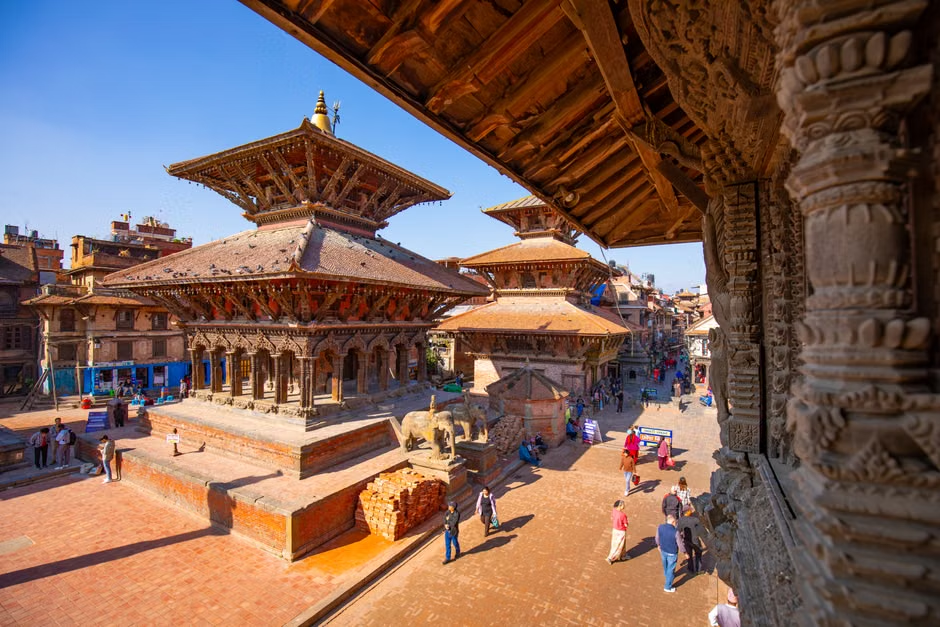
Why Patan / Lalitpur is Perfect for Your Celebration
- UNESCO-listed Durbar Square and medieval courtyards provide unmatched ceremonial backdrops
- Rich Newari cultural traditions — music, cuisine, and ritual — can be authentically woven into celebrations
- Intimate city scale suits smaller, curated guest lists seeking depth over spectacle
- Tribhuvan International Airport (KTM) is just ~7 km away, making international guest arrivals straightforward
- October and November offer reliably clear skies and comfortable temperatures for outdoor events
- A growing boutique hospitality scene offers heritage-style properties within the historic core
Compare Patan / Lalitpur with Other Top Destinations
Frequently Asked Questions
Is Patan / Lalitpur a good destination for a wedding?
Yes, particularly for couples seeking an intimate, culturally immersive celebration. Patan's Newari heritage architecture, courtyard spaces, and living cultural traditions create a genuinely distinctive wedding atmosphere. It is most naturally suited to guest lists in the 50–250 range, where the city's intimate scale becomes an asset rather than a constraint. Couples who want their destination to feel meaningful — not just scenic — will find Patan a compelling choice.
What is the best time of year to hold an event in Patan / Lalitpur?
October and November are generally the strongest months — post-monsoon skies are clear, temperatures are comfortable (typically low-to-mid 20s°C by day), and the valley is at its most visually striking. March and April offer a good spring alternative with blooming rhododendrons and pleasant warmth. Avoid June through September (monsoon) for outdoor events, and December through February if cold evenings and morning fog are a concern for your guests.
How do guests get to Patan / Lalitpur?
Tribhuvan International Airport (KTM) is approximately 7 km from Patan's city center and is the primary arrival point for all guests. It has direct connections from major Indian cities (Delhi, Mumbai, Kolkata, Bangalore) and several international hubs. There is no railway network serving the Kathmandu Valley, so all guests will arrive by air or, for those already in the region, by road from the Indian border.
What size guest group can Patan / Lalitpur realistically accommodate for an event?
Patan and the broader Kathmandu Valley can comfortably support events in the 50–300 guest range, with a mix of heritage boutique properties and larger full-service hotels providing accommodation. Events above 300–400 guests may find accommodation more dispersed across the valley than is ideal, and single-venue capacity at that scale is limited. The destination is genuinely best suited to curated, smaller gatherings.
What kinds of venues are available for events in Patan / Lalitpur?
The main options include heritage boutique hotels with courtyard gardens and traditional Newari architecture (typically 50–200 guest capacity), larger full-service hotels in the broader Kathmandu Valley with ballrooms and lawns (up to 400–600 guests), and rooftop terraces with views over the city's temple skyline. Purpose-built large-scale wedding resort infrastructure is limited — the destination's strength is atmospheric, heritage-style spaces rather than high-capacity event halls.
Do guests need a visa to attend an event in Patan / Lalitpur?
Most nationalities require a visa for Nepal, which is available on arrival at Tribhuvan International Airport and is generally straightforward to obtain. Indian nationals can enter Nepal without a visa but do need a valid passport or voter ID card. It is worth communicating this clearly to international guests well in advance, as it is an additional logistical step compared to a domestic Indian destination.
Can Newari cultural traditions be incorporated into a wedding or celebration in Patan?
Yes, and this is one of Patan's genuine strengths as an event destination. Traditional Newari music (including dhimay and panchai baja ensembles), multi-course Newari feast menus, and locally crafted décor sourced from Patan's artisan community can all be authentically integrated into celebrations. Local event coordinators with Kathmandu Valley experience can facilitate these elements — they are not tourist performances but living traditions.
How easy is it to move a large group around Patan during an event?
Group logistics within Patan require careful planning. The historic city core has narrow lanes that are not accessible to large coaches, so guest movement is best managed with smaller private vehicles or on foot for short distances. Traffic congestion in the Kathmandu Valley can be significant, particularly during major festival periods in October and November. Build generous transfer times into event schedules and work with a local coordinator familiar with the city's road patterns.
Is the local vendor ecosystem in Patan equipped for destination events?
Yes, within its scale. Patan has an established catering community experienced in both Newari and broader Nepali cuisine, a strong artisan base for locally sourced décor, and a growing community of event photographers and coordinators with destination wedding experience. For very large or highly complex productions, some supplementation from Kathmandu-based or international vendors may be needed, but for events in the 50–250 guest range, the local ecosystem is generally well-suited.
What makes Patan / Lalitpur different from other destination wedding locations in the region?
Patan's defining difference is that the city itself is the experience — not just a setting. Its UNESCO-listed Durbar Square, living Newari cultural traditions, and medieval courtyard architecture are genuinely irreplaceable. Unlike resort-based destinations where the venue is self-contained, Patan invites guests to engage with a real, historically layered city. This makes it particularly compelling for couples and families who want their celebration to feel rooted in place and cultural meaning.
Are there good accommodation options for event guests staying in Patan / Lalitpur?
Yes. Patan and the surrounding Kathmandu Valley offer a range of accommodation from heritage boutique properties within the historic city to larger full-service hotels a short drive away. For groups of up to around 300 guests, accommodation can generally be arranged within a manageable radius of the event venue. Very large groups may need to spread across multiple properties in the valley, which requires coordinated transport planning.
What should I be aware of when planning an event in Patan during the October–November festival season?
October and November coincide with Nepal's major festival calendar — Dashain and Tihar are both celebrated during this period, bringing significant cultural richness to the destination. However, this also means that local hospitality resources, transport, and vendors are in high demand. Book venues, accommodation, and key vendors well in advance (ideally 9–12 months ahead for peak festival dates), and factor in that some local staff and vendors may have festival commitments that affect availability on specific days.

Ready to explore venues in Patan / Lalitpur?
Patan / Lalitpur: Destination Wedding & Cultural Event Venues in Nepal's Ancient City
◆Patan / Lalitpur is best suited to intimate, culturally immersive weddings, private celebrations, and social gatherings where heritage atmosphere matters more than large-scale infrastructure. Its primary vibe is Cultural & Timeless — rooted in Newari architecture, living Buddhist-Hindu traditions, and medieval courtyard spaces that few destinations in South Asia can match. The best seasons are March–April and October–November, when skies are clear and temperatures are comfortable. Tribhuvan International Airport (KTM) is approximately 7 km away, making international guest arrivals manageable, though the city's intimate scale means it is most naturally suited to guest lists in the range of 50–300 rather than very large gatherings.
Patan / Lalitpur at a Glance
| Attribute | Detail |
|---|---|
| Best For | Intimate Weddings, Cultural Celebrations, Social Gatherings, Private Events |
| Primary Vibe | Cultural & Timeless |
| Other Vibes | Spiritual, Artisan, Heritage, Intimate |
| Best Season | Autumn / Fall (Mar, Apr, Oct, Nov) |
Why Choose Patan / Lalitpur?
- Unrivalled Newari architectural heritage: Patan's UNESCO-listed Durbar Square, its network of bahals (Buddhist courtyards), and its intricately carved temples create ceremonial backdrops that are genuinely irreplaceable — no purpose-built event venue can replicate this atmosphere.
- Living cultural traditions as event content: Newari music (dhimay, panchai baja), traditional cuisine, and ritual practices are not museum exhibits here — they are active community traditions that can be authentically incorporated into wedding ceremonies and celebrations, giving events a depth of meaning that generic resort settings cannot offer.
- Proximity to an international airport: Tribhuvan International Airport (KTM) is roughly 7 km from Patan's city center, with direct connections from major South Asian hubs and several international cities, making it genuinely accessible for guests traveling from India, Southeast Asia, the Gulf, and beyond.
- Boutique and heritage hospitality within the city: Patan and the immediately surrounding Kathmandu Valley area offer a range of heritage-style boutique properties and established hotels that can accommodate event guests without requiring long transfers, keeping the group experience cohesive.
- Artisan and craft ecosystem: Patan is Nepal's historic center of metalwork, thangka painting, and woodcarving. This translates directly into distinctive, locally sourced event décor, gifts, and experiences that are both authentic and meaningful.
- Intimate city scale suits curated guest lists: Unlike sprawling resort destinations, Patan's compact historic core means that guests staying in the area can walk between venues, explore the city organically, and experience the destination as a whole — not just a hotel compound.
Which Celebrations Work Best in Patan / Lalitpur?
- Intimate destination weddings: Patan is particularly well-suited to couples who want a wedding that feels rooted in place — where the city itself is part of the ceremony, not just a backdrop. Newari courtyard spaces, heritage properties, and the spiritual atmosphere of the valley make smaller weddings (typically under 200 guests) feel genuinely ceremonial rather than logistically managed.
- Cultural and heritage celebrations: Milestone events — anniversaries, family reunions, naming ceremonies — that benefit from a sense of historical continuity find a natural home in Patan. The city's layered Buddhist and Hindu traditions give even secular celebrations a sense of occasion.
- Social gatherings and private parties: The city's boutique restaurant scene, rooftop terraces overlooking temple spires, and courtyard spaces make it well-suited to smaller social events — cocktail evenings, pre-wedding dinners, and post-event gatherings — where atmosphere is the priority.
- Corporate retreats with a cultural dimension: Teams seeking an offsite that combines genuine cultural immersion with functional meeting space will find Patan's established hotels and the broader Kathmandu Valley well-equipped for this format, particularly in the October–November window.
Venues & Event Spaces
Patan and the surrounding Kathmandu Valley offer a genuinely varied range of event spaces, though the inventory is more intimate in scale than a large resort destination. The main categories include:
- Heritage boutique hotels and courtyard properties: Several properties within or immediately adjacent to Patan's historic core have been sensitively restored and offer courtyard gardens, traditional architecture, and event spaces that seat between 50 and 200 guests. These are the most distinctive option for couples seeking an authentic Newari setting.
- Established full-service hotels in the Kathmandu Valley: Larger, internationally branded properties in the broader valley area (within a short drive of Patan) offer ballrooms, lawns, and banquet facilities capable of hosting events in the 200–600 guest range, with professional event management infrastructure.
- Rooftop terraces and garden spaces: A number of Patan's boutique hotels and restaurants feature rooftop terraces with views over the city's temple skyline — particularly atmospheric for evening events during the clear autumn and spring seasons.
- Community and cultural spaces: For events with a strong cultural programming element, some of Patan's historic bahals and community courtyards can be accessed for private events, typically requiring coordination with local cultural organizations and advance planning.
It is worth noting that Patan does not have the large-scale dedicated wedding resort infrastructure found in some Indian destination wedding cities — the strength here is authenticity and atmosphere, not sheer capacity or purpose-built event facilities.
Best Time to Celebrate
The curated best seasons for events in Patan / Lalitpur are March, April, October, and November — broadly the post-monsoon autumn and the pre-monsoon spring windows.
- October and November are generally considered the prime window. The monsoon has cleared, leaving the valley with exceptionally clean air, vivid mountain views (including Himalayan peaks on clear days), and stable daytime temperatures typically in the low-to-mid 20s°C. Evenings are cool but comfortable. This is also the period of major Nepali festivals including Dashain and Tihar, which adds cultural richness but also means advance planning is essential as local hospitality resources are in high demand.
- March and April offer a spring alternative — rhododendrons are in bloom across the hills, temperatures are warming pleasantly, and the valley is clear before the pre-monsoon haze builds in May. April can see some afternoon cloud build-up, but rain is generally light and brief at this stage.
- May marks a transition — temperatures rise noticeably, haze increases, and the risk of pre-monsoon showers grows. Outdoor events become less reliable.
- June through September is the monsoon season. Rainfall is frequent and heavy, outdoor events are largely impractical, and the valley can feel humid and overcast for extended periods. Events during this window require fully covered indoor spaces and contingency planning.
- December through February brings cold mornings and evenings (temperatures can drop to near or below 5°C overnight), frequent morning fog in the valley, and occasional frost at higher elevations. Daytime can be pleasant and sunny, but the cold and fog make early-morning ceremonies and outdoor evening events uncomfortable for many guests.
Getting There & Local Connectivity
Patan / Lalitpur is served by Tribhuvan International Airport (KTM), located approximately 7 km from the city center — one of the closer airport-to-city relationships of any South Asian destination. The airport handles direct flights from major Indian cities (Delhi, Mumbai, Kolkata, Bangalore), as well as connections from the Gulf, Southeast Asia, and several European hubs. For guests traveling from within India, the journey is typically straightforward, with flight times of under two hours from most major cities.
Nepal has no operational passenger railway network serving the Kathmandu Valley, so all guests will arrive by air or road. Road entry from India (via border crossings such as Sunauli/Bhairahawa or Kakarbhitta) is possible but involves long journey times and is generally not practical for event guests unless they are already in the region.
Within Patan and the Kathmandu Valley, local transport for groups typically relies on private vehicles and minibuses arranged through hotels or event coordinators. The city's historic core has narrow lanes that are not accessible to large coaches, so guest movement within the heritage area is best managed with smaller vehicles or on foot. Traffic congestion in the valley can be significant, particularly during peak festival periods — build generous transfer times into event schedules.
Local Vendor & Hospitality Ecosystem
Patan's vendor ecosystem is genuinely strong in areas directly tied to its cultural identity, and more limited in areas associated with large-scale event production.
- Catering and cuisine: Newari cuisine is one of Nepal's most distinctive culinary traditions, and Patan has a well-developed local catering community capable of delivering authentic multi-course Newari feasts as well as broader Nepali and continental menus. Several established caterers in the valley have experience with event-scale service.
- Décor and artisan sourcing: Patan's status as Nepal's historic craft center means that locally sourced décor — metalwork, woodcarving, thangka-inspired textiles, handmade paper — is both high quality and genuinely available. This is a meaningful advantage for couples wanting décor that reflects the destination.
- Photography and videography: The Kathmandu Valley has a growing community of professional photographers and videographers with experience in destination event work, though for very large productions, some couples bring specialists from India or internationally.
- Event management: A small but established event management industry operates in the valley, with coordinators experienced in destination weddings for both Nepali and international clients. For complex, large-scale productions, it is advisable to engage a coordinator with specific Kathmandu Valley experience rather than assuming the same vendor infrastructure as a major Indian city.
- Accommodation capacity: The combined accommodation inventory of Patan and the broader Kathmandu Valley is sufficient for most event guest lists in the 50–300 range, with a mix of heritage boutique properties and larger full-service hotels. Very large groups (400+) may find accommodation more dispersed across the valley than is ideal.
Pros & Things to Consider
Why Patan / Lalitpur Works Well
- Genuinely irreplaceable cultural and architectural atmosphere — Newari heritage is not replicated anywhere else
- Close proximity to an international airport makes guest arrivals manageable
- Authentic local vendor ecosystem for cuisine, décor, and cultural programming
- Compact city scale creates a cohesive guest experience — the destination itself is the entertainment
- October–November window offers reliably excellent weather with the added richness of major Nepali festivals
- Heritage boutique properties offer intimate, characterful accommodation that reinforces the destination's identity
Things to Consider
- No railway connectivity — all guests must arrive by air or road, which can be a constraint for some
- Large-scale event infrastructure (purpose-built wedding resorts, very large ballrooms) is limited compared to major Indian destination wedding cities
- Traffic congestion within the Kathmandu Valley can be significant, particularly during festival periods — logistics require careful planning
- The monsoon season (June–September) makes outdoor events largely impractical and requires robust indoor contingency planning
- International guests may require a Nepal visa, adding a logistical step not present for purely domestic Indian destinations
- The city's historic core has narrow lanes that limit vehicle access, which affects guest movement and vendor logistics
When Patan / Lalitpur May Not Be the Right Fit
- Very large guest lists (400+): If your event requires a single venue accommodating 500 or more guests under one roof with on-site accommodation for the majority, Patan's current hospitality inventory is unlikely to meet that need without significant logistical compromise.
- Monsoon-season outdoor events: If your preferred dates fall between June and September and outdoor spaces are central to your event vision, Patan is a poor fit — the monsoon is persistent and heavy, and the city's most distinctive spaces (courtyards, rooftops, temple surrounds) are exposed.
- Guests with limited international travel experience or visa concerns: Nepal requires a visa for most nationalities (including Indian nationals, who can enter visa-free but still need a valid passport). For guest groups where international travel logistics are a significant barrier, a domestic Indian destination may be more practical.
- Events requiring large-scale production infrastructure: If your event vision involves very large stage productions, extensive pyrotechnics, or the kind of infrastructure typically associated with a 1,000-guest Indian destination wedding, the local vendor ecosystem and venue scale in Patan will require either significant supplementation from outside or a recalibration of expectations.