
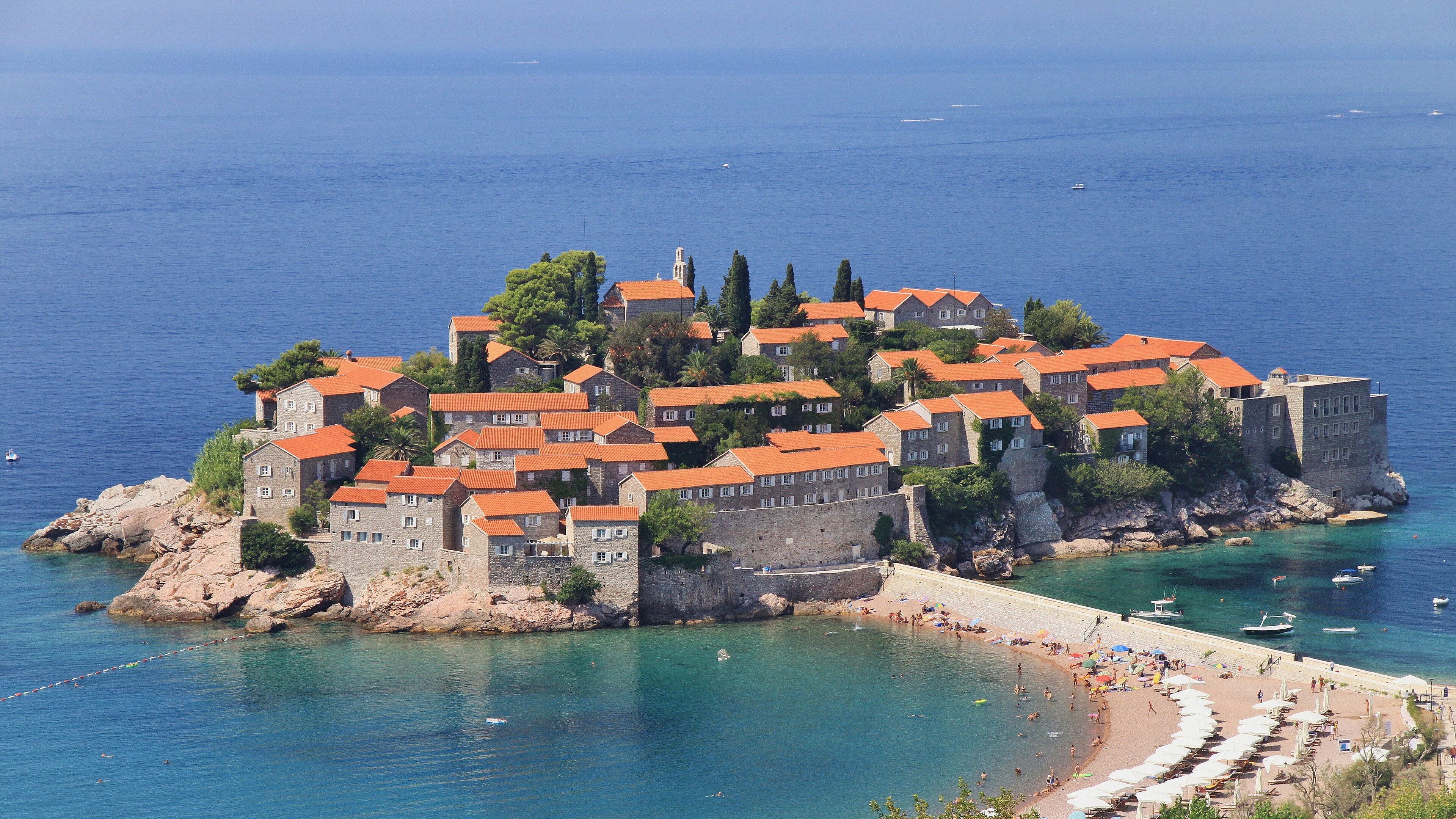
Why Sveti Stefan is Perfect for Your Celebration
- Aman Sveti Stefan offers near-total buyout of a historic islet village — unmatched privacy for exclusive events
- Dramatic Adriatic backdrop with a medieval stone village setting creates genuinely cinematic ceremony visuals
- Long, warm Mediterranean summers (May–September) provide reliable outdoor event conditions
- Intimate scale suits small, ultra-exclusive weddings and private celebrations rather than mass-market events
- World-class Aman hospitality standard with dedicated event planning support on-site
- Proximity to Tivat Airport (approx. 35 km) allows international guests to arrive with relative ease during summer

Compare Sveti Stefan with Other Top Destinations
Frequently Asked Questions
Is Sveti Stefan a good destination for a wedding?
Yes, particularly for intimate, luxury weddings. Sveti Stefan's fortified islet setting, Aman-standard hospitality, and Adriatic backdrop make it one of Europe's most visually dramatic wedding destinations. It is best suited to smaller guest lists — typically under 150 — where exclusivity and setting quality matter more than scale. Couples seeking a genuinely private, cinematic ceremony location will find it exceptionally well-matched.
How many guests can realistically be accommodated for an event at Sveti Stefan?
Sveti Stefan is best suited to intimate events, generally up to around 100–150 guests for a ceremony and reception within the primary resort. Accommodation for larger groups requires using properties in the surrounding Przno and Budva area, which is manageable but adds transfer logistics. The destination is not designed for very large-scale events and works best when the guest list is deliberately kept small.
What is the best time of year to hold a wedding or event at Sveti Stefan?
May through September is the curated best season. This Mediterranean summer window delivers warm, dry, and sunny conditions with long daylight hours — ideal for outdoor ceremonies and terrace receptions. June and early September are often the most comfortable months, balancing good weather with a slightly quieter surrounding environment compared to the peak of July and August.
Which airport do international guests use to reach Sveti Stefan?
Tivat Airport is the closest and most practical option, approximately 35 km from Sveti Stefan with a road transfer of around 35–45 minutes. Podgorica Airport is a further alternative, roughly 70 km away, with a broader range of year-round international connections. During summer, Tivat receives direct flights from multiple European cities, making it the preferred arrival point for most event guests.
Is there a train to Sveti Stefan?
No. There is no direct railway connection to Sveti Stefan. The nearest rail infrastructure is in Bar or Podgorica, and road transfer is the only practical option for the final leg of any journey. Event planners typically arrange private or group transfers from Tivat Airport for arriving guests, which is the standard and most efficient approach for this destination.
What kinds of event spaces are available at Sveti Stefan?
The primary event infrastructure consists of spaces within the luxury resort that occupies the historic islet village — including stone-walled indoor rooms, sea-view terraces, courtyard gardens, and the adjacent mainland estate with outdoor lawn areas. The overall character is heritage and coastal: intimate, visually dramatic spaces rather than large conventional banquet halls. The destination suits alfresco ceremonies and terrace receptions particularly well.
How do guests get around once they arrive at Sveti Stefan?
The islet itself is pedestrian-only, so all vehicle access stops at the causeway. Guests staying at properties in the surrounding area — Przno or Budva — require short road transfers to reach the main event venue. Event planners typically arrange a coordinated shuttle or private transfer fleet for the duration of the event, particularly for evening functions when guests need return transport after dark.
Does Sveti Stefan have a mature local wedding vendor ecosystem?
The primary resort has strong in-house event planning, catering, and service capabilities, which reduces the need for external vendors for events hosted there. However, the broader local independent vendor market — florists, entertainment agencies, AV specialists, stylists — is limited. Specialist suppliers are typically sourced from Podgorica, the wider Budva area, or internationally, which is manageable but requires early planning and additional logistics.
Can the Sveti Stefan islet be privately hired for an event?
Yes, in principle. The Aman Sveti Stefan resort encompasses the historic islet village and the adjacent Miločer estate, and the property can be taken on an exclusive-use basis for events — effectively giving a host private access to the entire islet. This is one of the destination's most distinctive features and a primary reason couples and event planners choose it for high-end, private celebrations.
What makes Sveti Stefan different from other European coastal wedding destinations?
The combination of a genuinely historic fortified islet village — not a purpose-built resort — with Aman-level hospitality and an Adriatic setting is rare. The destination offers a level of visual authenticity and privacy that is difficult to replicate: guests are not simply at a coastal hotel, but within a 15th-century stone village on its own island. This heritage character, combined with world-class service, is what distinguishes it from more conventional Mediterranean wedding venues.
Are there things to do for guests beyond the main event at Sveti Stefan?
Yes. The surrounding Budva Riviera offers beaches, boat excursions along the Montenegrin coast, visits to the walled old town of Budva, and day trips to the Bay of Kotor — a UNESCO-listed area roughly an hour's drive away. The broader region provides a genuinely rich pre- and post-event experience for guests who extend their stay, which is a meaningful advantage for a destination wedding where guests travel internationally.
Is Sveti Stefan safe for international guests?
Yes. Montenegro is generally considered a very safe destination for international visitors, and Sveti Stefan specifically — given its resort-dominated character and limited public access — is among the more secure environments in the region. The primary resort operates with professional security and guest management standards consistent with global luxury hospitality. Standard travel precautions apply, but there are no specific safety concerns that would give event planners pause.

Ready to explore venues in Sveti Stefan?
Sveti Stefan: Luxury Destination Weddings & Exclusive Events on the Adriatic
◆Sveti Stefan is a small, ultra-exclusive destination on Montenegro's Adriatic coast, best suited to intimate luxury weddings, private celebrations, and high-end social events. Its primary strength is a combination of dramatic medieval islet scenery, world-class Aman-standard hospitality, and near-total privacy — making it one of Europe's most distinctive settings for couples or hosts seeking an exclusive, cinematic event rather than a large-scale or budget-conscious one. The destination is most accessible and most enjoyable during the Mediterranean summer (May through September). International guests typically arrive via Tivat Airport, roughly 35 km away, making it reachable but not effortlessly so for very large groups.
Sveti Stefan at a Glance
| Attribute | Detail |
|---|---|
| Best For | Intimate luxury weddings, private social celebrations, honeymoon-adjacent events, exclusive corporate retreats |
| Primary Vibe | Luxury & Glamour |
| Other Vibes | Coastal exclusivity, Heritage romance, Cinematic drama |
| Best Season | Summer (May, Jun, Jul, Aug, Sep) |
Why Choose Sveti Stefan?
- Unrivalled visual drama: The fortified islet village — a cluster of 15th-century stone buildings rising from a turquoise Adriatic bay — provides a ceremony and reception backdrop that is genuinely difficult to replicate anywhere else in Europe.
- Exclusive resort buyout potential: The Aman Sveti Stefan property encompasses the historic islet itself as well as the adjacent Villa Miločer estate, allowing event hosts to effectively take over an entire heritage village for their celebration — a level of privacy and immersion rarely available at comparable destinations.
- Mediterranean summer reliability: The May–September window delivers consistently warm, dry, and sunny conditions, with long daylight hours that suit both daytime ceremonies and evening receptions on terraces overlooking the sea.
- Intimate scale by design: Sveti Stefan is not a mass-market resort town. Its small footprint and limited accommodation inventory mean events here are inherently exclusive — a genuine advantage for couples or hosts who prioritise privacy and a curated guest experience over scale.
- World-class hospitality infrastructure: Aman's global reputation for discreet, personalised service translates directly into event planning support, bespoke catering, and a level of operational polish that is difficult to find in a destination this small.
- Proximity to the broader Budva Riviera: While Sveti Stefan itself is compact, the surrounding Budva municipality offers additional accommodation options for overflow guests, and the wider Montenegrin coast provides excursion and pre/post-event experiences.
Which Celebrations Work Best in Sveti Stefan?
- Intimate destination weddings: Sveti Stefan is particularly well-suited to small, high-end weddings — typically under 100–150 guests — where the emphasis is on visual impact, privacy, and a once-in-a-lifetime setting rather than large guest lists or elaborate multi-venue logistics.
- Private social celebrations: Milestone birthdays, anniversaries, and family reunion events benefit from the destination's exclusivity and the ability to create a fully immersive, private environment for a close group.
- Honeymoon-adjacent experiences: Couples who want their wedding and honeymoon to begin in the same extraordinary location find Sveti Stefan's combination of ceremony setting and resort luxury particularly compelling.
- Exclusive corporate retreats and incentive events: The destination's privacy, world-class service standards, and dramatic setting make it a credible choice for high-end corporate groups seeking an incentive or leadership retreat with genuine wow-factor — provided the group size fits the intimate venue inventory.
Venues & Event Spaces
The venue landscape at Sveti Stefan is deliberately limited and intentionally exclusive. The dominant event infrastructure is a luxury resort that occupies the historic islet village itself, offering a range of indoor and outdoor spaces within centuries-old stone buildings — including terraced gardens, sea-view courtyards, and intimate dining rooms that can be configured for ceremonies, receptions, and private dinners. The adjacent mainland estate adds further outdoor lawn and garden spaces with direct Adriatic views, suitable for cocktail receptions and alfresco dining.
Beyond the primary resort, the immediately surrounding area — particularly the village of Przno — offers a small number of additional hotel properties with their own event facilities, providing supplementary accommodation and modest function space for overflow guests or secondary events. The overall venue inventory is small by design: this is not a destination with dozens of competing banquet halls or large convention facilities. Event planners should approach Sveti Stefan expecting to work within a curated, boutique framework rather than a broad, competitive marketplace of venue options.
Outdoor spaces are a particular strength — the combination of stone terraces, manicured gardens, and unobstructed sea views creates ceremony and reception settings that require minimal additional decoration to achieve a high visual standard. Indoor spaces within the historic village buildings carry genuine heritage character, with stone walls, arched doorways, and period architectural detail that adds authenticity to any event aesthetic.
Best Time to Celebrate
The curated best season for Sveti Stefan is Summer: May, June, July, August, and September. This window aligns with the Mediterranean climate's most reliable period — warm to hot temperatures, very low rainfall, calm Adriatic seas, and long daylight hours that extend usable outdoor event time well into the evening. June and September are often considered the most comfortable months for guests, with temperatures typically in the mid-to-upper 20s Celsius and lower humidity than the peak of July and August.
July and August represent the height of the Adriatic tourist season — the weather is at its most reliably sunny and warm, but the surrounding region is at its busiest, which can affect road transfer times from Tivat Airport and the availability of ancillary services. For events requiring maximum privacy and a quieter surrounding environment, late May, June, or early September can offer a better balance.
Outside this summer window, the picture changes considerably. October brings cooler temperatures and increasing rainfall, and while early October can still be pleasant, the risk of unsettled weather makes outdoor event planning less reliable. November through April is genuinely off-season for this part of the Montenegrin coast — temperatures drop significantly, rainfall is frequent, and the primary resort operates on a reduced or seasonal basis. Events planned outside the May–September window face real practical constraints around venue availability, vendor access, and the overall guest experience.
Getting There & Local Connectivity
The most practical international gateway for Sveti Stefan is Tivat Airport, which receives direct flights from a range of European cities during the summer season — particularly from the UK, Germany, Russia, and other key source markets. The drive from Tivat to Sveti Stefan takes approximately 35–45 minutes along the coastal road, and private transfers are the standard arrangement for event guests. Podgorica Airport, Montenegro's main international hub, is a further option — roughly 70 km away — and offers a broader range of year-round connections, though the transfer time is longer.
There is no direct railway connection to Sveti Stefan. The nearest rail infrastructure is in Bar or Podgorica, and road transfer remains the only practical option for the final leg of any journey. For event planners managing a large guest group, coordinating a fleet of private transfers from Tivat is the most common and efficient approach — the airport's relatively small scale actually simplifies group arrival logistics compared to a major hub.
Local movement around Sveti Stefan itself is limited by the destination's compact geography. The islet is pedestrian-only, and the surrounding area is best navigated by private vehicle or organised shuttle. For guests staying at properties in Przno or the broader Budva area, a short road transfer to the main event venue is typically required. Event planners should factor in transfer coordination as a meaningful logistical element, particularly for evening events when guests may need return transport after dark.
Local Vendor & Hospitality Ecosystem
The hospitality ecosystem at Sveti Stefan is narrow but exceptionally deep at the top end. The primary resort operates with an in-house event planning team, in-house catering, and established relationships with specialist suppliers — meaning that for events hosted within that property, the vendor coordination burden on an external planner is relatively low. The resort's kitchen and service teams are accustomed to delivering high-standard event catering for international guests, and the overall operational standard is consistent with global luxury hospitality benchmarks.
Beyond the primary resort, the local vendor ecosystem is limited. Montenegro as a whole has a developing but not yet fully mature destination wedding industry, and Sveti Stefan specifically — given its small size — does not have the depth of independent florists, entertainment agencies, AV specialists, or wedding stylists that a larger destination city would offer. Event planners working here typically bring specialist vendors in from Podgorica, from the broader Budva area, or from international markets. This is a manageable approach for a well-resourced event, but it does add logistical complexity and should be factored into planning timelines.
Catering quality within the resort is strong, with an emphasis on Adriatic and Mediterranean cuisine using locally sourced seafood and regional produce. For events requiring highly specific international cuisine or very large-scale catering operations, supplementary vendor sourcing from outside the immediate area is advisable.
Pros & Things to Consider
Why Sveti Stefan Works Well
- Genuinely unique, world-class visual setting that is difficult to replicate at any comparable destination
- Aman-standard hospitality delivers a consistently exceptional guest experience with minimal operational risk
- Intimate scale creates a naturally exclusive atmosphere — no risk of the event feeling like one of many happening simultaneously
- Reliable Mediterranean summer weather window (May–September) with long, warm days suited to outdoor events
- Islet buyout potential means the entire historic village can become the event's private domain
- Strong international flight connectivity to Tivat during summer season simplifies guest arrival
Things to Consider
- Very limited venue inventory means this destination is not suitable for large guest lists — events above 150 guests will find the local accommodation and event space genuinely constrained
- No railway access and a single practical airport mean guests face a mandatory road transfer, which requires careful coordination for groups
- The local independent vendor ecosystem is thin — specialist suppliers for floristry, entertainment, AV, and styling typically need to be sourced from further afield, adding cost and logistical complexity
- The destination is strongly seasonal — planning an event outside May–September carries real risks around venue availability, weather reliability, and the overall guest experience
- The surrounding area at peak summer (July–August) can be busy with general tourism, which may affect road transfer times and the sense of exclusivity beyond the resort's own boundaries
When Sveti Stefan May Not Be the Right Fit
- Large guest lists: If your event requires accommodating more than 150–200 guests within a single venue or a tightly clustered set of properties, Sveti Stefan's limited inventory will create genuine logistical and accommodation challenges that a larger destination city would handle more comfortably.
- Events planned outside the summer season: Couples or planners committed to an autumn, winter, or spring date will find that Sveti Stefan's primary venue operates seasonally, weather reliability drops significantly, and the overall destination experience is considerably diminished compared to the summer window.
- Guests travelling from destinations without direct Tivat connections: For a guest group drawn primarily from markets without summer charter or scheduled service to Tivat, the journey — involving a connection through Podgorica or another hub — adds meaningful travel complexity that may reduce attendance or guest comfort.
- Events requiring a broad, competitive local vendor market: If your event concept depends on sourcing multiple specialist vendors locally — a large entertainment lineup, highly specific décor requirements, complex AV production — the thin local ecosystem means you will be managing significant vendor logistics from outside the destination, which suits some planners but not all.