
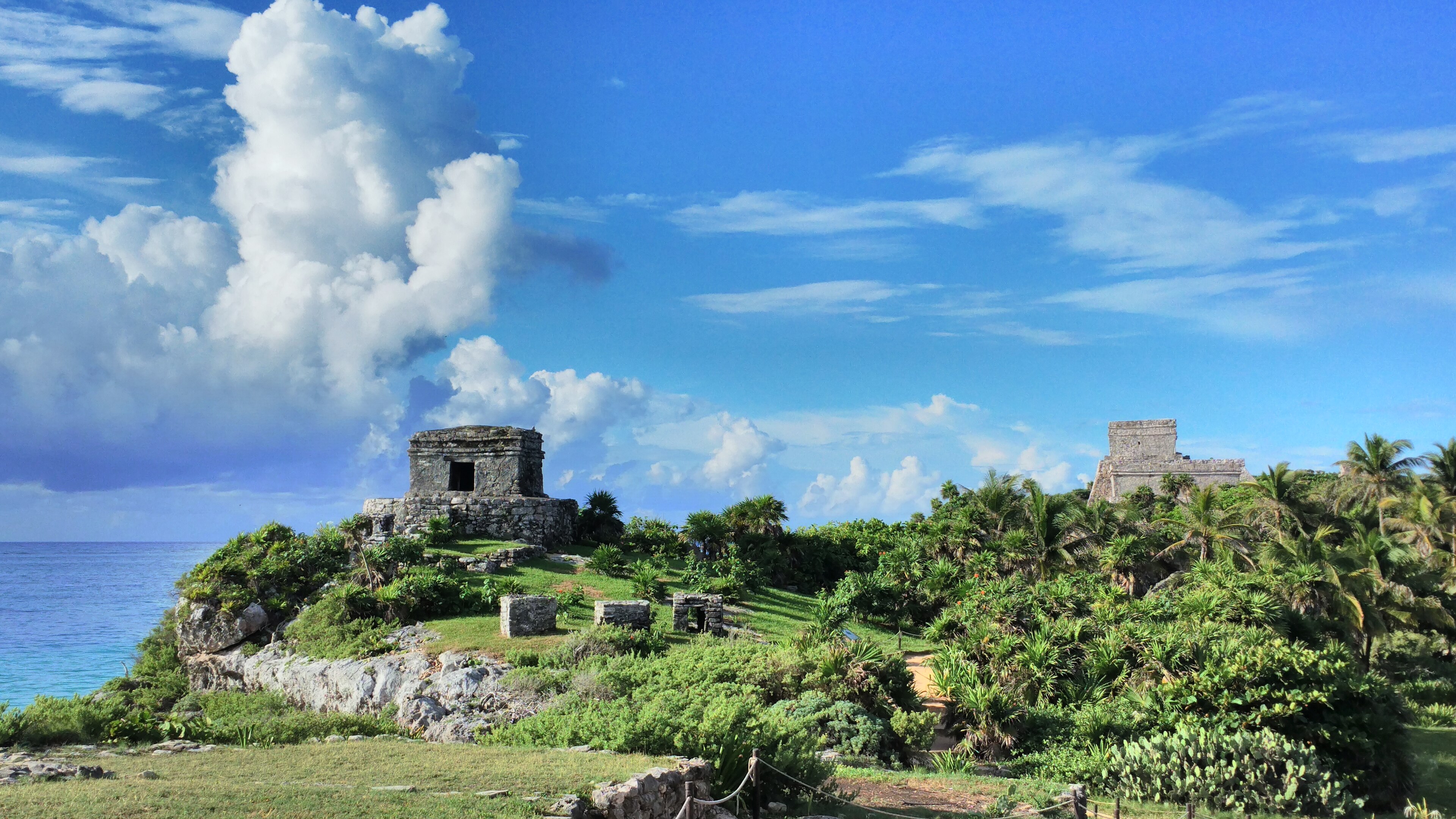
Why Tulum is Perfect for Your Celebration
- Dramatic natural backdrops — Mayan ruins, cenotes, and Caribbean beachfront — create effortlessly cinematic wedding settings
- Thriving eco-luxury resort scene with open-air venues designed specifically for intimate destination celebrations
- Dry season (Nov–Apr) delivers consistently clear skies and comfortable temperatures ideal for outdoor ceremonies
- Internationally experienced vendor ecosystem: wedding planners, floral designers, photographers, and caterers well-versed in destination events
- Bohemian-luxury aesthetic is genuinely distinctive — hard to replicate at conventional hotel-ballroom destinations
- Cenote ceremonies and jungle dinners offer once-in-a-lifetime experiences unique to this specific region

Compare Tulum with Other Top Destinations
Frequently Asked Questions
Is Tulum a good destination for a wedding?
Yes, particularly for intimate and visually distinctive celebrations. Tulum is especially well-suited to weddings in the 20–150 guest range, where its boutique eco-luxury resorts, beachfront ceremony spaces, and cenote venues create a genuinely extraordinary setting. Its mature local wedding-vendor ecosystem means experienced planners, photographers, and caterers are readily available. It is less suited to very large weddings exceeding 300 guests.
What is the best time of year to hold a wedding or event in Tulum?
The dry season — January through April and November through December — is the strongly recommended window. These months bring low humidity, minimal rainfall, and comfortable temperatures ideal for outdoor ceremonies and receptions. January through March are the most reliably stable. June through October falls within hurricane season and carries a genuine risk of tropical storms and heavy rain that makes outdoor events impractical.
How do guests get to Tulum for a destination wedding?
Most guests fly into Cancún International Airport, which has direct connections from major cities across North America and Europe. From the airport, Tulum is approximately 1.5 to 2 hours by road. Private shuttle or van transfers are the standard arrangement for wedding groups. The Tren Maya regional rail also connects Cancún to Tulum, though private transfers are generally more practical for groups with luggage.
What size guest group can Tulum realistically accommodate for a wedding?
Tulum's venue inventory is best suited to intimate to mid-size events — typically 20 to 250 guests. Most properties are boutique in scale, and the destination's character is built around smaller, more private gatherings. Some beach clubs and larger resort properties can accommodate up to 300 guests, but very large events significantly above that threshold will find the local venue options limiting.
What kinds of venues are available for events in Tulum?
Tulum's venue landscape is dominated by open-air and semi-open spaces: beachfront palapas, jungle terraces, wooden decks over the Caribbean, and garden lawns. Cenotes — natural freshwater sinkholes — are increasingly used as ceremony locations and offer a dramatically unique setting. Enclosed, air-conditioned ballroom space is limited by design; Tulum is fundamentally an outdoor-first destination.
Can guests stay close to the event venue in Tulum?
Generally yes, though it requires coordination. Most event venues are boutique resorts that also offer guest accommodation, making on-site or adjacent stays straightforward for smaller groups. For larger guest lists spread across multiple properties along the hotel zone, a dedicated shuttle circuit between accommodation and event venues is standard practice and strongly advisable.
How far in advance should we book a wedding in Tulum?
For prime dry-season dates — particularly January through March — the most sought-after venues and vendors typically book 12 to 18 months in advance. Tulum's popularity as a destination-wedding location means early planning is not just advisable but practically necessary if you have specific venue or vendor preferences. Shoulder dry-season months (November, December, April) may offer slightly more flexibility.
Is the local wedding vendor ecosystem in Tulum experienced with international couples?
Yes. Tulum has one of the most internationally experienced destination-wedding vendor communities in Latin America, built over more than a decade of sustained demand from North American and European couples. Local planners, photographers, floral designers, and caterers are generally well-versed in managing multi-day destination events, outdoor production logistics, and the specific permit requirements for beach and cenote ceremonies.
Are cenote ceremonies actually possible for a wedding in Tulum?
Yes. Cenote ceremonies are a genuine and increasingly popular option in and around Tulum. Several cenotes in the Riviera Maya region are accessible for private event hire and offer a dramatically distinctive setting — naturally lit, surrounded by jungle, with crystal-clear freshwater. Logistics require coordination with a local planner familiar with access permits and site-specific requirements, but it is a well-established practice in the destination.
What makes Tulum different from other Caribbean wedding destinations?
Tulum's distinguishing combination is its bohemian-luxury aesthetic, ancient Mayan cultural context, and access to cenotes — none of which are typical of conventional Caribbean resort destinations. Rather than a manicured all-inclusive resort environment, Tulum offers an earthy, design-forward, nature-immersive setting that appeals specifically to couples seeking a visually distinctive and experientially rich celebration rather than a traditional beach-resort wedding.
Is Tulum safe for international wedding guests?
The tourist zones — the hotel zone (Zona Hotelera) and the main town area — are generally considered safe for international visitors, and the destination receives large numbers of international tourists and wedding guests annually without significant incident. Standard travel precautions apply. Guests and planners should stay informed of current travel advisories from their home country's foreign affairs authority, as conditions in Mexico can vary by region.

Ready to explore venues in Tulum?
Tulum: Destination Wedding & Celebration Venues in Quintana Roo, Mexico
◆Tulum is a bohemian eco-luxury destination on Mexico's Caribbean coast, best suited to intimate weddings, private celebrations, and experiential events for groups typically ranging from 20 to 300 guests. Its primary draw is a genuinely rare combination of natural settings — Caribbean beachfront, jungle cenotes, and ancient Mayan ruins — paired with a mature international hospitality and wedding-vendor ecosystem. The dry season (November through April) is the clear window for outdoor events, offering low humidity and reliable sunshine. Tulum sits roughly 130 km south of Cancún International Airport, making it accessible for international guests willing to factor in a road transfer. It is a premium-tier destination; the eco-luxury positioning of most properties means it is not typically a budget-friendly choice.
Tulum at a Glance
| Category | Detail |
|---|---|
| Best For | Intimate Weddings, Honeymoon Celebrations, Private Parties, Experiential Events |
| Primary Vibe | Romantic & Dreamy |
| Other Vibes | Bohemian, Earthy, Adventurous, Spiritual |
| Best Season | Dry Season (Jan, Feb, Mar, Apr, Nov, Dec) |
Why Choose Tulum?
- Unmatched natural scenery: The combination of turquoise Caribbean water, white-sand beach, dense jungle, and accessible cenotes (natural freshwater sinkholes) creates ceremony and reception backdrops that are genuinely difficult to replicate anywhere else in the world.
- Mature destination-wedding vendor ecosystem: Tulum has attracted an internationally experienced community of wedding planners, photographers, floral designers, and caterers who are specifically accustomed to the logistical demands of destination celebrations — including multi-day events, guest coordination, and outdoor production in a tropical environment.
- Distinctive bohemian-luxury aesthetic: The destination's design identity — open-air palapas, natural materials, candlelit jungle paths, and barefoot-luxury styling — is a coherent, well-developed aesthetic that suits couples seeking something far removed from a conventional hotel ballroom.
- Proximity to cultural and experiential add-ons: The Tulum Mayan ruins, nearby Cobá archaeological site, and a network of cenotes throughout the Riviera Maya give guests genuinely memorable pre- and post-event experiences, making a multi-day celebration itinerary easy to build.
- Dry-season reliability: From November through April, Tulum's weather is among the most consistently pleasant on the Caribbean coast — low humidity, minimal rainfall, and warm but comfortable temperatures that make extended outdoor events practical and comfortable.
- Intimate scale by design: Most Tulum properties are boutique in nature, which means events here naturally feel private and curated rather than mass-market — a genuine advantage for couples who prioritise exclusivity and atmosphere over sheer scale.
Which Celebrations Work Best in Tulum?
- Intimate destination weddings: Tulum is particularly well-suited to weddings in the 20–150 guest range. The boutique resort model, open-air ceremony spaces, and cenote venues are designed for smaller, more personal gatherings rather than large-scale banquets. Couples who want a visually distinctive, emotionally immersive wedding experience consistently find Tulum delivers on that expectation.
- Honeymoon and anniversary celebrations: The destination's romantic, secluded character — private beach access, jungle spa retreats, candlelit dinners — makes it a natural fit for couples celebrating milestones beyond the wedding day itself.
- Private parties and milestone birthdays: The beach-club and eco-resort culture in Tulum is well-adapted to private buyouts and curated group experiences. A milestone birthday or reunion group can take over a boutique property and build a fully personalised multi-day programme.
- Experiential and wellness retreats: Tulum's strong wellness identity — yoga, cenote swimming, temazcal ceremonies, and holistic spa culture — makes it genuinely suitable for wellness-themed celebrations or corporate retreats with a celebratory component, not just traditional weddings.
Venues & Event Spaces
Tulum's venue landscape is dominated by boutique eco-luxury resorts and beach clubs concentrated along the coastal hotel zone, with a secondary cluster of jungle-set properties further inland. Most venues feature open-air structures — palapas (thatched-roof pavilions), wooden decks over the beach, and garden terraces — rather than enclosed ballrooms, which reinforces the destination's outdoor-first character. Cenotes in and around the region are increasingly used as ceremony locations, offering a dramatic, naturally lit underground or semi-open setting unlike anything available in a conventional hotel. Rooftop terraces, beachfront lawns, and jungle clearings round out the typical venue typology. For larger events approaching 200–300 guests, some beach clubs and resort properties can accommodate the scale, though the intimate boutique model remains the dominant offering. Indoor air-conditioned ballroom space is limited by design — couples and planners should plan primarily for outdoor or semi-open settings and build contingency plans for the rare occasion of unexpected weather even within the dry season.
Best Time to Celebrate
The dry season — running from November through April — is the clear and strongly recommended window for outdoor events in Tulum. During these months, rainfall is infrequent, humidity drops to comfortable levels, and daytime temperatures typically sit in the high 20s Celsius, cooling pleasantly in the evenings. January through March represent the most reliably comfortable months, with the lowest chance of any weather disruption. November and December are also excellent, with the added advantage of festive-season atmosphere and slightly lower demand compared to the peak January–March window.
The months outside this window — particularly June through October — fall within the Atlantic hurricane season, which brings a materially elevated risk of tropical storms, heavy sustained rainfall, and high humidity that makes extended outdoor events impractical and potentially unsafe. May sits in a transitional zone: temperatures and humidity begin rising noticeably, and early-season rains can arrive, making it a less reliable choice for outdoor celebrations even if it technically precedes the formal hurricane season. Planners should treat May with caution and June through October as genuinely unsuitable for outdoor event commitments in Tulum.
Getting There & Local Connectivity
The primary international gateway for Tulum is Cancún International Airport, one of Mexico's busiest and best-connected airports, with direct flights from major cities across North America, Europe, and Latin America. The road journey from the airport to Tulum town and the hotel zone takes approximately 1.5 to 2 hours depending on traffic and the specific property's location along the coastal strip — a manageable transfer for most guests, though it requires coordination for large groups arriving across multiple flights.
The Tren Maya regional rail service now includes a Tulum station, connecting the destination to Cancún, Playa del Carmen, and several Mayan archaeological sites. While this is a useful option for individual travellers, it is generally not the most practical solution for coordinating large wedding guest groups with luggage, who typically rely on private shuttle or van transfers arranged through the resort or a local ground-transport operator.
Within Tulum itself, the hotel zone (Zona Hotelera) is a linear coastal strip several kilometres long. Getting between properties, the town centre (Tulum Pueblo), and jungle venues typically requires private vehicles or taxis — there is no meaningful public transport network within the hotel zone. For multi-day events with guests spread across several properties, a dedicated shuttle circuit is strongly advisable and is a standard part of destination-wedding logistics planning in Tulum.
Local Vendor & Hospitality Ecosystem
Tulum has developed one of the most internationally mature destination-wedding vendor ecosystems in Latin America, driven by over a decade of sustained demand from North American and European couples. Local and regionally based wedding planners are generally experienced in managing the specific complexities of destination events: guest travel coordination, multi-vendor production in outdoor environments, permit requirements for beach and cenote ceremonies, and the logistical demands of multi-day celebration programmes.
Floral and décor suppliers in the region have developed strong expertise in the bohemian-tropical aesthetic that defines Tulum events, and many work regularly with international couples who have specific visual references. Catering at the resort level is generally of high quality, with strong representation of both Mexican cuisine and international menus. Photography and videography talent is abundant and internationally competitive — Tulum is one of the most photographed wedding destinations in the Americas, and the local creative community reflects that.
One genuine consideration is that the destination's popularity means peak-season availability at the most sought-after venues and vendors books up well in advance — typically 12 to 18 months ahead for prime dry-season dates. Early planning is not just advisable but practically necessary for couples with specific venue or vendor preferences.
Pros & Things to Consider
Why Tulum Works Well
- Genuinely distinctive natural settings — cenotes, Caribbean beach, jungle — that create visually extraordinary event backdrops
- Mature, internationally experienced wedding and event vendor community
- Dry season (Nov–Apr) delivers reliable, comfortable outdoor weather for extended celebrations
- Boutique resort model naturally supports intimate, private, exclusive-feeling events
- Rich guest experience beyond the event itself — ruins, cenotes, wellness, beach — makes multi-day programmes easy to build
- Strong international flight connectivity via Cancún for guests travelling from North America and Europe
Things to Consider
- Transfer distance from the airport: The 1.5–2 hour road journey from Cancún airport to Tulum adds a logistical layer that requires careful coordination, particularly for guests arriving late at night or on tight schedules.
- Limited large-scale venue capacity: Tulum's boutique character means it is not well-suited to very large weddings or events exceeding roughly 300 guests — the venue inventory simply does not support the scale that some other destinations can offer.
- Outdoor-first environment: Almost all event spaces are open-air or semi-open. While this is a strength in the dry season, it requires robust contingency planning and means the destination is genuinely unsuitable for events during the rainy/hurricane season.
- Peak-season booking pressure: The most desirable venues and vendors book up 12–18 months in advance for prime dry-season dates, requiring earlier planning lead times than many comparable destinations.
- Internal transport requires active management: The absence of public transport within the hotel zone means guest movement between venues, accommodation, and activities must be actively organised through private shuttles.
- Connectivity in jungle areas: Properties set deeper in the jungle may have limited mobile and internet connectivity, which can be a practical consideration for guests and for event-day coordination.
When Tulum May Not Be the Right Fit
- Events planned for June through October: The hurricane season brings a genuine and material risk of tropical storms, sustained heavy rainfall, and conditions that make outdoor celebrations impractical. Couples with fixed dates in this window should seriously consider an alternative destination or a fully indoor venue — which Tulum does not readily offer.
- Very large guest lists (300+): The boutique, intimate character of Tulum's venue inventory means it does not comfortably support very large-scale events. Couples expecting a guest list significantly above 250–300 will find the local venue options limiting and may be better served by a destination with larger resort or convention infrastructure.
- Guests with limited international travel flexibility: While Cancún is well-connected internationally, guests travelling from regions without direct routes to Cancún face multi-leg journeys. For a predominantly domestic Mexican guest list outside the Yucatán, or for guests from regions with poor Cancún connectivity, the travel burden may be disproportionate.
- Couples seeking a traditional or formal ballroom-style celebration: Tulum's entire venue and aesthetic identity is built around open-air, natural, bohemian settings. Couples who specifically want a grand indoor ballroom, formal chandeliered reception hall, or highly conventional wedding format will find the local offering a poor match for that vision.