
Why Riviera Maya is Perfect for Your Celebration
- Miles of white-sand Caribbean beach provide naturally stunning ceremony backdrops
- Exceptional concentration of large all-inclusive luxury resorts with dedicated wedding teams
- Dry season (Nov–Apr) delivers reliably clear skies and calm seas for outdoor events
- Cancún International Airport offers direct flights from North America, Europe, and Latin America
- Unique Mayan cenotes, ruins, and jungle settings add cultural depth to celebrations
- Mature destination-wedding vendor ecosystem — photographers, florists, planners, and caterers all highly experienced with international couples

Compare Riviera Maya with Other Top Destinations
Frequently Asked Questions
Is Riviera Maya a good destination for a wedding?
Yes, strongly so. Riviera Maya is one of the world's most established destination-wedding locations, with a high concentration of beachfront and jungle resort properties, experienced on-site wedding teams, and a reliable dry season from November through April. The combination of natural Caribbean scenery, mature vendor infrastructure, and strong international air access through Cancún makes it particularly well-suited to couples planning a multi-day celebration for an international guest list.
What is the best time of year to hold a wedding or event in Riviera Maya?
The dry season — January, February, March, April, November, and December — is the recommended window. These months offer minimal rainfall, lower humidity, and reliably clear skies for outdoor ceremonies and receptions. January and February are generally the most stable months. June through October falls within the Atlantic hurricane season and carries meaningful weather risk for outdoor events.
How do guests typically get to Riviera Maya for a destination event?
Most guests fly into Cancún International Airport (CUN), which has direct routes from major cities across North America, Europe, and Latin America. From the airport, resort properties are typically 45–90 minutes by road depending on location. Group shuttle transfers, coordinated through the resort or a local destination management company, are the standard and most practical option for large wedding or corporate groups.
How many guests can Riviera Maya venues realistically accommodate?
The corridor supports a wide range of group sizes. Boutique eco-resorts and intimate properties typically handle 30–150 guests comfortably, while larger all-inclusive resort complexes can accommodate 300–800 guests across multiple event spaces. The destination is particularly well-suited to mid-to-large groups of 80–400 guests, where the all-inclusive resort model delivers the most logistical efficiency.
What kinds of event spaces are available in Riviera Maya?
The destination offers beachfront ceremony lawns, jungle and cenote settings, grand indoor ballrooms, rooftop terraces, beach club and pool-deck spaces, and private villa gardens. Most large resort properties have multiple distinct event spaces within a single property, allowing couples to host ceremonies, cocktail hours, and receptions in different settings without requiring guest transport between venues.
Can foreign nationals legally marry in Riviera Maya?
Yes. Civil marriages for foreign nationals are legally recognized in Mexico, and the local vendor and legal ecosystem is well-practiced in guiding international couples through the documentation process. Many couples also choose to hold a symbolic or religious ceremony in Riviera Maya while completing the legal formalities in their home country — both approaches are widely supported by local planners and officiants.
Is Riviera Maya suitable for corporate retreats and incentive travel?
Yes. Large all-inclusive resorts with dedicated conference wings, reliable international air access, and a broad range of team-building activities — cenote excursions, cooking classes, water sports, Mayan ruin tours — make the destination well-suited to corporate groups seeking a reward-style retreat format. The all-inclusive model is particularly practical for managing group food and beverage logistics at scale.
What makes Riviera Maya's vendor ecosystem well-suited to destination events?
Decades of hosting international weddings and corporate events have produced a deep local pool of experienced photographers, florists, entertainment providers, officiants, and destination management companies. Most are multilingual, accustomed to working within resort event frameworks, and familiar with the expectations of international couples. In-house resort wedding teams further reduce the coordination burden for couples planning from abroad.
What is the sargassum seaweed situation, and does it affect events?
Sargassum — a type of brown seaweed — washes onto Caribbean beaches seasonally, most notably from spring through summer. It can affect the visual quality of beachfront ceremony settings. Resort teams actively manage and clear it, but the volume varies year to year and is not fully predictable. Couples planning beachfront ceremonies should discuss the resort's sargassum management approach and have an indoor contingency plan available.
How far in advance should we book a Riviera Maya resort for a destination wedding?
For peak dry-season dates — particularly January through March and December — booking 12–18 months in advance is strongly advisable for popular resort properties, especially if a large group room block is required. Shoulder months (April, November) offer somewhat more flexibility, but early booking remains recommended given the destination's consistent international demand.
What unique settings does Riviera Maya offer that other beach destinations don't?
Riviera Maya's most distinctive assets are its Mayan cultural heritage and natural cenotes. Ancient ruins at Tulum and Cobá provide dramatic backdrops for pre-wedding photography and guest excursions, while sacred cenotes — natural freshwater sinkholes surrounded by jungle — offer ceremony and photoshoot settings that are genuinely unique to the Yucatán Peninsula and unavailable at most other Caribbean or beach destinations.
Is Riviera Maya safe for international wedding guests?
The established resort zones — Mayakoba, Playa del Carmen's hotel zone, Puerto Morelos, and the Tulum hotel strip — are generally considered safe and well-managed for international visitors. Resort properties operate with their own security infrastructure. As with any international destination, guests are advised to stay within well-trafficked tourist areas and follow standard travel precautions; the resort-corridor experience is broadly comfortable for international groups.

Ready to explore venues in Riviera Maya?
Riviera Maya: Destination Wedding & Event Venues on the Caribbean Coast
◆Riviera Maya is one of the world's most established destination-wedding corridors, running along Mexico's Caribbean coastline in Quintana Roo. Its primary strength is beachfront luxury: a dense concentration of large all-inclusive and boutique resorts with professional on-site wedding teams, naturally dramatic settings (white-sand beaches, turquoise sea, jungle cenotes, and Mayan ruins), and a dry season from November through April that delivers reliably clear skies for outdoor events. Cancún International Airport provides direct access from dozens of international cities, making guest travel straightforward. The destination suits weddings, honeymoons, corporate retreats, and milestone celebrations particularly well.
Riviera Maya at a Glance
| Category | Detail |
|---|---|
| Best For | Destination Weddings, Honeymoons, Corporate Retreats, Milestone Celebrations |
| Primary Vibe | Romantic & Dreamy |
| Other Vibes | Tropical, Adventurous, Luxurious, Cultural |
| Best Season | Dry Season (Jan, Feb, Mar, Apr, Nov, Dec) |
Why Choose Riviera Maya?
- Unmatched beachfront scenery: The Caribbean coastline offers naturally photogenic ceremony settings — turquoise water, powdery white sand, and dramatic sunsets — without requiring elaborate décor to create impact.
- Exceptional resort infrastructure: The Riviera Maya corridor hosts a high density of large, purpose-built resort properties with dedicated event spaces, in-house catering, and experienced wedding coordination teams accustomed to managing international guests.
- Unique cultural and natural backdrops: Ancient Mayan ruins at Tulum and Cobá, sacred cenotes (natural freshwater sinkholes), and lush jungle settings give celebrations a distinctive character unavailable at most other beach destinations.
- Strong international air connectivity: Cancún International Airport is one of Mexico's busiest international hubs, with direct routes from North America, Europe, and Latin America, making it genuinely accessible for geographically dispersed guest lists.
- Mature destination-wedding vendor ecosystem: Decades of hosting international weddings have produced a deep local pool of experienced photographers, florists, entertainment providers, officiants, and planners who are fluent in managing multi-day, multi-event celebrations.
- All-inclusive model simplifies group logistics: Many resorts offer group all-inclusive packages that consolidate accommodation, food, beverage, and event costs, reducing the coordination burden for couples and corporate planners managing large guest groups.
Which Celebrations Work Best in Riviera Maya?
- Destination Weddings: This is the destination's single strongest category. The combination of beachfront ceremony settings, large resort capacities, professional on-site wedding teams, and a reliable dry season makes it one of the most consistently well-suited places in the world for international couples planning a multi-day wedding celebration.
- Honeymoons & Romantic Getaways: The intimate boutique properties within the corridor — particularly around Tulum and Mayakoba — offer seclusion, spa facilities, and natural beauty that make Riviera Maya a natural honeymoon choice for couples who have just married elsewhere or are extending their wedding trip.
- Corporate Retreats & Incentive Travel: Large all-inclusive resorts with dedicated conference and event wings, reliable international air access, and a broad range of team-building activities (cenote excursions, cooking classes, water sports) make the destination well-suited for corporate groups seeking a reward-style retreat format.
- Milestone Celebrations (Anniversaries, Birthdays, Quinceañeras): The resort infrastructure scales well for private group events of 50–500 guests, and the destination's inherent glamour makes milestone occasions feel genuinely special without requiring the couple or family to source every element independently.
- Pre-Wedding Events (Mehendi, Sangeet, Welcome Dinners): Multi-day resort buyouts or group blocks allow couples to host a full sequence of pre-wedding events across different resort spaces — beach clubs, jungle terraces, rooftop bars — giving each event a distinct setting within a single property.
Venues & Event Spaces
Riviera Maya's event venue landscape is dominated by large beachfront and jungle-edge resort properties, ranging from sprawling all-inclusive complexes capable of hosting several hundred guests across multiple simultaneous events, to smaller boutique eco-resorts that offer more intimate, curated settings for groups of 30–100. Within these properties, typical event spaces include:
- Beachfront ceremony lawns and terraces: Open-air spaces directly on or adjacent to the Caribbean shore, designed specifically for sunset ceremonies and cocktail receptions.
- Jungle and cenote settings: Some properties have access to or are adjacent to natural cenotes and jungle clearings, which can be used for ceremony or reception settings with a uniquely dramatic, natural character.
- Grand ballrooms and indoor banquet halls: Climate-controlled indoor spaces within larger resorts, suitable for formal dinners and evening receptions, particularly useful during the warmer months or as a contingency for outdoor events.
- Rooftop and sky-deck venues: Several boutique and luxury properties offer elevated outdoor spaces with panoramic sea or jungle views, well-suited to cocktail hours and smaller seated dinners.
- Beach clubs and pool decks: Casual, festive settings ideal for welcome parties, farewell brunches, and daytime celebrations, often with built-in bar and catering infrastructure.
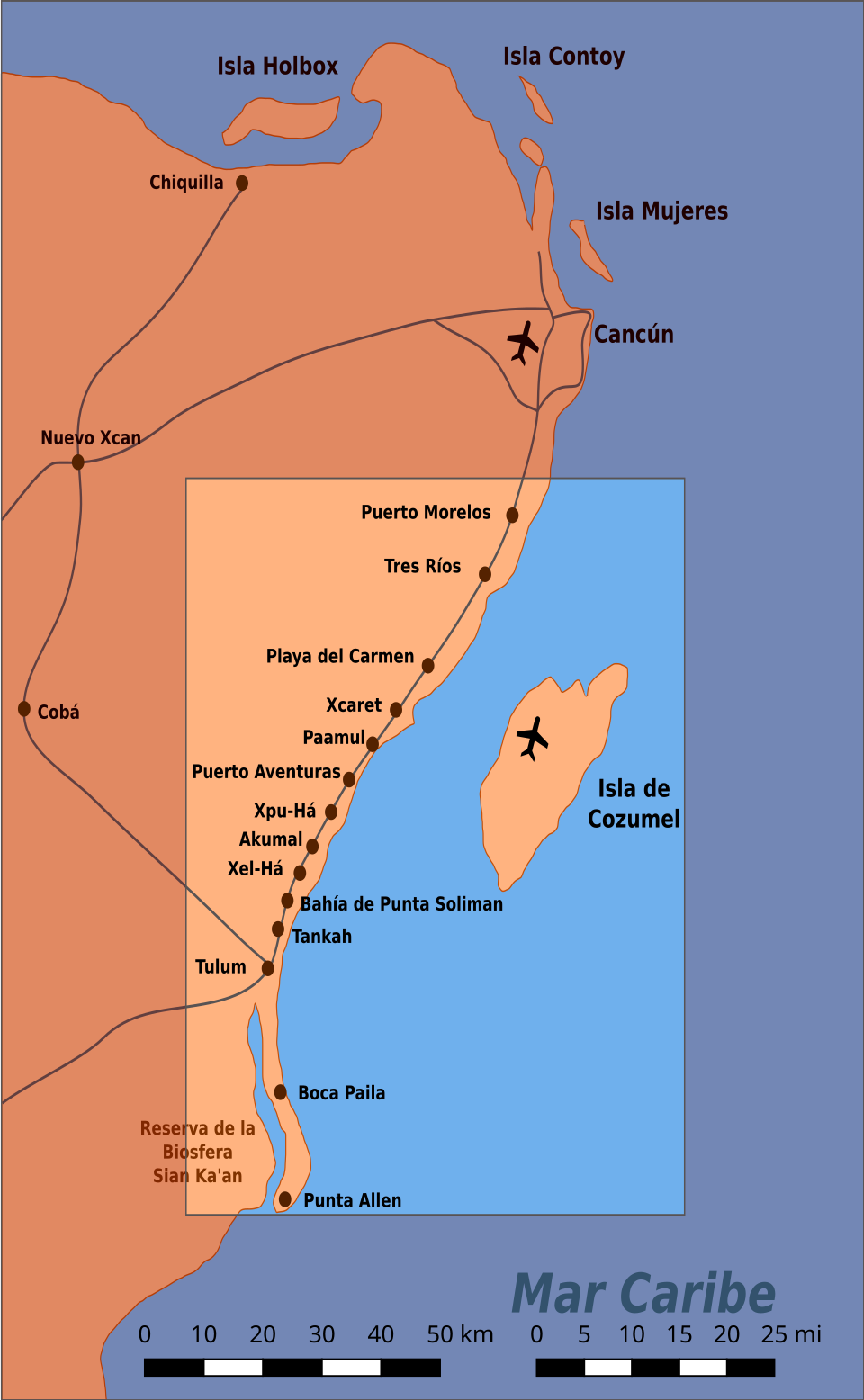
The corridor between Puerto Morelos in the north and Tulum in the south contains the greatest concentration of event-capable properties, with the Mayakoba resort complex near Playa del Carmen representing the highest density of ultra-luxury event infrastructure in a single location.
Best Time to Celebrate
The curated best season for Riviera Maya events is the dry season: January, February, March, April, November, and December. Here is why each part of that window works, and what makes the remaining months less suitable:
- November – December: The tail end of the hurricane season has typically passed by mid-November, and conditions shift quickly toward clear skies, lower humidity, and comfortable evening temperatures. December is particularly popular for weddings, with festive atmosphere and strong international flight availability.
- January – February: Widely considered the peak of the dry season. Daytime temperatures are warm but not oppressive (typically 24–28°C), humidity is at its annual low, and rainfall is minimal. These months offer the most reliable outdoor event conditions of the year.
- March – April: Still firmly within the dry season, though temperatures begin to climb toward the upper end of the comfortable range by late April. Easter week (Semana Santa) brings significant domestic tourism, which can affect resort availability and local traffic — early booking is particularly important for this window.
- May: A genuine shoulder month — temperatures and humidity rise noticeably, and the probability of afternoon rain increases, but the full hurricane season has not yet begun. Outdoor events remain feasible with contingency planning, but conditions are less predictable than the core dry season.
- June – October: The Atlantic hurricane season is active, with peak risk from August through October. This period brings heavy rainfall, high humidity, reduced visibility, and a genuine (if statistically variable) risk of tropical storms or hurricanes directly affecting the region. Outdoor events during this window carry meaningful weather risk, and travel disruption for guests is a real possibility. Most destination-wedding planners advise against scheduling primary events during this window without robust indoor contingency plans.
Getting There & Local Connectivity
Cancún International Airport (CUN) is the primary gateway for Riviera Maya, and it is one of the most internationally connected airports in the Americas. Direct flights operate from major cities across the United States, Canada, the United Kingdom, continental Europe, and Latin America, meaning most international guest groups can reach the destination without a connecting flight. The airport sits at the northern end of the Riviera Maya corridor, placing it roughly 45–90 km from the main resort zones depending on the specific property — a transfer of approximately 45 minutes to 90 minutes by road.
Ground transfers between the airport and resort properties are well-organized, with a mature private shuttle and shared van transfer industry serving the corridor. For large wedding groups, coordinated group transfers — typically arranged through the resort or a local DMC (destination management company) — are the standard approach and work reliably well. Taxis and app-based ride services are available but less practical for large groups arriving simultaneously.
Within the Riviera Maya corridor itself, movement between properties and local attractions is primarily by road. The Tren Maya regional rail service now connects several towns along the corridor, including Playa del Carmen, but it is not yet optimized for large group logistics and is better suited to individual guest exploration. For group excursions — cenote visits, Mayan ruin tours, beach club days — private chartered minibuses and vans are the standard and most practical option, and local operators are experienced in managing these for wedding and corporate groups.
Local Vendor & Hospitality Ecosystem
Riviera Maya has one of the most developed destination-wedding vendor ecosystems in the world, built over several decades of hosting international couples. Key characteristics of this ecosystem include:
- In-house resort teams: Most large resort properties employ dedicated wedding coordinators and event managers who are experienced with international couples, multilingual, and familiar with the legal and logistical requirements of hosting foreign nationals' weddings in Mexico.
- Independent specialist vendors: A large community of independent wedding photographers, videographers, florists, hair and makeup artists, entertainment companies, and officiants operates throughout the corridor, many of whom have extensive portfolios of international destination weddings and are accustomed to working within resort event frameworks.
- Catering quality: Resort catering in the luxury and upper-midscale tiers is generally of a high standard, with significant experience in multi-course plated dinners, cocktail receptions, and themed food stations. Local Mexican cuisine elements — fresh seafood, regional flavors — can be incorporated meaningfully into event menus.
- Legal framework for foreign weddings: Civil weddings for foreign nationals are legally recognized in Mexico, and the local vendor and legal ecosystem is well-practiced in guiding international couples through the documentation requirements. Symbolic or religious ceremonies are also widely available for couples who prefer to handle the legal formalities in their home country.
- DMC infrastructure: A well-established destination management company (DMC) sector operates throughout the corridor, offering end-to-end event logistics, excursion coordination, and group transport management — particularly valuable for corporate groups and large wedding parties.
Pros & Things to Consider
Why Riviera Maya Works Well
- Naturally spectacular Caribbean setting that requires minimal additional décor to create a memorable visual impact
- High density of large, professionally managed resort properties with dedicated event infrastructure
- Excellent international air connectivity through Cancún, making guest travel straightforward from most major markets
- Reliable dry-season weather from November through April, with minimal rainfall and comfortable temperatures
- Mature, experienced local vendor ecosystem covering every element of a destination wedding or corporate event
- Unique cultural and natural assets — Mayan ruins, cenotes, jungle — that add genuine distinctiveness to celebrations
- All-inclusive resort model simplifies group accommodation and catering logistics significantly
Things to Consider
- Hurricane season risk (June–October): Events planned during this window face genuine weather uncertainty, including the possibility of tropical storms or hurricanes requiring postponement or significant contingency planning.
- Sargassum seaweed: Seasonal influxes of sargassum seaweed on Caribbean beaches — most pronounced from spring through summer — can affect the visual quality of beachfront settings. Resort teams manage this actively, but it is a real and variable factor that couples should discuss with their venue.
- High demand during peak season: The dry season is also the destination's peak tourism period, meaning resort availability for large group blocks requires early booking — often 12–18 months in advance for popular properties during January–March.
- Distance from resort zones to town centers: Many luxury resort properties are located in gated resort zones some distance from Playa del Carmen or Tulum town centers, which can limit spontaneous guest exploration and requires organized transport for off-property activities.
- Semana Santa congestion: Easter week brings very high domestic Mexican tourism to the region, affecting road traffic, local restaurant availability, and the general atmosphere around resort zones — worth factoring into event timing.
When Riviera Maya May Not Be the Right Fit
- Events planned during June–October: Couples or planners unwilling or unable to build robust indoor contingency plans should consider whether the hurricane-season weather risk is acceptable for their specific event dates.
- Guest lists with limited international travel flexibility: While Cancún is well-connected, the journey still involves international travel, passport requirements, and potentially significant flight costs for guests — if a large proportion of the guest list faces genuine barriers to international travel, a domestic destination may serve the group better.
- Very small, highly intimate gatherings (under 20 guests): The destination's infrastructure is optimized for mid-to-large group events. Very small elopement-style celebrations can certainly be arranged, but the all-inclusive resort model and associated group-event frameworks are less naturally suited to micro-gatherings than some boutique alternatives.
- Couples seeking a primarily urban or heritage-cultural event setting: Riviera Maya's character is fundamentally coastal and resort-oriented. Couples whose vision centers on a historic city, palace, or urban cultural setting will find the destination's offering less aligned with that aesthetic than alternatives in Mexico (such as San Miguel de Allende or Oaxaca) or elsewhere.