
Why Maasai Mara is Perfect for Your Celebration
- Exclusive-use luxury tented camps and bush lodges offer unmatched privacy for intimate celebrations
- The Great Migration (Jul–Oct) provides a genuinely once-in-a-lifetime natural spectacle as a backdrop
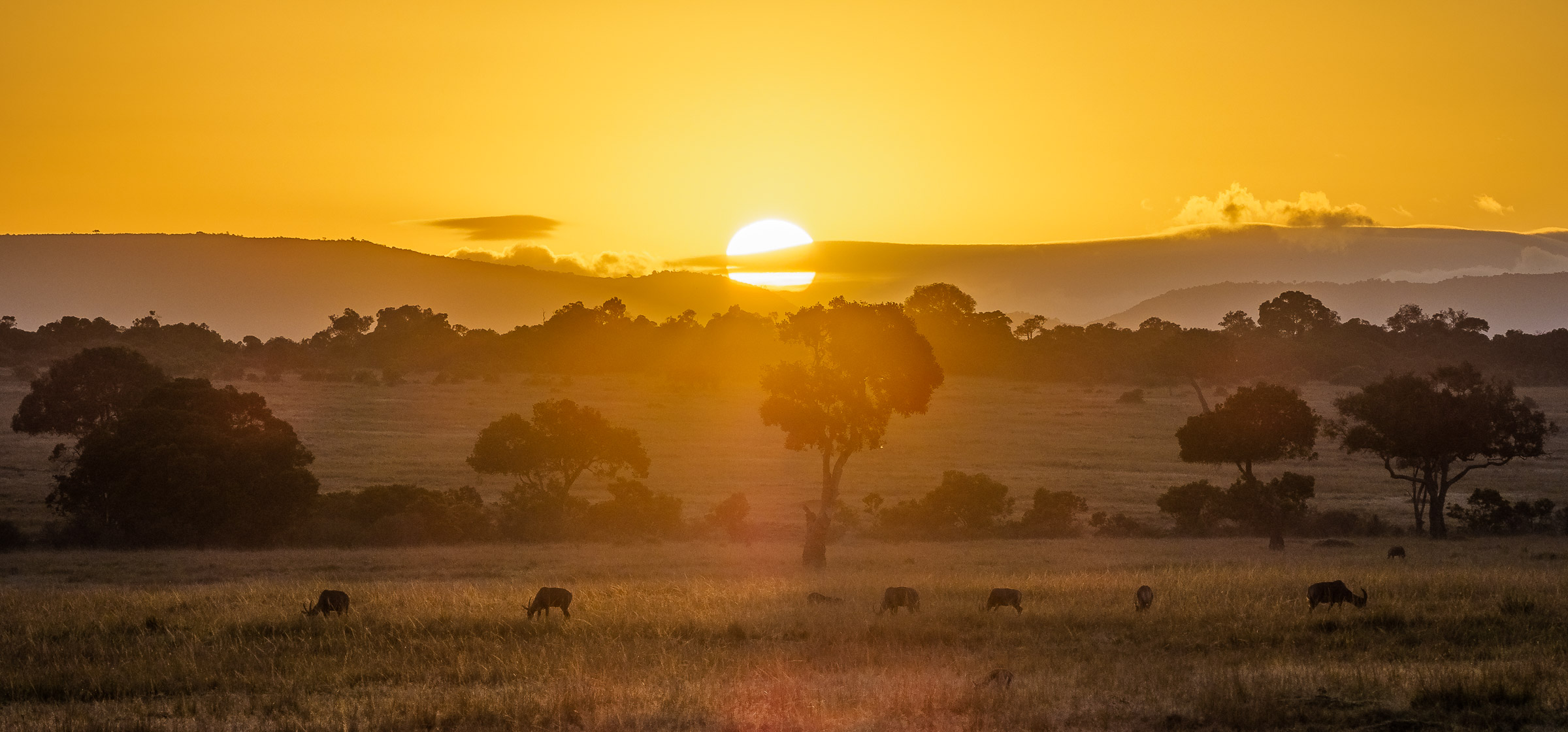
- Dramatic open savannah and golden-hour skies create extraordinary natural photography settings
- World-class bush hospitality with experienced camp staff accustomed to bespoke guest experiences
- Dry season (Jun–Oct) delivers reliably clear skies and firm terrain ideal for outdoor events
- Maasai cultural experiences — traditional dances, warrior ceremonies — add authentic local character to celebrations

Compare Maasai Mara with Other Top Destinations
Frequently Asked Questions
Is the Maasai Mara a good destination for a wedding?
Yes, particularly for intimate weddings. The Mara is exceptionally well-suited to small, exclusive destination weddings — typically under 60 guests — where the emphasis is on a deeply personal, immersive experience rather than large-scale ceremony. Exclusive-use camps allow a couple to design the entire event around the landscape, with ceremonies on the open plains, sundowner receptions, and private dinners under the stars.
How many guests can realistically be accommodated for an event in the Maasai Mara?
Most camps and lodges in the Mara accommodate between 20 and 80 guests, with many of the most exclusive properties capping at 30–40. The destination is genuinely designed for intimate groups. If your event requires 100 or more guests in a single venue with full event facilities, the Mara's existing inventory will not comfortably support it, and a different destination would be more practical.
What is the best time of year to hold an event in the Maasai Mara?
The dry season — June through October — is strongly recommended. This window brings minimal rainfall, firm terrain for vehicle access, comfortable temperatures, and peak wildlife activity including the Great Migration river crossings (July–October). The long rains from March to May make the destination genuinely unsuitable for planned events, and November's short rains introduce logistical uncertainty.
How do guests get to the Maasai Mara for an event?
The most practical route is a charter flight from Wilson Airport in Nairobi to one of the Mara's airstrips — approximately 45 minutes. For a group event, a dedicated charter is strongly recommended. International guests arrive via Jomo Kenyatta International Airport (JKIA) in Nairobi. The road journey from Nairobi takes approximately five to six hours and involves unpaved sections within the reserve.
What kinds of venues and event spaces are available in the Maasai Mara?
Event spaces here are embedded within luxury tented camps and bush lodges rather than standalone banquet halls. Typical spaces include open-sided mess tents dressed for formal dinners, elevated decks overlooking the plains or river, private clearings for outdoor ceremonies, and campfire circles for informal gatherings. The natural environment is always the primary venue — there are no purpose-built event centres in the conventional sense.
Can Maasai cultural experiences be incorporated into a celebration in the Mara?
Yes. Authentic Maasai warrior ceremonies, traditional dances, and community visits can be genuinely integrated into a celebration programme. This is one area where the local ecosystem is both well-organised and authentic — camps have established relationships with local Maasai communities and can arrange cultural programming as part of a bespoke event itinerary.
What is connectivity like for guests staying in the Maasai Mara during an event?
Mobile and internet connectivity is limited across the reserve. Most camps provide satellite-based Wi-Fi, though speeds are modest and reliability varies by property and location. Guests should expect to be largely disconnected from routine digital life — which many find to be part of the appeal. Event planners should factor limited connectivity into any real-time coordination requirements during the event itself.
How developed is the local vendor ecosystem for events in the Maasai Mara?
The in-house hospitality capabilities of the Mara's top camps are strong — experienced kitchen teams, event coordination staff, and cultural programming are well-established. However, the external vendor ecosystem (specialist florists, decorators, large catering contractors) is thin. Most specialist vendors need to be sourced from Nairobi and transported in, so working with an event planner who has specific Mara experience and established supplier relationships is strongly advisable.
Is the Maasai Mara suitable for a corporate retreat or leadership offsite?
Yes. The Mara's remoteness is a genuine asset for corporate groups seeking disconnection from routine. The combination of structured game drive experiences, open-air meeting spaces, evening campfire discussions, and Maasai cultural programming makes it a compelling setting for strategy retreats, leadership offsites, and incentive travel for high-performing teams. Camps can typically configure indoor and outdoor spaces for structured sessions.
What should I know about safety for guests attending an event in the Maasai Mara?
The Mara is generally safe within managed conservancies and camps, which have experienced rangers and established safety protocols. However, it is a genuine wildlife environment — outdoor events take place in an area where animal encounters are real. Camps manage this carefully, and guests are briefed on protocols. Event layouts and evening movements are planned with wildlife awareness in mind, and experienced camp staff guide all outdoor activities.
Is the Maasai Mara a good fit for a milestone birthday celebration?
Yes. A significant milestone birthday celebrated in the Mara — with a small group of close friends or family in an exclusive-use camp — carries a weight of occasion that a conventional venue cannot match. Multi-day itineraries combining game drives, sundowners, private dinners, and cultural experiences create a celebration that guests remember as a defining life event rather than a standard party.

Ready to explore venues in Maasai Mara?
Maasai Mara: Destination Wedding & Celebration Event Guide
◆Maasai Mara is Kenya's most celebrated wildlife reserve and one of the world's most dramatic natural settings for intimate destination celebrations, milestone birthdays, and exclusive social events. Its primary character is Nature & Wilderness — open savannah, sweeping escarpments, and the Mara River — delivered through a mature ecosystem of luxury tented camps and exclusive-use bush lodges. The destination suits small-to-medium guest groups best; it is not designed for large-scale banquet-style events. Accessibility requires either a charter flight from Nairobi or a long road journey, so it rewards guests who plan ahead. The dry season (June through October) is the clear window for events, coinciding with the Great Migration and reliably firm terrain.
Maasai Mara at a Glance
| Attribute | Detail |
|---|---|
| Best For | Intimate Destination Weddings, Milestone Birthdays, Exclusive Social Gatherings, Corporate Retreats |
| Primary Vibe | Nature & Wilderness |
| Other Vibes | Romantic & Secluded, Adventurous, Culturally Immersive |
| Best Season | Dry Season (Jun, Jul, Aug, Sep, Oct) |
Why Choose Maasai Mara?
- Unrivalled natural spectacle: The Great Migration — the annual movement of over a million wildebeest and zebra — takes place primarily between July and October, offering a backdrop that no constructed venue anywhere in the world can replicate.
- Genuine exclusivity: Many camps in the Mara operate on an exclusive-use basis, meaning your group has the entire property — its staff, vehicles, dining spaces, and outdoor areas — entirely to yourselves for the duration of the event.
- Dramatic natural event spaces: Sundowner decks on the Oloololo Escarpment, riverine forest clearings, open plains under unpolluted night skies, and private kopje viewpoints provide ceremony and reception settings that are inherently photogenic without any additional decoration.
- Maasai cultural integration: Authentic Maasai warrior ceremonies, traditional dances, and community visits can be woven into a celebration programme, adding a layer of genuine cultural meaning that is specific to this region.
- Mature luxury hospitality: The Mara has hosted international travellers for decades; its top-tier camps employ experienced hospitality professionals who are accustomed to bespoke, high-touch guest experiences and can adapt their service to event requirements.
- Low light pollution and extraordinary skies: The reserve's remoteness means night skies are among the clearest in East Africa — a genuine asset for evening celebrations and stargazing experiences built into an event programme.
Which Celebrations Work Best in Maasai Mara?
- Intimate Destination Weddings: The Mara is particularly well-suited to small, deeply personal weddings — typically under 60 guests — where the emphasis is on experience over scale. Exclusive-use camps allow a couple to design every element of the day around the landscape, from a sunrise ceremony on the plains to a candlelit dinner under the stars. The setting does the heavy lifting aesthetically, which means even a relatively simple event feels extraordinary.
- Milestone Birthday Celebrations: A significant birthday — a 40th, 50th, or 60th — celebrated in the Mara carries a weight of occasion that a conventional hotel ballroom cannot match. Small groups of close friends or family can be accommodated in a single camp, with game drives, sundowners, and private dinners forming a multi-day celebration itinerary.
- Exclusive Social Gatherings: Reunion trips, anniversary celebrations, and curated group experiences for close-knit social circles translate well to the Mara's camp model. The shared experience of the wilderness — game drives, bush walks, evening campfires — creates a natural social programme that bonds a group in a way that a static venue cannot.
- Corporate Retreats and Leadership Offsites: The Mara's remoteness is an asset for corporate groups seeking genuine disconnection from routine. The combination of structured game drive experiences, open-air meeting spaces, and evening campfire discussions makes it a compelling setting for strategy retreats, leadership programmes, and incentive travel for high-performing teams.
Venues & Event Spaces
The Maasai Mara's event infrastructure is built around luxury tented camps and permanent bush lodges rather than conventional hotel ballrooms or banquet halls. Properties range from ultra-exclusive, small-footprint camps with as few as eight to twelve tents — designed for complete privacy and a deep immersion in the landscape — to larger, more established lodges with greater capacity and more structured facilities.
Outdoor event spaces are the defining feature: open-sided mess tents that can be dressed for a formal dinner, elevated decks overlooking the plains or river, private clearings within the conservancy for ceremony setups, and campfire circles for informal evening gatherings. Some properties have dedicated event lawns or boma areas that can accommodate a standing reception or a seated dinner for a larger group within the camp's capacity.
The conservancies surrounding the national reserve — Olare Motorogi, Naboisho, Olderkesi, and others — tend to host the most exclusive and private properties, where guest numbers are deliberately kept low and the ratio of land to guests is exceptionally high. Properties within or immediately adjacent to the national reserve itself tend to offer slightly larger capacities and more established infrastructure, which can be an advantage for groups needing a broader range of facilities.
It is worth noting that the Mara does not have standalone banquet halls, wedding chapels, or purpose-built event centres in the conventional sense. Every event space here is embedded within a camp or lodge, and the natural environment is always the primary venue. This is a strength for the right kind of celebration and a genuine constraint for others.
Best Time to Celebrate
The dry season, running from June through October, is the clear and strongly recommended window for events in the Maasai Mara. During these months, rainfall is minimal, the ground is firm enough for vehicle access across the reserve, and daytime temperatures are warm but not extreme — typically in the mid-20s Celsius, with cool evenings that make outdoor dining genuinely comfortable.
July through October specifically coincides with the Great Migration river crossings, when large herds of wildebeest and zebra cross the Mara River in dramatic, unpredictable surges. For a celebration group, witnessing a crossing — even once during a multi-day stay — is an experience that becomes the defining memory of the event. This period is also when predator activity is at its highest, making game drives particularly rewarding.
June is slightly cooler and less crowded than the peak July–September window, which can be an advantage for groups seeking a more private experience. October sees the migration beginning to move southward but wildlife remains abundant and the dry conditions hold.
November brings the short rains — typically lighter and more intermittent than the long rains, but enough to make some tracks muddy and certain camp access routes unreliable. It is a shoulder period that some experienced travellers use, but it introduces logistical uncertainty that is not ideal for a planned event.
March through May is the long rainy season and is genuinely unsuitable for most events. Heavy rainfall makes many tracks impassable, some camps close entirely for maintenance, and the landscape — while lush and green — is difficult to navigate for a group with event logistics to manage. Outdoor ceremonies and receptions become unreliable, and the overall experience is significantly diminished compared to the dry season.
January and February are a drier interlude within the broader wet season calendar and are generally more manageable than March–May, but they do not offer the same reliability or wildlife density as the June–October window. Groups considering these months should plan with flexibility and consult closely with their chosen camp on current conditions.
Getting There & Local Connectivity
The most practical and commonly used route for event guests is a charter flight from Wilson Airport in Nairobi to one of the Mara's several airstrips — including Keekorok, Ol Kiombo, and Musiara, among others. The flight takes approximately 45 minutes and lands guests directly within or adjacent to the reserve, from where camp vehicles collect them. For a group event, coordinating a dedicated charter is both feasible and strongly recommended, as it removes the complexity of individual road journeys and ensures all guests arrive together.
The road journey from Nairobi takes approximately five to six hours under good conditions, passing through Narok town. While the route is manageable, it involves a significant stretch of unpaved road within the reserve itself, and journey times can extend considerably during or after rain. For guests arriving from outside Kenya, Jomo Kenyatta International Airport (JKIA) in Nairobi is the primary international gateway, with connections from major hubs across Europe, the Middle East, and Asia.
Within the Mara, movement is almost entirely by 4WD safari vehicle. There is no public transport, no ride-hailing infrastructure, and no paved road network within the reserve. Camps provide their own vehicles for game drives and transfers, and for a group event, additional vehicles can typically be arranged through the camp or a local operator. Guests should expect that all movement between locations requires advance coordination — spontaneous travel is not how the Mara works.
Mobile connectivity within the reserve is limited. Most camps offer satellite-based Wi-Fi, though speeds are modest and reliability varies. This is generally considered part of the experience rather than a shortcoming, but event planners should factor it into any communication or coordination requirements during the event itself.
Local Vendor & Hospitality Ecosystem
The Maasai Mara's hospitality ecosystem is mature at the luxury end but deliberately contained. The camps and lodges that operate here have, over decades, developed strong in-house capabilities: experienced kitchen teams capable of producing high-quality multi-course dinners in remote settings, event coordination staff who understand the specific logistical demands of bush celebrations, and established relationships with local Maasai communities for cultural programming.
However, the external vendor ecosystem — florists, specialist event decorators, entertainment companies, and large-scale catering contractors — is not as developed as it would be in a major city. Most event elements need to be either sourced from Nairobi and transported to the Mara, or handled in-house by the camp. This places a premium on choosing a property with strong internal event capabilities and on working with an event planner who has specific Mara experience and established supplier relationships.
Maasai cultural performers — warriors, dancers, and community representatives — are genuinely available and can be engaged directly through camps or community organisations. This is one area where the local ecosystem is both authentic and well-organised, and it adds a dimension to a Mara celebration that is impossible to replicate elsewhere.
Photography and videography professionals who specialise in bush and wildlife settings are available, typically based in Nairobi but experienced in working within the reserve. Engaging a photographer with specific Mara experience is strongly advisable, as the lighting conditions, wildlife interactions, and terrain require a different skill set from conventional event photography.
Pros & Things to Consider
Why Maasai Mara Works Well
- Genuinely unmatched natural setting — the savannah, wildlife, and open skies create an atmosphere no constructed venue can replicate
- Exclusive-use camp model delivers a level of privacy and personalisation that is rare in any destination
- The Great Migration (Jul–Oct) adds a world-class natural spectacle to any event programme during peak season
- Maasai cultural experiences provide authentic, meaningful programming that is specific to this place
- Experienced luxury camp staff are accustomed to high-touch, bespoke hospitality and can adapt to event requirements
- Low light pollution makes evening celebrations under the stars genuinely extraordinary
- The remoteness itself is a feature — guests are fully present, disconnected from routine, and focused on the experience
Things to Consider
- Guest capacity is inherently limited — most camps accommodate between 20 and 60 guests, making the Mara unsuitable for large weddings or events requiring 100+ attendees in a single venue
- Accessibility requires either a charter flight or a long road journey; guests with limited mobility or a low tolerance for travel complexity may find the logistics demanding
- The external vendor ecosystem is thin — specialist decorators, florists, and large catering contractors must typically be sourced from Nairobi and transported in, adding logistical complexity and lead time
- Internet and mobile connectivity is limited across the reserve; real-time communication during the event requires satellite infrastructure and should not be taken for granted
- The rainy seasons (particularly March–May) make the destination genuinely unsuitable for events, and even the shoulder months carry some weather risk
- Wildlife is wild — while camps manage safety carefully, outdoor events take place in an environment where animal encounters are real, and event layouts must account for this
When Maasai Mara May Not Be the Right Fit
- Large guest lists: If your event requires accommodating more than 60–80 guests in a single venue with full event facilities, the Mara's camp-based inventory will not comfortably support it. The destination is designed for intimacy, not scale.
- Guests with significant travel constraints: International guests connecting through multiple airports, elderly guests with mobility considerations, or attendees with a low tolerance for long road journeys or small charter aircraft may find the journey to the Mara genuinely difficult. A destination with direct international airport access would serve this guest profile better.
- Events planned during the long rains (March–May): If your preferred dates fall within the long rainy season, the Mara is not a reliable choice. Track conditions, camp access, and outdoor event viability are all significantly compromised during this period.
- Groups requiring extensive external vendor coordination: If your event vision depends on a large team of specialist vendors — a complex floral installation, a live band requiring significant equipment, a large-scale catering operation — the logistical challenge of bringing all of this into a remote reserve is substantial. A destination with a more developed urban vendor ecosystem would be more practical.