
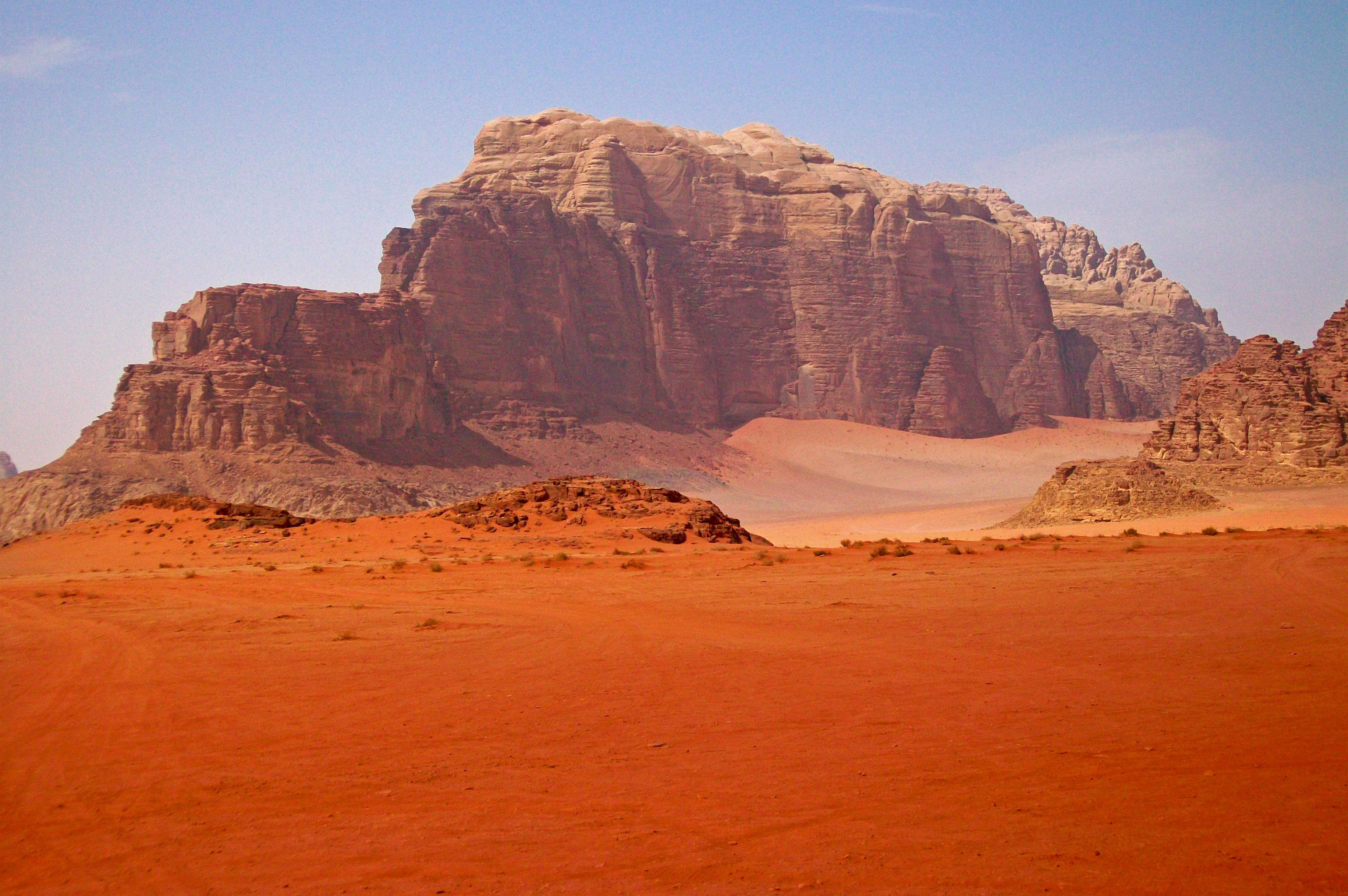
Why Wadi Rum is Perfect for Your Celebration
- Unmatched cinematic desert landscape — red dunes, sandstone arches, and towering cliffs create a natural event backdrop found nowhere else
- World-class stargazing with near-zero light pollution, making evening and night celebrations genuinely magical
- Authentic Bedouin hospitality and camp culture offer a deeply immersive, culturally rich guest experience
- Cool, dry winters (Jan–Mar, Oct–Dec) provide comfortable outdoor conditions for daytime and evening events
- Exclusive, private camp settings allow for intimate gatherings with a strong sense of seclusion and personalisation
- UNESCO-listed protected area status adds prestige and a sense of occasion to any event held here
Compare Wadi Rum with Other Top Destinations
Frequently Asked Questions
Is Wadi Rum a good destination for a wedding?
Yes, particularly for small, intimate destination weddings where atmosphere and exclusivity matter more than scale. Wadi Rum's dramatic desert landscape, Bedouin hospitality, and world-class stargazing create a genuinely extraordinary setting. It suits couples comfortable with a wilderness environment and a guest list that fits within camp accommodation capacity — typically up to around 80–100 guests on-site.
What is the best time of year to hold a celebration in Wadi Rum?
The cool, dry months — January, February, March, October, November, and December — are the only genuinely comfortable window for outdoor events. Daytime temperatures are mild, skies are reliably clear, and evenings are cool but manageable. Summer months (June–August) bring extreme heat that makes outdoor events unsafe, and April–May sees rapidly rising temperatures that carry meaningful risk for pre-planned events.
How do guests travel to Wadi Rum?
Most guests fly into King Hussein International Airport in Aqaba, approximately 60 km from the protected area, or into Amman's Queen Alia International Airport and travel onward by road. There is no passenger railway serving Wadi Rum. Road transfer — by private coach or minibus — is the standard route, and coordinating group transfers in advance with a local ground operator is strongly recommended.
How many guests can realistically be accommodated for an event in Wadi Rum?
Camp accommodation within the protected area typically supports events of up to roughly 80–100 guests on-site. For larger groups, planners can coordinate across multiple camps, though this adds logistical complexity. Aqaba, about an hour's drive away, provides a broader hotel base for overflow accommodation, making it a practical support hub for larger guest lists.
What kinds of venues and event spaces are available in Wadi Rum?
Venues are camp-based rather than conventional hotel properties. Options range from premium luxury tented camps with en-suite facilities and elevated dining platforms to well-appointed Bedouin-style camps with traditional settings. Ceremony spaces are typically set on open sand between rock formations, on elevated plateaus, or within natural sandstone alcoves. There are no indoor ballrooms or conventional banquet halls within the protected area.
Is mobile phone and internet connectivity reliable in Wadi Rum?
No. Mobile signal is patchy to absent across much of the protected area, and reliable internet connectivity is limited. Guests should be briefed on this before arrival. Event coordinators should plan for offline communication protocols during the event itself. Some premium camps offer satellite-based Wi-Fi, but coverage and speed vary and should not be relied upon for critical event coordination.
What makes a Wadi Rum evening celebration special?
Wadi Rum sits within one of the lowest light-pollution zones in the Middle East, producing a night sky that is genuinely spectacular. Evening celebrations — candlelit dinners on the desert floor, sunset ceremonies beneath sandstone arches, or midnight stargazing sessions — benefit from a natural atmosphere that no venue decoration can replicate. This is one of the destination's most distinctive and consistently praised qualities.
What local catering and entertainment options are available for events?
Local Bedouin catering is a genuine strength — traditional Zarb feasts (slow-cooked underground), open-fire grills, and mezze spreads are well-executed and scalable. Traditional Bedouin music (oud, percussion, storytelling) is authentic and atmospheric. For non-traditional elements — elaborate florals, DJ equipment, live bands, or complex AV — suppliers typically need to be brought in from Aqaba or Amman, requiring advance planning.
Is Wadi Rum suitable for a corporate retreat or experiential group event?
Yes, for small groups. Wadi Rum works well as an unconventional offsite setting for organisations seeking a high-impact, non-conference-room experience. Desert activities — jeep tours, camel treks, hiking, rock climbing — can be woven into a multi-day itinerary alongside facilitated sessions. The practical ceiling on group size and the limited connectivity inside the protected area are the main considerations for corporate planners.
Are there any restrictions on holding events inside the Wadi Rum protected area?
Yes. Wadi Rum is a UNESCO World Heritage Site and a protected nature reserve, and events must comply with regulations governing the area. These may restrict certain structures, waste practices, open fires outside designated areas, and vehicle access to sensitive zones. Working with an experienced local camp operator who is familiar with the protected area's rules is essential for ensuring compliance and avoiding disruption to your event.
What should guests know about the physical environment before attending an event in Wadi Rum?
Guests should be prepared for unpaved desert terrain, significant temperature variation between day and night (particularly in winter months), limited medical facilities nearby, and the absence of mobile connectivity. Comfortable, closed-toe footwear is essential. Guests with limited mobility, respiratory conditions, or other health sensitivities should assess their suitability for the environment carefully before committing to attendance.

Ready to explore venues in Wadi Rum?
Wadi Rum: Destination Wedding & Celebration Venues in Jordan's Desert
◆Wadi Rum is best suited to small, intimate, and highly atmospheric celebrations — destination weddings, elopements, anniversary events, and adventure-themed gatherings — where the landscape itself is the primary draw. Its primary vibe is adventurous and thrilling, rooted in a vast UNESCO-listed desert wilderness of red sandstone cliffs, sculpted dunes, and ancient Bedouin culture in southern Jordan. The cool, dry months from October through March are the only genuinely comfortable window for outdoor events; summer heat is extreme and effectively rules out daytime gatherings. Accessibility requires coordinated road transfers, making it better suited to guests who have pre-arranged group logistics. Accommodation is camp-based rather than conventional hotel-based, which defines both the charm and the practical ceiling on guest numbers.
Wadi Rum at a Glance
| Category | Detail |
|---|---|
| Best For | Destination Weddings, Elopements, Anniversary Celebrations, Adventure Gatherings |
| Primary Vibe | Adventurous & Thrilling |
| Other Vibes | Romantic, Intimate, Culturally Immersive, Cinematic |
| Best Season | Cool / Mild Season (Jan, Feb, Mar, Oct, Nov, Dec) |
Why Choose Wadi Rum?
- A landscape with no real equivalent: The combination of towering sandstone massifs, sweeping red dunes, natural rock arches, and ancient Nabataean inscriptions creates a backdrop that is genuinely cinematic — it has served as a filming location for major international productions precisely because it looks like no other place on Earth.
- World-class night skies: Wadi Rum sits within one of the lowest light-pollution zones in the Middle East. Evening and night-time celebrations — from candlelit dinners under open skies to midnight ceremonies — benefit from a star canopy that is a genuine spectacle for guests.
- Authentic Bedouin cultural immersion: Local Bedouin communities have operated in this landscape for centuries. Camps run by Bedouin families offer guests an experience of traditional hospitality, music, food, and storytelling that is deeply rooted in place rather than manufactured for tourism.
- Exclusivity and privacy by default: The protected area's controlled access and the dispersed nature of camp properties mean that events here feel genuinely private. There is no risk of a neighbouring conference or a passing crowd of day-trippers intruding on a ceremony.
- Comfortable outdoor conditions in the cool season: Between October and March, daytime temperatures are mild and evenings are cool and clear — conditions that are genuinely pleasant for outdoor ceremonies, alfresco dining, and sunset gatherings without the logistical burden of heat management.
- UNESCO World Heritage status: Wadi Rum's designation as a UNESCO World Heritage Site adds a layer of prestige and cultural significance that resonates with internationally-minded couples and guests.
Which Celebrations Work Best in Wadi Rum?
- Destination Weddings: Wadi Rum is particularly well-suited to couples who want a small, deeply personal ceremony in an extraordinary natural setting rather than a conventional ballroom or palace. The landscape does the decorating; the intimacy is built in. Guest lists of up to roughly 80–100 are the realistic ceiling given camp accommodation capacity.
- Elopements & Micro-Weddings: For couples wanting a ceremony with only their closest circle — or just the two of them — Wadi Rum offers a level of seclusion and drama that few destinations can match. A sunrise ceremony among the dunes or a sunset exchange of vows beneath a sandstone arch is genuinely achievable here.
- Anniversary & Milestone Celebrations: The sense of occasion that the landscape creates makes it a strong choice for significant anniversaries or milestone birthdays where the experience itself is the gift. A private dinner under the stars or a guided desert excursion for a small group of close friends and family translates into a lasting memory.
- Adventure & Experiential Gatherings: Groups drawn together by a shared appetite for adventure — hiking, jeep tours, camel treks, rock climbing — will find Wadi Rum a natural fit. The desert activities available within the protected area can be woven directly into a multi-day celebration itinerary.
- Corporate Retreats (Small Groups): For organisations seeking an unconventional, high-impact offsite experience that breaks entirely from the conference-room format, a small Wadi Rum camp retreat — combining facilitated sessions with desert experiences — can be genuinely transformative, provided the group size is modest.
Venues & Event Spaces
Wadi Rum's event infrastructure is almost entirely camp-based, which is both its defining character and its primary practical constraint. Properties within the protected area range from premium luxury tented camps — featuring geodesic or Martian-dome-style structures with en-suite facilities, elevated dining platforms, and curated desert experiences — to well-appointed mid-range Bedouin camps with traditional goat-hair tents and open fire settings. There are no conventional hotel ballrooms, banquet halls, or indoor conference centres within the protected area itself.
Outdoor event spaces are effectively unlimited in scale — the desert floor itself becomes the venue — but the practical ceiling is set by accommodation capacity and catering logistics. Ceremony spaces are typically set up on open sand between rock formations, on elevated plateaus with panoramic views, or within natural sandstone alcoves. Dining is commonly arranged around a central fire, on long communal tables under open skies, or on private elevated decks attached to premium camp structures. For larger gatherings, multiple camps can be coordinated, though this requires careful logistical planning with experienced local operators.
Best Time to Celebrate
The curated best season — Cool / Mild Season (January, February, March, October, November, December) — is the only genuinely comfortable window for outdoor events in Wadi Rum, and the reasons go beyond simply "the weather is nice."
During these months, daytime temperatures typically range from around 10°C to 20°C, with evenings dropping to between 0°C and 10°C — cool enough to require a layer after sunset, but entirely manageable and actually pleasant for outdoor dining and stargazing. Skies are reliably clear and dry, with very low humidity, which means photography conditions are excellent and the night sky is at its most spectacular. Wind is generally light, and the desert air carries a clarity that makes the landscape look its sharpest.
The months left out of the best season tell an equally important story:
- June, July, August: Daytime temperatures regularly exceed 35°C and can reach 40°C. This is genuinely dangerous for outdoor events, particularly for elderly guests, children, or anyone not acclimatised to desert heat. Even evening temperatures remain high. This period is effectively unsuitable for any outdoor celebration.
- April and May: Temperatures rise rapidly through spring. April can still be manageable in the early part of the month, but by May daytime heat is already uncomfortable for extended outdoor activity. These months carry meaningful risk for events planned months in advance, as conditions can vary significantly year to year.
- September: Still very hot, transitioning out of peak summer. Daytime temperatures remain high enough to make outdoor daytime events uncomfortable, and the reliable cool of the best season has not yet arrived. It is a shoulder month that carries more risk than reward for event planning.
In practical terms, October–November and February–March tend to be the most popular windows within the best season — temperatures are at their most comfortable, and the landscape's colours are particularly vivid in the lower-angle light of these months. January and December are cooler, with nights that can be genuinely cold, which requires planning for guest comfort (fire pits, blankets, and appropriate tent heating are standard at quality camps during these months).
Getting There & Local Connectivity
The nearest commercial airport serving Wadi Rum is King Hussein International Airport in Aqaba, approximately 60 km from the Wadi Rum village and protected area entrance. Aqaba is a small regional airport with direct connections to Amman (Queen Alia International Airport) and a limited number of international routes. Most international guests will route through Amman, which has significantly broader connectivity, and then either fly onward to Aqaba or travel by road — a journey of roughly three to four hours through the desert highway.
There is no operational passenger railway serving Wadi Rum. Road transfer is the standard and only practical means of reaching the protected area. For event groups, this means coordinating private coaches or minibuses from Aqaba or Amman — a logistical step that requires advance planning but is entirely manageable with an experienced local ground operator.
Within the protected area itself, movement is by 4WD jeep, camel, or on foot. There are no paved roads inside the desert, and standard vehicles are not suitable. Reputable camps manage guest transfers within the protected area as part of their standard offering. For event groups, dedicated jeep fleets can be arranged for excursions, ceremony transfers, and inter-camp movement. Mobile phone signal is patchy to absent in much of the protected area — guests should be briefed on this in advance, and event coordinators should plan for offline communication protocols during the event itself.
Local Vendor & Hospitality Ecosystem
Wadi Rum's vendor ecosystem is small but genuinely experienced in delivering high-quality desert events. The Bedouin community has developed considerable expertise in event catering — traditional Zarb (underground oven) feasts, open-fire grills, and mezze spreads are a particular strength, and local caterers can scale these for groups of varying sizes. International cuisine is less readily available and typically requires either importing a catering team or working with a camp that has invested in a broader kitchen capability.
Floral decoration, lighting, and event styling are areas where Wadi Rum's local ecosystem is thinner. Couples and planners who want elaborate floral installations or complex lighting rigs will generally need to bring in suppliers from Aqaba or Amman, which adds logistical complexity and lead time. Conversely, the landscape itself reduces the need for heavy decoration — the natural setting does work that no florist can replicate.
Photography and videography are a genuine strength: a small but skilled community of photographers specialising in desert and adventure shoots is based in and around Wadi Rum, and the light conditions during the cool season are exceptional. Music and entertainment options lean toward traditional Bedouin performance — oud, percussion, and storytelling — which is authentic and atmospheric; for couples wanting a DJ or live band, equipment logistics into the protected area require advance coordination.
Accommodation capacity across the protected area is limited in absolute terms. For events larger than roughly 80–100 guests requiring on-site accommodation, planners should expect to work across multiple camps, which requires careful coordination to ensure a consistent guest experience. Aqaba, approximately an hour's drive away, provides a broader hotel base for overflow accommodation if needed.
Pros & Things to Consider
Why Wadi Rum Works Well
- Genuinely unique, cinematic landscape that creates an unforgettable event atmosphere with minimal artificial decoration
- World-class stargazing conditions make evening and night-time celebrations a standout experience for guests
- Authentic Bedouin hospitality and cultural programming add depth and meaning to the guest experience
- High degree of privacy and exclusivity within the protected area — events feel genuinely secluded
- Cool, dry winter season provides comfortable outdoor conditions with reliable clear skies
- Jordan is a politically stable, tourist-friendly country with a well-established hospitality sector in the broader region
- Luxury camp properties offer a surprisingly high standard of comfort and service within a wilderness setting
Things to Consider
- Guest numbers are practically capped by camp accommodation capacity — this is not a destination for large-scale weddings of 200+ guests without significant logistical complexity
- Accessibility requires coordinated road transfers; guests who are not comfortable with desert terrain or long road journeys may find the journey tiring
- Mobile connectivity is limited to absent inside the protected area — a genuine operational challenge for event coordination and for guests expecting to stay connected
- The vendor ecosystem for non-traditional event elements (elaborate florals, live bands, complex AV) is thin locally and requires importing from Aqaba or Amman
- Winter nights (December–February) can be genuinely cold, requiring active planning for guest comfort at outdoor evening events
- The desert environment is sensitive — events must comply with protected area regulations, which may restrict certain activities, structures, or waste practices
When Wadi Rum May Not Be the Right Fit
- Large guest lists: If your celebration involves more than roughly 100 guests requiring on-site accommodation and a single cohesive venue, Wadi Rum's camp-based infrastructure will struggle to deliver a seamless experience without significant multi-camp coordination.
- Guests with limited mobility or health sensitivities: The desert terrain, absence of paved surfaces, temperature extremes (even in the cool season, nights can be cold), and distance from medical facilities make Wadi Rum a challenging environment for guests with mobility issues, respiratory conditions, or other health considerations that require easy access to medical support.
- Events planned for April through September: If your preferred dates fall in the warmer months, Wadi Rum is genuinely not suitable for outdoor celebrations. The heat during this period is not merely uncomfortable — it is a safety consideration, and no amount of shade or cooling infrastructure fully compensates for desert summer temperatures.
- Couples or planners wanting conventional luxury amenities: If the vision includes a grand ballroom, a spa, a swimming pool, multiple restaurant options, and the full-service infrastructure of a large resort hotel, Wadi Rum's camp-based properties — however high their quality — will not deliver that experience. The destination rewards those who embrace its wilderness character rather than those seeking to replicate a conventional luxury hotel setting within it.