
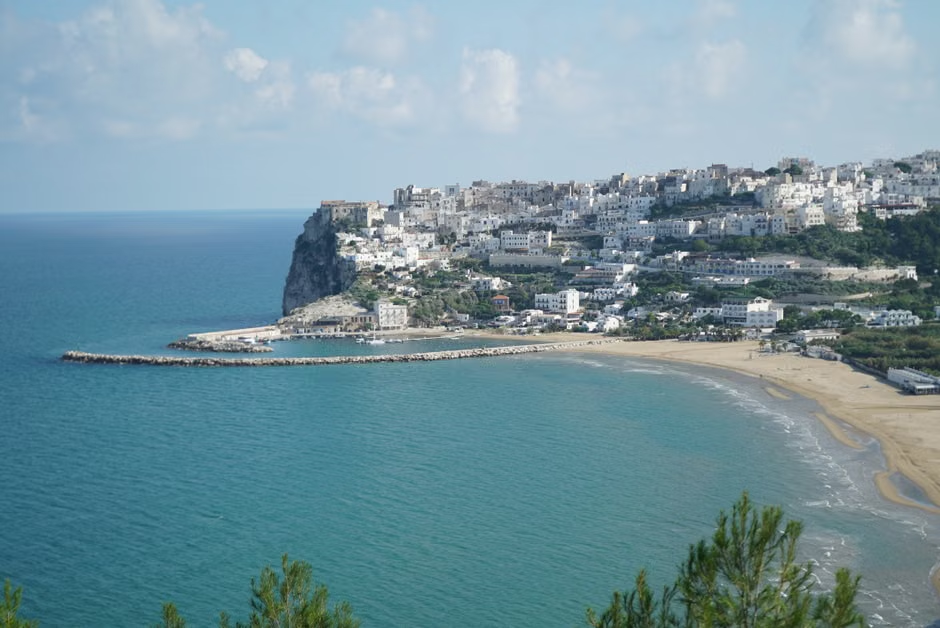
Why Puglia is Perfect for Your Celebration
- Iconic masserie (fortified farmhouses) offer exclusive-use wedding venues unlike anywhere else in Europe
- Warm, reliable summer climate with long golden evenings ideal for outdoor ceremonies and al fresco dining
- World-class Puglian cuisine and local wines (Primitivo, Negroamaro) elevate every celebration
- Dramatic backdrops — trulli of Alberobello, Adriatic coastline, ancient olive groves — for unforgettable photography
- Strong local vendor ecosystem: experienced wedding planners, florists, and caterers specialising in destination events
- Relatively uncrowded compared to Tuscany or Amalfi, offering greater privacy and exclusivity for guests
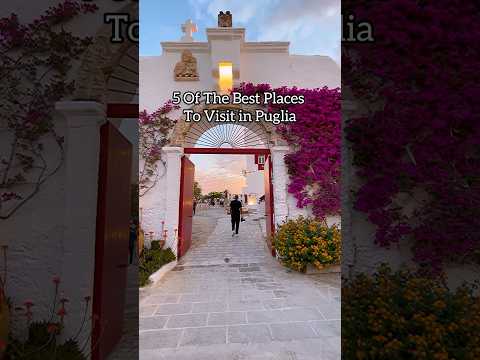
Compare Puglia with Other Top Destinations
Frequently Asked Questions
Is Puglia a good destination for a wedding?
Yes. Puglia is one of Europe's most established destination wedding regions, particularly well-suited to couples seeking an exclusive, intimate setting. The region's masserie — historic fortified farmhouses available on an exclusive-use basis — offer a genuinely distinctive venue format that combines ceremony space, dining, accommodation, and grounds in one private estate, typically for groups of 30 to 300 guests.
What is the best time of year to hold a wedding or celebration in Puglia?
May through September is the recommended season. This period delivers consistently dry, warm conditions with long evenings ideal for outdoor ceremonies and al fresco dining. May and June are particularly popular for their comfortable temperatures and lower crowd levels. July and August are hotter and busier, while September offers a pleasant balance of warmth and reduced peak-season pressure.
How do international guests typically travel to Puglia?
Most international guests fly into either Brindisi Airport (BDS) or Bari Airport (BRI), both of which receive direct seasonal flights from several European cities. Guests travelling from outside Europe or from cities without direct Puglia routes will typically connect through Rome Fiumicino or Milan Malpensa. Journey times from Rome by train or car are approximately 4–5 hours.
How large a guest group can Puglia venues realistically accommodate?
Puglia's venue landscape is best suited to groups of roughly 30 to 400 guests. The exclusive-use masseria format is optimised for mid-sized, intimate gatherings. Larger coastal resort properties can accommodate groups toward the upper end of this range. Events requiring a single venue for 500 or more guests may find the local inventory more constrained.
What kinds of event spaces are available in Puglia?
The dominant venue type is the masseria — a restored historic farmhouse estate, typically hired exclusively. Beyond this, the region offers coastal resort properties with sea-view terraces, trulli complexes in the Itria Valley, Baroque palazzo venues in towns like Lecce, vineyard and agriturismo estates, and outdoor olive grove settings. Most formats are oriented toward outdoor or semi-outdoor celebrations.
Do guests need a car to get around Puglia during a multi-day event?
For most guests, coordinated group transfers are strongly recommended rather than individual car hire. Many masserie are located on rural roads with no public transport access, and navigating unfamiliar country roads can be challenging. Most experienced local wedding planners arrange dedicated coach or minibus transfers between airports, accommodation, and venues as a standard part of event logistics.
Is Puglia suitable for a multi-day wedding programme?
Yes, and it is particularly well-suited to this format. The exclusive-use estate model naturally accommodates spreading different celebration elements — welcome dinners, pre-wedding events, the main ceremony, and farewell lunches — across consecutive days on the same property. The region's cultural activities (olive oil tastings, cooking classes, ceramic workshops, coastal excursions) also provide strong programming for guests between formal events.
How developed is the local wedding vendor ecosystem in Puglia?
Puglia has a mature, well-established destination wedding industry built over more than 15 years. Local specialist wedding planners, experienced caterers drawing on exceptional regional produce, florists, photographers, and musicians (including performers of the region's indigenous pizzica/taranta folk tradition) are all well-represented. An experienced local planner is effectively essential for navigating Italian legal requirements for civil ceremonies.
What makes Puglia's food and drink offering distinctive for a wedding celebration?
Puglian cuisine is ingredient-led and deeply regional — burrata, fresh orecchiette pasta, wood-fired meats, Adriatic seafood, and local olive oil are staples. The region produces distinctive wines including Primitivo di Manduria and Negroamaro. Many masserie operate their own kitchens, and the quality of local produce gives celebrations a genuinely place-specific gastronomic identity that guests consistently highlight.
Are there any important practical considerations for non-Italian couples planning a legal ceremony in Puglia?
Yes. Italian civil ceremony requirements for non-Italian couples involve specific documentation, advance notice periods, and coordination with local municipal authorities — a process that varies depending on the couple's nationality and home country. The requirements can be complex, and engaging an experienced local wedding planner who regularly handles international couples is strongly advisable well in advance of the event date.
Is Puglia suitable for corporate retreats and incentive events, or is it primarily a wedding destination?
Puglia works well for smaller executive retreats and incentive travel groups, where the combination of luxury masseria accommodation, distinctive cuisine, and cultural excursions creates a strong reward-focused programme. It is less commonly used for large-scale corporate conferences, where single-venue capacity and urban infrastructure requirements may not be well-matched to what the region offers.

Ready to explore venues in Puglia?
Puglia: Destination Wedding & Celebration Venues in Southern Italy
◆Puglia is one of Southern Italy's strongest destination wedding and celebration regions, defined by its exclusive-use masserie (historic fortified farmhouses), Adriatic coastal scenery, and deeply rooted food and wine culture. The primary vibe is Romantic & Dreamy, making it particularly well-suited to intimate weddings, honeymoon-adjacent celebrations, anniversary events, and small corporate retreats seeking an authentic Italian backdrop. The best season runs from May through September, when long warm days and dry evenings make outdoor ceremonies and al fresco dining consistently reliable. Accessibility requires planning — most international guests connect through Rome or Milan — but the region's well-developed destination wedding industry means logistics are generally well-managed once guests arrive.
Puglia at a Glance
| Category | Detail |
|---|---|
| Best For | Destination Weddings, Intimate Celebrations, Anniversary Events, Romantic Getaways |
| Primary Vibe | Romantic & Dreamy |
| Other Vibes | Rustic-Elegant, Heritage, Coastal, Gastronomic |
| Best Season | Summer (May, Jun, Jul, Aug, Sep) |
Why Choose Puglia?
- Unmatched masseria venue typology: Puglia's centuries-old fortified farmhouses offer a genuinely exclusive venue format — typically hired on a full-property basis — that combines accommodation, catering, ceremony space, and grounds in one self-contained estate. This format is rare elsewhere in Europe and is a primary reason couples choose the region.
- Exceptional local gastronomy: Puglian cuisine — burrata, orecchiette, fresh seafood, wood-fired lamb, and indigenous wines such as Primitivo di Manduria and Negroamaro — gives every celebration a distinctive, place-specific character that guests genuinely remember. Local caterers and masseria kitchens are experienced at scaling this for event groups.
- Scenic diversity within a compact region: Within a roughly two-hour drive, couples can access the whitewashed hilltop town of Ostuni, the UNESCO-listed trulli of Alberobello, the Baroque architecture of Lecce, and multiple stretches of Adriatic and Ionian coastline — giving photographers and guests a rich variety of backdrops.
- Mature destination wedding industry: Puglia has been a recognised destination wedding hub for well over a decade. Local wedding planners, florists, musicians, and officiants are experienced with international couples and multilingual logistics, reducing the coordination burden significantly.
- Relative exclusivity compared to more saturated Italian regions: While Puglia is popular, it remains less crowded than Tuscany or the Amalfi Coast during peak season, which typically translates to greater privacy at venues and a more genuinely local atmosphere for guests.
- Warm, reliable summer climate: The Mediterranean climate delivers consistently dry, sunny conditions from May through September, with warm evenings that extend outdoor celebrations well into the night without the humidity or rain risk common in other European summer destinations.
Which Celebrations Work Best in Puglia?
- Destination Weddings: Puglia is arguably most strongly associated with this event type. The exclusive-use masseria model — where a single couple or family takes over an entire estate — suits weddings of 30 to 300 guests particularly well, offering privacy, a cohesive aesthetic, and on-site accommodation for the core guest group.
- Intimate Elopements & Micro-Weddings: Smaller masserie and boutique agriturismo properties cater well to very small groups of 10–40 guests, where the focus is on quality of experience rather than scale. The region's scenery and food culture make even a small gathering feel genuinely special.
- Anniversary & Milestone Celebrations: The romantic, unhurried character of Puglia — long lunches, evening passeggiata, candlelit courtyards — makes it a natural fit for significant anniversaries, vow renewals, and landmark birthday celebrations for couples or close family groups.
- Corporate Retreats & Incentive Events: Smaller executive retreats and incentive travel groups find Puglia's combination of luxury accommodation, distinctive cuisine, and cultural excursions (olive oil tastings, ceramic workshops in Grottaglie, cooking classes) well-suited to reward-focused programmes. The region is less commonly used for large-scale corporate conferences, where venue capacity can be a limiting factor.
- Pre-Wedding Celebrations (Mehendi, Sangeet, Rehearsal Dinners): Multi-day wedding programmes are common in Puglia, and the estate format lends itself naturally to spreading different celebration elements across consecutive evenings — a welcome dinner in the olive grove, a rehearsal dinner in the courtyard, the main ceremony on the terrace.
Venues & Event Spaces
Puglia's venue landscape is dominated by the masseria — a historic agricultural estate, often dating to the 16th–18th centuries, that has been restored and converted into a luxury hospitality property. Most operate on an exclusive-use or semi-exclusive basis for weddings, meaning the entire property (accommodation, gardens, pool, dining areas) is reserved for a single event group. This creates a genuinely private, immersive experience that is central to Puglia's appeal.
Beyond the masseria typology, the region offers:
- Coastal resort properties along the Adriatic and Ionian coasts, with terraces, infinity pools, and sea-view ceremony spaces suited to larger guest lists.
- Trulli complexes in the Itria Valley (particularly around Alberobello and Locorotondo), where clusters of the iconic conical stone dwellings can be hired as accommodation and event space for smaller, highly distinctive celebrations.
- Baroque palazzo and historic town venues in cities such as Lecce and Martina Franca, offering grand architectural interiors for ceremonies and receptions with a more urban, formal character.
- Vineyard and agriturismo estates that combine working agricultural land with event facilities, particularly suited to daytime celebrations and wine-focused programmes.
- Outdoor garden and olive grove settings within larger estates, where ceremonies are held under ancient olive trees or in walled gardens — a format that is particularly popular during the May–September season.
Venue capacity across the region generally suits groups of 30–400 guests most comfortably. Very large events above 500 guests may find the local inventory more constrained than in major Italian cities.
Best Time to Celebrate
The curated best season for Puglia is Summer: May, June, July, August, and September. This period aligns with the Mediterranean climate's driest and warmest stretch, and it is when the region's outdoor venue formats — open-air ceremonies, terrace dinners, garden receptions — are at their most reliable and visually spectacular.
- May and June are widely considered the sweet spot: temperatures are warm (typically 22–28°C) but not yet at peak summer intensity, wildflowers are still visible in the countryside, and venues are fully operational without the August crowd peak.
- July and August bring the hottest conditions (regularly 30–35°C inland), which suits evening-focused celebrations particularly well. Daytime outdoor events require careful timing and shade planning. August is peak tourist season across Puglia, meaning accommodation demand is highest and advance booking is essential.
- September is a strong month — temperatures begin to ease, the harvest season begins (adding a gastronomic dimension), and the summer crowds thin noticeably while venues remain fully open.
- October and November represent a shoulder period: temperatures are mild (15–22°C) and some venues remain open, but evening events can be cool, and the risk of rain increases. Not ideal for outdoor-focused celebrations, though indoor masseria events remain feasible in October.
- December through March is the off-season for most destination wedding venues in Puglia. Many masserie close entirely or operate at reduced capacity. Temperatures drop to 8–14°C, rainfall is more frequent, and the outdoor character that defines the region's appeal is largely unavailable.
- April is an early shoulder month — the landscape is green and scenic, but temperatures and weather reliability are not yet consistent enough for outdoor evening events, and a number of venues are still completing seasonal reopening preparations.
Getting There & Local Connectivity
Puglia is served by two main airports: Brindisi Airport (BDS), which sits close to the central Adriatic coast and is the most convenient entry point for the Fasano–Ostuni–Lecce corridor where many major venues are concentrated; and Bari Karol Wojtyła Airport (BRI), which handles a broader range of international and domestic routes and serves the northern part of the region. Both airports receive direct seasonal flights from several European cities, particularly during the summer months, though most intercontinental guests will connect through Rome Fiumicino (FCO) or Milan Malpensa (MXP).
By rail, Puglia is connected to the national Trenitalia network via Bari Centrale and Brindisi stations, with intercity services running to Rome (approximately 4–5 hours) and Naples. Within the region, rail connections between towns are slower and less frequent, making them less practical for moving a large guest group between venues or accommodation clusters.
For groups, private coach or minibus transfers are the standard and most practical solution for moving guests between airports, accommodation, and event venues. Many masserie are located on rural roads not easily navigable by individual guests unfamiliar with the area, so coordinated group transfers are strongly recommended rather than relying on individual car hire or taxis. Local transfer companies experienced with wedding groups are well-established in the region.
Within towns such as Lecce, Ostuni, and Alberobello, the historic centres are walkable, which adds to the guest experience during free time between events.
Local Vendor & Hospitality Ecosystem
Puglia has developed a genuinely mature destination wedding vendor ecosystem over the past 15+ years. Key strengths include:
- Specialist destination wedding planners based in the region who are experienced with international couples, multilingual communication, and the specific logistical requirements of exclusive-use masseria events.
- Strong local catering culture: Puglian cuisine is deeply ingredient-led and seasonally driven. Many masserie operate their own kitchens with in-house chefs, and the quality of local produce — olive oil, burrata, fresh pasta, seafood, local meats — is genuinely high. External catering companies also operate across the region for larger events.
- Floristry and décor: Local florists are experienced with the rustic-elegant aesthetic that suits masseria settings, and the region's own seasonal flowers (particularly in May–June) provide strong raw material. For more elaborate or non-traditional floral concepts, some couples bring in specialists from Rome or Milan.
- Music and entertainment: Local musicians, folk performers (taranta/pizzica traditional music is indigenous to Puglia and adds a distinctive cultural element), and DJ services are well-represented. International entertainment acts can be brought in but require additional logistics.
- Photography and videography: The region attracts a strong pool of both local and internationally-based photographers who specialise in destination weddings, drawn by the quality of light and scenery.
- Accommodation ecosystem: The masseria model means that on-site accommodation for the core guest group is typically built into the venue hire. For larger guest lists, nearby boutique hotels, agriturismo properties, and trulli rental clusters provide overflow accommodation, though coordinating this across multiple properties requires planning.
Pros & Things to Consider
Why Puglia Works Well
- Exclusive-use masseria venues create a genuinely private, immersive event experience rarely matched elsewhere in Europe
- Exceptional local food and wine culture gives every celebration a distinctive, place-specific identity
- Reliable dry summer climate with long warm evenings — outdoor ceremonies and al fresco dining are consistently feasible from May through September
- Mature, experienced local wedding industry reduces coordination risk for international couples
- Scenic diversity — coast, hilltop towns, olive groves, Baroque architecture — within a compact, driveable region
- Relatively less crowded than Tuscany or Amalfi, offering greater exclusivity and a more authentic local atmosphere
- Strong cultural programme options (olive oil tastings, ceramic workshops, cooking classes, trulli tours) for multi-day guest itineraries
Things to Consider
- International accessibility requires a connection: Most guests from outside Europe, and many from within it, will need a connecting flight via Rome or Milan, adding travel time and complexity — particularly for older or less mobile guests.
- Rural venue locations demand coordinated transfers: Many of the most desirable masserie are on rural roads with no public transport access. Group transfer logistics must be planned carefully and budgeted for.
- August peak season pressure: Accommodation availability tightens significantly in August, and advance booking — often 12–18 months ahead for popular venues — is essential for summer dates.
- Venue capacity ceiling for very large events: Groups above 400–500 guests may find the local venue inventory less well-suited than major Italian cities. The masseria format is optimised for mid-sized, intimate gatherings rather than very large-scale productions.
- Language and bureaucratic complexity: Italian legal and administrative requirements for civil ceremonies (particularly for non-Italian couples) can be complex. An experienced local wedding planner is effectively essential, not optional, for navigating this.
- Limited connectivity in remote areas: Wi-Fi and mobile data coverage can be inconsistent at rural masserie, which may matter for guests expecting reliable connectivity throughout a multi-day stay.
When Puglia May Not Be the Right Fit
- Very large guest lists (500+): If the event requires a single venue accommodating 500 or more guests with full on-site facilities, Puglia's masseria-dominated inventory may not comfortably support this scale. A major city venue in Rome, Milan, or a large resort complex elsewhere may be more appropriate.
- Guests with significant travel limitations: For a guest list where a large proportion of attendees have limited mobility, are elderly, or face long-haul travel from non-European origins, the connecting flight requirement and rural venue locations can create genuine logistical difficulty.
- Off-season or winter celebrations: Couples set on a December–March wedding date will find most of Puglia's signature outdoor venues closed or operating at reduced capacity, and the climate does not support the al fresco character that defines the region's appeal.
- Couples seeking a highly urban, cosmopolitan event atmosphere: Puglia's strongest identity is rural, agricultural, and authentically Southern Italian. Couples seeking a sleek, metropolitan event environment with immediate access to city nightlife, large convention facilities, or a wide range of urban amenities would be better served by a major Italian city destination.