
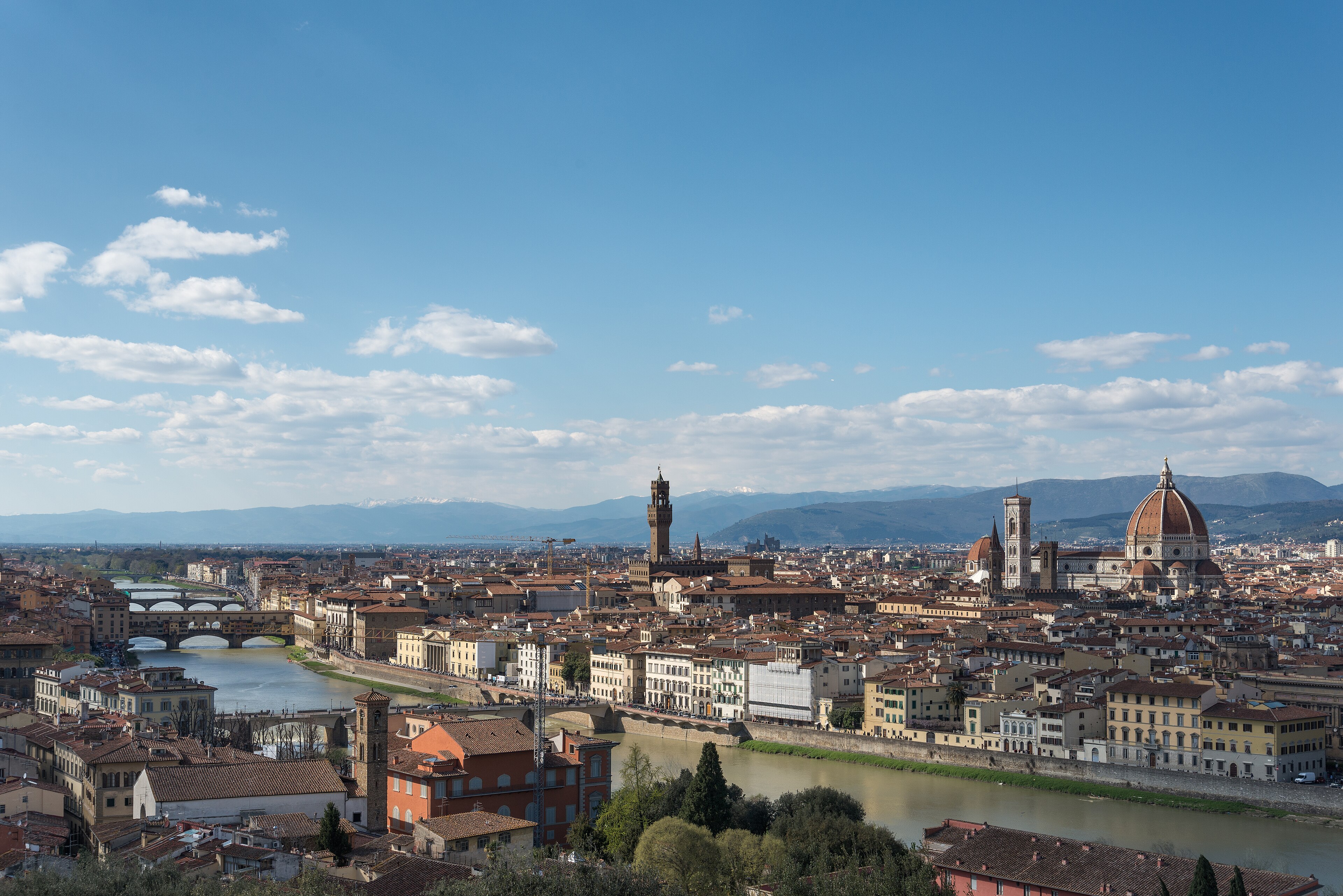
Why Florence is Perfect for Your Celebration
- Iconic Renaissance palazzos and historic villas available as exclusive event venues
- Stunning Tuscan countryside estates within 30 km for outdoor ceremonies
- World-class Florentine cuisine and wine culture elevates every celebration
- Excellent rail connectivity — guests from Rome, Milan, Venice arrive in under 2 hours
- Spring and early autumn offer ideal outdoor weather with lush, photogenic landscapes
- Mature, internationally experienced wedding and event vendor ecosystem
Compare Florence with Other Top Destinations
Frequently Asked Questions
Is Florence a good destination for an intimate destination wedding?
Yes. Florence is particularly well-suited to intimate and medium-scale destination weddings, typically in the range of 30 to 200 guests. The city's historic palazzos, private gardens, and nearby Tuscan countryside villas offer ceremony and reception settings that are genuinely exceptional for smaller, experience-focused celebrations where setting and cultural richness are priorities.
What is the best time of year to hold a wedding or event in Florence?
Spring (April, May, June) and early autumn (September, October) are the strongest windows. Both offer mild, comfortable temperatures, beautiful natural light, and the city and countryside at their most photogenic. September and October have the added appeal of the Tuscan grape harvest season. July and August are best avoided due to intense heat and peak tourist crowds.
How do guests typically travel to Florence for a destination event?
Florence is served by Amerigo Vespucci Airport (FLR), approximately 5 km from the city centre, with good European connections. Guests from across Italy and Europe often find high-speed rail the most convenient option — Florence's Santa Maria Novella station connects to Rome in around 1.5 hours and Milan in under 2 hours. Intercontinental guests typically connect through Rome or Milan.
What kinds of venues are available for events in and around Florence?
Florence offers a wide range of venue types: historic Renaissance palazzos and noble residences within the city, luxury hotel ballrooms and terraces, private Tuscan villas and wine estates in the surrounding countryside, and intimate courtyards and rooftop spaces. The inventory skews toward heritage-rich and intimate-to-medium-scale settings rather than large purpose-built event halls.
Can a large guest group (150+ people) be accommodated in Florence?
Generally yes, though it requires planning. Florence has a substantial range of hotels, boutique guesthouses, and private villa rentals across the city and surrounding countryside. A group of 150 or more guests can typically be accommodated within a reasonable radius of the event venue, but early booking is strongly advisable — the city is globally popular and accommodation fills quickly during spring and autumn.
How experienced are local vendors in handling international destination weddings?
Very experienced. Florence and the broader Tuscany region have been a focal point for international destination weddings for decades. Local wedding planners, florists, photographers, caterers, and entertainment providers are generally well-versed in working with multilingual couples and international guest groups, and English-language communication is reliable among established event professionals.
What makes the food and catering experience distinctive at a Florence event?
Florentine and Tuscan cuisine is a genuine event highlight — fresh pasta, local meats, truffles, aged cheeses, and the region's celebrated wines (Chianti Classico, Brunello di Montalcino) mean catering is typically a standout element rather than a background detail. Many venues work with local producers and can offer seasonal, farm-to-table menus that reflect the landscape and harvest.
Is Florence suitable for corporate retreats or non-wedding celebrations?
Yes. Florence works well for corporate retreats with cultural programming — the city's museums, artisan workshops, cooking schools, and wine estates offer rich activity options beyond a standard conference format. It also suits anniversary celebrations, milestone birthdays, and arts or design-themed events where the destination's cultural identity adds genuine depth to the occasion.
What are the main logistical considerations for moving a guest group around Florence?
Florence's compact historic centre means most central hotel guests can walk between key locations. For guests staying in countryside villas or suburban properties, pre-arranged private minibus or coach transfers are the standard approach. Local transport companies experienced in event logistics are well-established. Taxis can be limited during peak tourist periods, so group transfers are advisable for larger parties.
Are there genuine trade-offs to choosing Florence as an event destination?
Yes. Florence sits at a premium end of the European event-destination spectrum. Venue hire, catering, and accommodation are generally higher than in less internationally prominent Italian cities. The city is also very popular with tourists, which can affect the exclusivity of the experience in public spaces. Very large events (300+ guests) may find the local venue inventory more limiting than purpose-built event destinations.

Ready to explore venues in Florence?
Florence: Destination Wedding & Celebration Venues in Tuscany
◆Florence is one of Europe's premier destinations for weddings, milestone celebrations, and cultural events, combining Renaissance architecture, Tuscan countryside estates, and a world-class hospitality ecosystem. Its primary vibe is Cultural & Timeless — best suited to intimate weddings, anniversary celebrations, corporate retreats with cultural programming, and milestone events where setting and heritage matter as much as logistics. The ideal seasons are spring (April–June) and early autumn (September–October), when temperatures are comfortable and the city and surrounding countryside are at their most photogenic. Florence is well-connected by rail and air, making it genuinely accessible for international and European guests, though it sits at a premium end of the destination-event cost spectrum.
Florence at a Glance
| Attribute | Detail |
|---|---|
| Best For | Destination Weddings, Anniversary Celebrations, Cultural Events, Corporate Retreats |
| Primary Vibe | Cultural & Timeless |
| Other Vibes | Romantic, Heritage, Intimate, Artistic |
| Best Season | Spring (Apr, May, Jun, Sep, Oct) |
Why Choose Florence?
- Unrivalled architectural heritage: Florence's historic centre is a UNESCO World Heritage Site, meaning that even the streets and piazzas surrounding your venue form part of the event's visual experience — a backdrop that simply cannot be replicated elsewhere.
- Diversity of venue types: From grand Renaissance palazzos and intimate medieval courtyards within the city to sprawling Tuscan vineyard estates and hilltop villas in the surrounding countryside, Florence offers a genuinely wide range of event settings within a compact geographic area.
- Exceptional food and wine culture: Florentine cuisine — bistecca, fresh pasta, truffles, Chianti Classico — is a destination draw in its own right. Catering at a Florence event is typically a highlight rather than a logistical afterthought.
- Strong rail and air connectivity: Florence's central station connects to Rome in approximately 1.5 hours and Milan in under 2 hours by high-speed rail, making it straightforward for guests arriving from across Italy or Europe to reach the city without a domestic flight.
- Mature international event vendor ecosystem: Florence has hosted destination weddings and high-profile events for decades, meaning local planners, florists, photographers, and caterers are experienced working with international couples and multilingual guest groups.
- Compact, walkable city core: Most of Florence's major hotels, historic venues, and cultural landmarks are within walking distance of each other, which simplifies guest logistics considerably compared to more sprawling destinations.
Which Celebrations Work Best in Florence?
- Destination Weddings: Florence is particularly well-suited to intimate-to-medium-scale weddings (typically 30–200 guests) where the setting, cultural experience, and quality of food and hospitality are the primary priorities. The city's historic palazzos, private gardens, and nearby Tuscan villas provide ceremony and reception spaces that are genuinely difficult to match for visual impact.
- Anniversary & Milestone Celebrations: The combination of romantic scenery, fine dining, and cultural richness makes Florence an excellent choice for significant anniversaries, vow renewals, or landmark birthday celebrations where the event is as much about the experience as the occasion itself.
- Corporate Retreats with Cultural Programming: Florence's museums, artisan workshops, cooking schools, and wine estates offer a depth of cultural programming that makes it a strong choice for corporate groups seeking a retreat that goes beyond a standard conference format.
- Engagement Celebrations & Pre-Wedding Events: The city's intimate restaurants, rooftop terraces, and private garden spaces are well-suited to smaller pre-wedding gatherings, engagement dinners, and welcome events for arriving guests.
- Cultural & Arts-Themed Events: For organisations or individuals whose event has an arts, design, fashion, or heritage theme, Florence's identity as the birthplace of the Renaissance lends an authenticity and depth of context that few other cities can offer.
Venues & Event Spaces
Florence and its surrounding Tuscan countryside offer a genuinely varied landscape of event spaces. Within the city itself, historic palazzos and noble residences — many of which date to the 15th and 16th centuries — can be hired exclusively or partially for weddings and private events, offering frescoed ceilings, internal courtyards, and formal gardens. Several of the city's leading luxury hotels occupy historic buildings and offer dedicated ballrooms, terraces, and garden spaces capable of hosting ceremonies and receptions of varying scales.
Beyond the city centre, the Tuscan countryside within roughly 30 kilometres of Florence is home to a significant number of private villas, wine estates, and agriturismo properties that offer outdoor ceremony lawns, olive groves, vineyard backdrops, and rustic stone interiors. These rural venues are particularly popular for couples seeking a more relaxed, countryside aesthetic while remaining within easy reach of Florence's accommodation and transport infrastructure.
For smaller, more intimate gatherings, the city also offers private dining rooms in historic restaurants, rooftop terraces with Duomo views, and boutique hotel gardens — spaces that suit welcome dinners, rehearsal events, or post-wedding brunches rather than full-scale receptions. The overall venue inventory skews toward the intimate and the heritage-rich rather than the large-scale and purpose-built, which is an important consideration for event planners working with larger guest lists.
Best Time to Celebrate
The curated best season for Florence events is spring (April, May, June) and early autumn (September, October), and both windows have distinct advantages worth understanding in detail.
April and May bring mild temperatures (typically 15°C–22°C), blooming wisteria and roses in villa gardens, and a city that has emerged from winter quiet but has not yet reached peak summer saturation. Outdoor ceremonies are comfortable, natural light is excellent for photography, and the surrounding Tuscan countryside is at its most lush and green.
June sits at the edge of the ideal window — temperatures begin climbing toward the high 20s, and tourist numbers increase significantly, but it remains a workable month for events, particularly earlier in the month and for venues with good shade or indoor options.
September and October are arguably the finest months for Tuscan events. The summer heat has eased, the grape harvest is underway across the surrounding wine estates, the light is warm and golden, and the city is somewhat less crowded than July and August. Vineyard and countryside venues are particularly atmospheric during the harvest period.
July and August present real challenges: temperatures regularly exceed 32°C, the city is at its most crowded with tourists, many Florentine residents and local vendors take extended holidays in August, and outdoor daytime events become genuinely uncomfortable. Evening events are more manageable, but the overall conditions are less than ideal for a celebration requiring sustained outdoor time.
November through March brings cold, grey, and often wet conditions. Daylight hours are short, many countryside venues close or significantly reduce their services, and the romantic outdoor aesthetic that defines Florence's event appeal is largely unavailable. Indoor events in the city's historic hotels and palazzos remain possible, but the overall experience is considerably diminished compared to the spring and autumn windows.
Getting There & Local Connectivity
Florence is served by Amerigo Vespucci Airport (FLR), located approximately 5 kilometres from the city centre — one of the shortest airport-to-centre distances of any major European city. The airport handles a solid range of European routes, though guests travelling intercontinentally will typically connect through Rome Fiumicino (FCO) or Milan Malpensa (MXP) before taking a domestic flight or high-speed train onward to Florence.
Firenze Santa Maria Novella, Florence's main railway station, is one of Italy's busiest and best-connected rail hubs. High-speed Frecciarossa and Italo services connect Florence to Rome (approximately 1.5 hours), Milan (approximately 1 hour 45 minutes), Venice (approximately 2 hours), and Naples (approximately 3 hours), making rail a genuinely practical option for guests arriving from across Italy and for those connecting from international flights into Rome or Milan.
Within Florence itself, the compact historic centre means that most guests staying in central hotels can walk between their accommodation, the ceremony venue, and the reception space. For guests staying in countryside villas or suburban hotels, private minibus or coach transfers are the standard approach — local transport companies experienced in wedding and event logistics are well-established in the area. Taxis and ride-hailing services are available but can be limited during peak tourist periods, so pre-arranged group transfers are generally advisable for larger guest groups.
Local Vendor & Hospitality Ecosystem
Florence has one of the most developed destination-wedding vendor ecosystems in Europe. The city and surrounding Tuscany region have been a focal point for international destination weddings for several decades, which means the local supply of specialist wedding planners, florists, photographers, videographers, caterers, and entertainment providers is both deep and internationally experienced. Many local vendors are accustomed to working with multilingual couples and guests, and English-language communication is generally reliable among established event professionals.
Florentine and Tuscan catering is a genuine strength — the region's food culture (fresh pasta, local meats, truffles, aged cheeses, olive oil) and wine heritage (Chianti Classico, Brunello di Montalcino, Vernaccia) mean that food and beverage at a Florence event is typically a highlight rather than a background element. Many venues have established relationships with local producers and can offer farm-to-table menus that reflect the season and the landscape.
Accommodation capacity across the city and surrounding countryside is substantial, with a wide range of properties from grand luxury hotels to boutique heritage guesthouses and private villa rentals, meaning that even a moderately large guest group can typically be accommodated within a reasonable radius of the event venue. That said, during peak spring and autumn periods, early booking is strongly advisable — Florence is a globally popular destination and accommodation fills quickly around popular event dates.
Pros & Things to Consider
Why Florence Works Well
- Extraordinary visual setting — Renaissance architecture, Tuscan countryside, and the Arno River create a backdrop that is genuinely world-class for event photography and guest experience
- Mature, internationally experienced event vendor ecosystem with strong English-language capability
- Excellent rail connectivity makes the city accessible for guests arriving from across Italy and Europe without requiring a domestic flight
- Compact city centre simplifies guest logistics — most key locations are walkable from central accommodation
- Exceptional food and wine culture elevates the catering dimension of any event
- Wide variety of venue types — from grand city palazzos to intimate countryside villas — within a compact geographic area
Things to Consider
- Florence sits at a premium end of the European destination-event spectrum — venue hire, catering, and accommodation costs are generally higher than in less internationally prominent Italian cities
- The city's popularity as a tourist destination means that public spaces, streets, and even some venue surroundings can be crowded during peak periods, which can affect the exclusivity of the experience
- Venue capacity tends toward the intimate-to-medium scale — couples or planners requiring very large guest lists (300+) may find the local inventory more limiting than in purpose-built event destinations
- Summer heat (July–August) makes outdoor daytime events genuinely uncomfortable and is a real planning constraint for those with fixed summer dates
- International guests travelling from outside Europe face a multi-leg journey — Florence's airport handles fewer long-haul routes than Rome or Milan, so intercontinental guests will typically need a connection
- High demand during spring and autumn means popular venues and accommodation book out well in advance — late planning carries real availability risk
When Florence May Not Be the Right Fit
- Very large guest lists: If your event requires a single venue capable of comfortably hosting 400 or more guests under one roof, Florence's historic venue inventory — which skews toward intimate and medium-scale spaces — may not offer the right fit without significant logistical complexity.
- Fixed summer dates in July or August: Couples or planners with non-negotiable summer dates should be aware that Florence in high summer is hot, crowded, and logistically more challenging — a different season or a different destination with a more forgiving summer climate would serve those plans better.
- Guests primarily travelling from outside Europe: While Florence is accessible, intercontinental guests will face a connecting journey through a major European hub. For a guest group that is predominantly non-European, a destination with stronger direct long-haul connectivity may reduce travel fatigue and logistical complexity.
- Winter events requiring outdoor spaces: Florence's winter months (November–March) are cold, grey, and short on daylight. If outdoor ceremonies, garden receptions, or countryside vineyard settings are central to the event vision, winter is not a workable window and a different season — or a different destination with a warmer winter climate — would be more appropriate.