
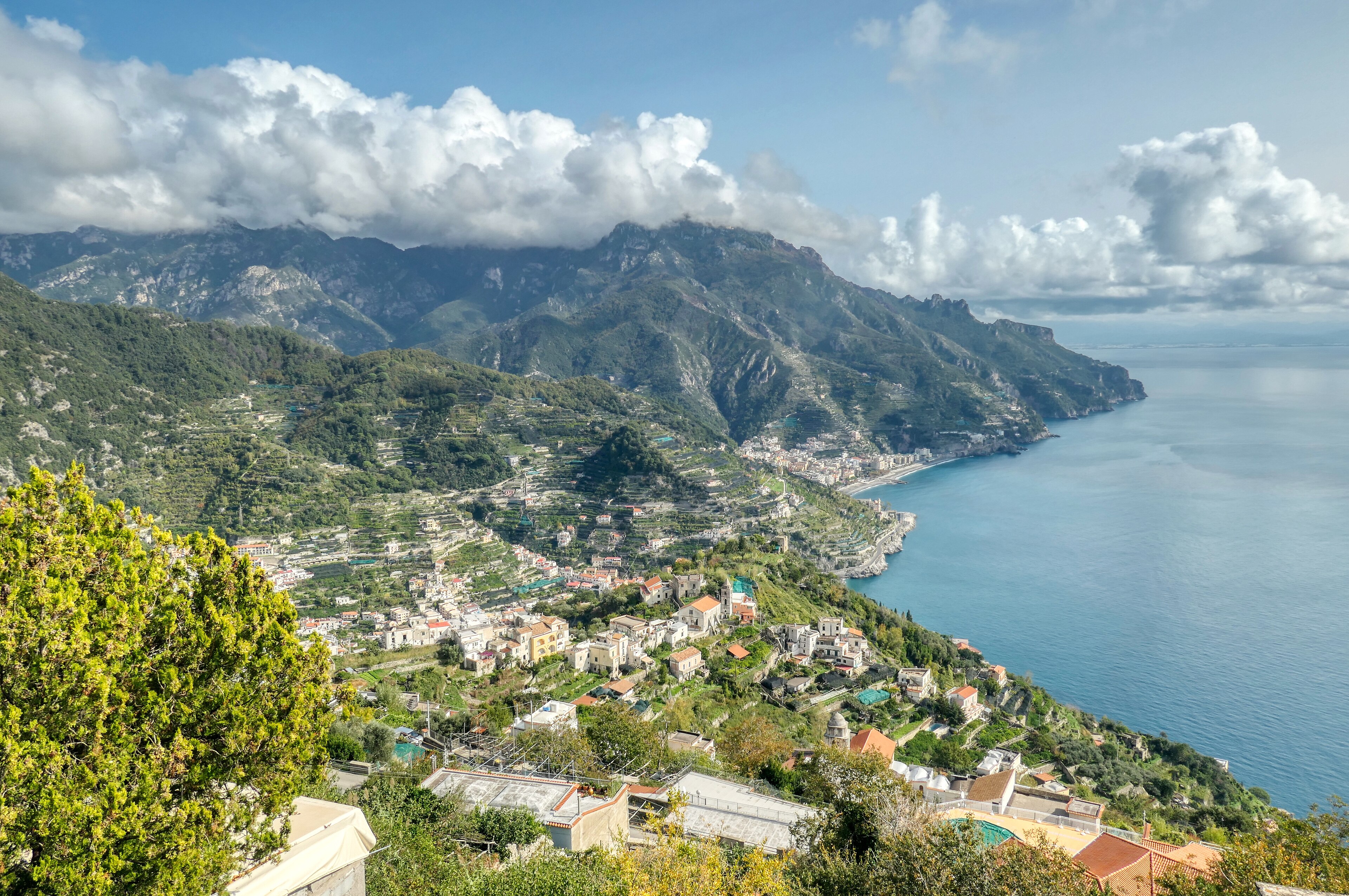
Why Amalfi Coast is Perfect for Your Celebration
- Dramatic clifftop and sea-view terraces create a naturally cinematic ceremony backdrop
- Historic villas, converted monasteries, and boutique luxury hotels offer genuinely unique venue character
- UNESCO World Heritage coastline provides unmatched scenic prestige for photography and guest experience
- Warm, dry summers (May–September) deliver reliably ideal outdoor event conditions
- World-class Italian cuisine, local limoncello, and fresh seafood elevate every dining experience
- Intimate scale of most venues naturally suits smaller, exclusive celebrations with a high-touch feel
Compare Amalfi Coast with Other Top Destinations
Frequently Asked Questions
Is the Amalfi Coast a good destination for a wedding?
Yes, particularly for intimate weddings. The Amalfi Coast is one of Italy's most celebrated destination wedding locations, offering clifftop terraces, historic villas, and sea-view gardens that create a genuinely cinematic ceremony setting. It suits couples prioritising atmosphere, exclusivity, and exceptional photography over large-scale capacity, and works best for guest lists roughly in the range of 20 to 150 people.
What guest-group sizes can Amalfi Coast venues realistically support?
Most venues on the Amalfi Coast are boutique in scale and are best suited to guest lists of 20 to 150 people. A small number of larger properties can accommodate up to around 200 guests for a reception, but the coast does not have large ballroom or convention-centre infrastructure. Groups significantly above 150 may find the local venue supply limiting.
What is the best time of year to plan a celebration on the Amalfi Coast?
May through September is the curated best season. May, June, and September are particularly well-regarded — warm and dry without the peak-summer congestion of July and August. September is often considered the single best month, combining excellent weather, softer light ideal for photography, and a slightly less crowded atmosphere as the main tourist season begins to wind down.
How do guests typically get to the Amalfi Coast for an event?
Most guests fly into Naples International Airport, approximately 60–75 km from Amalfi, and then transfer by private car or minibus along the coastal road, or by ferry from Salerno or Sorrento during the summer season. Guests travelling by train typically arrive at Salerno station and connect onward by road or ferry. Private group transfers are strongly recommended given the narrow coastal roads and very limited parking.
What kinds of venues are available for events on the Amalfi Coast?
The coast offers historic villas, converted monasteries and convents, clifftop boutique hotel terraces, and private villa rentals — all characterised by genuine architectural heritage and sea or garden views. Purpose-built banquet halls or convention spaces are not a feature of this destination. Events here are typically designed around the natural and historic environment, which is both the coast's greatest strength and a real constraint for large or logistically complex gatherings.
Can guests be accommodated together in one place, or are they spread across multiple properties?
On the Amalfi Coast, accommodation is typically spread across multiple boutique hotels and properties in different villages, as very few single venues have enough rooms to house a large group entirely. For smaller groups of 20–40 guests, a private villa buyout or a small boutique hotel can sometimes accommodate everyone together. For larger groups, a coordinated multi-property accommodation plan managed by a local planner is the standard approach.
How does local transport work for a group once guests arrive on the coast?
Local transport for groups requires careful advance planning. The SS163 coastal road is narrow and prone to congestion in peak summer months, so private minibus transfers are strongly recommended over self-drive. Seasonal ferry services between Positano, Amalfi, and nearby ports offer a scenic and often faster alternative to road travel. Staggered or staged transfer schedules typically work better than moving a whole group simultaneously.
Is the Amalfi Coast accessible for guests with mobility limitations?
This requires honest consideration. The coast's steep terrain, cobbled streets, and staircase-heavy access routes in most towns — including Ravello and Positano — present genuine challenges for guests using wheelchairs or with serious mobility impairments. Some properties have lift access and flatter internal layouts, but the destination as a whole is not straightforwardly accessible. Specific accessibility needs should be discussed in detail with a local planner before committing to a venue.
What makes the local vendor and hospitality ecosystem well-suited to destination events?
The Amalfi Coast has a mature, specialist destination wedding vendor community shaped by decades of international demand. Local planners, florists, caterers, photographers, and musicians are experienced with the specific logistics, permitting requirements, and aesthetic of the coast. The Campania region's culinary tradition — fresh seafood, regional wines, and local produce — means food and beverage quality at events here is consistently high without requiring significant outside sourcing.
How far in advance should we book a venue on the Amalfi Coast?
For peak summer dates — particularly June, July, and September — the most sought-after venues in Ravello and Positano typically book 12 to 24 months in advance. May and early September dates may have slightly more flexibility, but the coast's overall popularity as a destination wedding location means that early planning is strongly advisable regardless of the specific month chosen.
Are civil wedding ceremonies legally possible on the Amalfi Coast for non-Italian couples?
Yes, legal civil ceremonies are possible for non-Italian couples, but they require specific documentation, advance coordination with local municipal offices, and typically the involvement of an experienced local wedding planner who knows the process. Requirements include apostilled documents, translations, and advance notice periods. The process is well-established given the coast's long history of international destination weddings, but it is not self-service — professional local guidance is essential.
What types of celebrations beyond weddings work well on the Amalfi Coast?
Anniversary celebrations, milestone birthday events, and smaller corporate incentive retreats are all well-suited to the coast's boutique venue landscape and exceptional hospitality. The intimate scale, world-class cuisine, and scenic excursion options — boat trips, cooking classes, vineyard visits — make it particularly strong for any celebration where the guest experience and sense of occasion matter more than large-scale event infrastructure.

Ready to explore venues in Amalfi Coast?
Amalfi Coast: Destination Wedding & Celebration Venues in Campania, Italy
◆The Amalfi Coast is best suited to intimate, high-style weddings, anniversary celebrations, and milestone birthday events where scenic drama and exclusivity matter more than large-scale capacity. Its primary vibe is romantic and dreamy — clifftop terraces, sea-view gardens, and converted historic villas define the event landscape. The summer season (May through September) delivers reliably warm, dry Mediterranean conditions ideal for outdoor ceremonies. Accessibility requires planning: guests typically fly into Naples and transfer by road or ferry, making logistics more involved than a major city destination. The overall character is boutique and premium rather than mass-market.
Amalfi Coast at a Glance
| Category | Detail |
|---|---|
| Best For | Intimate Weddings, Anniversary Celebrations, Milestone Birthdays, Honeymoon Extensions |
| Primary Vibe | Romantic & Dreamy |
| Other Vibes | Cinematic, Exclusive, Mediterranean Luxe |
| Best Season | Summer (May, Jun, Jul, Aug, Sep) |
Why Choose Amalfi Coast?
- Unrivalled scenic backdrop: The UNESCO-listed coastline — with its stacked pastel villages, terraced lemon groves, and open Tyrrhenian Sea — provides a ceremony setting that is genuinely difficult to replicate anywhere else in the world.
- Distinctive venue character: Historic villas, former monasteries, and clifftop boutique hotels offer event spaces with genuine architectural heritage rather than purpose-built banquet halls, giving celebrations a sense of place and story.
- World-class Italian hospitality and cuisine: The Campania region's culinary tradition — fresh seafood, handmade pasta, local Fiano and Falanghina wines, and the coast's signature limoncello — elevates every dining element of an event naturally.
- Intimate scale by design: Most venues on the coast are deliberately small and exclusive, which suits guest lists of 20–150 particularly well and ensures a level of personalised attention that larger resort destinations rarely match.
- Photography and visual storytelling: The combination of golden-hour light over the sea, colourful village architecture, and terraced gardens means that event photography here is consistently exceptional without requiring elaborate staging.
- Proximity to broader Italian experiences: Guests can extend their trip to Naples, Pompeii, Capri, or the Sorrentine Peninsula, making the Amalfi Coast a natural anchor for a wider Italian travel experience around a celebration.
Which Celebrations Work Best in Amalfi Coast?
- Destination Weddings: The coast is among Italy's most sought-after wedding destinations, particularly for couples seeking an intimate ceremony on a sea-view terrace or in a historic villa garden. The scale of most venues naturally caps guest lists, which suits couples who want a curated, exclusive experience over a large gathering.
- Anniversary Celebrations: The inherently romantic atmosphere — candlelit terraces, sea breezes, and exceptional food and wine — makes the Amalfi Coast a particularly strong choice for milestone anniversaries, whether a private dinner or a small gathering of close family and friends.
- Milestone Birthday Celebrations: Boutique hotel buyouts and private villa events work well for significant birthdays where the host wants a genuinely memorable setting rather than a conventional banquet room. The coast's exclusivity adds a sense of occasion that guests remember.
- Honeymoon Extensions: While not an event in the traditional sense, many couples use the Amalfi Coast as the natural continuation of a wedding held elsewhere in Italy, given its reputation as one of Europe's most romantic coastal destinations.
- Corporate Retreats and Incentive Events: Smaller executive retreats and high-end incentive groups find the coast's combination of luxury accommodation, exceptional dining, and scenic excursions (boat trips, cooking classes, vineyard visits) well-suited to reward-focused programmes, though the logistical complexity of the terrain means this works best for smaller groups.
Venues & Event Spaces
The Amalfi Coast's event venue landscape is defined by its architectural heritage and natural setting rather than purpose-built convention infrastructure. The most characteristic spaces include:
- Historic villas and palazzi: Converted aristocratic residences with formal gardens, sea-view loggias, and frescoed interiors are among the most sought-after ceremony and reception settings on the coast, particularly in Ravello and its surroundings.
- Former monasteries and convents: Several properties along the coast occupy buildings with centuries of history, offering cloistered courtyards and terraced gardens that create a genuinely atmospheric event environment.
- Clifftop boutique hotel terraces: Many of the coast's luxury hotels feature open-air terraces cantilevered over the sea, which function as ceremony spaces, cocktail reception areas, and dining settings with panoramic views.
- Private villa rentals: The coast and its immediate hinterland have a strong tradition of private villa hire, allowing groups to take over an entire property for multi-day celebrations with full catering and staffing.
- Boat and yacht events: The calm summer sea makes private boat charters — for cocktail receptions, sunset dinners, or inter-village transfers — a genuinely practical and popular element of Amalfi Coast celebrations.
It is worth noting that the coast does not have large-scale ballroom or convention-centre infrastructure. Events here are typically designed around the natural and architectural environment rather than fitted into a neutral event space, which is both the destination's greatest strength and a genuine constraint for larger or more logistically complex gatherings.
Best Time to Celebrate
The curated best season for events on the Amalfi Coast is May through September, and this reflects the Mediterranean climate's most reliable window for outdoor celebrations.
- May and June are generally considered the most comfortable months — temperatures are warm but not oppressive, the coast is in full bloom, and the summer tourist peak has not yet reached its maximum intensity, meaning slightly easier logistics and a somewhat less crowded atmosphere.
- July and August are the height of summer and the most popular months overall. Temperatures are at their warmest (regularly reaching the mid-to-upper 20s Celsius), the sea is at its calmest and warmest for boat events, and the long daylight hours allow for extended outdoor celebrations. The trade-off is that these months bring the highest visitor volumes to the coast, which can affect road congestion and the availability of ancillary services.
- September is widely regarded as an excellent month for events — the summer heat softens slightly, the crowds begin to thin, and the light takes on a particularly warm quality that is especially valued for photography. Many experienced planners consider September the single best month on the coast for a celebration.
- October sits outside the curated best season. Early October can still be pleasant, but the risk of autumn storms increases meaningfully, and a growing number of smaller venues and service providers begin to reduce operations or close for the winter season.
- November through March should generally be avoided for outdoor events. Rainfall is significantly higher, the sea can be rough, many hotels and restaurants close entirely, and the dramatic coastal roads can become genuinely difficult to navigate safely. The destination loses much of its characteristic warmth and vibrancy in this period.
- April is a shoulder month — the coast begins to reopen, spring flowers are attractive, but weather reliability is lower than the summer months and some venues may not yet be fully operational for the season.
Getting There & Local Connectivity
The primary gateway for international and domestic guests is Naples International Airport (NAP), located approximately 60–75 km from Amalfi town. From Naples, guests can reach the coast by private transfer along the SS163 coastal road, by ferry from Salerno or Sorrento during the summer season, or by a combination of train to Salerno followed by ferry or road transfer. Salerno Railway Station, approximately 25 km from Amalfi, provides a useful rail connection to Naples and Rome for guests travelling by train.
Local connectivity within the coast itself requires careful planning for groups. The SS163 — the single coastal road linking the main towns — is famously narrow and winding, and can experience significant congestion during peak summer months. Key practical considerations include:
- Private minibus or coach transfers are strongly recommended for groups, as parking is extremely limited in most coastal towns.
- Ferry services between Positano, Amalfi, and Ravello's nearest port (Minori) operate seasonally and offer a scenic and often faster alternative to road travel during summer.
- Ravello, one of the most popular wedding locations on the coast, sits above the main coastal road and is accessed by a steep, narrow road — this is worth factoring into accessibility planning for elderly guests or those with mobility considerations.
- For very large guest groups, a staged arrival plan (staggered transfers, a mix of road and sea routes) is typically more effective than attempting to move everyone simultaneously.
Local Vendor & Hospitality Ecosystem
The Amalfi Coast has a well-developed specialist wedding and events vendor ecosystem, shaped by decades of international destination wedding demand. Key characteristics include:
- Experienced destination wedding planners: The coast has a strong community of local and Italy-based event planners who specialise specifically in Amalfi Coast celebrations and are familiar with the permitting, logistics, and supplier relationships that make events here work smoothly.
- Floral and décor specialists: Local florists with expertise in Mediterranean botanical styling — incorporating local lemons, bougainvillea, olive branches, and seasonal blooms — are well-established and widely used.
- Catering and culinary talent: The Campania region's culinary tradition is deep and genuine. Local caterers and hotel kitchens draw on exceptional regional produce, and the quality of food and beverage at events here is consistently high.
- Music and entertainment: Classical string ensembles, traditional Neapolitan musicians, and contemporary Italian performers are all available and commonly engaged for Amalfi Coast celebrations.
- Photography and videography: The coast attracts a significant number of specialist destination wedding photographers, both Italian and international, who are experienced with the specific light conditions and locations of the area.
- Permitting and civil ceremony logistics: Legal civil ceremonies for non-Italian couples require specific documentation and advance planning through local municipal offices. Experienced local planners are essential for navigating this process correctly and on time.
Pros & Things to Consider
Why Amalfi Coast Works Well
- UNESCO World Heritage coastline provides a ceremony backdrop of genuine global prestige
- Historic villas, converted monasteries, and clifftop terraces offer venue character that is architecturally and atmospherically distinctive
- Warm, dry Mediterranean summers (May–September) deliver reliable outdoor event conditions
- World-class regional cuisine and wine elevate every dining element naturally
- Intimate venue scale suits smaller, exclusive guest lists exceptionally well
- Strong specialist vendor ecosystem with deep experience in international destination weddings
- Exceptional photography conditions — golden light, sea views, colourful architecture
- Proximity to Naples, Capri, and Pompeii allows guests to build a broader Italian itinerary
Things to Consider
- Logistical complexity: The narrow coastal road, limited parking, and seasonal ferry dependency make group transfers more demanding to coordinate than at most other destination wedding locations in Europe.
- Limited large-scale capacity: The coast does not suit guest lists much above 150–200 people at most venues; those needing large ballroom or convention-scale infrastructure will find the local supply genuinely limited.
- Seasonal closure: A significant portion of the coast's hotels, restaurants, and service providers close between November and March, making off-season events difficult to plan and execute.
- Peak-season congestion: July and August bring very high visitor volumes to the coast, which can affect road travel times, the availability of ancillary services, and the overall sense of exclusivity that many couples seek.
- Accessibility for mobility-impaired guests: The steep terrain, cobbled streets, and staircase-heavy architecture of most coastal towns can present genuine challenges for guests with limited mobility — this requires specific advance planning.
- Advance booking lead times: The most sought-after venues, particularly in Ravello and Positano, book up well in advance for peak summer dates; planning timelines of 12–24 months are common for prime dates.
When Amalfi Coast May Not Be the Right Fit
- Large guest lists: If your celebration requires a venue comfortably accommodating 300 or more guests under one roof, the Amalfi Coast's boutique venue inventory is unlikely to meet that need without significant compromise.
- Guests with significant mobility limitations: The coast's steep terrain, staircase-heavy access routes, and cobbled streets make it a genuinely difficult destination for guests who use wheelchairs or have serious mobility impairments — a flatter, more accessible destination would serve those guests better.
- Off-season or winter events: If your preferred dates fall between November and March, the Amalfi Coast is not a practical choice — venue closures, weather unpredictability, and reduced service availability make this period unsuitable for events here.
- Groups prioritising ease of arrival: If your guest list includes a large proportion of travellers for whom a long-haul flight followed by a 60–75 km road or ferry transfer represents a significant burden, a destination with a major international airport closer to the event venue may be a more considerate choice.