
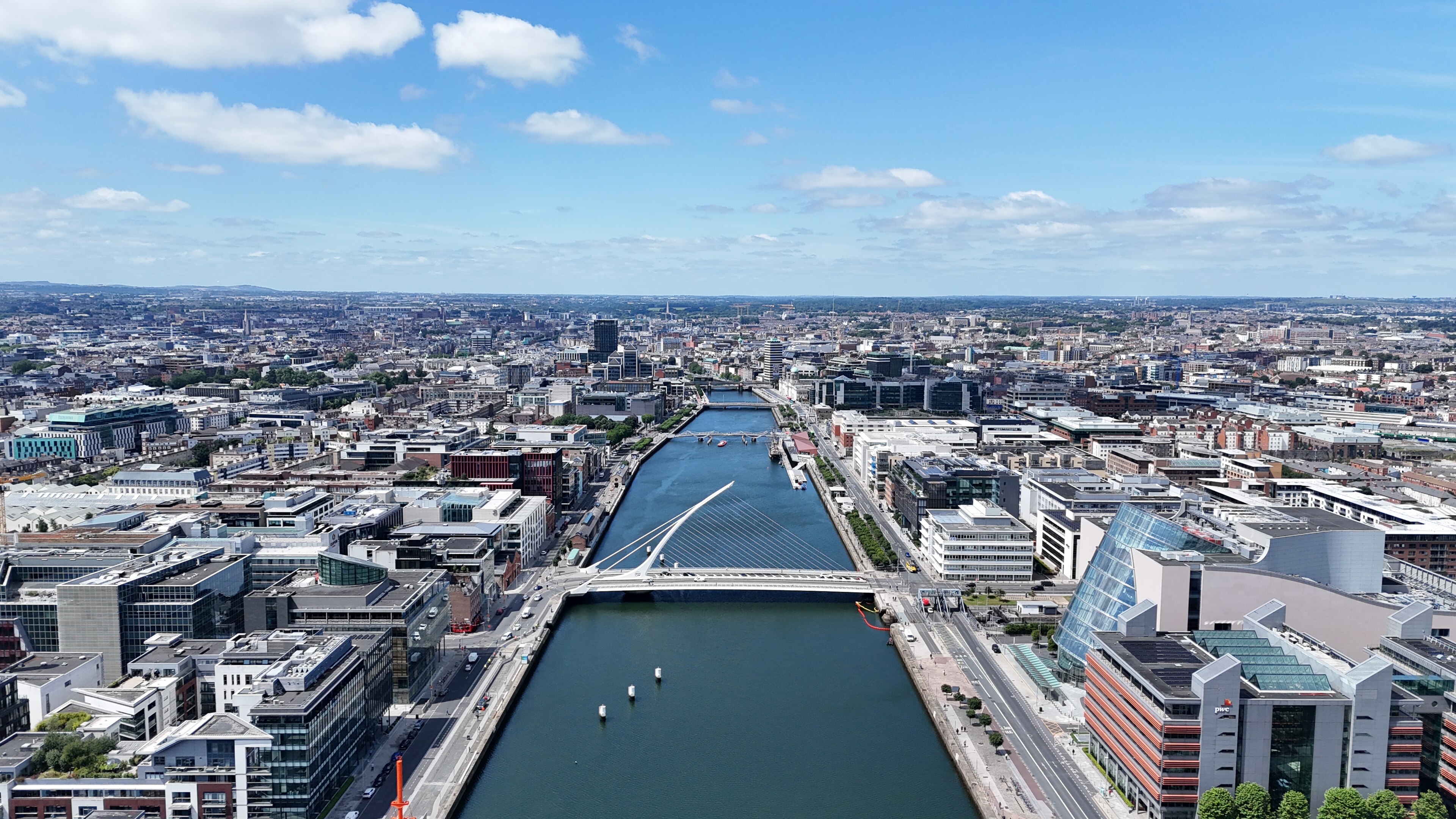
Why Dublin is Perfect for Your Celebration
- Castle and manor house estates on the city's outskirts offer dramatic, photogenic ceremony backdrops
- Long summer evenings (daylight until 10 pm in June–July) create naturally extended outdoor celebration windows
- A mature, internationally experienced events and catering industry with specialist wedding vendors
- Dublin Airport is one of Europe's best-connected hubs, making international guest travel straightforward
- The compact city centre means guests can move easily between ceremony, reception, and accommodation
- A rich cultural backdrop — Georgian squares, cobbled lanes, and iconic riverside settings — adds character to every event

Compare Dublin with Other Top Destinations
Frequently Asked Questions
Is Dublin a good destination for a wedding?
Yes. Dublin is a strong destination wedding choice, particularly for couples with international guest lists. The city offers a range of distinctive venue types — including castle estates, Georgian heritage hotels, and luxury city-centre properties — combined with excellent air connectivity from Europe and North America, a mature wedding vendor ecosystem, and long summer evenings that extend outdoor celebrations naturally.
What is the best time of year to hold a wedding or event in Dublin?
May through September is the recommended window. These months offer the longest daylight hours (up to nearly 10 pm in June), the mildest temperatures, and the lowest rainfall relative to the rest of the year. July and August are the warmest months. September is a quieter, often underrated option within the same window. October through April brings cold, wet, and frequently stormy conditions that make outdoor elements impractical.
How easy is it for international guests to travel to Dublin?
Very easy for guests from Europe and North America. Dublin Airport is one of Europe's most connected hubs, with direct transatlantic routes from major US and Canadian cities and frequent services from across Europe. Most international guests can reach Dublin on a single direct flight, which significantly reduces travel complexity for destination event groups.
What kinds of venues are available for weddings and events in Dublin?
Dublin offers a genuinely diverse range: luxury five-star hotel ballrooms in the city centre, castle and manor house estates on the outskirts (some available for exclusive hire), four-star conference and event hotels with large ballroom capacities, intimate private dining rooms in heritage properties, and distinctive cultural venues such as galleries and historic buildings. Marquee-ready estate grounds are also available for summer events.
How many guests can Dublin venues typically accommodate?
Most of Dublin's well-known event hotels and castle venues comfortably accommodate seated receptions in the 100–500 guest range. Some larger suburban conference hotels and resort properties can host events up to 1,000–1,500 guests. The destination is generally best suited to events in the 50–500 guest range if a heritage or characterful venue setting is a priority.
Is Dublin suitable for corporate events and incentive travel?
Yes, strongly so. Dublin is one of Europe's leading corporate event destinations, home to the European headquarters of many major technology and financial firms. The city has a well-developed supply of conference hotels, purpose-built event spaces, and experienced corporate hospitality providers. The summer months are particularly popular for incentive travel and team celebration events.
What is the local transport situation for event guest groups once they arrive?
Dublin's compact city centre means many guests staying centrally can walk between key locations. The city also has a tram network (Luas), bus services, and the DART coastal rail line. For event groups, private coach hire and taxis are widely available and practical for transfers between the airport, hotels, and venues — particularly for castle or estate properties outside the city centre.
Do I need to plan for weather contingencies even in summer?
Yes. Even during May–September, Dublin's Atlantic climate means rain and cool temperatures are always possible. Outdoor ceremonies and receptions should have a credible indoor or covered backup — a marquee, a covered terrace, or an indoor alternative — rather than relying on guaranteed sunshine. This is standard practice among experienced Dublin event planners and should be built into any outdoor event brief.
Are there legal requirements for international couples getting married in Dublin?
Yes. Couples marrying in Ireland who are not Irish residents must give formal notification to the relevant civil registration office — typically a minimum of three months in advance — and provide specific documentation. The requirements are manageable but need advance planning. Working with a local wedding planner or coordinator who is familiar with Irish civil registration procedures is strongly advisable for international couples.
How developed is Dublin's wedding and events vendor ecosystem?
Very well developed. Dublin has a deep supply of specialist wedding planners, high-quality caterers, florists experienced in large-scale event design, professional photographers and videographers, live music providers, and luxury transport operators. Many leading hotels have dedicated in-house events teams experienced with international clients. Destination wedding planners who specialise in the Irish market are also available for couples planning remotely.
Can Dublin accommodate guests who need to stay close to the event venue?
Generally yes. The city centre has a high density of hotel accommodation across multiple tiers, meaning guest groups can typically find rooms within walking distance of central venues. For castle or estate venues outside the city, nearby accommodation options exist, and private coach transfers from central hotels are a standard and practical solution for event-day logistics.

Ready to explore venues in Dublin?
Dublin: Destination Wedding & Corporate Event Venues in Ireland
◆Dublin is Ireland's capital and its most internationally connected city, making it a strong choice for destination weddings, corporate celebrations, and milestone events. Its primary vibe is Chic & Cosmopolitan, underpinned by Georgian architecture, castle estates on the city's outskirts, a mature hospitality industry, and a lively cultural scene. The destination suits weddings, corporate events, anniversary celebrations, and social gatherings particularly well. The best season runs from May through September, when daylight hours are long and temperatures are at their most comfortable. Dublin is generally accessible for international guests, with one of Europe's busiest airports offering direct connections from North America, the Middle East, and across Europe.
Dublin at a Glance
| Category | Detail |
|---|---|
| Best For | Destination Weddings, Corporate Events, Anniversary Celebrations, Social Gatherings |
| Primary Vibe | Chic & Cosmopolitan |
| Other Vibes | Historic & Cultural, Lively & Social, Intimate & Elegant |
| Best Season | Summer (May, Jun, Jul, Aug, Sep) |
Why Choose Dublin?
- Castle and manor estate venues: Dublin's outskirts and the wider Leinster region offer genuine castle properties that provide dramatic, photogenic settings for ceremonies and receptions — a venue type that is genuinely rare in most global cities.
- Exceptional international air connectivity: Dublin Airport is one of Europe's most connected hubs, with direct transatlantic routes and frequent services from across Europe, making it straightforward for international guests to attend without complex connections.
- Long summer evenings: During June and July, daylight extends until approximately 10 pm, giving outdoor celebrations a naturally extended golden-hour window that is difficult to replicate in most other destinations.
- Mature, experienced events industry: Dublin has a well-developed ecosystem of specialist wedding planners, caterers, florists, photographers, and entertainment providers who are accustomed to working with international clients and large-scale events.
- Compact, walkable city centre: The relatively small footprint of central Dublin means guests can move easily between ceremony venues, reception spaces, and accommodation — reducing the logistical complexity that often accompanies large destination events.
- Rich cultural backdrop: Georgian squares, cobbled laneways, the River Liffey, and a vibrant arts and literary heritage give every event a distinctive sense of place that generic conference-city destinations typically cannot offer.
Which Celebrations Work Best in Dublin?
- Destination Weddings: Dublin is particularly well-suited to couples seeking a European city wedding with genuine character. The combination of castle estates, elegant Georgian townhouse venues, and luxury city-centre hotels means there is a strong range of ceremony and reception settings. The city's international connectivity makes it realistic for guests travelling from North America, mainland Europe, and further afield.
- Corporate Events & Conferences: Dublin is one of Europe's leading corporate event destinations, home to the European headquarters of many major technology and financial companies. The city has a strong supply of large-capacity conference hotels, purpose-built event spaces, and experienced corporate hospitality providers. Summer months are particularly popular for incentive travel and team events.
- Anniversary & Milestone Celebrations: Intimate private dining rooms in heritage hotels, exclusive-use castle hire, and the city's strong restaurant and hospitality culture make Dublin a compelling choice for significant personal milestones — particularly for groups of 20 to 150 guests.
- Social Gatherings & Group Celebrations: Dublin's lively pub culture, live music scene, and range of private event spaces make it a natural fit for group social events — from rehearsal dinners and pre-wedding gatherings to post-event brunches and group city experiences.
Venues & Event Spaces
Dublin offers a genuinely diverse range of venue types across different scales and styles. At the upper end, the city has a strong supply of luxury five-star hotel ballrooms and event suites in the city centre, capable of hosting seated dinners and receptions for several hundred guests. These properties typically offer in-house catering, dedicated event coordination, and accommodation blocks for guest groups.
Beyond the city centre, castle and manor house estates — several of which offer exclusive-use hire — provide a distinctly Irish setting for ceremonies and receptions. These properties often combine historic architecture with landscaped grounds, making them particularly popular for outdoor summer ceremonies.
The city also has a range of four-star conference and event hotels, particularly in the western suburbs and near the airport, that offer large ballroom capacities and are well-suited to corporate events and larger wedding receptions. For more intimate gatherings, private dining rooms in heritage hotels, converted Georgian townhouses, and cultural institution hire (galleries, libraries, and historic buildings) provide distinctive alternatives to conventional hotel ballrooms.
Outdoor event infrastructure — including marquee-ready grounds at estate properties — is available during the summer season, though all outdoor plans in Dublin should include contingency arrangements given the city's variable weather even in its best months.
Best Time to Celebrate
The curated best season for Dublin events runs from May through September, and this recommendation is grounded in several concrete factors beyond simply "the weather is nicer."
May and June offer rapidly lengthening days, with June seeing the longest daylight of the year (sunset approaching 10 pm). Temperatures are typically in the 14–18°C range — cool by many standards, but comfortable for outdoor ceremonies and garden receptions, particularly when guests are dressed for a celebration. Rainfall is generally lower in May and June than in the autumn and winter months, though showers remain possible at any time.
July and August are Dublin's warmest months, with temperatures occasionally reaching the low-to-mid 20s°C. These months are the most reliably pleasant for outdoor elements and are the peak of the city's tourism and events calendar — meaning venues and vendors are in high demand and early booking is strongly advisable.
September remains a viable and often underrated month — temperatures are still mild, the summer crowds begin to thin, and the city retains good daylight into the early evening. It can represent a practical shoulder-season option within the best-season window.
By contrast, October through April presents meaningful challenges for event planning. October sees rapidly shortening days and increasing Atlantic storm activity. November through February brings cold temperatures (frequently 4–8°C), persistent rain, strong winds, and very limited daylight — conditions that make outdoor elements impractical and that can significantly affect the guest experience for those travelling internationally. March and April are transitional months with unpredictable weather; while occasional fine days occur, the risk of cold, wet conditions remains high enough that they fall outside the recommended planning window for destination events.
Getting There & Local Connectivity
Dublin is served by Dublin Airport (DUB), located approximately 10–12 km north of the city centre. It is one of Europe's busiest airports, with direct services from major North American cities (including New York, Boston, Chicago, Los Angeles, and Toronto), a wide range of European destinations, and connections to the Middle East and beyond. For most international guests, Dublin is reachable with a single direct flight — a significant practical advantage for destination event planning.
Within Ireland, Dublin Heuston and Dublin Connolly stations connect the capital to Cork, Galway, Limerick, Belfast, and other major cities by intercity rail, making it accessible for domestic guests travelling from across the country.
Within the city itself, Dublin has a well-developed public transport network including the Luas tram system, Dublin Bus, and the DART coastal rail line. For event groups, taxis and private coach hire are widely available and practical for moving guests between venues, hotels, and the airport. The compact nature of the city centre means that many guests staying in central hotels can walk between key locations, which simplifies logistics considerably for smaller groups.
Local Vendor & Hospitality Ecosystem
Dublin has one of the most developed event and hospitality ecosystems in the British Isles. The city's long history as a major tourism and business destination has produced a deep bench of experienced professionals across every category relevant to celebrations: specialist wedding coordinators, high-quality catering companies, florists with experience in large-scale event design, professional photographers and videographers, live music and entertainment providers, and luxury transport operators.
Many of Dublin's leading hotels have dedicated in-house events teams with experience managing international weddings and corporate events, including guests arriving from multiple countries with varying dietary, cultural, and logistical requirements. The city's strong restaurant culture also means that rehearsal dinners, welcome events, and post-celebration brunches can be hosted at a high standard across a range of settings.
For couples or planners based outside Ireland, the availability of experienced destination wedding planners who specialise in the Irish market — and who can manage supplier relationships, venue negotiations, and legal requirements on behalf of international clients — is a genuine practical asset.
Pros & Things to Consider
Why Dublin Works Well
- Exceptional international air connectivity, with direct transatlantic and pan-European routes making guest travel straightforward
- A genuinely diverse venue portfolio — from castle estates and Georgian heritage properties to contemporary luxury hotel ballrooms
- Long summer daylight hours that extend outdoor celebrations naturally and create distinctive photographic conditions
- A mature, internationally experienced events and hospitality industry with deep specialist expertise
- A compact, walkable city centre that reduces logistical complexity for guest groups
- Strong cultural identity — Georgian architecture, literary heritage, and a lively social scene — that gives events a genuine sense of place
Things to Consider
- Weather unpredictability: Even within the best season (May–September), Dublin's Atlantic climate means rain and cool temperatures are always possible. Outdoor elements require robust contingency planning — a marquee or indoor backup is strongly advisable rather than optional.
- Peak-season demand: July and August are the city's busiest months for both tourism and events. Popular venues and vendors book up well in advance, and accommodation across the city can be at a premium during this period.
- Scale limitations for very large events: While Dublin has venues capable of hosting several hundred guests, the city's inventory of very large-scale event spaces (1,000+ guests for a single seated event) is more limited than purpose-built convention cities. Very large events may require purpose-built conference facilities rather than the heritage or hotel venues that define the destination's character.
- Legal requirements for international couples: Couples marrying in Ireland who are not Irish residents face specific legal notification and documentation requirements. These are manageable but require advance planning — typically a minimum of three months' notice to the relevant civil registration office.
When Dublin May Not Be the Right Fit
- Outdoor-focused events planned outside May–September: If a couple or planner has a strong vision for an outdoor ceremony or garden reception and cannot commit to the summer window, Dublin's climate makes this a genuinely risky choice — the autumn and winter months bring conditions that are frequently incompatible with outdoor celebrations.
- Very large guest lists requiring a single venue: Groups requiring a single venue to seat 800 or more guests for a wedding-style reception may find Dublin's heritage and hotel venue inventory limiting. The destination is better suited to events in the 50–500 guest range.
- Guests for whom long-haul travel is a significant barrier: While Dublin is excellent for guests from Europe and North America, guests travelling from South or Southeast Asia, sub-Saharan Africa, or parts of Latin America will typically face long journeys with connections. If the majority of a guest list is concentrated in a region without strong direct connectivity to Dublin, the travel burden may be disproportionate.
- Those seeking a warm-weather, sun-guaranteed destination: Dublin is a cool, temperate city. Guests or couples whose primary priority is guaranteed warm sunshine and high temperatures will find the destination's climate a poor match, even in its best months — and should consider Mediterranean or tropical alternatives instead.