
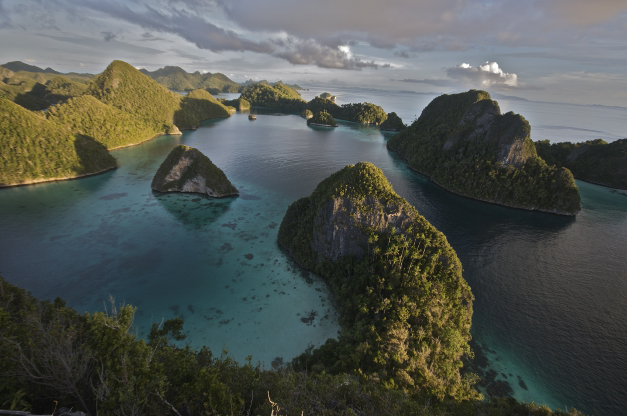
Why Raja Ampat is Perfect for Your Celebration
- Unmatched marine biodiversity — the world's richest coral reef ecosystem forms a living, breathing backdrop for ceremonies
- Extreme seclusion and privacy — private island resorts and overwater bungalows ensure an exclusive, crowd-free celebration
- Dramatic karst limestone scenery provides a genuinely one-of-a-kind visual setting found nowhere else on earth
- Dry season (Jan–Mar, Oct–Dec) delivers calm, glassy seas ideal for boat-based events, snorkelling excursions, and sunset ceremonies
- Intimate scale suits small, meaningful gatherings — elopements, micro-weddings, and private retreats rather than large banquets
- Eco-resort hospitality culture prioritises personalised, attentive service well-suited to bespoke event experiences
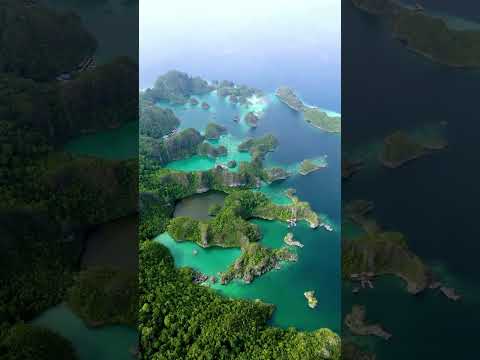
Compare Raja Ampat with Other Top Destinations
Frequently Asked Questions
Is Raja Ampat a good destination for a wedding?
Yes, for the right couple. Raja Ampat is particularly well-suited to elopements, micro-weddings, and intimate ceremonies where natural scenery and total privacy are the priority. It is not suited to large traditional weddings — most properties accommodate a maximum of 40–60 guests, and the remote location requires guests to commit to a multi-leg journey involving flights to Sorong and a speedboat transfer.
How many guests can realistically attend an event in Raja Ampat?
Most eco-resorts in Raja Ampat accommodate between 20 and 60 guests at full capacity. For a cohesive event experience, a full property buyout is the most practical approach, which typically means groups of 10–40 guests. Larger groups can be split across multiple properties, but inter-island coordination adds meaningful logistical complexity.
What is the best time of year to hold a celebration in Raja Ampat?
The dry season — January through March and October through December — is the only reliably suitable window for events. During these months, seas are calm, rainfall is low, and outdoor ceremonies and boat transfers are comfortable. The wet season (April–September) brings rough seas, heavy rain, and reduced visibility, making it unsuitable for event planning.
How do guests get to Raja Ampat?
Guests fly into Domine Eduard Osok Airport in Sorong, West Papua, which is served by domestic flights from Jakarta, Makassar, Manado, and other Indonesian hubs. There are no direct international flights into Sorong. From Sorong, guests travel by speedboat to the Raja Ampat islands — a journey of roughly 30 minutes to 2 hours depending on the destination island.
What kinds of venues are available for events in Raja Ampat?
Venues are almost exclusively eco-resorts and boutique dive lodges. Event spaces include private beaches, overwater decks, jungle clearings, and hillside platforms with sea views. There are no conventional banquet halls or ballrooms. Most properties offer full buyout options for private events, and boat-based or floating platform ceremonies are possible during the dry season.
Can I bring my own wedding vendors to Raja Ampat?
Yes, and for specialised services — professional photography, bespoke floristry, live music, or complex catering — bringing vendors in from Sorong, Bali, or Jakarta is typically necessary. The local vendor ecosystem is small and resort-based. Most resorts are experienced at coordinating with external vendors and can advise on logistics, but advance planning is essential given the remote location.
What is internet and mobile connectivity like for guests during an event?
Connectivity across Raja Ampat is limited and variable. Most eco-resorts offer some Wi-Fi, but speeds are slow and coverage is inconsistent. Mobile data is unreliable across much of the archipelago. Guests and planners should not depend on consistent internet access, and event coordination should account for communication gaps — this is a genuine consideration, not a minor inconvenience.
Is Raja Ampat suitable for a corporate retreat or private group experience?
Yes. Small leadership teams, creative retreats, and wellness-focused corporate groups are well-served by Raja Ampat's environment. The seclusion, high staff-to-guest ratios, and immersive natural setting support focused, distraction-free gatherings. Activities such as diving, snorkelling, and island-hopping provide meaningful shared experiences that complement a retreat format.
What makes Raja Ampat different from other island wedding destinations?
Raja Ampat offers a level of ecological richness and remoteness that is genuinely unmatched. The combination of karst limestone island scenery, the world's most biodiverse coral reefs, and near-total seclusion creates a setting no constructed venue can replicate. It suits couples who want their celebration to be defined by the destination itself rather than by a venue's facilities or a city's amenities.
Are there any safety or health considerations for guests travelling to Raja Ampat?
Raja Ampat is generally safe, but medical facilities within the archipelago are very limited. The nearest comprehensive medical care is in Sorong, requiring a boat journey. Guests with significant health considerations should factor this in. Standard tropical health precautions apply — sun protection, hydration, and awareness of marine environment guidelines are all relevant for guests participating in water activities.
How far in advance should I plan an event in Raja Ampat?
Planning 12–18 months in advance is strongly advisable. Eco-resort capacity is limited, dry season dates book out early, and coordinating external vendors, guest travel logistics, and potential full property buyouts all require extended lead time. The remote location means that last-minute changes are significantly harder to manage than at more accessible destinations.

Ready to explore venues in Raja Ampat?
Raja Ampat: Destination Wedding & Intimate Event Venues in West Papua
◆Raja Ampat is an archipelago of over 1,500 islands in West Papua, Indonesia, and is globally recognised as the epicentre of marine biodiversity. As an event destination, it is strongest for extremely intimate celebrations — elopements, micro-weddings, private honeymoon retreats, and small-group nature immersion experiences — where seclusion, dramatic natural scenery, and a one-of-a-kind setting matter more than scale or urban convenience. The primary vibe is nature and wilderness. The dry season (January–March and October–December) is the only reliably suitable window for events. Accessibility requires genuine commitment: guests must fly into Sorong and then transfer by speedboat. This is not a destination for large guest lists or conventional banquet-style events.
Raja Ampat at a Glance
| Category | Detail |
|---|---|
| Best For | Elopements, Intimate Destination Weddings, Private Retreats, Nature Immersion Experiences |
| Primary Vibe | Nature & Wilderness |
| Other Vibes | Secluded, Romantic, Eco-Conscious, Adventure |
| Best Season | Dry Season (Jan, Feb, Mar, Oct, Nov, Dec) |
Why Choose Raja Ampat?
- The world's richest marine ecosystem as your backdrop: Raja Ampat hosts more coral species and reef fish than anywhere else on the planet. A ceremony above a turquoise lagoon or on a private beach framed by karst limestone towers is genuinely unlike anything available at a conventional destination.
- Total privacy and exclusivity: The archipelago's remoteness is itself a feature. Eco-resorts here typically accommodate very small numbers of guests, meaning an entire property can often be taken over for a private celebration — something that is logistically and financially out of reach at most popular destinations.
- Dramatic, irreplaceable scenery: The mushroom-shaped karst islands, overwater bungalows, and jungle-covered hillsides create a visual setting that requires no decoration or staging — the landscape does the work.
- Dry season reliability: During January–March and October–December, seas are typically calm, skies are clear, and underwater visibility peaks — making boat transfers, sunset ceremonies, and snorkelling excursions genuinely comfortable and photogenic.
- Eco-resort hospitality culture: Properties in Raja Ampat are almost universally independently operated and sustainability-focused, which translates into highly personalised, attentive service — a meaningful advantage for bespoke event planning where generic, chain-hotel rigidity would be a poor fit.
- Conservation-aligned celebrations: For couples or groups who want their event to leave a positive environmental footprint, Raja Ampat's established marine conservation framework and eco-resort ethos make it one of the few destinations where a celebration can genuinely align with those values.
Which Celebrations Work Best in Raja Ampat?
- Elopements and micro-weddings: Raja Ampat is particularly well-suited to couples seeking an intimate, private ceremony with a small number of witnesses. The scale of available venues, the remoteness, and the natural setting all favour gatherings of under 20–30 guests rather than large wedding parties.
- Honeymoon retreats and post-wedding experiences: Even for couples who hold their main wedding elsewhere, Raja Ampat functions exceptionally well as a honeymoon or post-celebration retreat — the combination of overwater accommodation, world-class diving, and total seclusion is hard to replicate.
- Private group retreats and corporate off-sites: Small leadership teams, creative retreats, or wellness-focused corporate groups will find the environment genuinely conducive to focused, distraction-free gatherings. The absence of urban noise and the immersive natural setting support this format well.
- Nature and adventure celebration experiences: Groups who want their event to include meaningful shared experiences — diving, snorkelling, island-hopping, kayaking — rather than purely formal programming will find Raja Ampat uniquely equipped to deliver that.
Venues & Event Spaces
The venue landscape in Raja Ampat is defined almost entirely by eco-resorts and boutique dive lodges rather than conventional hotel ballrooms or banquet halls. Most properties are built on or over the water, using natural materials, and are designed to integrate with the surrounding reef and jungle environment. Outdoor ceremony spaces — private beaches, overwater decks, jungle clearings, and hillside platforms with panoramic sea views — are the norm. Indoor event spaces are typically small and informal, suited to intimate dinners rather than large receptions. Some properties offer the option of exclusive buyout, meaning the entire resort becomes the event venue, which is the most practical approach for groups wanting a cohesive, private experience. Floating platform setups and boat-based ceremonies are also possible during the dry season when sea conditions permit. The absence of large-scale convention facilities or purpose-built wedding venues is a defining characteristic of this destination — it is a feature for the right couple and a genuine limitation for others.
Best Time to Celebrate
The dry season in Raja Ampat runs across two windows: January through March, and October through December. During these months, the prevailing winds shift away from the archipelago, seas become calm and navigable, and rainfall is significantly reduced. This matters practically for events: boat transfers between islands are comfortable and predictable, outdoor ceremonies are not at risk of sudden downpours, and underwater visibility — relevant for any group incorporating diving or snorkelling — reaches its annual peak.
The wet season, broadly April through September, brings the northwest monsoon. During this period, heavy and sustained rainfall is common, seas can be rough enough to make inter-island boat travel uncomfortable or unsafe, and some resorts partially or fully close. Planning an event during the wet season carries meaningful logistical risk — outdoor ceremonies become unreliable, and the dramatic scenery that defines the destination is frequently obscured by cloud and rain. For event planning purposes, the wet season months should be avoided entirely rather than treated as a shoulder option.
Within the dry season, October–December tends to offer particularly settled conditions and is often considered the peak period for both diving and event planning. January–March is also reliable, though February can occasionally see brief transitional weather. Couples and planners should build flexibility into their schedule regardless of the month chosen, as Raja Ampat's remote location means weather contingency planning is always prudent.
Getting There & Local Connectivity
The gateway to Raja Ampat is Domine Eduard Osok Airport in Sorong, West Papua. Sorong is served by domestic flights from Jakarta, Makassar, Manado, and a small number of other Indonesian hubs — there are no direct international flights into Sorong, so international guests will require at least one domestic connection within Indonesia. From Sorong, guests travel by public or private speedboat to the main island of Waigeo and the surrounding archipelago, a journey that typically takes between 30 minutes and 2 hours depending on the specific island destination.
Local movement within Raja Ampat is entirely by boat. There are no roads connecting the islands, and inter-island transfers are a routine part of daily life here. For event groups, this means that coordinating guest arrivals, accommodation, and movement requires careful advance planning — particularly if guests are staying across multiple properties or islands. Private boat charters are available and are the most practical solution for group logistics during an event. Internet and mobile connectivity across the archipelago is limited and variable; guests and planners should not rely on consistent data access, and communication planning should account for this.
Local Vendor & Hospitality Ecosystem
Raja Ampat's vendor ecosystem is small, specialised, and almost entirely resort-based. Unlike established wedding destinations with a mature network of independent florists, caterers, photographers, and event coordinators, Raja Ampat relies heavily on in-house resort teams to deliver event services. Most eco-resorts have experience coordinating intimate ceremonies and can manage catering, decoration, and basic event logistics internally — but the range of options is naturally narrower than in a city or established resort destination.
For specialised services — professional wedding photography, bespoke floral design, live music, or complex catering — couples typically need to bring vendors in from Sorong, Manado, Bali, or Jakarta. This adds logistical complexity and cost, but it is a well-understood part of planning an event in a remote destination. Resorts in Raja Ampat are generally experienced at coordinating with external vendors and can advise on what is realistically achievable. The hospitality culture here is warm, personalised, and genuinely attentive — the small scale of operations means staff-to-guest ratios are high and service is rarely impersonal.
Pros & Things to Consider
Why Raja Ampat Works Well
- Genuinely unmatched natural scenery — karst islands, turquoise lagoons, and coral reefs create a setting that no constructed venue can replicate
- Extreme privacy and exclusivity — remote location and small-capacity resorts make full property buyouts realistic for small groups
- Dry season conditions are reliably calm and photogenic, with excellent underwater visibility for diving and snorkelling experiences
- Eco-resort hospitality is highly personalised — small teams, high staff-to-guest ratios, and genuine attentiveness
- Conservation-aligned ethos suits couples and groups who want their celebration to reflect environmental values
- The destination itself is the experience — guests who make the journey are typically deeply engaged and appreciative of the effort
Things to Consider
- Multi-leg travel is unavoidable — international guests face a long journey involving at least one domestic Indonesian connection and a boat transfer, which will deter some attendees
- Guest list size is practically constrained — most properties accommodate 20–60 guests at most, and coordinating larger groups across multiple resorts adds significant complexity
- Internet and mobile connectivity is limited and unreliable across most of the archipelago — this affects both event coordination and guest experience
- The local vendor ecosystem is thin — specialised event services (photography, floristry, entertainment) typically need to be sourced and transported from outside the region
- Wet season (April–September) is a genuine no-go for events, not merely a shoulder period — the planning window is meaningfully narrower than at most destinations
- Medical facilities are very limited in the archipelago; the nearest comprehensive medical care is in Sorong, which requires a boat journey — relevant for guests with health considerations
When Raja Ampat May Not Be the Right Fit
- Large guest lists: If your celebration involves more than 40–60 guests, the available accommodation and event space inventory in Raja Ampat will not comfortably support the group without splitting across multiple properties — which adds logistical complexity that may outweigh the destination's appeal.
- Guests with limited travel flexibility: Elderly guests, those with mobility challenges, or attendees who cannot manage multi-hour boat transfers and remote conditions may find the journey and the destination itself genuinely difficult. A more accessible destination would serve those groups better.
- Events planned during April–September: The wet season in Raja Ampat is not a manageable risk — it is a genuine operational constraint. If your dates fall in this window, a different destination is strongly advisable rather than hoping for an exception.
- Groups requiring urban amenities or entertainment: Raja Ampat has no restaurants, bars, shopping, or nightlife outside of resort properties. Groups who want a destination with a broader social scene, city experiences, or diverse off-site activities will find the archipelago's isolation a limitation rather than a feature.