
Why Gili Islands is Perfect for Your Celebration
- Car-free islands create an intimate, pedestrian-friendly environment ideal for private celebrations
- Stunning beachfront ceremony settings with natural coral sand and turquoise water backdrops
- Gili Trawangan's lively beach-bar and sunset-party culture suits milestone birthdays and social events
- Gili Meno offers near-total seclusion, perfect for intimate destination weddings
- World-class snorkelling and diving provide built-in guest activities around the celebration
- Dry season (May–September) delivers reliably clear skies and calm seas for outdoor events
Compare Gili Islands with Other Top Destinations
Frequently Asked Questions
Are the Gili Islands a good destination for a wedding?
Yes, particularly for small to medium-sized destination weddings. The Gili Islands offer exceptional beachfront ceremony settings, a mature international wedding vendor ecosystem, and a genuinely immersive island atmosphere. They work best for guest lists under 150, where the intimate scale of the islands becomes an asset rather than a constraint. Gili Meno is especially popular for romantic, secluded ceremonies.
How many guests can realistically be accommodated for an event on the Gili Islands?
Most individual venue spaces comfortably seat 50 to 150 guests. The islands' total accommodation stock can support larger groups spread across multiple properties, but coordinating transfers, accommodation, and event logistics for groups above 150 becomes genuinely complex. Events above 200 guests are not well-suited to the islands' current infrastructure and are better planned elsewhere.
What is the best time of year to hold a celebration on the Gili Islands?
The dry season from May through September is the optimal window. During these months, rainfall is minimal, seas are calm for boat crossings, and outdoor conditions are reliably good for beachfront events. The wet season (November–March) brings heavy rain and rough seas that can disrupt both travel and outdoor celebrations. April and October are transitional months with higher unpredictability.
How do guests get to the Gili Islands for an event?
Access requires a multi-leg journey. Most guests fly into either Lombok International Airport (LOP) or Bali's Ngurah Rai Airport, then transfer by road to a harbour and take a fast-boat crossing to the islands. The total journey from Lombok airport typically takes 1.5 to 2.5 hours; from Bali by fast boat, approximately 1.5 to 2 hours. There is no railway access to Lombok or the Gili Islands.
What kinds of event venues are available on the Gili Islands?
Venues are almost exclusively beachfront resort properties, open-air pavilions, private beach lawns, and rooftop terraces. There are no standalone banquet halls or convention-style spaces — all events are hosted within resort grounds or on private beach stretches. Some properties offer whole-resort buyouts, which is particularly popular on the smaller, quieter Gili Meno.
Is there a local wedding planning and vendor ecosystem on the Gili Islands?
Yes. The islands have a well-developed international wedding vendor network including experienced local planners, catering teams, photographers specialising in island light conditions, and floral and décor suppliers with established logistics from Bali and Lombok. For very large or highly complex productions, some specialist suppliers may need to be sourced from Bali, adding lead time.
What is it like to move around the Gili Islands during an event?
All three islands are car-free — there are no motorised vehicles. Guests move on foot, by bicycle, or by horse-drawn cidomo cart. This creates a relaxed, intimate atmosphere but requires careful planning for guests with mobility limitations and for transporting event equipment and luggage. A local coordinator with established island logistics experience is strongly recommended for group events.
Which of the three Gili Islands is best for a celebration?
It depends on the event style. Gili Trawangan suits vibrant, social celebrations — it has the most developed hospitality infrastructure, beach clubs, and a lively sunset atmosphere. Gili Meno is the quietest and most secluded, ideal for intimate ceremonies and romantic events. Gili Air offers a balance between the two, with a relaxed but social character and a growing range of resort options.
How reliable is internet and mobile connectivity on the Gili Islands?
Connectivity is improving but remains limited compared to mainland destinations. Gili Trawangan has the most reliable 4G coverage; Gili Meno and Gili Air are patchier. For event coordination purposes, planners should not rely on real-time internet connectivity during setup and should build offline contingencies into their logistics plan. Guests should be informed to expect limited connectivity.
Are the Gili Islands suitable for guests who are not experienced travellers?
The multi-leg journey — involving at least one flight, a road transfer, and a boat crossing — requires more coordination than a single-flight mainland destination. For guests who are less experienced travellers, older, or have mobility limitations, the journey and the car-free island environment can be challenging. Clear pre-event travel guidance and on-the-ground coordination support are particularly important for mixed-experience guest groups.
What activities are available for guests around the celebration?
The Gili Islands offer world-class snorkelling with sea turtles, scuba diving, paddleboarding, sunset sailing cruises, beach yoga, and cycling around the islands. These built-in activities mean guests have genuinely memorable experiences across a multi-day celebration trip, reducing the pressure on the event programme itself to fill every hour and making the destination particularly well-suited to multi-day celebration packages.

Ready to explore venues in Gili Islands?
Gili Islands: Destination Wedding & Event Venues in Indonesia
◆The Gili Islands — comprising Gili Trawangan, Gili Meno, and Gili Air — are Indonesia's most celebrated small-island destination for intimate destination weddings, milestone birthday parties, and private tropical celebrations. Their primary vibe is Vibrant & Festive, particularly on Gili Trawangan, while Gili Meno offers a quieter, more secluded counterpart. The islands suit small-to-medium guest groups best; very large events (200+ guests) are logistically challenging given island infrastructure. The optimal season runs from May through September (dry season), when seas are calm and skies reliably clear. Access requires a multi-leg journey — international or domestic flight to Bali or Lombok, then a fast-boat transfer — so guest travel coordination is important. The overall character is barefoot-luxury tropical, with a strong international hospitality ecosystem geared toward weddings and leisure events.
Gili Islands at a Glance
| Category | Detail |
|---|---|
| Best For | Destination Weddings, Birthday Parties, Honeymoon Celebrations, Intimate Private Events |
| Primary Vibe | Vibrant & Festive |
| Other Vibes | Romantic & Secluded (Gili Meno), Relaxed & Tropical (Gili Air) |
| Best Season | Dry Season (May, Jun, Jul, Aug, Sep) |
Why Choose Gili Islands?
- Car-free environment: All three islands ban motorised vehicles, creating a uniquely peaceful, pedestrian-friendly atmosphere that makes celebrations feel genuinely private and unhurried — guests move by horse cart or bicycle, which adds to the charm.
- Exceptional natural backdrops: White coral-sand beaches, turquoise shallows, and clear visibility to Mount Rinjani on Lombok provide ceremony and reception backdrops that are difficult to replicate elsewhere in the region.
- Island-specific character for different event styles: Gili Trawangan suits lively, social celebrations with its beach-bar culture and sunset strip; Gili Meno is among the quietest islands in the region, ideal for intimate ceremonies; Gili Air balances both.
- Strong international wedding vendor ecosystem: Years of catering to international couples have produced a mature local network of wedding planners, florists, photographers, and catering teams experienced with diverse cultural requirements.
- Built-in guest activities: World-class snorkelling with sea turtles, diving, paddleboarding, and sunset cruises mean guests have genuinely memorable experiences beyond the event itself — reducing the pressure on the event programme to fill every hour.
- Reliable dry-season conditions: From May through September, the Gili Islands experience consistently low rainfall, calm seas, and excellent visibility — conditions that make outdoor beachfront events predictable and low-risk for that window.
Which Celebrations Work Best in Gili Islands?
- Destination Weddings: The Gili Islands are particularly well-suited to small, intimate destination weddings where the journey itself is part of the experience. Beachfront ceremonies at sunset, with the ocean as a natural altar backdrop, are a signature offering. The islands work best for guest lists that are manageable in scale — typically under 150 — given accommodation and logistics constraints.
- Milestone Birthday Parties: Gili Trawangan's vibrant social scene, beach clubs, and festive energy make it a natural fit for landmark birthday celebrations. The island's compact size means a group can effectively take over a resort or beach venue and create a genuinely immersive party environment.
- Honeymoon Celebrations & Romantic Getaways: Gili Meno in particular is one of the most secluded and romantically quiet islands in Indonesia, making it ideal for couples who want a private post-wedding retreat or a honeymoon celebration dinner in an extraordinary setting.
- Private Group Retreats & Social Gatherings: The islands' self-contained nature — where guests are naturally together on a small island with limited outside distraction — makes them excellent for corporate social events, friend-group reunions, and private group retreats that want a celebratory tropical backdrop.
Venues & Event Spaces
The Gili Islands' event venue landscape is defined almost entirely by beachfront resorts and boutique island properties. Dedicated standalone banquet halls or convention-style event spaces do not exist here — the island character means all celebrations are hosted within resort grounds, on private beach stretches, or in open-air pavilions and garden settings attached to accommodation properties.
Typical venue formats include:
- Private beachfront lawns and terraces attached to resorts, set directly on the sand with ocean views — the most popular format for ceremonies and receptions.
- Open-air pavilions and bale structures with traditional Indonesian architectural elements, suited to both ceremonies and seated dinners.
- Rooftop and elevated deck spaces on some Gili Trawangan properties, offering panoramic sunset views across the Lombok Strait.
- Whole-island or whole-resort buyouts — particularly on Gili Meno, where the smaller scale of the island makes it feasible for a group to effectively have the environment to themselves during quieter periods.
- Beach club settings on Gili Trawangan, which transition naturally from daytime leisure to evening celebration formats with existing sound, lighting, and bar infrastructure.
Capacity across the islands is generally modest by mainland standards. Most individual venue spaces comfortably accommodate between 50 and 150 guests for a seated event; larger numbers require creative use of multiple spaces or beach areas. This is a genuine constraint to plan around, not a limitation that can be easily overcome with additional logistics.
Best Time to Celebrate
The dry season from May through September is the clear optimal window for events on the Gili Islands, and this is not simply a matter of preference — it is a practical necessity for outdoor beachfront celebrations.
During these months, rainfall is minimal, seas between Bali/Lombok and the Gilis are calm enough for reliable fast-boat crossings, and daytime temperatures are warm but moderated by consistent sea breezes. Visibility for underwater activities (snorkelling, diving) is at its annual peak, which matters for guest experience around the event. Sunsets during this period are typically vivid and cloud-free — a significant factor for ceremony timing.
The wet season, running broadly from November through March (with January through March being the most intense), brings heavy and often prolonged rainfall, rough seas that can disrupt or cancel fast-boat services, and conditions that make outdoor beachfront events genuinely unreliable. Flooding of low-lying beach areas is possible during peak wet season. April and October are transitional months — conditions are improving or deteriorating respectively, and while some events do take place, the risk of disruption is meaningfully higher than in the core dry season. These months are best treated as shoulder periods requiring contingency planning rather than reliable event windows.
Getting There & Local Connectivity
Reaching the Gili Islands requires a multi-leg journey for virtually all guests, which is the single most important logistical factor to communicate clearly when planning an event here.
The primary access routes are:
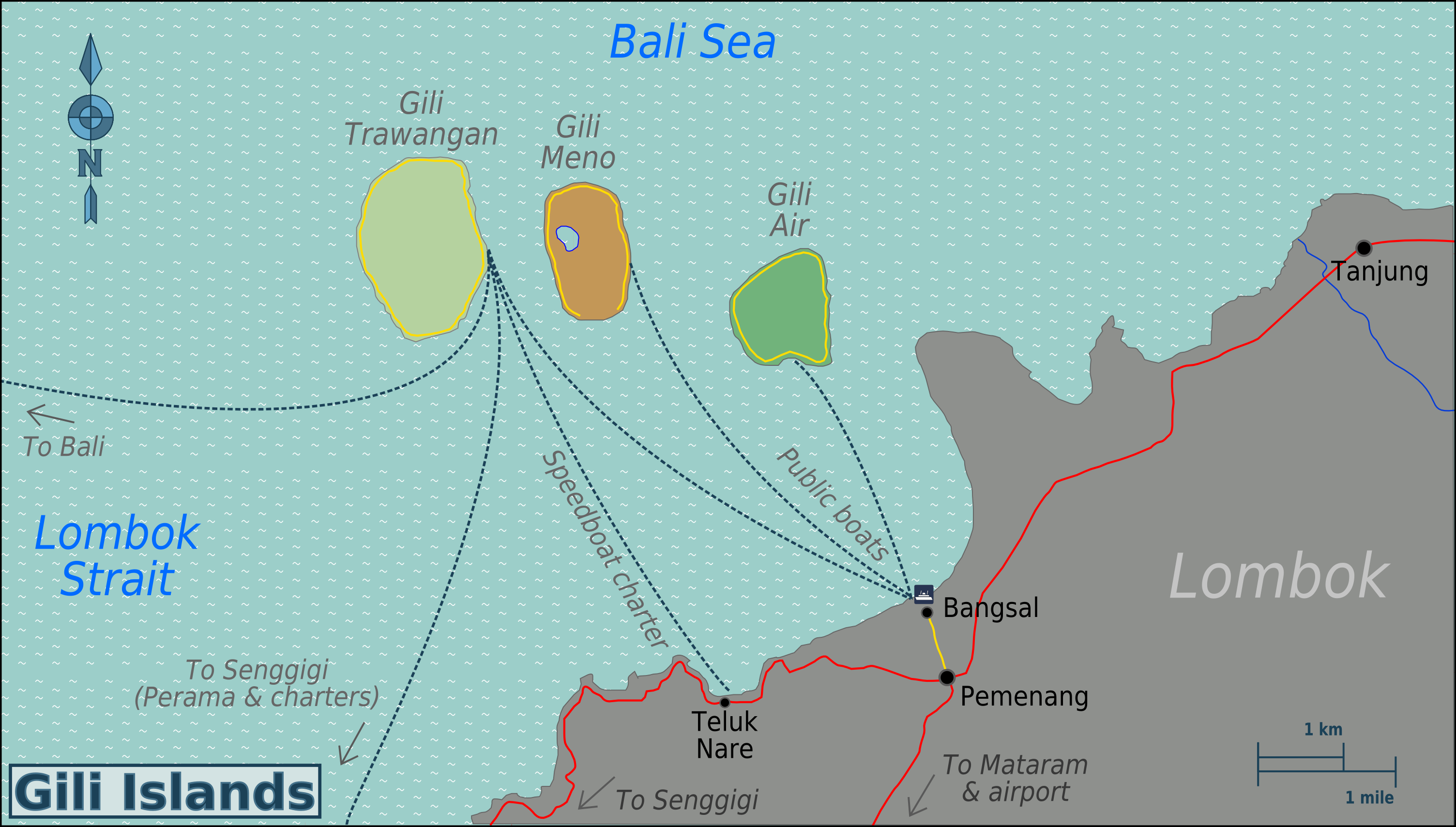
- Via Lombok: Fly into Lombok International Airport (LOP), then transfer by road to Bangsal Harbour or Teluk Nare, and take a fast boat to the chosen island. Total journey time from the airport to the island is typically 1.5 to 2.5 hours depending on traffic and boat schedules.
- Via Bali: Many international guests arrive at Ngurah Rai International Airport in Bali, then take a fast-boat service directly from Bali's Serangan or Padang Bai harbours to the Gili Islands. This crossing takes approximately 1.5 to 2 hours in good conditions and is the most common route for international travellers.
There is no railway network on Lombok or the Gili Islands. Once on the islands, there are no motorised vehicles — guests move on foot, by bicycle, or by horse-drawn cidomo cart. This is part of the islands' charm but requires guests to be comfortable with this mode of movement and for luggage logistics to be planned carefully. For large groups, coordinating boat transfers, luggage handling, and island-side transport requires a dedicated logistics plan, ideally managed by a local event coordinator with established supplier relationships.
Local Vendor & Hospitality Ecosystem
The Gili Islands have developed a genuinely mature hospitality and wedding vendor ecosystem, driven by years of catering to international couples and travellers. Key strengths include:
- Experienced wedding planners based on or regularly working across the islands, familiar with the specific logistical challenges of island events (boat transfers, generator backup, equipment transport).
- International-standard catering available through resort kitchens, with experience in diverse dietary requirements and multi-course event menus.
- Photography and videography professionals who specialise in the islands' specific light conditions — particularly the golden-hour and underwater photography opportunities.
- Floral and décor suppliers who source from Lombok and Bali, with established logistics for bringing materials across to the islands.
The main ecosystem limitation is scale: the vendor pool, while experienced, is smaller than what is available in Bali or major mainland cities. For very large or highly complex events, some specialist suppliers may need to be brought in from Bali or Lombok, adding lead time and logistics cost. Internet connectivity, while improving, remains limited on Gili Meno and Gili Air — real-time coordination during event setup can require planning for offline contingencies.
Pros & Things to Consider
Why Gili Islands Works Well
- Genuinely unique, car-free island setting that creates an immersive, private celebration environment
- Exceptional natural scenery — beaches, coral reefs, and volcanic mountain views — that requires minimal additional décor investment
- Strong international hospitality culture with English widely spoken across all three islands
- Built-in guest activities (diving, snorkelling, sunset cruises) that extend the celebration experience across multiple days
- Dry season reliability (May–September) makes outdoor event planning genuinely low-risk within that window
- Choice of island character — vibrant (Gili T), secluded (Gili Meno), or balanced (Gili Air) — allows the event to be matched to the desired atmosphere
Things to Consider
- Multi-leg travel (flight + road transfer + boat) is unavoidable and adds complexity for guests, particularly older or less mobile attendees
- Guest capacity is genuinely limited — events above 150 guests face real logistical constraints around accommodation, venue space, and boat transfer coordination
- Wet season (November–March) makes outdoor events unreliable and boat crossings potentially unsafe; the event window is meaningfully narrower than mainland destinations
- Internet and mobile connectivity is limited, particularly on Gili Meno and Gili Air — real-time coordination and guest communication during the event requires planning
- All supplies, equipment, and décor must be transported by boat, which adds lead time and requires careful advance logistics planning
- No motorised vehicles on the islands means guests with mobility limitations need specific assistance planning for movement between accommodation and event spaces
When Gili Islands May Not Be the Right Fit
- Large guest lists (200+ guests): The islands' accommodation stock, venue capacity, and boat transfer logistics are not well-suited to very large events. Groups of this size will find the coordination burden and capacity constraints genuinely limiting.
- Events planned during the wet season (November–March): If dates are fixed in the wet season, the risk of rain disruption, rough sea crossings, and outdoor venue flooding is significant enough that a different destination would offer more reliable conditions.
- Guests with significant mobility limitations: The absence of motorised vehicles, the need for boat transfers, and the sandy/uneven terrain across all three islands can make the experience genuinely difficult for guests with mobility challenges — this should be assessed honestly before committing.
- Events requiring large-scale production infrastructure: Major stage builds, large AV rigs, or complex technical production setups face real constraints in getting equipment to the islands and operating without reliable mains power — a mainland venue with established event infrastructure would be more practical.