
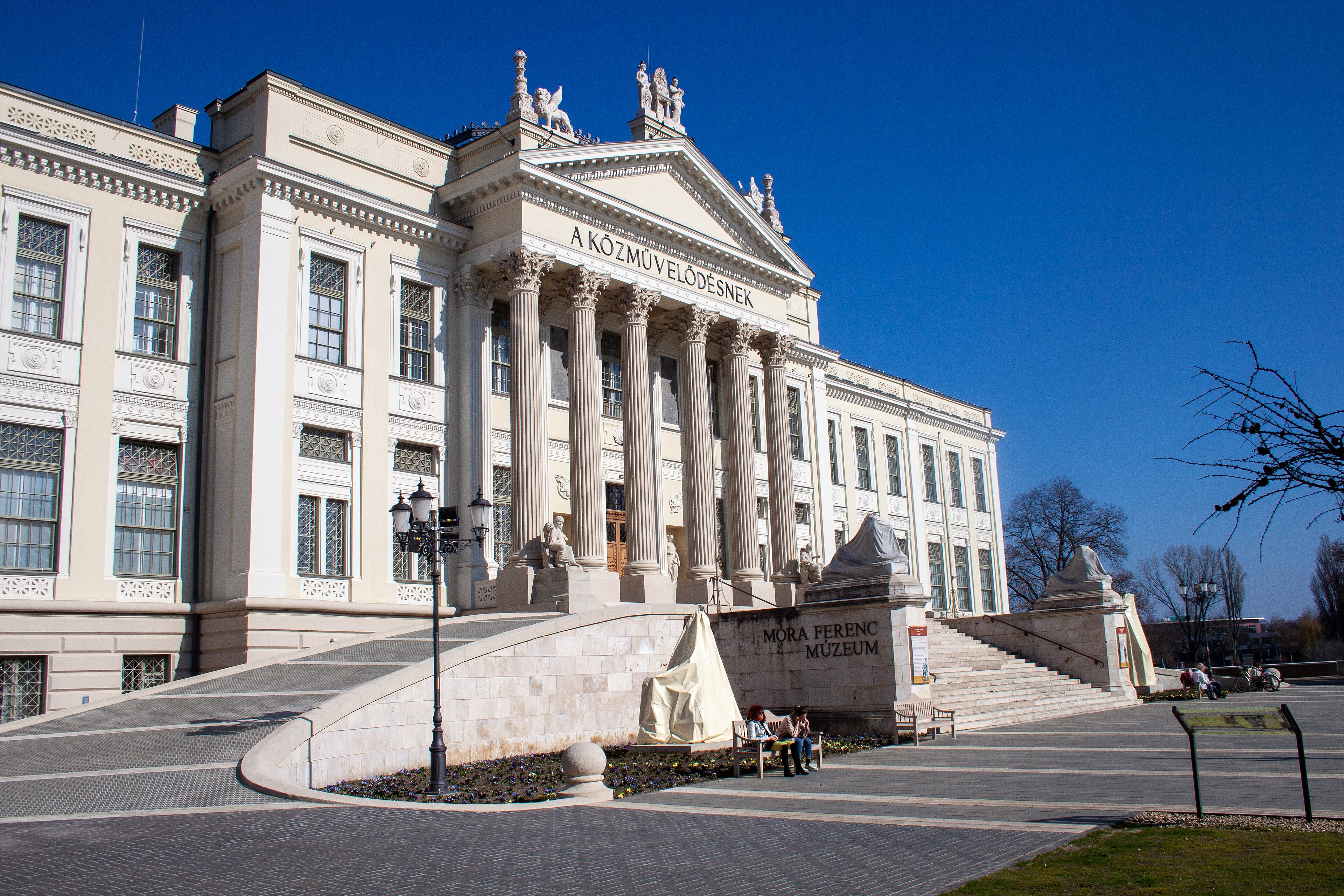
Why Szeged is Perfect for Your Celebration
- Hungary's sunniest city — reliably long, warm summers ideal for outdoor ceremonies and receptions
- Iconic Art Nouveau architecture and grand civic squares provide a naturally dramatic event backdrop
- Home to the famous Szeged Open-Air Festival (Szegedi Szabadtéri Játékok), giving the city a deep culture of large-scale outdoor event production
- Compact, walkable city centre means guests can move easily between ceremony, reception, and accommodation on foot
- Direct InterCity rail link to Budapest (~2 hours) makes guest travel straightforward from the capital
- Established local hospitality and catering scene with experience serving large festival and conference crowds

Compare Szeged with Other Top Destinations
Frequently Asked Questions
Is Szeged a good destination for a wedding?
Yes, particularly for intimate to mid-scale weddings of up to around 200–300 guests. Szeged's Art Nouveau architecture, riverside settings, and the dramatic backdrop of Cathedral Square give weddings a distinctive visual character. The city's compact centre also simplifies guest logistics. Very large weddings requiring 400+ guests in a single space may find local venue capacity more limited.
What is the best time of year to hold an event in Szeged?
May through September is the curated best season. Szeged is Hungary's sunniest city, and these months offer reliably warm weather, long daylight hours, and the festive atmosphere generated by the city's open-air festival culture. May and September are particularly comfortable for formally dressed guests; June through August offers peak sunshine and energy but requires early hotel booking due to festival demand.
How do guests travel to Szeged from Budapest?
Direct InterCity trains run regularly between Budapest Keleti station and Szeged, with a journey time of approximately two hours. This is the most practical route for domestic guests and for international guests arriving at Budapest Ferenc Liszt International Airport. The total travel time from the airport to Szeged city centre is typically around three to three-and-a-half hours.
Is there an airport close to Szeged?
Szeged has a small airport, but it handles only limited charter and private aviation — it is not a practical option for most commercial guests. The main gateway for international travellers is Budapest Ferenc Liszt International Airport, approximately 170 km away, with onward travel to Szeged by direct train.
What kinds of event spaces are available in Szeged?
Szeged offers hotel ballrooms and conference facilities, historic civic halls in the Art Nouveau quarter, riverside terraces along the Tisza embankment, garden spaces in the Újszeged district, and the iconic open-air setting of Cathedral Square. The range suits events from intimate indoor dinners to larger outdoor receptions, with the inventory best matched to the 50–300 guest range.
How easy is it for a large guest group to get around Szeged once they arrive?
Very manageable. Szeged's city centre is compact and largely walkable, meaning guests staying in central hotels can typically reach ceremony and reception venues on foot. For guests in the Újszeged district across the Tisza river, trams and taxis cover the short distance easily. Coordinated coach transfers for larger groups are straightforward to arrange through local operators.
Does Szeged have experience hosting large-scale events?
Yes. The city has hosted the Szeged Open-Air Festival (Szegedi Szabadtéri Játékok) for decades — one of Central Europe's longest-running open-air performance events. This has built a genuinely experienced local ecosystem of caterers, audio-visual suppliers, and event production companies that are accustomed to working at scale, which benefits private event planners significantly.
What makes Szeged's local catering distinctive?
Szeged has a strong regional culinary identity centred on paprika-based dishes and its nationally famous fish soup (halászlé). Local caterers can offer menus that are both high-quality and authentically rooted in the region's food culture, giving events a genuine sense of place rather than a generic international menu. Local wines from the southern Hungarian region complement this well.
Are there things to do in Szeged for guests beyond the main event?
Yes. As a major university city, Szeged has a lively food, café, and cultural scene. Guests can explore the Art Nouveau city centre, walk the Tisza riverside promenades, visit the Votive Church and Cathedral Square, and enjoy the city's restaurants and thermal bath facilities. During summer, the open-air festival programme adds further entertainment options for guests with free time.
Should I be concerned about hotel availability during peak summer?
Yes, particularly in mid-July to mid-August when the Open-Air Festival draws significant visitor numbers. Hotel availability in Szeged during festival weeks is genuinely constrained. Events planned for this window should secure accommodation block bookings well in advance — ideally six to twelve months ahead — to avoid guests being displaced to less convenient locations.
Is Szeged suitable for corporate events and conferences?
Yes. The city's hotel properties have well-equipped conference and meeting facilities, and its central location within Hungary's southern region makes it accessible for regional corporate gatherings. The academic character of the city — home to one of Hungary's leading universities — also lends itself naturally to knowledge-sector events, seminars, and professional retreats.

Ready to explore venues in Szeged?
Szeged: Destination Wedding & Event Venues in Hungary's Sunniest City
◆Szeged is Hungary's sunniest city and its second-largest urban centre, located in the south of the country at the confluence of the Tisza and Maros rivers. It is particularly well-suited to summer festivals, corporate gatherings, cultural celebrations, and intimate to mid-scale weddings. The city's primary vibe is vibrant and festive, shaped by its grand Art Nouveau architecture, its famous open-air festival tradition, and long, warm summers. Guests travelling from Budapest reach Szeged in approximately two hours by direct InterCity train, making domestic travel straightforward, though international guests will typically connect through Budapest.
Szeged at a Glance
| Category | Detail |
|---|---|
| Best For | Festivals & Cultural Events, Corporate Gatherings, Weddings, Social Celebrations |
| Primary Vibe | Vibrant & Festive |
| Other Vibes | Historic & Architectural, Riverside & Relaxed, Cultural & Academic |
| Best Season | Summer (May, Jun, Jul, Aug, Sep) |
Why Choose Szeged?
- Hungary's highest sunshine hours: Szeged consistently records more annual sunshine than any other Hungarian city, making outdoor ceremonies and receptions genuinely reliable during the summer months rather than a weather gamble.
- Exceptional architectural character: The city was largely rebuilt after the 1879 flood in a unified Art Nouveau and Historicist style, giving its central squares, boulevards, and civic buildings a cohesive grandeur that few Hungarian cities outside Budapest can match as an event backdrop.
- Deep-rooted outdoor event culture: The Szeged Open-Air Festival (Szegedi Szabadtéri Játékok), one of Central Europe's longest-running open-air performance events, means the city has decades of experience hosting large-scale outdoor productions — local suppliers, technical crews, and hospitality staff are genuinely accustomed to event-scale demands.
- Compact, walkable city centre: Ceremony venues, reception spaces, hotels, and restaurants are concentrated within a manageable area, reducing the logistical burden of moving large guest groups between locations.
- Strong rail connection to Budapest: Direct InterCity services run regularly, meaning guests from the capital — or international guests arriving at Budapest Ferenc Liszt International Airport — can reach Szeged without requiring a car or a complex transfer chain.
- University city energy: As home to the University of Szeged, one of Hungary's leading institutions, the city has a lively, cosmopolitan character and a well-developed food, beverage, and entertainment scene that benefits event guests looking for things to do beyond the celebration itself.
Which Celebrations Work Best in Szeged?
Festivals & Cultural Events: Szeged is arguably most naturally suited to this category. The city's open squares — particularly Dóm tér (Cathedral Square), one of Hungary's largest and most dramatic public spaces — have hosted thousands of audience members for the Open-Air Festival. Event organisers planning cultural galas, outdoor concerts, or large-scale public celebrations will find a city infrastructure already calibrated for this kind of event.
Corporate Gatherings & Conferences: The combination of well-equipped hotel conference facilities, a central location within Hungary's southern region, and reliable summer weather makes Szeged a practical choice for corporate retreats, regional conferences, and team-building events. The city's academic character also lends credibility to knowledge-sector events.
Weddings: Szeged suits intimate to mid-scale weddings particularly well. The Art Nouveau civic architecture, riverside promenades, and the Votive Church (Fogadalmi Templom) as a ceremony backdrop give weddings a distinctive visual character. Guest groups of up to roughly 200–300 are well-served by the existing hotel and venue inventory; very large weddings requiring 400+ guests under one roof may find the local supply more constrained.
Social Celebrations & Milestone Events: Birthday galas, anniversary dinners, and family reunions benefit from Szeged's combination of characterful venues, good local catering, and the general festive atmosphere the city carries through the summer season.
Venues & Event Spaces
Szeged's event venue landscape is anchored by its established four-star hotel properties, several of which have dedicated banquet and conference facilities capable of hosting receptions, gala dinners, and multi-day corporate programmes. Beyond hotels, the city offers a range of distinctive spaces: historic civic halls and cultural centres in the Art Nouveau quarter, riverside terraces and garden spaces along the Tisza embankment, and the extraordinary open-air setting of Cathedral Square, which has been used for large-scale performances and public events for decades.
For outdoor ceremonies, the city's parks and riverside promenades — particularly in the Újszeged district across the river, which has a greener, more garden-like character — provide attractive natural settings during the summer months. Indoor options range from hotel ballrooms suited to formal seated dinners to more intimate heritage rooms in the city's older civic buildings. The overall venue inventory is well-matched to events in the 50–300 guest range; planners expecting to seat 500 or more guests in a single space should verify availability carefully, as very large single-space capacity is more limited here than in Budapest.
Best Time to Celebrate
The curated best season for Szeged is Summer: May through September, and this recommendation is grounded in more than just pleasant temperatures. Szeged's identity as a celebration destination is inseparable from its summer character — the city genuinely comes alive during these months in a way that the rest of the year does not replicate.
May and September are shoulder months within the season: temperatures are warm rather than hot (typically in the low-to-mid 20s Celsius), evenings are comfortable, and the city is active without the peak-summer crowds of July and August. These months are particularly good for outdoor ceremonies where guests may be dressed formally and heat comfort matters.
June, July, and August represent the peak of Szeged's summer energy. Temperatures regularly reach the high 20s to low 30s Celsius, sunshine hours are at their maximum, and the Open-Air Festival season runs through much of this period, giving the city a festive, celebratory atmosphere that is genuinely infectious. Outdoor evening receptions are at their most practical and atmospheric during these months.
October sees a rapid shift: temperatures drop noticeably, daylight shortens, and the outdoor event season effectively closes. While early October can still be mild, it is unreliable enough that outdoor-dependent events carry real weather risk.
November through March brings a Central European winter that is genuinely cold — temperatures regularly fall below freezing, grey skies are the norm, and the city's outdoor character, which is so central to its appeal, is largely inaccessible. Indoor-only events are possible but the destination loses much of what makes it distinctive.
April is a transitional month: spring arrives but unevenly, with cool evenings, variable rainfall, and temperatures that can still dip sharply. It is not recommended for outdoor-dependent celebrations.
Getting There & Local Connectivity
The primary gateway for international guests is Budapest Ferenc Liszt International Airport (BUD), approximately 170 km north of Szeged. From the airport, guests can connect to Szeged by direct InterCity train from Budapest Keleti station — a journey of roughly two hours — making the overall travel time from landing to Szeged city centre manageable for most guests, typically around three to three-and-a-half hours including airport transit.
Szeged itself has a small airport that handles limited charter and private aviation; it is not a practical option for most commercial guests. For domestic Hungarian guests, the Budapest–Szeged rail corridor is the dominant travel route and is well-served by frequent departures throughout the day.
Within the city, Szeged's compact centre means that most guests staying in central hotels can walk between key event locations. For guests staying in the Újszeged district across the Tisza, trams and taxis bridge the short distance easily. For larger groups requiring coordinated transfers — particularly for guests arriving at different times from Budapest — local coach and minibus hire is available and straightforward to arrange through established local operators.
Local Vendor & Hospitality Ecosystem
Szeged's vendor ecosystem is meaningfully shaped by its festival heritage. Caterers, audio-visual suppliers, floral designers, and event production companies in the city have genuine experience working at scale — the Open-Air Festival and the city's active conference calendar have created a local market that is more sophisticated than one might expect from a city of this size.
Local cuisine is a genuine asset: Szeged is nationally famous for its fish soup (halászlé) and paprika-based culinary traditions, and local caterers can offer menus that are both high-quality and distinctively regional — a meaningful differentiator for guests who want their event to feel rooted in place rather than generically international.
The hotel sector, while not extensive in absolute terms, is anchored by well-run four-star properties with experienced events teams. For very large or highly complex productions, planners may wish to supplement local vendors with Budapest-based specialists, but for events in the 50–300 guest range, the local ecosystem is generally capable of delivering without significant external augmentation.
Pros & Things to Consider
Why Szeged Works Well
- Genuinely distinctive architectural and riverside setting that photographs exceptionally well
- Reliable summer sunshine — the highest annual sunshine hours in Hungary reduce weather risk for outdoor events
- Festival-experienced local vendor and production community
- Walkable city centre simplifies guest logistics significantly
- Strong rail link to Budapest keeps domestic guest travel straightforward
- Regional culinary identity (paprika, fish soup, local wines) adds authentic character to catering
- University city atmosphere means a lively, cosmopolitan guest experience beyond the event itself
Things to Consider
- International guests face a two-stage journey (fly to Budapest, then train to Szeged) which adds travel time and complexity compared to a capital-city destination
- Very large single-space capacity (500+ guests) is limited — the venue inventory is better matched to mid-scale events
- The destination's appeal is heavily season-dependent; outside May–September, much of what makes Szeged distinctive is unavailable or weather-compromised
- Peak summer (July–August) coincides with the Open-Air Festival, which can affect hotel availability and should be factored into planning timelines well in advance
- English-language vendor communication, while generally manageable, may require more coordination effort than in Budapest for highly detailed or technically complex briefs
When Szeged May Not Be the Right Fit
- Large-scale events requiring 400+ guests under one roof: The local venue inventory is well-suited to mid-scale events but does not comfortably support very large single-space requirements. Planners with guest lists significantly above 300 should verify capacity carefully before committing.
- Events planned for October through April: Outside the curated summer season, Szeged's outdoor character — which is central to its appeal — is largely inaccessible, and the city's winter climate is genuinely cold and grey. A destination with year-round indoor venue strength would serve these dates better.
- Guest groups with a high proportion of long-haul international travellers: The two-stage journey (international flight to Budapest, then onward train) adds meaningful travel complexity. For events where a large share of guests are flying from outside Europe, a destination with direct international air access may reduce attrition and travel fatigue.
- Events coinciding with the Open-Air Festival peak (mid-July to mid-August) without advance planning: Hotel availability in Szeged during festival weeks is genuinely constrained. Events planned for this window without early accommodation block bookings risk significant guest accommodation difficulties.