
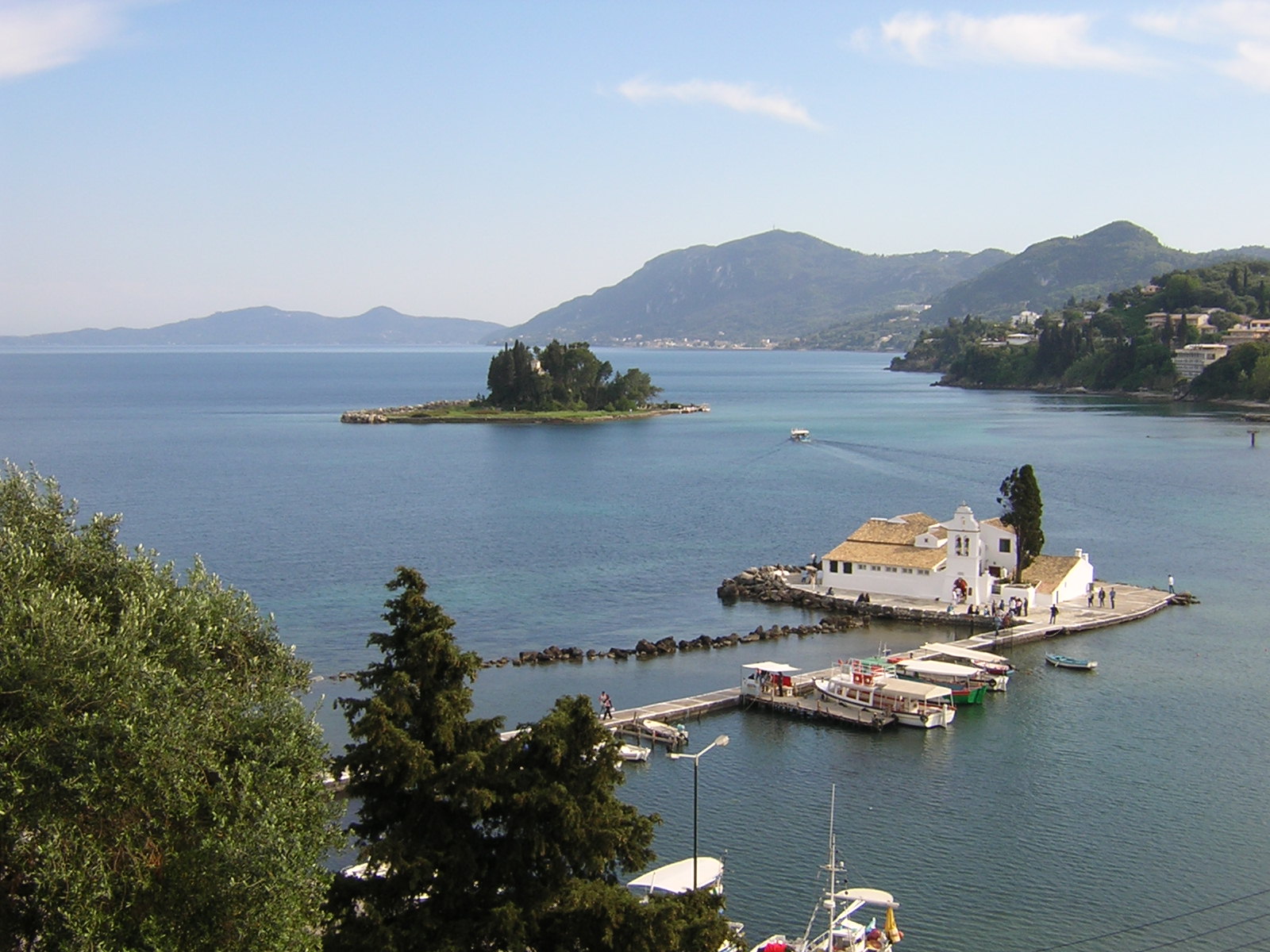
Why Corfu is Perfect for Your Celebration
- Stunning Ionian Sea backdrops — clifftop terraces, private beaches, and olive grove gardens for ceremonies
- Venetian-era Old Town (UNESCO-listed) provides a uniquely historic and photogenic setting
- International airport with direct summer flights from UK, Germany, Scandinavia, and across Europe
- Mature destination-wedding vendor ecosystem — experienced local planners, florists, and caterers
- Diverse venue portfolio spanning luxury beach resorts, boutique heritage villas, and grand hotel ballrooms
- Long summer season (May–September) guarantees reliable sunshine and warm evenings for outdoor events
Compare Corfu with Other Top Destinations
Frequently Asked Questions
Is Corfu a good destination for a wedding?
Yes. Corfu is one of Europe's most established destination-wedding islands, particularly well-suited to romantic, intimate, and medium-scale weddings. Its combination of Venetian heritage architecture, Ionian Sea views, a mature local vendor ecosystem, and direct summer flights from across Europe makes it a genuinely practical and visually distinctive choice for couples planning from abroad.
What is the best time of year to hold a wedding or celebration in Corfu?
May through September is the curated best season. September and June are particularly popular with experienced planners — the weather is reliably warm and sunny, crowds are lighter than peak July–August, and the full range of venues and vendors is operational. July and August work well but require earlier booking due to high island-wide demand.
How do guests travel to Corfu for a destination event?
Most guests arrive by air at Corfu International Airport (CFU), which receives direct summer flights from the UK, Germany, Scandinavia, the Netherlands, and other European cities. Guests from outside Europe typically connect through Athens or a major European hub. Ferry connections from the Greek mainland and Italy are also available for guests who prefer sea travel.
How many guests can Corfu realistically accommodate for a destination wedding?
Corfu works best for events in the 30–250 guest range. The island's resort and boutique venue portfolio comfortably supports this scale, with multiple accommodation options available within short transfer distances. Very large events of 400+ guests may find the local venue and accommodation inventory stretched, and early planning is essential for any group above 150.
What kinds of venues are available for events in Corfu?
The island offers a range of venue types: large coastal resort complexes with dedicated event terraces and ballrooms, boutique heritage properties in and around the Venetian Old Town suited to smaller gatherings, and private villa hire for exclusive, self-contained events. Outdoor ceremony spaces with sea views are a particular strength of the island's venue landscape.
Is Corfu suitable for an elopement or very small intimate ceremony?
Yes. Corfu is well-suited to elopements and intimate ceremonies for couples wanting a private, scenic setting without the scale of a large resort event. Boutique properties in and around Corfu Town, as well as smaller villa venues, offer genuinely intimate environments, and local planners are experienced with small-format destination ceremonies.
How do guests get around the island once they arrive?
Local transport for event groups typically relies on private transfers, taxis, and hired minibuses rather than public buses. Most event planners arrange dedicated shuttle services between accommodation and the event venue. The island is compact — most resort areas are within 20–40 minutes of Corfu Town — making group logistics manageable with advance coordination.
Are local wedding planners and vendors in Corfu experienced with international events?
Generally, yes. Corfu has hosted international destination weddings for decades, and the local vendor ecosystem — planners, florists, caterers, photographers — is experienced with multi-nationality, multi-day event formats. English is widely spoken across the tourism and hospitality sector, which reduces communication friction for couples planning from abroad.
Can events be held outdoors in Corfu, and is the weather reliable?
Yes, during the May–September season. Outdoor ceremonies and receptions are a core part of Corfu's event offering, and the summer weather is reliably sunny with very low rainfall. Evening events are particularly pleasant in July and August when daytime heat softens after sunset. Outside this season, outdoor events become unreliable due to increasing rainfall and shorter days.
What makes Corfu's setting distinctive compared to other Mediterranean island destinations?
Corfu's UNESCO-listed Venetian Old Town gives it a heritage character that is genuinely rare among Greek islands — cobbled lanes, Baroque churches, and Venetian loggias provide a backdrop that differs markedly from the whitewashed Cycladic aesthetic. Combined with the island's unusually lush, green landscape (a result of higher winter rainfall), it offers a visually distinctive setting for events.
Is Corfu safe for international guests attending a wedding or event?
Yes. Corfu is generally considered very safe for international visitors. It is a well-established European tourism destination with a stable environment, reliable emergency services, and a hospitality sector accustomed to hosting large numbers of international guests throughout the summer season. Standard travel precautions apply, as with any destination.

Ready to explore venues in Corfu?
Corfu: Destination Wedding & Celebration Venues on Greece's Ionian Island
◆Corfu is one of Europe's most established destination-wedding islands, particularly well-suited to romantic weddings, elopements, anniversary celebrations, and intimate social gatherings. Its primary vibe is Romantic & Dreamy — shaped by Venetian-era architecture, turquoise Ionian waters, olive-grove gardens, and clifftop sunset terraces. The best season runs from May through September, when long sunny days and warm evenings make outdoor ceremonies reliably feasible. The island is accessible via its own international airport with direct summer flights from across Europe, and its mature hospitality sector — spanning luxury beach resorts to boutique heritage properties — makes it a genuinely practical choice for international guest groups of small to medium scale.
Corfu at a Glance
| Category | Detail |
|---|---|
| Best For | Destination Weddings, Elopements, Anniversary Celebrations, Intimate Social Gatherings |
| Primary Vibe | Romantic & Dreamy |
| Other Vibes | Coastal & Scenic, Heritage & Cultural, Relaxed Luxury |
| Best Season | Summer (May, Jun, Jul, Aug, Sep) |
Why Choose Corfu?
- UNESCO-listed Venetian Old Town: Corfu Town's historic centre — a UNESCO World Heritage Site — provides a genuinely rare and photogenic backdrop, with narrow cobbled lanes, Venetian loggias, and Baroque churches that few other Mediterranean islands can match.
- Diverse coastal ceremony settings: From private beach terraces at peninsula resorts to clifftop gardens overlooking the Ionian Sea, the island offers a wide range of naturally dramatic outdoor ceremony spaces without requiring elaborate decoration.
- Mature destination-wedding infrastructure: Corfu has hosted international destination weddings for decades, meaning local planners, florists, photographers, and caterers are experienced with multi-day, multi-nationality event formats — reducing the coordination burden on couples planning from abroad.
- Direct international air access: Corfu International Airport (CFU) receives direct summer charter and scheduled flights from the UK, Germany, Scandinavia, the Netherlands, and other European hubs, making guest travel straightforward for European-based groups.
- Compact island geography: The island is small enough that guests staying at different properties can reach a central venue within 20–40 minutes, simplifying group logistics without requiring a single large block-booking.
- Lush, green landscape: Unlike many Aegean islands, Corfu's high rainfall in winter produces a genuinely verdant, olive-grove-covered landscape that remains photogenic and green well into the summer season — a distinctive visual character that sets it apart from drier Greek island alternatives.
Which Celebrations Work Best in Corfu?
- Destination Weddings: Corfu is particularly well-suited to destination weddings for couples seeking a European coastal setting with genuine heritage character. The combination of sea-view ceremony terraces, experienced local vendors, and a range of resort and boutique accommodation options makes multi-day wedding weekends very feasible here.
- Elopements & Intimate Ceremonies: For couples wanting a small, private ceremony — perhaps just immediate family — Corfu's boutique villa properties and smaller heritage hotels in and around Corfu Town offer genuinely intimate settings without the scale of a large resort event.
- Anniversary & Milestone Celebrations: The island's romantic atmosphere and high-quality resort dining make it a natural fit for significant anniversaries, vow renewals, and milestone birthday celebrations for groups of 20–80 guests.
- Social Gatherings & Group Retreats: Corfu's well-developed leisure infrastructure — boat trips, cultural excursions to the Old Town, beach clubs, and spa facilities — makes it a strong choice for social group events where the surrounding experience is as important as the event itself.
Venues & Event Spaces
Corfu's venue landscape is dominated by coastal resort properties, many of which have dedicated event terraces, garden lawns, and indoor ballrooms capable of hosting ceremonies and receptions. Peninsula and beachfront resorts typically offer the most dramatic sea-view settings, with outdoor spaces that can accommodate ceremonies of varying scales.
Beyond the large resorts, the island has a growing number of boutique heritage properties and restored Venetian-era buildings in and around Corfu Town, which suit smaller, more intimate gatherings where architectural character is a priority. These properties generally work best for guest groups under 100.
For larger events, several of the island's established resort complexes have purpose-built banquet halls and conference facilities that can be adapted for wedding receptions and gala dinners, often with adjacent outdoor terraces for cocktail hours and ceremony spaces. Private villa hire — either as a standalone venue or as overflow accommodation — is also a well-established option on the island, particularly for groups wanting a more exclusive, self-contained event environment.
Best Time to Celebrate
The curated best season for events in Corfu runs from May through September, and this reflects the island's genuine operational and climatic peak. Here is why each part of that window has its own character:
- May & June: Arguably the most comfortable months for outdoor events — temperatures are warm (typically 22°C–28°C) without the intense heat of high summer, the island is green from winter rains, and crowds are lighter than July–August. Vendor availability is good and accommodation is easier to block-book.
- July & August: Peak season — maximum sunshine, warmest sea temperatures, and the full range of vendors and services operating. The trade-off is higher accommodation demand, busier public spaces, and the hottest midday temperatures (occasionally reaching 32°C+), which can make outdoor daytime ceremonies uncomfortable. Evening ceremonies and receptions are particularly popular in these months.
- September: Often considered the sweet spot for destination weddings — the summer heat softens, the sea remains warm, crowds begin to thin, and the island retains its full summer character. Many experienced planners favour September for its balance of reliable weather and slightly easier logistics.
Outside this window, the picture changes significantly. October sees increasing rainfall, shorter days, and the beginning of seasonal closures among resort properties and vendors — it can still work for very small indoor events, but outdoor ceremonies become unreliable. November through March brings Corfu's wet season: the island receives the highest rainfall of any part of Greece during these months, many hotels and venues close entirely for winter, and the vendor ecosystem is largely dormant. April is a transitional month — the island begins to reopen, but vendor availability and accommodation options are still limited compared to the full summer season.
Getting There & Local Connectivity
Corfu is served by Corfu International Airport – Ioannis Kapodistrias (CFU), located just a few kilometres from Corfu Town. During the summer season, the airport receives a high volume of direct charter and scheduled flights from across Northern and Western Europe, making it one of the more accessible Greek island airports for international guests. Guests travelling from outside Europe will typically connect through Athens, London, or another major European hub.
There is no railway connection to Corfu — as an island, it is reached by air or by ferry. Ferry services operate from the Greek mainland port of Igoumenitsa (a short crossing) and from Patras, as well as international routes from Italy (Bari, Brindisi, Venice, Ancona). For guests already in Greece, the Athens–Corfu ferry route is also available, though the flight is considerably faster.
Once on the island, local transport for groups typically relies on private transfers, taxis, and hired minibuses — there is a public bus network, but it is not well-suited to coordinating large guest groups across multiple venues or accommodation points. Most event planners arrange dedicated shuttle services between accommodation clusters and the event venue, which is straightforward given the island's compact size. Driving distances between the main resort areas and Corfu Town are generally under 30–40 minutes.
Local Vendor & Hospitality Ecosystem
Corfu has one of the more developed destination-wedding vendor ecosystems among Greek islands, built over decades of hosting international couples. Local wedding planners and coordinators with experience managing multi-nationality, multi-day events are available, and many have established working relationships with the island's resort properties. This reduces the friction of planning from abroad, though couples should still expect to make at least one in-person site visit during the planning process.
Catering on the island is generally strong — resort properties typically have in-house catering teams experienced with large-format event menus, and there are independent catering operators for villa and off-site events. Greek and Mediterranean cuisine is naturally well-represented, and most established caterers can accommodate international dietary requirements.
The floral and décor sector is reasonably well-developed for a destination of this scale, with local florists experienced in both traditional and contemporary wedding aesthetics. For very large or highly bespoke productions, some couples choose to bring in specialist suppliers from Athens or from their home country, which is logistically feasible given the airport access.
Photography and videography professionals — both local and those who travel to the island seasonally — are plentiful during the summer months. The island's scenery means that location scouting is rarely a challenge; the harder task is often narrowing down the options.
Pros & Things to Consider
Why Corfu Works Well
- Genuinely romantic and visually distinctive setting — Venetian heritage, lush greenery, and Ionian Sea views combine in a way that is specific to this island
- Reliable summer sunshine across a long five-month season, giving couples flexibility on exact date
- Direct international air access makes guest travel from Europe straightforward
- Mature vendor ecosystem reduces planning risk for couples organising from abroad
- Range of venue types — from large resort complexes to intimate boutique properties — suits different guest scales and event styles
- Island's compact size means guests at different accommodation points can easily converge for events
- Strong local hospitality culture and English widely spoken across the tourism sector
Things to Consider
- Seasonality is strict: The island's event infrastructure is heavily concentrated in May–September; planning outside this window significantly limits venue and vendor options
- Peak-season demand: July and August are busy across the island — accommodation block-bookings require early planning, and public spaces near tourist areas can feel crowded during the day
- Island transfer logistics: All guests must arrive by air or ferry, and onward transfers from the airport or port require coordination — this adds a logistical layer that mainland destinations do not have
- Scale limitations: Corfu is best suited to small and medium-scale events; very large guest lists (300+) may find the local venue and accommodation inventory stretched, particularly if guests need to be housed in close proximity
- Non-European guests face longer journeys: Guests travelling from outside Europe will need to connect through a major hub, adding travel time and complexity compared to a mainland European destination
When Corfu May Not Be the Right Fit
- Very large guest lists: If your event requires accommodating 400+ guests in close proximity with a single large venue, Corfu's inventory may not comfortably support this — the island's properties are generally better suited to events in the 50–250 guest range.
- Non-summer timing: If your preferred dates fall between October and April, Corfu is a poor fit — many venues and vendors are closed for the off-season, and the weather is genuinely unsuitable for outdoor events.
- Guests with very limited travel flexibility: If a significant portion of your guest list is based outside Europe and faces long-haul travel, the island's lack of direct intercontinental flights means a more accessible mainland destination may serve your group better.
- Highly bespoke, large-scale production events: For events requiring very large specialist production teams, extensive imported décor, or infrastructure that goes well beyond what a resort property can provide in-house, the island's logistics (everything arrives by air or sea) can add meaningful complexity and lead time.