
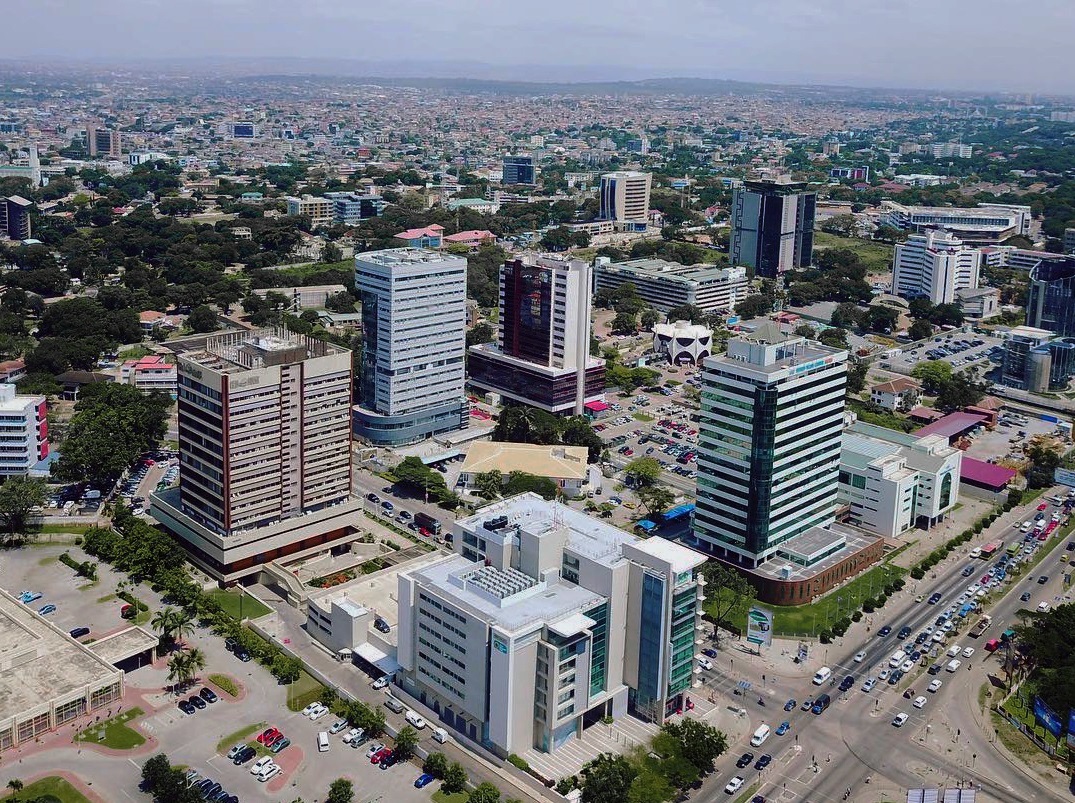
Why Accra is Perfect for Your Celebration
- Kotoka International Airport offers direct flights from major hubs in Europe, North America, and across Africa, making diaspora and international guest travel genuinely feasible
- A growing stock of upscale beachfront and urban hotel venues capable of hosting large receptions and multi-day celebrations
- Rich Ghanaian cultural traditions — kente cloth, traditional drumming, and Ghanaian cuisine — add authentic, memorable character to celebrations
- Dry season (Jan–Mar, Nov–Dec) delivers reliably low rainfall and comfortable temperatures, ideal for outdoor ceremonies and garden receptions
- A maturing local vendor ecosystem with experienced wedding planners, caterers, florists, and entertainment professionals familiar with both traditional and contemporary event formats
- Strong diaspora wedding market means venues and vendors are well-practised in blending Western and Ghanaian celebration styles

Compare Accra with Other Top Destinations
Frequently Asked Questions
Is Accra a good destination for a wedding with international guests?
Yes, particularly for diaspora weddings. Kotoka International Airport receives direct flights from major European, North American, and African hubs, making Accra genuinely accessible for international guest groups. English is the official language, which removes communication barriers, and the city's upscale hotels are experienced in hosting multi-day wedding programmes that blend Ghanaian traditions with contemporary formats.
What is the best time of year to hold a wedding or event in Accra?
The dry season — January, February, March, November, and December — is the recommended window. Rainfall is minimal during these months, temperatures are warm but manageable, and evenings are particularly pleasant for outdoor receptions. January and February can occasionally see Harmattan dust haze, which is worth factoring into outdoor photography planning. The main rainy season (April–June) and the secondary rainy season (September–October) carry meaningful disruption risk for outdoor events.
What kinds of venues are available for events in Accra?
Accra offers a range of venue types: large hotel ballrooms, beachfront hotel grounds with Atlantic Ocean backdrops, landscaped garden terraces, purpose-built event centres, and standalone banquet halls. Upscale international-brand hotels provide integrated solutions — accommodation, catering, and event spaces — under one roof, while independent event centres offer more flexibility for external vendors and larger raw capacities.
How large a guest list can Accra venues realistically accommodate?
Accra's leading hotel venues can comfortably accommodate seated receptions of several hundred guests, with some properties capable of hosting 500–800 guests across combined indoor and outdoor spaces. For very large traditional ceremonies or community celebrations exceeding 1,000 guests, purpose-built event centres and standalone banquet halls in the city typically offer greater raw capacity, though integrated luxury amenities may be more limited at that scale.
Do guests need a visa to attend an event in Accra?
It depends on nationality. Ghana offers visa-on-arrival and e-visa options for many nationalities, but eligibility and processing requirements vary. For a large international guest group, planners should research visa requirements well in advance and include clear guidance in guest communications. Building extra lead time into the invitation and RSVP process is advisable to allow guests sufficient time to arrange travel documentation.
How do guests get around Accra once they arrive?
Ground transport in Accra is road-based — there is no functional passenger rail network. For event groups, pre-arranged private coaches or minibuses are the most reliable option for coordinated transfers between the airport, hotels, and venues. Ride-hailing apps also operate in the city and work well for individual guests. Accra's road traffic can be heavy, so event-day schedules should include generous transfer buffers.
Can Ghanaian traditional wedding ceremonies be incorporated into an Accra celebration?
Yes, and this is one of Accra's genuine strengths as a destination. Traditional Ghanaian elements — the knocking ceremony, kente cloth attire, traditional drumming and dance troupes, and authentic Ghanaian cuisine — can be woven into a multi-day celebration programme. Local planners and vendors are experienced in managing both traditional and contemporary formats within the same event, which is particularly valuable for diaspora couples.
What is the local vendor ecosystem like for events in Accra?
Accra has a well-developed event vendor community, including experienced wedding planners, caterers, floral and décor studios, photographers, and entertainment professionals. The city's growth as a diaspora wedding hub has raised the overall standard of event services. Catering is a particular strength, with vendors able to offer both authentic Ghanaian menus and international cuisine. Early booking during peak dry-season months is advisable, as demand for top-tier vendors is competitive.
Is Accra suitable for corporate events and conferences?
Yes. Several of Accra's upscale hotels maintain dedicated conference facilities with professional AV infrastructure, breakout rooms, and business-grade connectivity. These can be combined with evening banqueting in the same property, making Accra a practical choice for regional corporate gatherings, product launches, and award ceremonies — particularly for organisations with a West African or pan-African footprint.
What should planners know about power supply and infrastructure for events in Accra?
Power supply reliability can be variable in Ghana. Upscale hotels and established event venues typically operate backup generators to ensure uninterrupted power during events, but this should be explicitly confirmed during venue selection. For events at standalone or less-established venues, planners should verify backup power arrangements and factor contingency planning into the event brief.
How far in advance should an Accra destination event be planned?
For a destination wedding or large celebration during the peak dry season (November–March), planning 12–18 months in advance is generally advisable. This allows sufficient time for venue booking, vendor engagement, guest visa coordination, and international travel arrangements. Diaspora weddings in particular benefit from early communication with guests, given the international travel logistics involved.

Ready to explore venues in Accra?
Accra: Destination Wedding & Event Venues in Ghana's Cosmopolitan Capital
◆Accra is Ghana's capital and West Africa's most cosmopolitan event destination, best suited to weddings, festivals, social celebrations, and corporate events that benefit from strong international air connectivity and a growing upscale hospitality sector. The city's primary vibe is chic and contemporary, layered with rich Ghanaian cultural traditions — kente cloth ceremonies, traditional drumming, and Ghanaian cuisine — that give celebrations genuine local character. The dry season months of January, February, March, November, and December offer the most reliable conditions for outdoor events. Accra is generally accessible for international guests, particularly those travelling from Europe, North America, and other African cities, though visa logistics and urban traffic require advance planning for large groups.
Accra at a Glance
| Category | Detail |
|---|---|
| Best For | Weddings, Festivals & Social Events, Corporate Celebrations, Diaspora Reunions |
| Primary Vibe | Chic & Cosmopolitan |
| Other Vibes | Culturally Rich, Vibrant, Beachfront, Urban |
| Best Season | Dry Season (Jan, Feb, Mar, Nov, Dec) |
Why Choose Accra?
- International air gateway: Kotoka International Airport receives direct flights from London, Amsterdam, New York, Washington D.C., Dubai, and numerous African capitals, making it genuinely practical for diaspora families and international guests to converge on a single city without complex onward connections.
- Beachfront and urban venue diversity: Accra offers a range of event spaces from Atlantic-facing beachfront hotel grounds to polished urban ballrooms and open-air garden venues, giving planners meaningful flexibility in ceremony and reception format.
- Authentic Ghanaian cultural integration: Few African capitals offer the same depth of accessible cultural programming — traditional Ghanaian ceremonies, kente-draped receptions, live highlife and Afrobeats performances, and authentic local cuisine can all be woven into a celebration without feeling staged or imported.
- Maturing professional vendor ecosystem: Accra has a well-established community of wedding planners, event decorators, caterers, photographers, and entertainment professionals who are experienced in managing both traditional Ghanaian and contemporary international event formats.
- Reliable dry-season weather window: The dry season spans five months across two distinct periods (January–March and November–December), giving planners a generous booking window with predictably low rainfall and comfortable temperatures for outdoor ceremonies.
- English-speaking destination: English is Ghana's official language, which significantly reduces communication friction for international guests and simplifies vendor coordination for planners working remotely.
Which Celebrations Work Best in Accra?
- Weddings (traditional and contemporary): Accra is particularly well-suited to weddings that want to incorporate Ghanaian cultural elements — the knocking ceremony, kente attire, traditional drumming — alongside a modern reception. The city's upscale hotels provide the infrastructure for multi-day wedding programmes that blend both formats seamlessly.
- Diaspora and destination weddings: Accra has become a meaningful hub for Ghanaian diaspora couples returning home to celebrate. The city's international airport connectivity, English-speaking environment, and familiar hospitality standards make it accessible for guests flying in from Europe and North America.
- Festivals and large social celebrations: Accra's vibrant cultural calendar and its capacity for large-scale outdoor events make it a natural fit for milestone birthday celebrations, family reunions, and cultural festivals. The city's energy and entertainment infrastructure support multi-day social programmes effectively.
- Corporate events and conferences: Several of Accra's upscale hotels maintain dedicated conference and banqueting facilities with professional AV infrastructure, making the city a credible choice for regional corporate gatherings, product launches, and award ceremonies.
- Engagement and pre-wedding celebrations: Accra's beachfront settings and rooftop venues provide attractive backdrops for engagement parties, bridal showers, and pre-wedding dinners, particularly during the dry season when outdoor settings are reliably usable.
Venues & Event Spaces
Accra's event venue landscape spans several distinct categories. At the upper end, the city's international-brand luxury hotels offer large ballrooms, landscaped outdoor lawns, and beachfront terraces capable of accommodating several hundred guests for seated dinners and receptions. These properties typically provide in-house catering, dedicated event coordination teams, and accommodation blocks for guest room nights — making them practical one-stop solutions for multi-day celebrations.
Beyond the major hotels, Accra has a growing stock of purpose-built event centres and standalone banquet halls that offer larger raw capacity for high-attendance events such as traditional engagement ceremonies or community celebrations. These spaces are often more flexible in terms of external catering and décor arrangements.
Beachfront venues along Accra's Atlantic coastline are among the city's most distinctive offerings — open-air settings with ocean backdrops that are particularly popular for sunset ceremonies and evening receptions during the dry season. Garden venues within hotel grounds and private estate spaces also feature in the local market, offering a more intimate atmosphere for smaller guest lists.
For corporate events, several hotels maintain dedicated conference wings with breakout rooms, professional AV systems, and business-grade connectivity, which can be combined with evening banqueting in the same property for a seamless delegate experience.
Best Time to Celebrate
The curated best season for events in Accra is the dry season: January, February, March, November, and December. During these months, rainfall is minimal, humidity is comparatively lower (though still present, as Accra is a tropical coastal city), and daytime temperatures are warm but generally manageable for outdoor ceremonies. Evening temperatures during the dry season are particularly pleasant, making sunset and after-dark receptions comfortable for guests.
January and February are among the driest months of the year, though the Harmattan wind — a dry, dusty wind blowing from the Sahara — can occasionally affect visibility and air quality during this period. This is worth factoring into outdoor décor and photography planning. November and December offer a second dry window that coincides with the festive season, making them popular months for diaspora weddings and year-end celebrations.
The months to approach with caution are April through June, which constitute Accra's main rainy season. Heavy, unpredictable downpours during this period can disrupt outdoor events and cause urban flooding on some roads, complicating guest logistics. September and October bring a second, shorter rainy season that, while less intense than the main one, still introduces meaningful rainfall risk for outdoor ceremonies. July and August represent a brief dry interlude between the two rainy seasons, but overcast skies and high humidity make them less ideal than the primary dry season months, and they are generally considered shoulder months rather than a recommended planning window.
Getting There & Local Connectivity
Accra is served by Kotoka International Airport, which sits close to the city centre — a relatively short transfer compared to many international capitals. The airport handles a substantial volume of international traffic, with direct routes from major European hubs, North American gateways, and a wide network of African cities. For diaspora guests travelling from the United Kingdom, continental Europe, or the United States, Accra is among the more directly accessible West African capitals.
Ghana operates a visa-on-arrival or e-visa system for many nationalities, but planners should verify current entry requirements well in advance for a large international guest group, as processing times and eligibility can vary. Building visa guidance into the guest communication plan is advisable for destination weddings with a significant international contingent.
Within Accra, local transport for event groups is primarily road-based. The city does not have a functional passenger rail network, so ground transport — private coaches, minibuses, and car hire — is the standard solution for moving guests between the airport, accommodation, and event venues. Accra's road traffic can be heavy, particularly during peak hours, and journey times between different parts of the city can be longer than distances suggest. Planners should build generous transfer buffers into event-day schedules and consider coordinating dedicated shuttle services for large guest groups to avoid fragmented arrivals.
Ride-hailing apps operate in Accra and provide a practical option for individual guests navigating the city independently, though for coordinated group movements, pre-arranged private transport is generally more reliable.
Local Vendor & Hospitality Ecosystem
Accra's event vendor ecosystem has matured considerably over the past decade, driven in part by the growth of the diaspora wedding market and the city's expanding role as a regional business hub. The city has a well-established community of professional wedding planners and event coordinators who are experienced in managing complex, multi-day celebrations that blend traditional Ghanaian customs with contemporary international formats.
Catering is a particular strength — Accra's food scene spans authentic Ghanaian cuisine (jollof rice, fufu, kelewele, grilled tilapia) through to international menus, and experienced event caterers can typically accommodate both within the same celebration programme. This is a genuine asset for mixed-heritage or diaspora weddings where guests have diverse culinary expectations.
Entertainment vendors — live bands, Afrobeats DJs, traditional drumming and dance troupes, and MC services — are plentiful and experienced in event contexts. Floral and décor vendors have also grown in sophistication, with a number of studios offering high-end installation work comparable to what planners would expect in other major African capitals.
Photography and videography professionals with experience in both traditional Ghanaian ceremonies and contemporary editorial styles are available, though as with any destination, early booking during peak dry-season months is advisable. International planners working remotely should expect to conduct most vendor coordination digitally, and building in at least one in-person site visit during the planning process is strongly recommended for complex events.
Pros & Things to Consider
Why Accra Works Well
- Strong international air connectivity makes it genuinely accessible for diaspora and international guest groups
- English as the official language removes a significant communication barrier for international planners and guests
- Authentic Ghanaian cultural elements — ceremonies, cuisine, music, attire — add distinctive, memorable character that is difficult to replicate elsewhere
- A generous five-month dry season window across two periods gives planners meaningful flexibility in date selection
- Upscale hotel properties with large ballrooms and beachfront grounds can accommodate substantial guest lists under one roof
- A maturing, experienced local vendor community reduces the need to import specialist services from outside the country
Things to Consider
- Urban road traffic in Accra can be significant, and journey times between venues, hotels, and the airport may be longer than expected — event-day logistics require careful scheduling
- The Harmattan wind during January and February can bring dust and haze, which may affect outdoor photography and décor
- Visa requirements for international guests vary by nationality and require advance planning — this adds an administrative layer that domestic destinations do not
- Accra is a tropical coastal city, and even during the dry season, humidity levels are higher than in many other popular event destinations — outdoor daytime ceremonies can be warm and guests should be prepared accordingly
- The absence of a functional passenger rail network means all ground transport is road-dependent, which increases exposure to traffic variability on event days
- Power supply reliability can be variable in Ghana; upscale hotels typically have backup generation, but this is worth confirming explicitly for any venue being considered for a large event
When Accra May Not Be the Right Fit
- Outdoor events planned during the rainy season (April–June or September–October): If dates are fixed in these months and the event concept relies heavily on outdoor spaces, Accra's rainfall patterns introduce meaningful disruption risk that is difficult to fully mitigate.
- Guest groups with limited international travel experience or complex visa situations: For a large guest list where many attendees face non-trivial visa processes or have limited experience with international travel logistics, the administrative complexity of an Accra destination event may outweigh the benefits.
- Events requiring very large single-venue capacity beyond what the current hotel stock comfortably supports: While Accra's venues can handle substantial guest lists, events requiring a single ballroom for 1,000+ guests in a fully integrated luxury setting may find the local inventory less comprehensive than in some other major international event cities.
- Planners seeking a cooler, low-humidity climate for a summer celebration: Accra is a warm, humid tropical city year-round; guests or couples who prioritise a temperate or cool-weather event environment will find the climate character a persistent consideration regardless of season.