
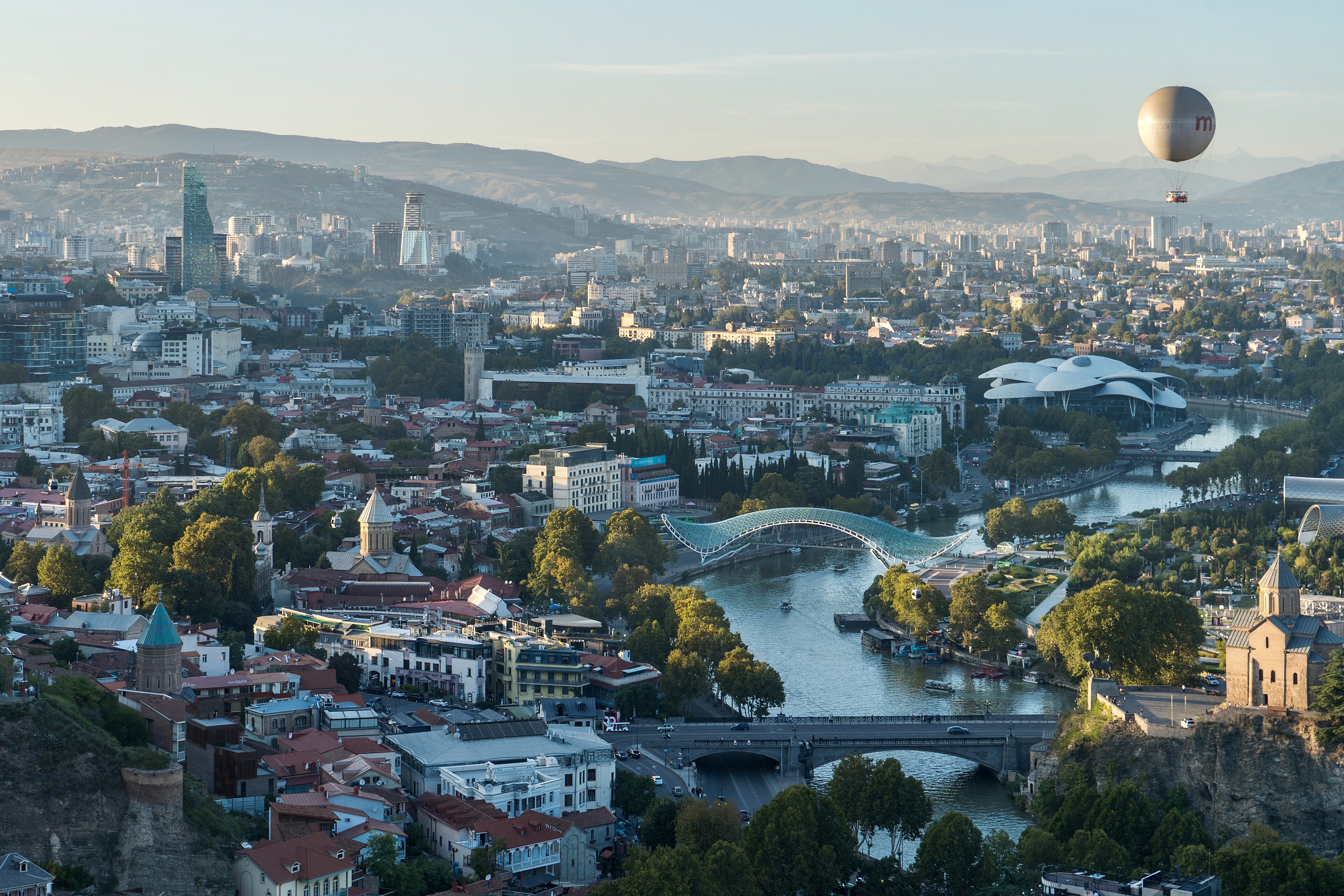
Why Tbilisi is Perfect for Your Celebration
- Tbilisi's UNESCO-listed Old Town (Dzveli Tbilisi) provides a genuinely unique, photogenic backdrop unavailable in most European capitals
- Georgia's ancient wine culture — the world's oldest, dating back 8,000 years — makes wine-paired dinners and tastings a natural, authentic event feature
- Intimate venue scale suits small-to-medium celebrations (50–300 guests) with a boutique, exclusive feel
- Spring and early autumn offer reliably mild, dry weather ideal for outdoor ceremonies and rooftop receptions
- A growing international hospitality scene with well-trained staff and strong tradition of Georgian feast-style (supra) hosting
- Relatively accessible from Europe, the Middle East, and Central Asia, with direct flights from many major hubs

Top Venues in Tbilisi

Sheraton Grand Tbilisi Metechi Palace
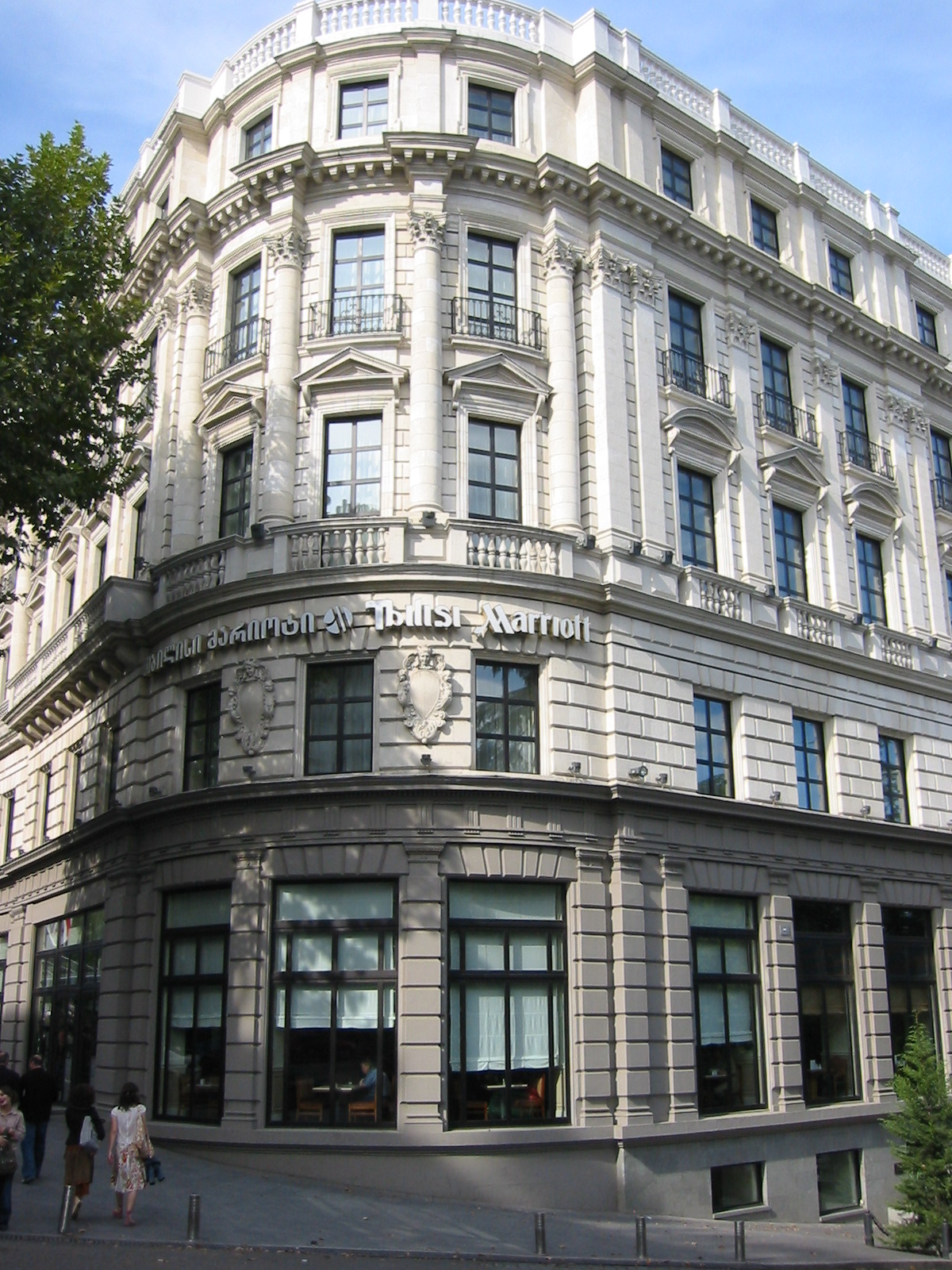
Marriott Tbilisi
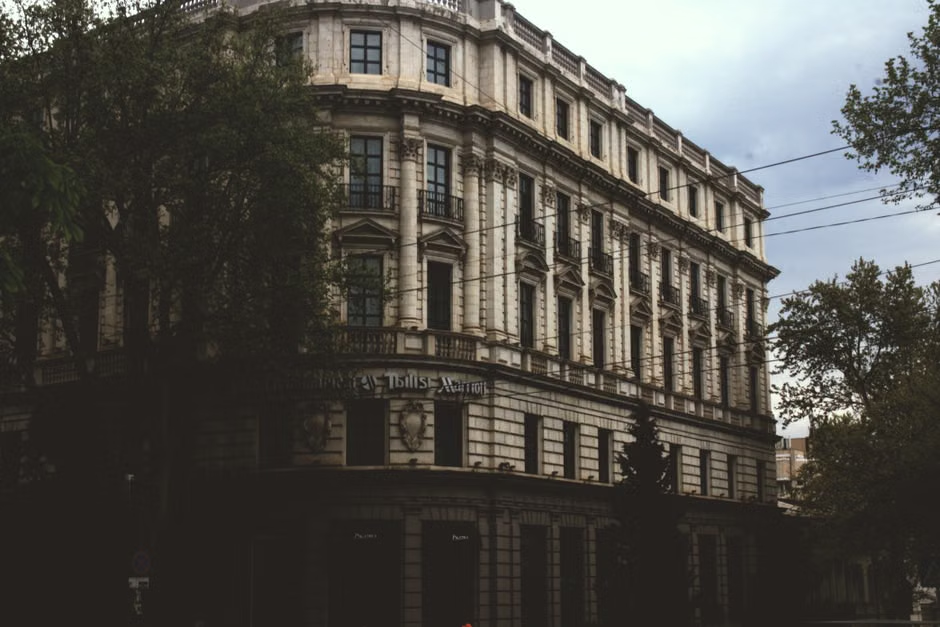
Tbilisi Marriott Hotel (Legacy Property)
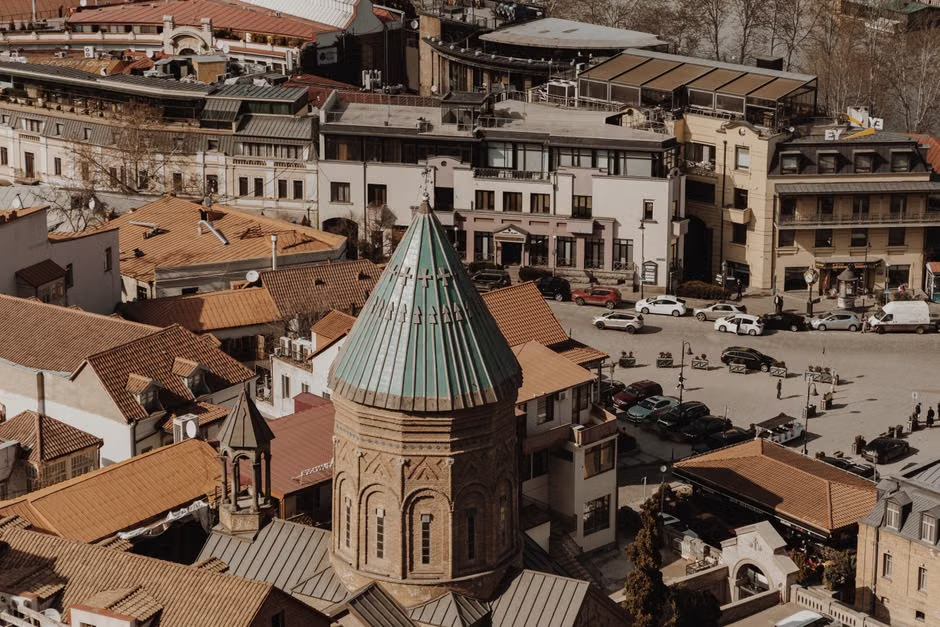
Mercure Tbilisi Old Town
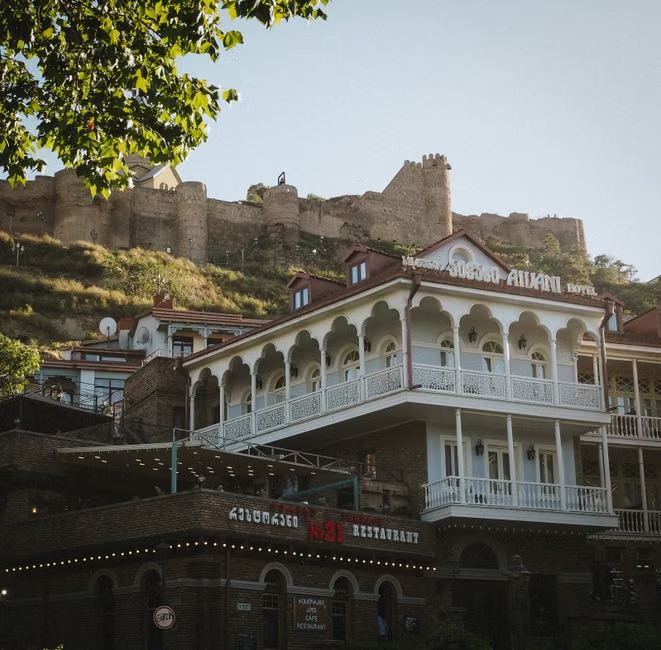
Hotel Stamba
Compare Tbilisi with Other Top Destinations
Frequently Asked Questions
Is Tbilisi a good destination for an intimate wedding?
Yes. Tbilisi is particularly well-suited to intimate destination weddings of 50–200 guests. The city's Old Town heritage buildings, rooftop terraces, and boutique hotel courtyards provide a genuinely distinctive setting, and Georgia's deep tradition of ceremonial feasting — the supra — means that generous, celebratory hosting is culturally embedded rather than a service-industry add-on.
What is the best time of year to hold a wedding or event in Tbilisi?
April through June and September through October are the strongest windows. Spring brings mild temperatures (14°C–22°C), blooming landscapes, and reliable outdoor conditions. Early autumn offers warm, stable days, lower humidity than summer, and the added backdrop of Georgia's grape harvest season. July and August are generally too hot for outdoor events, and November through March is cold and wet.
How do international guests typically get to Tbilisi?
Most international guests arrive at Tbilisi International Airport (TBS), approximately 18 km from the city centre. Direct flights operate from major European cities, Istanbul, Dubai, and several Central Asian hubs. Guests from South Asia or East Asia typically require one connection, usually via Istanbul or Dubai. The airport is well-organised and the transfer into the city is straightforward.
What guest group sizes can Tbilisi venues realistically accommodate?
Tbilisi's venue inventory is strongest for events in the 50–300 guest range. Boutique heritage properties and rooftop venues typically suit 50–150 guests, while internationally branded hotel ballrooms can accommodate up to 300–400 guests for seated dinners. Very large events above 400 guests may find the local supply of suitable single-venue spaces more limited.
What kinds of event spaces are available in Tbilisi?
Tbilisi offers a varied mix: internationally branded hotel ballrooms with professional AV infrastructure, restored heritage mansions and courtyard properties in the Old Town, rooftop terraces with panoramic city views, wine cellar private dining rooms, and repurposed arts and industrial spaces. The strongest character is in the boutique heritage and rooftop categories, which are genuinely distinctive.
Is Georgian wine culture something that can be incorporated into an event programme?
Yes, and it is one of Tbilisi's most distinctive event features. Georgia is widely recognised as the world's oldest wine-producing region, with an 8,000-year tradition of qvevri clay-vessel winemaking. Wine-paired dinners, cellar tastings, and traditional supra feasts with a tamada (toastmaster) are all authentic, locally rooted experiences that can be woven naturally into a multi-day event programme.
How easy is it to move a guest group around Tbilisi once they arrive?
Tbilisi is compact and relatively easy to navigate. The Old Town, Rustaveli Avenue, and the main hotel districts are all within short driving distance of one another. Ride-hailing apps (Bolt, Yandex) are widely available, and private minibus or coach transfers for groups are straightforward to arrange through local destination management companies. The city's metro also covers key areas.
Do I need a local destination management company (DMC) to plan an event in Tbilisi?
For any group of meaningful size, yes — engaging a reputable local DMC is strongly advisable. While English is widely spoken in internationally affiliated hotels, vendor communication at smaller properties can be variable, and a local DMC will manage transfers, accommodation blocks, vendor relationships, and on-the-ground logistics far more efficiently than remote planning alone.
Is Tbilisi suitable for corporate retreats and incentive travel?
Yes. Tbilisi works well for senior leadership retreats, strategy off-sites, and incentive travel programmes. Internationally branded hotels offer conference-capable meeting spaces, the city's cultural novelty provides strong engagement value for corporate groups, and the combination of Georgian hospitality, wine culture, and Old Town excursions makes for a memorable programme that stands apart from standard European conference destinations.
What makes Tbilisi's hospitality culture distinctive for event guests?
Georgian hospitality is rooted in the tradition of the supra — a lavish, multi-course feast presided over by a tamada (toastmaster) who leads ceremonial toasts throughout the meal. This tradition means that generous, ritualised hosting is culturally genuine here. Guests frequently describe Georgian hospitality as among the warmest they have encountered, which translates meaningfully into the atmosphere of events held in the city.
Are there interesting excursions or activities for guests attending a multi-day event in Tbilisi?
Yes. Tbilisi's compact geography makes it easy to build a rich multi-day programme. Nearby options include Mtskheta (Georgia's ancient capital, approximately 20 km away and a UNESCO World Heritage Site), the Kakheti wine region (roughly 70–80 km east, Georgia's primary wine-producing area), the Narikala Fortress and Old Town walking tours, and the Abanotubani sulfur bath district — all of which are genuinely distinctive and logistically accessible.
Is Tbilisi generally safe for international event guests?
Yes, Tbilisi is generally considered safe for international visitors. Georgia consistently ranks as one of the safer countries in the Caucasus region, and the city centre and main tourist and hotel districts are well-policed and comfortable to navigate. Standard travel precautions apply, as they would in any capital city, but safety is not typically a significant concern for event planners or guests.

Ready to explore venues in Tbilisi?
Tbilisi: Destination Wedding & Cultural Event Venues in Georgia
◆Tbilisi is Georgia's capital and its most compelling event destination — a compact, walkable city where medieval architecture, sulfur bath districts, vine-draped balconies, and a sophisticated modern hospitality scene coexist within a few square kilometres. It suits intimate-to-medium-scale weddings (typically 50–300 guests), corporate retreats, cultural celebrations, and pre/post-wedding gatherings particularly well. The best planning window is spring (April–June) and early autumn (September–October), when temperatures are mild and outdoor venues are fully usable. Tbilisi is accessible from Europe, the Middle East, and Central Asia via its international airport, and the city's hospitality infrastructure has matured significantly over the past decade.
Tbilisi at a Glance
| Category | Detail |
|---|---|
| Best For | Intimate Weddings, Corporate Retreats, Cultural Celebrations, Pre/Post-Wedding Events |
| Primary Vibe | Cultural & Timeless |
| Other Vibes | Romantic, Boutique, Heritage, Cosmopolitan |
| Best Season | Spring (Apr, May, Jun, Sep, Oct) |
Why Choose Tbilisi?
- A genuinely distinctive backdrop: Tbilisi's UNESCO-recognised Old Town (Dzveli Tbilisi) — with its Persian-influenced bathhouses, Orthodox churches, and ornate wooden balconies — provides a visual character that is essentially impossible to replicate elsewhere. Event photography here is inherently compelling.
- World's oldest wine culture as a built-in event feature: Georgia is widely recognised as the birthplace of wine, with an 8,000-year tradition of qvevri (clay-vessel) winemaking. Wine-paired dinners, cellar tastings, and Georgian feast-style supra banquets are authentic, locally rooted experiences rather than imported add-ons.
- Boutique scale that suits intimate celebrations: Tbilisi's venue inventory is strongest in the 50–300 guest range, making it particularly well-suited to events where a sense of exclusivity and personal attention matters more than sheer scale.
- Genuine Georgian hospitality tradition: The concept of the supra — a lavish, toast-driven feast presided over by a tamada (toastmaster) — means that generous, ceremonial hosting is culturally embedded here, not a service-industry performance.
- Reasonable international accessibility: Tbilisi International Airport (TBS) receives direct flights from major European, Middle Eastern, and Central Asian hubs, making it reachable for internationally dispersed guest lists without requiring complex multi-leg itineraries for most travellers.
- A maturing, internationally oriented hospitality sector: Over the past decade, Tbilisi has seen significant investment in its hotel and event infrastructure, with internationally branded properties alongside well-regarded independent boutique hotels, giving planners a genuine range of venue styles and service standards.
Which Celebrations Work Best in Tbilisi?
- Intimate destination weddings: Tbilisi is particularly well-suited to couples seeking a wedding that feels genuinely different — rooftop ceremonies above the Old Town, courtyard receptions in restored heritage buildings, and candlelit dinners in wine cellars all sit naturally within the city's existing character. The scale of the venue inventory means weddings of 50–200 guests are especially well-served.
- Corporate retreats and leadership off-sites: The combination of internationally branded conference-capable hotels, a stimulating cultural environment, and a compact city that is easy to navigate makes Tbilisi a strong choice for senior leadership retreats, strategy off-sites, and incentive travel programmes. The city's novelty factor — it remains less visited than Western European capitals — adds genuine engagement value for corporate groups.
- Cultural and milestone celebrations: Anniversary dinners, significant birthday celebrations, and family reunion gatherings benefit from Tbilisi's rich cultural programming — the city has a lively arts, music, and culinary scene that can be woven into multi-day event itineraries.
- Pre- and post-wedding events: Tbilisi's compact geography and density of interesting restaurants, wine bars, and cultural sites make it an excellent base for multi-day wedding programmes — welcome dinners, day-after brunches, and guest excursions to nearby Mtskheta (Georgia's ancient capital, approximately 20 km away) or the Kakheti wine region can all be organised with relative ease.
Venues & Event Spaces
Tbilisi's event venue landscape is diverse in character, though generally boutique in scale. The city offers several distinct venue typologies that planners should be aware of:
- Internationally branded hotel ballrooms and event floors: Several internationally affiliated properties along and near Rustaveli Avenue offer purpose-built event spaces with professional AV infrastructure, dedicated event coordination teams, and accommodation blocks for guest groups — suitable for structured corporate events and larger wedding receptions.
- Boutique heritage hotels and restored mansions: A growing number of independently operated properties in the Old Town and Vera districts occupy restored 19th-century buildings with courtyard gardens, ornate interiors, and rooftop terraces. These spaces are particularly sought after for intimate ceremonies and private dining events where atmosphere takes priority over capacity.
- Wine cellars and qvevri dining rooms: Several of Tbilisi's established restaurants and wine houses have private dining rooms or cellar spaces that can be exclusively hired for groups, offering an immersive Georgian wine and food experience as the event itself.
- Rooftop terraces: The city's hilly topography and dense old-town roofscape mean that rooftop event spaces with panoramic views of the Mtkvari River, Narikala Fortress, and the surrounding hills are genuinely available — particularly attractive for spring and early autumn evening receptions.
- Cultural and arts spaces: Tbilisi has a number of repurposed industrial and cultural venues — former print works, gallery spaces, and arts centres — that have been adapted for private events, offering a more contemporary, design-forward alternative to traditional hotel ballrooms.
Best Time to Celebrate
The curated best season for Tbilisi events is spring and early autumn: April, May, June, September, and October. Here is why each window works, and why the remaining months are generally less suitable:
- April and May are widely considered the most pleasant months in Tbilisi. Temperatures typically range from around 14°C to 22°C, the city's parks and hillsides are in full bloom, and rainfall — while present — tends to come in short, manageable showers rather than sustained downpours. Outdoor ceremonies and rooftop receptions are reliably viable.
- June extends the spring window with warmer temperatures (typically 20°C–27°C) and longer daylight hours, which suits evening outdoor events particularly well. It sits at the edge of the comfortable range before summer heat becomes a meaningful consideration.
- September and October offer arguably the most photogenic conditions of the year. The Caucasian autumn brings warm, stable days (typically 18°C–25°C in September, cooling to 12°C–18°C in October), lower humidity than summer, and the beginning of the grape harvest season in nearby Kakheti — a genuinely special backdrop for wine-themed events and excursions.
- July and August are the least suitable months for outdoor events. Tbilisi can reach 32°C–35°C during peak summer, with elevated humidity in the river valley. The city is also at its most crowded with tourists, which affects accommodation availability and ambient noise levels around popular venues.
- November through March brings cold, wet, and occasionally snowy conditions. While indoor events remain entirely feasible, outdoor ceremonies and rooftop receptions are generally not viable, and the city's characteristic visual appeal — its gardens, terraces, and hillside views — is at its least photogenic. January and February are the coldest months, with temperatures frequently dropping below 0°C at night.
Getting There & Local Connectivity
Tbilisi International Airport (TBS) is the primary entry point for international guests and sits approximately 18 km from the city centre. It receives direct services from a broad range of European capitals (including London, Paris, Amsterdam, Vienna, and Warsaw), major Middle Eastern hubs (Dubai, Istanbul, Tel Aviv), and several Central Asian cities. For guests travelling from South Asia or East Asia, a single connection — typically via Istanbul, Dubai, or a European hub — is generally required, which adds travel time but remains manageable for a destination event.
Within the city, Tbilisi is compact and relatively easy to navigate. The Old Town, Rustaveli Avenue, and the main hotel districts are all within a short drive of one another. The city has a functioning metro system, an established taxi and ride-hailing infrastructure (Bolt and Yandex both operate here), and a growing number of private transfer operators experienced in handling group logistics for events. For larger guest groups, coordinated minibus or coach transfers between the airport, hotels, and event venues are straightforward to arrange through local DMCs (destination management companies).
Tbilisi Central Railway Station connects the city to Batumi on the Black Sea coast and to Yerevan (Armenia) and Baku (Azerbaijan), which can be useful for guests travelling regionally. However, international rail connectivity is limited, and the vast majority of international guests will arrive by air.
Local Vendor & Hospitality Ecosystem
Tbilisi's event vendor ecosystem has developed considerably over the past decade, driven by a significant increase in both leisure tourism and business travel. Key characteristics for event planners to understand:
- Catering and food: Georgian cuisine is genuinely exceptional and deeply ceremonial in character. Local catering teams are experienced in producing large-format supra-style feasts, and the quality of local produce — particularly wine, cheese, bread, and meat — is high. International cuisine is also available through the larger hotel properties, though the strongest culinary offering is authentically Georgian.
- Floristry and décor: A growing number of Tbilisi-based event stylists and florists work regularly with destination event clients. The local flower market is well-stocked, and European-standard floral design is achievable, though for very large or highly specific briefs, some elements may need to be sourced or coordinated from further afield.
- Photography and entertainment: Tbilisi has a strong local creative community, and several photographers and videographers are experienced in destination wedding and event work. Live music — particularly traditional Georgian polyphonic choral music, which is UNESCO-listed — is a genuinely distinctive entertainment option unavailable in most other destinations.
- English-language capability: In the hospitality sector, English is widely spoken and generally reliable at internationally affiliated properties. At smaller independent venues and among some local vendors, communication may require a local coordinator or interpreter, which is standard practice for destination events here.
- DMC infrastructure: Several established destination management companies operate in Tbilisi with specific experience in handling international event groups — coordinating transfers, accommodation blocks, excursions, and vendor relationships. Engaging a reputable local DMC is strongly advisable for groups of any meaningful size.
Pros & Things to Consider
Why Tbilisi Works Well
- Genuinely distinctive visual character — the Old Town backdrop is unlike any other event destination in the region
- Deeply rooted hospitality and feast culture that translates naturally into memorable event experiences
- World-class wine culture available as an authentic, locally sourced event feature
- Compact city geography makes multi-venue, multi-day event programmes logistically manageable
- Reliable spring and autumn seasons with mild, photogenic weather
- Growing international hotel infrastructure with professional event coordination capabilities
- Relatively novel destination for most international guests — high novelty and engagement value
Things to Consider
- Scale limitations: Tbilisi's venue inventory is strongest for events of 50–300 guests. Very large celebrations (400+ guests) may find the local supply of suitable, purpose-built event spaces more constrained than in larger destination cities.
- Summer heat: July and August can be genuinely uncomfortable for outdoor events, and this window should be avoided for any celebration with significant outdoor components.
- Travel distance for South Asian guests: For guest lists drawn primarily from India, Pakistan, or Bangladesh, Tbilisi requires a connecting flight, adding meaningful travel time and complexity compared to closer regional destinations.
- Vendor ecosystem maturity: While improving rapidly, Tbilisi's event vendor market is not yet as deep or as standardised as that of major Western European or established South Asian destination cities. Planners should allow additional lead time for vendor sourcing and should work with a trusted local DMC.
- Language barrier at smaller venues: Outside internationally branded hotels, English proficiency among venue and vendor staff can be variable, making local coordination support important.
- Winter unsuitability for outdoor events: November through March is genuinely cold and wet, and the city's most appealing outdoor spaces are not usable during this period.
When Tbilisi May Not Be the Right Fit
- Very large celebrations (400+ guests): If your event requires a single venue capable of hosting 400 or more guests with full accommodation on-site, Tbilisi's current venue inventory may not comfortably meet that brief. A larger destination city with purpose-built convention hotel infrastructure would be a more reliable choice.
- Guest lists with predominantly South or East Asian travellers: For groups where the majority of guests are travelling from India, Southeast Asia, or East Asia, the connecting-flight requirement adds meaningful journey time and cost. A destination with more direct connectivity from those regions may serve the group better.
- Outdoor events planned for July or August: If the event concept is centred on outdoor ceremonies or receptions and the dates are fixed in peak summer, Tbilisi's heat and humidity make this a genuinely risky choice. The spring and autumn windows are strongly preferable.
- Events requiring very large, standardised vendor ecosystems: Planners who need to source a very high volume of specialist vendors (large-scale lighting rigs, international entertainment acts, specific cuisine styles) from a deep local market may find Tbilisi's ecosystem requires more creative problem-solving and longer lead times than more established destination markets.