
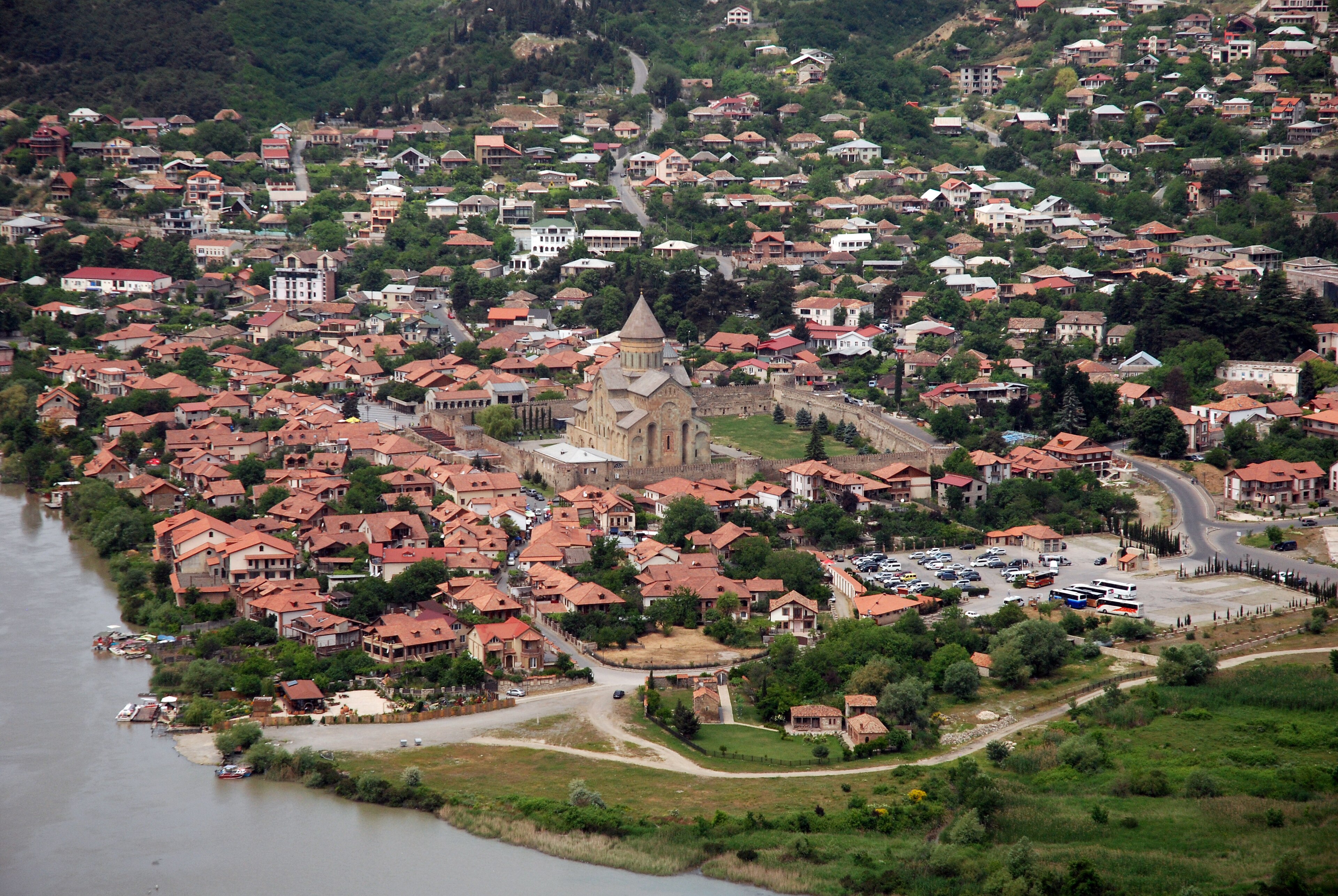
Why Mtskheta is Perfect for Your Celebration
- UNESCO World Heritage monasteries (Svetitskhoveli, Jvari) provide an unmatched sacred and historic backdrop
- Confluence of two rivers creates dramatic, photogenic natural scenery for ceremonies and portraits
- Intimate city scale naturally suits smaller, meaningful celebrations rather than mass-market events
- Proximity to Tbilisi (~25 km) means guests can access international flights and city amenities easily
- Authentic Georgian wine culture and cuisine add a distinctive local flavour to celebrations
- Spring and early autumn seasons deliver mild weather, blooming landscapes, and soft golden light

Compare Mtskheta with Other Top Destinations
Frequently Asked Questions
Is Mtskheta a good destination for a wedding?
Yes, particularly for intimate and culturally meaningful weddings. Mtskheta's UNESCO World Heritage monasteries, riverside scenery, and authentic Georgian atmosphere make it a genuinely distinctive setting. It is best suited to smaller celebrations — typically under 100 guests — where the emphasis is on experience and setting rather than large-scale event infrastructure.
How many guests can Mtskheta realistically accommodate for a wedding or event?
Local venues in Mtskheta comfortably support gatherings of around 20–150 guests. For larger groups, the practical approach is to use Mtskheta for the ceremony or a smaller gathering, with the main reception and guest accommodation arranged in nearby Tbilisi, which has a broader range of event venues and hotels.
What is the nearest airport to Mtskheta for international guests?
Tbilisi International Airport is the primary gateway, located approximately 25 km from Mtskheta. It receives direct flights from numerous European, Middle Eastern, and Central Asian cities. The transfer from the airport to Mtskheta takes roughly 20–30 minutes by road, making it one of the more accessible heritage destinations in the South Caucasus.
What is the best time of year to hold a wedding or celebration in Mtskheta?
Spring (April–June) and early autumn (September–October) are the strongest windows. Spring brings lush green hillsides and mild temperatures; September and October coincide with Georgia's grape harvest season, offering golden foliage and comfortable conditions. July and August are warmer and more crowded, while November through March brings cold winters that limit outdoor event viability.
What kinds of venues are available in Mtskheta for events?
Mtskheta offers boutique heritage properties, stone-built guesthouses with courtyard gardens, and outdoor settings within the historic core. The most distinctive spaces feature traditional Georgian architecture, river-view terraces, and proximity to the city's medieval monuments. For larger receptions, Tbilisi-based venues are typically incorporated into the event plan.
Can guests stay in Mtskheta itself, or do they need to be based in Tbilisi?
Both options are viable, but local accommodation in Mtskheta is limited in volume. Smaller guest groups can be housed within the city; larger groups will typically stay in Tbilisi and travel to Mtskheta by coordinated shuttle, which is straightforward given the short 25–30 minute road transfer. Many couples use this as an advantage, treating Mtskheta as an exclusive ceremony location.
Are there local wedding vendors and event suppliers in Mtskheta?
Mtskheta's own vendor ecosystem is modest, but it benefits directly from Tbilisi's well-developed events industry. Tbilisi-based wedding planners, caterers, photographers, florists, and musicians regularly work in Mtskheta and treat it as a natural extension of their service area. Georgian cuisine, amber wine, and polyphonic choirs are genuine local strengths that add cultural depth to any celebration.
Do I need special permissions to hold a ceremony near Mtskheta's monasteries or churches?
Yes. Mtskheta's major religious sites — including Svetitskhoveli Cathedral and Jvari Monastery — are active places of worship administered by the Georgian Orthodox Church, and are also UNESCO-protected heritage sites. Any ceremony or event in or immediately adjacent to these sites requires advance coordination with the relevant church and heritage authorities. A local event planner with established relationships is strongly recommended.
What makes Mtskheta distinctive compared to a conventional resort wedding destination?
Mtskheta offers something genuinely irreplaceable: a living, UNESCO-recognised ancient city where the ceremony backdrop is a 2,000-year-old cathedral or a hilltop monastery overlooking two rivers. The Georgian supra feast tradition, polyphonic music, and amber wine culture add layers of authentic hospitality that a purpose-built resort setting cannot replicate. It suits couples who prioritise meaning and atmosphere over scale and amenity.
How easy is it to move around Mtskheta with a group of guests?
Very easy within the historic core — Mtskheta is compact and largely walkable, so guests can move between a ceremony venue, reception space, and scenic viewpoints on foot. For guests based in Tbilisi, a coordinated minibus or coach shuttle is the standard arrangement and is logistically simple given the short, well-maintained road connection between the two cities.
Is Mtskheta suitable for a pre-wedding cultural event or rehearsal dinner?
Yes, and this is one of the most popular ways to incorporate Mtskheta into a broader Georgia-based celebration. Its proximity to Tbilisi makes it ideal for a pre-wedding cultural excursion, a heritage-themed rehearsal dinner, or a post-wedding brunch — giving guests a meaningful experience of Georgian history and landscape without requiring a full overnight stay in the city.

Ready to explore venues in Mtskheta?
Mtskheta: Destination Wedding & Cultural Event Venues in Georgia
◆Mtskheta is Georgia's ancient spiritual capital and a UNESCO World Heritage Site, best suited to intimate, culturally meaningful weddings, elopements, and small social celebrations. Its primary vibe is Cultural & Timeless — defined by medieval monasteries, riverside landscapes, and deep Georgian heritage rather than large-scale resort infrastructure. The best seasons are spring (April–June) and early autumn (September–October), when temperatures are mild and the scenery is at its most photogenic. Accessibility is straightforward for international guests via Tbilisi International Airport, roughly 25 km away, though local accommodation capacity is limited, making Mtskheta most practical for smaller guest lists or as a ceremony location with guests staying in Tbilisi.
Mtskheta at a Glance
| Category | Detail |
|---|---|
| Best For | Intimate Weddings, Elopements, Cultural Celebrations, Social Gatherings |
| Primary Vibe | Cultural & Timeless |
| Other Vibes | Sacred, Romantic, Riverside, Heritage |
| Best Season | Spring (Apr, May, Jun, Sep, Oct) |
Why Choose Mtskheta?
- UNESCO World Heritage backdrop: Svetitskhoveli Cathedral and Jvari Monastery are among the most historically significant religious sites in the Caucasus, providing a ceremony setting that is genuinely irreplaceable and deeply atmospheric.
- Dramatic natural scenery: The confluence of the Mtkvari (Kura) and Aragvi rivers, framed by forested hills and ancient fortifications, creates a landscape that is naturally cinematic — particularly valuable for photography-focused couples.
- Authentic Georgian culture: Mtskheta sits at the heart of Georgian wine country and culinary tradition. Celebrations here can incorporate polyphonic music, traditional Georgian feasting (supra), and local amber wine in a way that feels genuinely rooted rather than staged.
- Proximity to Tbilisi: International guests can fly into Tbilisi, one of the better-connected airports in the South Caucasus, and reach Mtskheta in under 30 minutes by road — making the logistics manageable even for guests travelling from Europe, the Middle East, or Central Asia.
- Intimate scale: The city's small size and relatively limited commercial development mean celebrations here feel private and exclusive by default, without requiring a buyout or special arrangement.
- Four-season character with a clear sweet spot: Spring and early autumn deliver mild, comfortable conditions with lush or golden foliage, giving event planners a reliable seasonal window that is neither too hot nor too cold.
Which Celebrations Work Best in Mtskheta?
- Intimate Destination Weddings: Mtskheta is particularly well-suited to smaller weddings — typically under 100 guests — where the emphasis is on meaning, setting, and experience rather than scale. The sacred character of the city, its ancient churches, and its riverside scenery make it a genuinely distinctive choice for couples seeking something beyond a conventional resort wedding.
- Elopements & Micro-Weddings: For couples planning a ceremony with a very small inner circle, Mtskheta offers an extraordinary setting without the logistical complexity of a large event. The city's compact geography means a ceremony, portraits, and a celebratory dinner can all happen within a short radius.
- Cultural & Heritage Celebrations: Milestone anniversaries, family reunions with a cultural travel dimension, or celebrations tied to Georgian heritage all find a natural home here. The city's living religious and cultural traditions add genuine depth to any gathering.
- Social Gatherings & Pre/Post-Wedding Events: Mtskheta works well as a day-trip or excursion destination for guests based in Tbilisi — making it a strong candidate for a pre-wedding cultural outing, a post-wedding brunch, or a rehearsal dinner in a heritage setting.
Venues & Event Spaces
Mtskheta's venue landscape is characterised by boutique heritage properties, small guesthouses with event-capable dining spaces, and outdoor settings within or adjacent to the city's historic core. The most distinctive event spaces tend to be associated with the city's old-town architecture — stone-built properties with courtyard gardens, terraces overlooking the river confluence, or interiors that reflect traditional Georgian design. Outdoor ceremonies in the shadow of the city's medieval monuments are possible with appropriate permissions and coordination with local authorities and the Georgian Orthodox Church, which administers the major religious sites.
For larger receptions requiring banquet-scale capacity, the practical approach is to use Mtskheta for the ceremony or a smaller gathering and arrange the main reception at a larger venue in or around Tbilisi, where a broader range of event infrastructure exists. Mtskheta's own properties are generally best suited to gatherings of up to 100–150 guests, with the most intimate settings comfortably accommodating 20–60.
Best Time to Celebrate
The curated best season for Mtskheta is Spring (April, May, June) and early Autumn (September, October), and both windows have distinct advantages worth understanding in detail.
April and May bring the most visually striking conditions: the surrounding hills are intensely green, wildflowers appear on the slopes below Jvari Monastery, and temperatures are comfortably mild — typically ranging from around 12°C at night to 22°C during the day. Rain is possible but generally manageable, and the city is not yet at peak tourist volume, which helps with venue access and a sense of privacy.
June extends the spring window with warmer, drier conditions. Daylight hours are long, which is particularly useful for outdoor ceremonies and evening receptions. By late June, temperatures begin climbing toward summer levels, so early-June events tend to be more comfortable than late-June ones.
September and October offer the autumn counterpart: harvest season in Georgia, with vineyards in full colour, the famous Rtveli grape harvest underway, and temperatures returning to the comfortable mid-range after summer. October in particular can be exceptionally beautiful, with golden foliage on the hillsides and clear, crisp air.
July and August are less ideal — temperatures can reach 30–35°C, the city is at its most crowded with tourists, and outdoor ceremonies in full sun become uncomfortable. November through March brings genuine winter conditions: frost, occasional snow, and temperatures that can drop well below zero at night. While a winter wedding in Mtskheta has a certain dramatic appeal, the logistical challenges — cold outdoor conditions, shorter daylight, and reduced local hospitality capacity — make it a more demanding choice.
Getting There & Local Connectivity
The primary gateway for international guests is Tbilisi International Airport, which receives direct flights from a range of European, Middle Eastern, and Central Asian cities. From the airport, Mtskheta is reachable in approximately 20–30 minutes by road, making it one of the more accessible heritage destinations in the region relative to its remoteness from major urban centres.
Road transfer is the most practical option for groups — minibuses and private coaches can be arranged from Tbilisi to Mtskheta with relative ease, and the route is straightforward along the main Georgian Military Highway corridor. A railway station exists in Mtskheta, though train frequency is limited and the service is better suited to individual travellers than coordinated group logistics.
Within Mtskheta itself, the historic core is compact and largely walkable, which is a genuine advantage for event groups — guests can move between a ceremony venue, a reception space, and a viewpoint for photographs without requiring vehicle transfers. For guests staying in Tbilisi (which many will, given the limited local accommodation stock), a coordinated shuttle arrangement is the standard approach and is logistically straightforward given the short distance.
Local Vendor & Hospitality Ecosystem
Mtskheta benefits significantly from its proximity to Tbilisi, which has a well-developed events and hospitality industry. Many Tbilisi-based wedding planners, caterers, florists, photographers, and musicians are experienced in working at Mtskheta locations and treat the city as a natural extension of their service area. This means that while Mtskheta itself does not have a large standalone vendor ecosystem, the effective vendor pool available to an event here is considerably broader than the city's own size would suggest.
Georgian cuisine and wine are genuine strengths — local caterers can deliver a traditional supra (feast) experience with polyphonic toasting, regional dishes, and amber or red wines from the nearby Kartli and Kakheti regions. This is a distinctive hospitality offering that adds real cultural value to a celebration. Polyphonic choirs and traditional Georgian musicians are available through Tbilisi-based agencies and can perform at Mtskheta venues.
Event coordination for anything beyond a very small gathering will typically require working with a Tbilisi-based event planner who has established relationships with local authorities, the Georgian Orthodox Church (for any ceremony near or within church grounds), and the relevant heritage site management bodies. This is a manageable requirement but one that should be factored into planning timelines.
Pros & Things to Consider
Why Mtskheta Works Well
- Genuinely unique, UNESCO-recognised heritage setting that no conventional resort destination can replicate
- Compact, walkable historic core makes event logistics simple for small groups
- Strong Georgian culinary and wine culture adds authentic, memorable hospitality to any celebration
- Short transfer from Tbilisi International Airport keeps international guest travel manageable
- Spring and autumn seasons deliver reliable, photogenic conditions with mild temperatures
- Naturally intimate scale creates a sense of exclusivity without requiring a venue buyout
Things to Consider
- Local accommodation capacity is limited — larger guest lists will need to be housed primarily in Tbilisi, requiring coordinated shuttle logistics
- The city's sacred character and active religious sites mean that event planning near or within church grounds requires coordination with the Georgian Orthodox Church and heritage authorities, which adds lead time
- Mtskheta is not suited to large-scale events (200+ guests) without significant logistical extension into Tbilisi's venue infrastructure
- Summer months (July–August) bring tourist crowds and heat that can complicate outdoor event planning
- The local standalone vendor ecosystem is modest — reliance on Tbilisi-based suppliers is the norm, which is workable but requires advance planning
When Mtskheta May Not Be the Right Fit
- Large guest lists (200+): If your celebration requires banquet-scale capacity for a large number of guests all accommodated locally, Mtskheta's current hospitality infrastructure will not comfortably support it. A Tbilisi-based venue with Mtskheta as a day excursion would be a more practical structure.
- Guests with very limited travel flexibility: While Tbilisi is reasonably well-connected, guests travelling from destinations without direct routes may face multi-leg journeys. For a guest list that is predominantly local to a single city, a destination closer to home may reduce travel friction significantly.
- Winter celebrations requiring outdoor elements: If your event concept depends on outdoor ceremonies, garden receptions, or open-air dining, a November–March date in Mtskheta carries real risk of cold, frost, or snow that would compromise the experience.
- Couples seeking a large, resort-style wedding with extensive on-site amenities: Mtskheta's strength is heritage and intimacy, not resort infrastructure. If the priority is a large spa resort, multiple on-site F&B outlets, and a dedicated events team within a single property, a different destination would be a better match.