
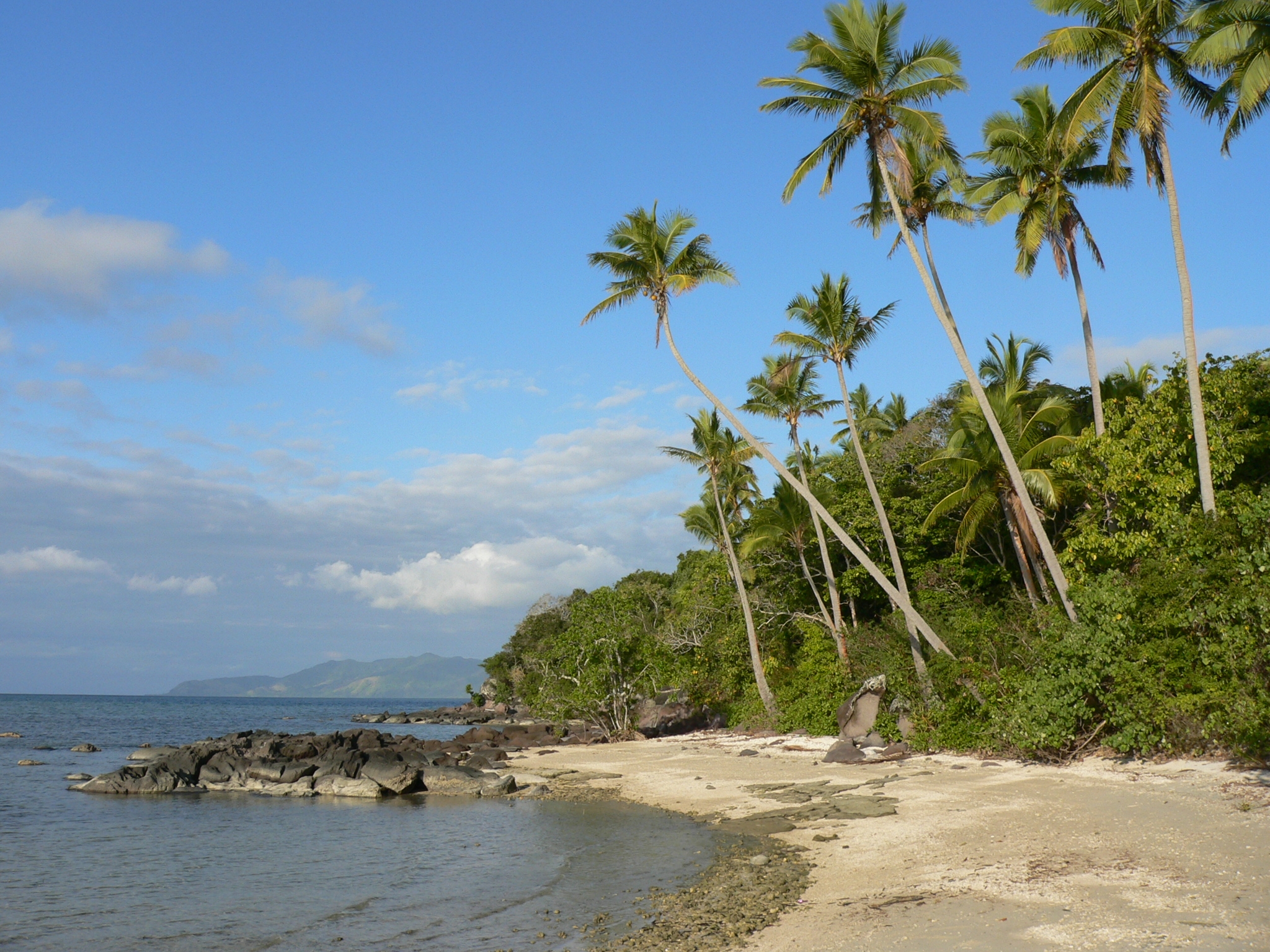
Why Kadavu is Perfect for Your Celebration
- Surrounded by the Great Astrolabe Reef — one of the world's largest barrier reefs — offering extraordinary underwater and coastal scenery
- Genuine seclusion: no mass tourism, no resort strips, making the entire island feel like a private venue
- Dry season (May–Oct) delivers reliably calm seas, lower humidity, and clear skies ideal for outdoor ceremonies
- Authentic Fijian village culture and warm local hospitality create a deeply personal celebration atmosphere
- Eco-resorts and boutique lodges can be booked exclusively, giving small groups total privacy
- Exceptional snorkelling, diving, and rainforest trekking provide natural guest activities around the event

Compare Kadavu with Other Top Destinations
Frequently Asked Questions
Is Kadavu a good destination for a small destination wedding?
Yes, particularly for intimate ceremonies of under 60 guests. Kadavu's eco-resorts can be booked on an exclusive-use basis, the Great Astrolabe Reef and rainforest provide a naturally extraordinary ceremony backdrop, and the island's remoteness ensures genuine privacy. It is not suited to large-scale weddings, but for couples prioritising seclusion and natural beauty over scale, it is among Fiji's most distinctive choices.
What is the best time of year to hold a celebration on Kadavu?
The dry season — May through October — is the strongly recommended window. During these months, sea conditions are calmer (important for guest transfers), rainfall is lower, humidity is more comfortable, and cyclone risk is minimal. July and August are typically the most stable months. The wet season (November–April) brings cyclone risk and unpredictable weather that makes outdoor events and island transfers genuinely unreliable.
How do guests get to Kadavu?
Guests fly into Nadi International Airport on Fiji's main island, then take a light aircraft (approximately 45 minutes) to Vunisea Airport on Kadavu. Aircraft on this route are small — typically 9 to 19 seats — so larger groups must be staggered across multiple flights. Some guests travel by boat from Viti Levu, but this is longer and more weather-dependent. There is no passenger rail network in Fiji.
How many guests can realistically attend an event on Kadavu?
Practically, groups of up to around 60 guests work most smoothly. The island's boutique eco-resorts have limited accommodation capacity, and the light aircraft transfer logistics become complex for larger groups. Beyond roughly 80 guests, it becomes very difficult to keep the group together in one property, and the overall event experience can fragment. Kadavu is genuinely best suited to small, intimate celebrations.
What kinds of event spaces are available on Kadavu?
Event spaces on Kadavu are almost entirely open-air or semi-open — beachfront platforms, garden lawns, overwater decks, and traditional Fijian bure (thatched) structures. There are no conventional hotel ballrooms or large indoor banquet halls. The natural environment — reef, rainforest, ocean — is the primary setting. Exclusive-use resort bookings are the standard approach for celebration events.
Can local vendors on Kadavu handle wedding catering and event services?
Partially. Resorts provide in-house catering — often featuring fresh local seafood, tropical produce, and traditional Fijian cooking methods like the lovo earth oven feast. However, specialist wedding vendors (florists, photographers, entertainment) are not based on the island in significant numbers and typically need to be sourced from Viti Levu and transported in. This requires longer planning lead times than a more developed destination.
What is the internet and mobile connectivity like on Kadavu for event guests?
Limited. Kadavu has restricted mobile coverage and generally slow or intermittent internet access compared to Fiji's main island. For many guests, this is part of the appeal — genuine disconnection. However, it is a real operational consideration for event coordination, live-streaming, or guests who need reliable connectivity. Event planners should discuss connectivity specifics directly with their chosen resort well in advance.
Is Kadavu suitable for a honeymoon celebration or post-wedding retreat?
Yes — it is particularly well-suited to this. The island's seclusion, natural beauty, and unhurried pace make it an exceptional honeymoon setting. Couples who marry elsewhere in Fiji or internationally frequently extend their celebration to Kadavu for a few days of genuine privacy. The Great Astrolabe Reef, rainforest walks, and warm Fijian hospitality create a deeply memorable post-wedding experience.
What cultural experiences can be incorporated into a celebration on Kadavu?
Several authentic Fijian cultural elements are genuinely available. Kava ceremonies — a traditional welcome and bonding ritual — can be arranged with local communities. Meke (traditional Fijian song and dance) performances are a common celebration feature. A lovo feast, where food is cooked in an earth oven, is a memorable catering option for celebration dinners. Village visits can also be arranged through most resorts, giving guests meaningful cultural engagement.
What activities are available for guests beyond the main celebration event?
Kadavu offers world-class reef diving and snorkelling on the Great Astrolabe Reef, kayaking, rainforest hiking, birdwatching (the island has several endemic species), and fishing. These activities are genuinely exceptional rather than generic resort offerings, and they give a multi-day celebration trip real substance for guests. Most resorts coordinate activity bookings directly for groups.
Are there situations where Kadavu would not be the right choice for an event?
Yes. Kadavu is not appropriate for large guest lists (100+), events planned during the wet season (November–April) due to cyclone and transfer risk, groups with guests who have significant mobility limitations, or any group requiring strong digital connectivity. If the event concept depends on a large ballroom, a wide choice of local vendors, or easy last-minute guest travel, a more developed destination would serve better.

Ready to explore venues in Kadavu?
Kadavu: Destination Wedding & Celebration Venues in Fiji's Wildest Island
◆Kadavu is Fiji's fourth-largest island and its most genuinely remote major destination — a nature-first, seclusion-first choice for couples and small groups who want an intimate celebration surrounded by the Great Astrolabe Reef and dense tropical rainforest rather than a polished resort strip. It suits small destination weddings, honeymoon extensions, milestone birthday retreats, and private group getaways particularly well. The dry season (May through October) is the reliable window for events; the wet season brings cyclone risk and rough sea crossings that make logistics genuinely difficult. Kadavu is not a high-volume, large-scale event destination — its strength is exclusivity, natural beauty, and authentic Fijian culture, not ballroom capacity or urban convenience.
Kadavu at a Glance
| Category | Detail |
|---|---|
| Best For | Intimate Destination Weddings, Honeymoon Celebrations, Milestone Birthday Retreats, Private Group Getaways |
| Primary Vibe | Nature & Wilderness |
| Other Vibes | Secluded, Eco-Conscious, Culturally Authentic |
| Best Season | Dry Season (May, Jun, Jul, Aug, Sep, Oct) |
Why Choose Kadavu?
- The Great Astrolabe Reef as a natural backdrop: One of the world's largest barrier reefs encircles the island, providing extraordinary underwater scenery, calm lagoon waters during the dry season, and a genuinely dramatic coastal setting for ceremonies and photography that few destinations on earth can match.
- True seclusion without manufactured exclusivity: Kadavu has no resort strips, no cruise ship terminals, and no mass-market tourism infrastructure. When a small group books an eco-resort here, they effectively have the surrounding environment to themselves — a level of privacy that purpose-built private island resorts charge a significant premium to simulate elsewhere.
- Authentic Fijian village culture: The island's communities maintain strong traditional customs, and many resorts facilitate genuine cultural exchanges — kava ceremonies, meke (traditional dance) performances, and village visits — that give celebrations a meaningful local dimension rather than a staged tourist experience.
- Exclusive-use resort model: The boutique eco-resorts on Kadavu are small enough that a modest-sized group can book the entire property, ensuring that the event space, accommodation, and staff attention are entirely dedicated to the celebration party.
- Exceptional natural guest activities: World-class reef diving and snorkelling, rainforest hiking, kayaking, and birdwatching (Kadavu is home to several endemic bird species) mean guests have genuinely memorable experiences beyond the event itself, making the trip feel like a full destination experience rather than just a venue visit.
- Dry season reliability: From May through October, Kadavu experiences its most stable weather — lower humidity, calmer seas, and predominantly clear skies — which is particularly important given that most event spaces and ceremony settings here are outdoors or open-air by design.
Which Celebrations Work Best in Kadavu?
- Intimate destination weddings (typically under 60 guests): Kadavu is particularly well-suited to small, meaningful ceremonies where the setting and experience matter more than scale. The reef, rainforest, and open-air resort spaces create a naturally beautiful ceremony environment, and the island's remoteness ensures the event feels genuinely special and private.
- Honeymoon and post-wedding retreats: Couples who marry elsewhere in Fiji or internationally frequently extend their celebration to Kadavu for its seclusion and natural beauty. The island's pace — unhurried, nature-focused, disconnected from urban noise — makes it an ideal honeymoon setting.
- Milestone birthday retreats: Small groups celebrating significant birthdays (30th, 40th, 50th) find Kadavu's exclusive-use resort model and activity-rich environment well-matched to a multi-day celebration format where the event is woven into a broader island experience.
- Private group getaways and corporate retreats (small scale): The island's combination of natural adventure activities, cultural immersion, and genuine disconnection from everyday connectivity makes it a compelling setting for small leadership retreats or close-knit group celebrations, provided the group is comfortable with limited digital infrastructure.
Venues & Event Spaces
Kadavu's event venue landscape is defined almost entirely by its eco-resorts and boutique lodge properties rather than by conventional banquet halls, hotel ballrooms, or purpose-built event centres. Ceremony and reception spaces are typically open-air or semi-open structures — beachfront platforms, garden lawns, overwater decks, and covered bures (traditional Fijian thatched structures) — that integrate the natural environment directly into the event aesthetic. This is a deliberate design philosophy rather than a limitation: the reef, the rainforest canopy, and the ocean horizon are the primary decorative elements.
Most properties on the island are small by international resort standards, with accommodation capacity ranging from roughly 10 to 30 rooms, which naturally caps comfortable guest group sizes. Exclusive-use bookings — where a group takes over the entire resort — are both possible and common for celebration events, and this model is generally the most practical approach for ensuring event cohesion and privacy. Outdoor ceremony sites on or near the beach, with reef views, are the signature offering. Indoor or fully weatherproofed large-scale event spaces do not exist on the island in the way they would at a mainland hotel, so contingency planning for weather is an important part of event design here.
Best Time to Celebrate
The dry season — May through October — is the strongly preferred window for any celebration on Kadavu, and this is not simply a matter of comfort. During these months, the southeast trade winds bring drier, cooler air, sea conditions are generally calmer (important for the small aircraft and boat transfers that guests use to reach the island), and the risk of tropical cyclones is at its lowest. Outdoor ceremonies and open-air receptions, which are the norm here, are far more reliably executable in this window.
The wet season (November through April) brings significantly higher rainfall, elevated humidity, and — critically — an active cyclone season that can disrupt travel to and from the island at short notice. Sea crossings between Kadavu and the main island of Viti Levu can become rough or temporarily suspended during storm events, which creates real logistical risk for guests travelling to a time-sensitive celebration. Even in the wet season's quieter months, the unpredictability of tropical weather patterns makes outdoor event planning genuinely difficult. For these reasons, the November–April period is not recommended for destination events on Kadavu, and the dry season window should be treated as the practical planning boundary rather than a preference.
Within the dry season, July and August tend to be the most popular months, offering the most stable conditions and the clearest underwater visibility for guests who plan to dive or snorkel the Great Astrolabe Reef. May, June, September, and October are excellent shoulder months within the dry season — conditions are still reliable, and the island is typically quieter.
Getting There & Local Connectivity
Reaching Kadavu requires a two-stage journey for virtually all international guests. The primary gateway is Nadi International Airport on Fiji's main island of Viti Levu, which receives direct international flights from Australia, New Zealand, the United States, and several other Pacific hubs. From Nadi, guests travel onward to Kadavu via Vunisea Airport (KDV) — a small domestic airstrip served by light aircraft on scheduled and charter services, with a flight time of approximately 45 minutes. Alternatively, some guests travel by boat from the Viti Levu coast, though this is a longer and more weather-dependent option.
The light aircraft connection is the critical logistics point for event planning: aircraft on this route are small (typically 9–19 seat capacity), meaning a larger guest group must be staggered across multiple flights and potentially multiple departure times. This requires careful coordination and should be factored into arrival and departure scheduling well in advance. There is no passenger rail network anywhere in Fiji.
On the island itself, movement between the airport, resorts, and villages is typically by resort vehicle, boat, or on foot along coastal tracks. There is no public transport network, and the island's road infrastructure is limited. Most resorts manage guest transfers directly, and for a celebration group, coordinating all transfers through the resort or a dedicated event logistics contact is the most practical approach. Mobile and internet connectivity on the island is limited — this is part of the appeal for many guests, but it is a genuine operational consideration for event coordination.
Local Vendor & Hospitality Ecosystem
Kadavu's vendor ecosystem is small and closely tied to its resort properties. Unlike larger Fijian destinations such as the Mamanuca or Yasawa island groups, Kadavu does not have a mature, independent wedding vendor market with multiple competing florists, caterers, photographers, and entertainment providers based locally. Most event services are either provided in-house by the resort or sourced from Viti Levu and transported to the island — which adds logistical complexity and lead time to vendor planning.
What the island does offer is genuinely warm and attentive Fijian hospitality. Resort staff on Kadavu are typically drawn from local communities and bring a personal, culturally grounded approach to guest service that is difficult to replicate in larger, more commercialised resort environments. For couples who value authentic human warmth over polished corporate service delivery, this is a meaningful distinction.
Catering on the island draws on fresh local seafood, tropical produce, and traditional Fijian cooking methods — a lovo (earth oven feast) is a particularly memorable catering option for celebration dinners. For more elaborate or internationally-styled menus, advance planning and potentially importing specific ingredients from the main island is necessary. Event planners working with Kadavu resorts should expect longer lead times, more direct communication with resort management (rather than a dedicated events team), and a collaborative rather than transactional planning relationship.
Pros & Things to Consider
Why Kadavu Works Well
- Unmatched natural setting — the Great Astrolabe Reef and rainforest create a ceremony backdrop that is genuinely extraordinary
- Exclusive-use resort model delivers real privacy and dedicated attention for small celebration groups
- Authentic Fijian cultural experiences (kava ceremonies, meke, lovo feasts) add meaningful depth to celebrations
- Dry season (May–Oct) is reliably stable for outdoor events, with calm seas and clear skies
- No mass tourism means the island retains a genuine, unhurried character that larger Fijian resort destinations have partly lost
- World-class diving and snorkelling on the Great Astrolabe Reef gives guests exceptional activities beyond the event itself
Things to Consider
- Access is genuinely remote — light aircraft transfers from Nadi require careful scheduling, especially for larger groups who must be staggered across multiple flights
- Venue capacity is inherently small; the island is not suited to weddings or events with guest lists above approximately 60–80 people without significant logistical strain
- The local vendor ecosystem is limited — most specialist event services must be sourced from Viti Levu and transported in, adding cost, complexity, and lead time
- Internet and mobile connectivity is limited across the island, which affects both guest experience and real-time event coordination
- The wet season (November–April) carries genuine cyclone risk and can disrupt travel at short notice — this is not a destination where wet-season events can be planned with confidence
- Accommodation inventory is small; a large guest group may need to be split across multiple properties, which requires additional coordination
When Kadavu May Not Be the Right Fit
- Large guest lists (100+ guests): The island's resort accommodation and event space capacity is genuinely limited. Groups significantly above 60–80 guests will find it difficult to keep everyone in the same property or even the same area of the island, and the light aircraft transfer logistics become very complex at scale.
- Guests with limited travel flexibility or mobility considerations: The two-stage journey (international flight to Nadi, then light aircraft to Kadavu) is manageable for most travellers but can be challenging for elderly guests, guests with mobility limitations, or those with tight international connection windows. The small aircraft and boat transfers add a layer of physical and logistical demand that some guests may find difficult.
- Events planned during the wet season (November–April): If the preferred event date falls in the wet season, Kadavu is genuinely not the right choice. Cyclone risk, rough sea crossings, and heavy rainfall make outdoor event planning unreliable, and the consequences of a weather disruption — guests stranded, transfers cancelled — are more severe here than at a more accessible destination.
- Groups requiring strong digital connectivity: Kadavu's limited mobile and internet infrastructure is a feature for guests seeking genuine disconnection, but it is a real constraint for any group that needs reliable connectivity for work, live-streaming the event, or real-time coordination. If strong digital access is a non-negotiable requirement, a more developed Fijian destination or a different region entirely would be more appropriate.