
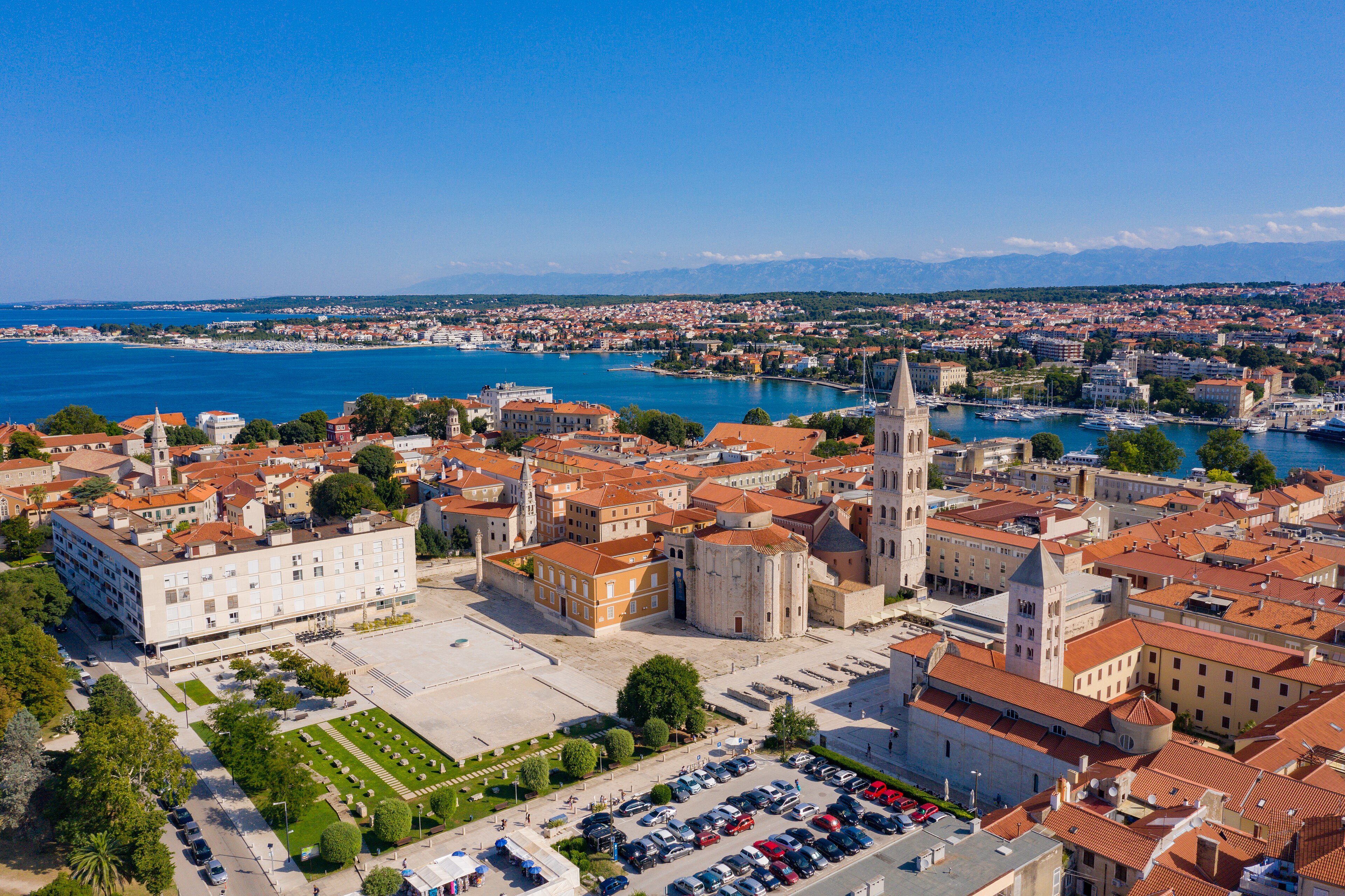
Why Zadar is Perfect for Your Celebration
- UNESCO-listed old town provides a uniquely atmospheric backdrop for ceremonies and celebrations
- Warm, sunny summers (May–Sep) with long daylight hours ideal for outdoor events and island excursions
- Zadar Airport (ZAD) offers direct seasonal flights from across Europe, easing guest travel
- Intimate city scale suits smaller, curated weddings and private celebrations rather than mass-market events
- Proximity to Plitvice Lakes National Park and Kornati Islands adds memorable guest experiences
- Growing boutique hotel and villa scene provides characterful accommodation options across the old town and coastline

Compare Zadar with Other Top Destinations
Frequently Asked Questions
Is Zadar a good destination for a wedding?
Yes, particularly for intimate destination weddings. Zadar's UNESCO-listed old town, Adriatic seafront, and boutique heritage hotels create a genuinely atmospheric setting. It is best suited to smaller guest lists — typically under 150 guests — where the city's character and scale work in the event's favour rather than against it. Couples seeking a meaningful sense of place over a generic resort backdrop will find Zadar especially rewarding.
What is the best time of year to hold a wedding or event in Zadar?
May through September is the curated best season. September and June are often considered the strongest months — warm and sunny without the peak-summer crowds of July and August. May and June offer lush scenery and comfortable daytime temperatures ideal for outdoor ceremonies. July and August are excellent for evening and sunset events but bring the busiest tourist period to the old town.
How do guests get to Zadar from abroad?
Most international guests fly into Zadar Airport (ZAD), located approximately 8 km from the city center. During summer, it receives direct flights from a wide range of European cities. Guests from outside Europe will typically connect through a major European hub. Private transfers and shuttle services between the airport and city center are readily available and the journey is short.
How many guests can venues in Zadar realistically accommodate?
Zadar's venue landscape is best suited to events in the range of 30 to 200 guests. Boutique heritage hotels in the old town typically suit more intimate gatherings, while resort-style properties along the coastline can accommodate larger groups across multiple event spaces. For events requiring a single space for 250 or more guests, Zadar's current inventory may be limiting.
What kinds of event spaces are available in Zadar?
Zadar offers two broad venue characters: boutique heritage hotels within the old town — typically featuring stone interiors, terraces, and courtyard spaces — and larger coastal resort properties outside the center with dedicated function rooms and sea-view terraces. Certain outdoor public spaces, including seafront promenades and historic squares, can also be used for events with appropriate permissions.
Is it easy for a large guest group to get around Zadar once they arrive?
Yes, for groups staying in or near the old town. The old town peninsula is entirely walkable, meaning guests can move between accommodation, ceremony venues, and dinner locations on foot — a genuine logistical advantage. Guests staying at resort properties outside the center (such as those at Punta Skala or Borik) are a short taxi or shuttle ride away, and distances are manageable.
Are there experienced local wedding and event vendors in Zadar?
Yes, though the pool is smaller than in larger Croatian cities. Local wedding planners, photographers, florists, and catering specialists with destination event experience are available in Zadar. Engaging them early is important, particularly for peak summer dates. For very complex or large-scale events, some specialist services may need to be sourced from Split or Zagreb, so timeline planning matters.
What makes Zadar distinctive as a celebration destination compared to a typical resort?
Zadar offers a genuinely layered sense of place — Roman forum ruins, medieval churches, Venetian city walls, and the world-famous sea organ all within a walkable old town. This gives celebrations a cultural and historical depth that a purpose-built resort cannot replicate. The combination of ancient urban character and Adriatic coastal scenery is specific to Zadar and creates a memorable backdrop for guests.
Can guests combine a Zadar wedding with other experiences in the region?
Yes. Zadar is well-positioned for regional excursions. Plitvice Lakes National Park — a UNESCO World Heritage Site — is accessible as a day trip. The Kornati Islands archipelago offers boat excursions. Split and its own historic old town are roughly 1.5 hours by road. These options give event planners strong material for pre- or post-wedding guest programmes.
Is Zadar safe for international guests attending a wedding or event?
Yes. Croatia is generally considered a very safe country for international visitors, and Zadar specifically has a low crime rate and a welcoming attitude toward tourism. The old town is well-lit, walkable, and busy with visitors during the summer season, which adds to the sense of security for guests unfamiliar with the city.
What should planners be aware of when considering Zadar for a summer event?
Peak summer (July–August) brings significant tourist crowds to the old town, which can affect the exclusivity feel of outdoor public spaces. Accommodation demand is highest in these months, so early booking is essential. Afternoon heat in July and August can make outdoor midday events uncomfortable — evening ceremonies and sunset dinners are generally better suited to the peak summer period.

Ready to explore venues in Zadar?
Zadar: Destination Wedding & Cultural Event Venues on the Adriatic
◆Zadar is a compact, historically rich coastal city on Croatia's Dalmatian coast, best suited to intimate weddings, anniversary celebrations, cultural gatherings, and small corporate retreats. Its primary vibe is Cultural & Timeless — shaped by a walkable Roman-era old town, medieval churches, and a dramatic Adriatic seafront. The best season runs from May through September, when warm, dry Mediterranean weather enables outdoor ceremonies and island excursions. Zadar Airport (ZAD) provides direct seasonal connections from across Europe, making guest travel straightforward for European attendees, though intercontinental guests will typically require a connecting flight. The destination suits curated, smaller-scale events rather than large-format weddings requiring ballrooms for several hundred guests.
Zadar at a Glance
| Category | Detail |
|---|---|
| Best For | Intimate Weddings, Anniversary Celebrations, Cultural Gatherings, Small Corporate Retreats |
| Primary Vibe | Cultural & Timeless |
| Other Vibes | Coastal & Romantic, Heritage & Scenic |
| Best Season | Summer (May, Jun, Jul, Aug, Sep) |
Why Choose Zadar?
- A genuinely ancient urban backdrop: Zadar's old town sits on a narrow peninsula with Roman forum ruins, pre-Romanesque churches, and Venetian-era city walls — providing ceremony and photography settings that are difficult to replicate elsewhere in the Adriatic.
- The sea organ and Sun Salutation: Zadar's famous sea organ — a world-first architectural sound installation built into the seafront steps — and the adjacent solar-powered Sun Salutation light installation create a uniquely atmospheric setting for evening celebrations and guest experiences that are specific to this city alone.
- Reliable summer weather: May through September brings consistently warm, dry conditions with long daylight hours, making outdoor ceremonies, waterfront dinners, and island day trips reliably plannable rather than weather-dependent gambles.
- Manageable city scale: Zadar is large enough to support a full hospitality ecosystem — catering, floristry, photography, music — yet compact enough that guests can walk between accommodation, ceremony venues, and dinner locations without complex logistics.
- Island and national park access: The Kornati Islands archipelago and Plitvice Lakes National Park are both accessible as day or overnight excursions, giving event planners genuinely memorable guest experiences beyond the city itself.
- Growing boutique accommodation scene: Heritage properties within the old town walls and resort-style hotels along the nearby Punta Skala coastline provide a range of accommodation characters suited to different event styles and guest preferences.
Which Celebrations Work Best in Zadar?
- Intimate destination weddings: Zadar is particularly well-suited to smaller weddings — typically under 150 guests — where the old town's atmospheric lanes, seafront terraces, and boutique heritage hotels can be used to their full effect. The city's character rewards couples who want a meaningful sense of place rather than a generic resort backdrop.
- Anniversary and vow renewal celebrations: The romantic coastal setting, sunset views over the Adriatic, and the city's unhurried pace make it a natural fit for milestone anniversary events where atmosphere and intimacy matter more than scale.
- Cultural and arts gatherings: Zadar has a genuine cultural calendar — including the Garden Festival and other summer music events — and its heritage infrastructure (churches, Roman forum spaces, old town squares) suits cultural gatherings, literary events, and arts-adjacent celebrations that benefit from a historically resonant setting.
- Small corporate retreats and incentive trips: The combination of reliable summer weather, island excursion options, quality resort facilities at Punta Skala, and good European air connectivity makes Zadar a credible choice for small-to-medium corporate groups seeking an off-the-beaten-track Adriatic destination with genuine character.
Venues & Event Spaces
Zadar's event venue landscape divides broadly into two distinct characters. Within the old town peninsula, the primary options are boutique heritage hotels — typically converted historic buildings with stone interiors, terrace spaces, and intimate courtyard settings. These suit ceremonies and dinners for smaller groups and offer a strong sense of place, though they generally cannot accommodate very large guest lists in a single indoor space.
Along the coastline north of the city — particularly around the Borik and Punta Skala areas — larger resort-style properties offer more conventional event infrastructure: dedicated function rooms, outdoor terraces overlooking the sea, swimming pool areas suitable for cocktail receptions, and the capacity to accommodate larger guest groups across multiple event spaces. These properties are better suited to events requiring more logistical scale while still offering Adriatic coastal scenery.
Beyond hotels, Zadar also has access to outdoor public spaces — including seafront promenades, the Roman forum area, and old town squares — which can be used for certain types of events with appropriate permissions, adding a genuinely unique open-air dimension that few other destinations can offer. Local event planners with experience in the city are typically the most reliable guide to what is practically achievable in these spaces.
Best Time to Celebrate
The curated best season for events in Zadar runs from May through September, and this reflects the Mediterranean climate's most reliable window rather than simply "summer is nice." Here is why each part of that window has a distinct character:
- May and June are generally considered the most comfortable months for outdoor events — temperatures are warm (typically mid-20s°C) without the intense heat of peak summer, crowds are lighter than July and August, and the landscape is green and vivid. These months are particularly well-suited to daytime ceremonies and outdoor dinners.
- July and August represent peak season: maximum sunshine, warmest sea temperatures, and the most active local hospitality scene. The trade-off is higher accommodation demand, busier old town streets, and afternoon temperatures that can make outdoor midday events uncomfortable. Evening events and sunset ceremonies are especially well-suited to these months.
- September is widely regarded as an excellent month — the summer heat softens, the Adriatic remains warm enough for swimming, crowds begin to thin, and the overall atmosphere is relaxed. For couples or planners who want the benefits of summer without peak-season intensity, September is often the strongest single month.
Outside this window, October can still be pleasant but carries increasing rain risk and sees a notable reduction in available services and seasonal venues. November through March brings genuinely cold, wet conditions, with many seasonal hospitality businesses closed or operating at reduced capacity — making this period unsuitable for outdoor events and limiting indoor options significantly. April is a transitional month: weather is improving but not yet reliably warm, and the full summer hospitality ecosystem has not yet opened.
Getting There & Local Connectivity
By air: Zadar Airport (ZAD) is located approximately 8 km from the city center and is the primary entry point for most international guests. During the summer season, it receives direct flights from a wide range of European cities — including major hubs in the UK, Germany, Scandinavia, and the Netherlands — making it genuinely convenient for European guest groups. Guests traveling from outside Europe will typically connect through a major European hub such as Frankfurt, Amsterdam, or London.
By road: Zadar is well-connected to the Croatian road network, including the A1 motorway linking it to Zagreb (approximately 3 hours by car) and Split (approximately 1.5 hours). For guests arriving from neighboring countries, road travel is a practical option. Shuttle and private transfer services between the airport and city center are readily available.
By rail: Croatia's rail network is limited in Dalmatia, and Zadar's train station connects to a relatively restricted set of destinations. For most guest groups, bus services and private transfers are more practical than rail for reaching Zadar from other Croatian cities.
Local movement: Within Zadar itself, the old town is entirely walkable — a genuine advantage for event logistics, as guests can move between accommodation, ceremony venues, and dinner locations on foot. For guests staying at resort properties outside the old town (such as those at Punta Skala or Borik), shuttle arrangements or taxi services are straightforward to organize and the distances involved are short.
Local Vendor & Hospitality Ecosystem
Zadar has developed a reasonably mature hospitality ecosystem relative to its size, driven by steady growth in tourism over the past decade. Local vendors with experience in destination events — including wedding planners, photographers, florists, catering specialists, and music providers — are available, though the pool is smaller than in larger Croatian cities such as Dubrovnik or Split. Couples and planners who engage local specialists early in the planning process generally find the ecosystem responsive and capable.
The catering scene draws on strong Dalmatian culinary traditions — fresh seafood, local wines from the Zadar hinterland, and Mediterranean produce — which can be a genuine asset for event menus that reflect the destination's character. Several local catering companies have experience with multi-day event formats.
For very large or highly complex events, it is worth noting that some specialist services (large-scale floral installations, certain entertainment categories, bespoke lighting rigs) may need to be sourced from Split, Zagreb, or internationally, adding a logistical layer that planners should account for in their timelines. For events within the destination's natural scale — intimate to medium-sized — the local ecosystem is generally sufficient.
Pros & Things to Consider
Why Zadar Works Well
- Genuinely distinctive sense of place — Roman ruins, medieval architecture, and Adriatic seafront create a backdrop that is specific and memorable rather than generic
- Reliable, long summer season (May–September) with excellent outdoor event conditions
- Good European air connectivity via Zadar Airport (ZAD) with direct seasonal routes from multiple countries
- Walkable old town simplifies guest logistics significantly
- Strong local culinary identity (Dalmatian seafood, local wines) adds authentic character to event catering
- Access to exceptional day-trip experiences (Kornati Islands, Plitvice Lakes) enriches the overall guest journey
- Generally very safe destination with a welcoming local culture toward international visitors
Things to Consider
- Venue capacity is limited — Zadar is not well-suited to very large weddings (200+ guests) where a single large ballroom or outdoor lawn for the full group is required
- Peak season (July–August) brings significant tourist crowds to the old town, which can affect the exclusivity feel of certain outdoor spaces
- Intercontinental guests face connecting flights, as ZAD does not currently serve long-haul routes directly
- Rail connectivity is limited; guests without cars or private transfers may find getting to Zadar from other Croatian cities less straightforward than expected
- The vendor ecosystem, while capable, is smaller than in Dubrovnik or Split — early engagement with local specialists is important for complex events
- Winter months see a significant reduction in available hospitality services, making off-season events genuinely difficult to plan
When Zadar May Not Be the Right Fit
- Very large guest lists: If your event requires a single venue capable of hosting 250 or more guests under one roof, Zadar's current venue inventory is unlikely to meet that need comfortably — a larger Croatian city or a purpose-built resort destination would be more appropriate.
- Guests traveling from outside Europe: While European guests can reach Zadar with relative ease, a guest list that is predominantly intercontinental (from Asia, the Americas, or Australia) will face multi-leg journeys that add meaningful travel fatigue and cost — a destination with stronger long-haul connectivity may serve those guests better.
- Off-season events (November–March): Couples or planners considering a winter event should be aware that Zadar's hospitality ecosystem contracts significantly outside the summer season, with reduced venue availability, fewer active vendors, and weather that is genuinely unsuitable for the outdoor settings that define the destination's appeal.
- Events requiring a large, purpose-built convention or banquet infrastructure: Zadar does not have a large convention center or hotel ballroom capable of hosting formal banquets at scale. Events that depend on that kind of infrastructure — large corporate conferences, gala dinners for 300+ — would be better served by a destination with that specific facility type.