
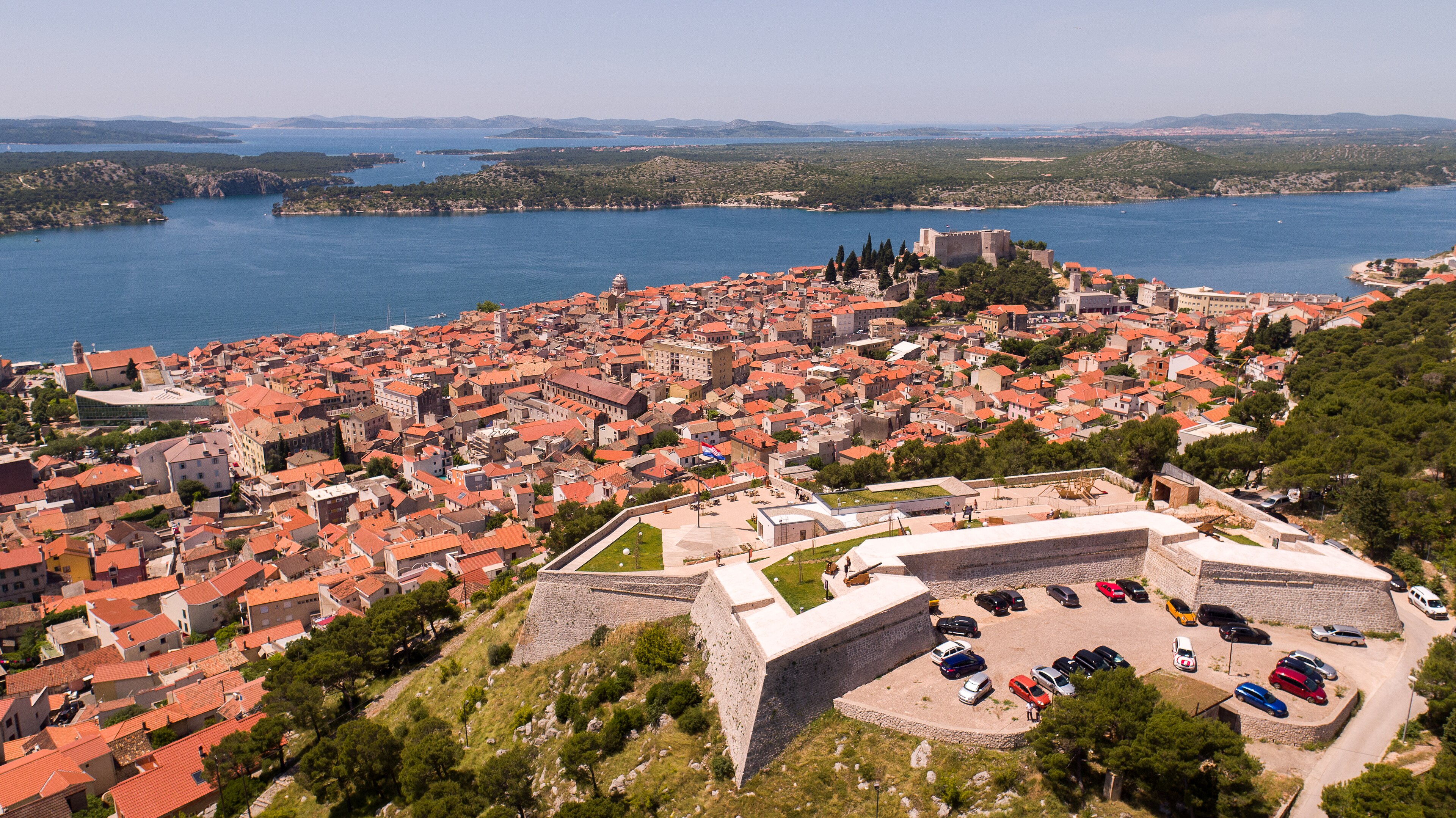
Why Šibenik is Perfect for Your Celebration
- UNESCO World Heritage Cathedral of St. James provides an unmatched ceremonial backdrop
- Three Renaissance-era sea fortresses (St. Michael, St. John, Barone) available as dramatic event venues
- Compact, walkable old town creates an immersive, exclusive atmosphere for guests
- Proximity to Krka National Park and the Kornati archipelago for pre/post-event excursions
- Warm, reliable summer weather from May through September suits outdoor celebrations
- Authentic Dalmatian cuisine and local wine culture elevate catering experiences

Compare Šibenik with Other Top Destinations
Frequently Asked Questions
Is Šibenik a good destination for a wedding?
Yes, particularly for intimate to mid-sized weddings of 20–150 guests. Šibenik's UNESCO-listed old town, Renaissance-era sea fortresses, and Adriatic waterfront create a genuinely dramatic and memorable setting. It suits couples who prioritise historic character and authenticity over large-scale resort infrastructure. The summer season (May–September) provides reliable warm weather for outdoor ceremonies and receptions.
What guest group sizes can Šibenik realistically accommodate for an event?
Šibenik works best for groups of roughly 20 to 150 guests. The most distinctive venues — fortress terraces and old town courtyards — are proportioned for intimate gatherings. Larger groups (up to around 300–500) can be accommodated at beach resort properties near the city, but very large events of 200+ guests will likely require accommodation spread across multiple properties and careful logistical planning.
What is the nearest airport to Šibenik for guests travelling internationally?
Split Airport is the primary gateway, receiving direct flights from numerous European cities, especially during summer. The road transfer from Split Airport to Šibenik takes approximately one hour. During peak summer season, low-cost carriers significantly expand routes to Split, making it reasonably accessible for guests travelling from across Europe.
What is the best time of year to plan a celebration in Šibenik?
May through September is the curated best season. September and June are often considered the sweet spots — warm and sunny, with fewer crowds than July and August. July and August offer the longest days and warmest sea temperatures but bring the highest visitor numbers to the old town. May is excellent for comfortable temperatures and good venue availability.
What kinds of venues are available for events in Šibenik?
The most distinctive options are the city's historic sea fortresses, which have been adapted as open-air event terraces with panoramic Adriatic views. Old town courtyards and piazzas suit intimate ceremonies and cocktail receptions. Waterfront hotels and the nearby Solaris Beach Resort complex offer more conventional banquet and outdoor event spaces for larger groups needing consolidated accommodation and event facilities.
How do guests get around Šibenik once they arrive?
The old town is entirely pedestrian — no vehicles can enter the historic core — so guests staying there will walk between venues, which is part of the charm but requires consideration for guests with mobility challenges. Groups staying at beach resort properties outside the old town need a short road transfer (around 5–10 minutes) to reach the historic centre. Local private transfer services are reliable during summer.
Is the local vendor and catering ecosystem in Šibenik well-developed for events?
Yes, to a meaningful degree. Šibenik has a growing destination wedding vendor community, including local coordinators, caterers specialising in Dalmatian cuisine, and experienced event photographers. The catering is a particular strength — fresh seafood, regional wines, and local produce give events a genuine sense of place. However, the ecosystem is smaller than in major cities, so booking 12 or more months ahead for peak summer dates is strongly advisable.
What makes Šibenik distinctive compared to other Dalmatian event destinations?
Šibenik is less commercially developed than Dubrovnik or Split, which means event groups typically experience a greater sense of exclusivity and encounter less competition for venue bookings. Its three sea fortresses are genuinely unique event spaces, and the UNESCO Cathedral of St. James provides a ceremonial backdrop that is difficult to replicate. The proximity to Krka National Park also enriches multi-day celebration itineraries.
Can guests easily find accommodation in Šibenik for a large wedding group?
For groups up to around 100–150 guests, accommodation can generally be consolidated across a small number of hotels and the Solaris Beach Resort complex near the city. For larger groups, private villa rentals in the surrounding Šibenik-Knin area supplement hotel capacity well. Early booking — ideally 12 months or more ahead for summer dates — is essential, as the city's hotel inventory is moderate in scale.
Are there good excursion options for guests attending a multi-day celebration in Šibenik?
Yes. Krka National Park, with its famous waterfalls, is approximately 15–20 km from the city centre and is a popular half-day excursion. The Kornati archipelago — a national park of over 100 islands — is accessible by boat and suits full-day boat trips. Both options are well-established for group excursions and add significant value to a multi-day destination wedding itinerary.
Is Šibenik suitable for cultural festivals or non-wedding celebrations?
Yes. The city already hosts established cultural events including the International Children's Festival and summer music festivals, demonstrating that its infrastructure and community are accustomed to organised cultural programming. The fortress venues and old town setting are particularly well-suited to heritage-themed events, milestone celebrations, and cultural gatherings that benefit from a historic, atmospheric backdrop.

Ready to explore venues in Šibenik?
Šibenik: Destination Wedding & Cultural Event Venues on the Dalmatian Coast
◆Šibenik is a medieval Croatian city on the central Dalmatian coast, best suited to intimate and mid-sized weddings, cultural festivals, and milestone celebrations that benefit from a genuinely historic, UNESCO-recognised setting. Its primary vibe is cultural and timeless — defined by stone fortresses, a Renaissance cathedral, and an Adriatic waterfront — rather than large-scale resort luxury. The summer season (May through September) is the clear window for outdoor events, with reliable warm weather and full hospitality operations. Accessibility is moderate: guests typically fly into Split Airport and transfer by road, which is manageable for well-organised groups. The destination suits couples and planners who prioritise character and authenticity over sheer scale.
Šibenik at a Glance
| Category | Detail |
|---|---|
| Best For | Intimate weddings, cultural festivals, milestone celebrations, elopements |
| Primary Vibe | Cultural & Timeless |
| Other Vibes | Coastal, Romantic, Historic |
| Best Season | Summer (May, Jun, Jul, Aug, Sep) |
Why Choose Šibenik?
- UNESCO World Heritage setting: The Cathedral of St. James — a masterpiece of Renaissance-Gothic architecture — provides a ceremonial backdrop that very few destinations anywhere in Europe can match for sheer historic gravitas.
- Fortress venues with panoramic Adriatic views: Fortresses St. Michael, St. John, and Barone sit above the old town and have been developed as event spaces, offering open-air terraces with sweeping sea and island views that are genuinely dramatic at sunset.
- Compact, pedestrian old town: The stone-paved old town is small enough that guests can walk between ceremony, cocktail hour, and dinner venues, creating a cohesive, immersive experience without the need for constant transfers.
- Natural excursion proximity: Krka National Park is roughly 15–20 km from the city centre, and the Kornati archipelago is accessible by boat — both provide exceptional pre- or post-event experiences that elevate a multi-day celebration itinerary.
- Authentic Dalmatian food and wine culture: Local seafood, Dalmatian lamb, and regional wines from the Šibenik-Knin hinterland give catering a genuine sense of place that guests from outside Croatia consistently find memorable.
- Relatively uncrowded compared to Dubrovnik or Split: Šibenik receives significantly fewer mass-tourism visitors than its more famous Dalmatian neighbours, which means event groups can feel a greater sense of exclusivity and encounter less competition for venue bookings during peak season.
Which Celebrations Work Best in Šibenik?
- Intimate destination weddings (20–150 guests): The old town's scale and the fortress venues are ideally proportioned for smaller guest lists. A ceremony in or near the cathedral precinct, followed by a dinner on a fortress terrace, is a format that works exceptionally well here and is difficult to replicate elsewhere.
- Cultural festivals and themed events: Šibenik already hosts the International Children's Festival and the Terraneo music festival, demonstrating that the city's infrastructure and community are accustomed to organised cultural programming. A private cultural celebration — art, music, heritage-themed — fits naturally into this ecosystem.
- Milestone celebrations (anniversaries, significant birthdays): The combination of a historic setting, Adriatic scenery, and high-quality local food and wine makes Šibenik particularly well-suited to celebratory gatherings where the experience itself is the gift.
- Elopements and micro-weddings (under 20 guests): For couples who want a legally or symbolically meaningful ceremony in a stunning location without the logistics of a large group, Šibenik's old town offers numerous intimate corners and terraces that feel private even in a city that does receive summer visitors.
Venues & Event Spaces
Šibenik's event venue landscape is defined by its historic architecture rather than purpose-built convention facilities. The primary categories available include:
- Fortress terraces and ramparts: The city's sea fortresses have been sensitively adapted for events, offering open-air spaces with stone walls, panoramic views, and a genuinely theatrical atmosphere. These are among the most distinctive event spaces on the entire Adriatic coast.
- Old town courtyards and piazzas: Several historic courtyards and small squares within the pedestrian old town can be arranged for private dining, cocktail receptions, or ceremony settings, typically accommodating smaller groups in an intimate configuration.
- Waterfront hotel event spaces: Hotels along the Šibenik waterfront and in the nearby Solaris Beach Resort complex offer more conventional banquet and conference facilities, with the capacity to handle larger seated dinners and receptions, along with outdoor terraces overlooking the sea or the bay.
- Beach resort lawns and terraces: The Solaris complex, a few kilometres from the old town, provides resort-style outdoor event spaces — lawns, pool terraces, and pavilions — that suit larger groups who need accommodation and event space consolidated in one location.
- Restaurant buyouts: Several high-quality Dalmatian restaurants in and around the old town offer full buyout arrangements for private dinners, typically suited to groups of 30–80 guests.
Best Time to Celebrate
The curated best season for events in Šibenik is summer: May through September. Here is why each part of that window has its own character, and why the remaining months are generally less suitable:
- May and June: Arguably the most comfortable months for guests. Temperatures are warm (typically 20–26°C) without the intense heat of high summer, the sea is becoming swimmable, crowds are lighter than July–August, and the old town is at its most pleasant to walk. Venue availability is also generally better than peak summer.
- July and August: Peak Adriatic summer. Temperatures regularly reach 28–32°C, the sea is warm, and daylight hours are long — ideal for sunset ceremonies on fortress terraces. The trade-off is that Šibenik, like all Dalmatian cities, sees its highest visitor numbers, which can affect the exclusivity feel of the old town and requires earlier booking of venues and accommodation.
- September: Often considered the sweet spot by experienced planners. The summer heat softens, the sea remains warm from months of sun, visitor numbers drop noticeably after the first week, and the light quality is exceptional. September is particularly well-suited to outdoor evening events.
- October: A genuine shoulder month — mild and often sunny in early October, but increasingly prone to rain and wind as the month progresses. Some outdoor venues begin to close or reduce operations. Not included in the curated best season for good reason, though early October can work for indoor-focused events.
- November through March: The off-season. Šibenik's Mediterranean climate means winters are mild by northern European standards, but rainfall is frequent, many hospitality businesses operate on reduced hours or close entirely, and the old town loses much of its animated character. Outdoor events are not reliably feasible.
- April: Spring arrives, but the sea is still cold and some venues have not yet reopened for the season. A transitional month that can work for indoor celebrations but is not reliably suitable for the outdoor-focused events that define Šibenik's appeal.
Getting There & Local Connectivity
The primary gateway for international guests is Split Airport, which receives direct flights from numerous European cities, particularly during the summer season when low-cost carriers significantly expand their routes to the Dalmatian coast. The transfer from Split Airport to Šibenik takes approximately one hour by road, and private transfers, shared shuttles, and rental cars are all readily available options for event groups.
A secondary option for guests travelling from Zagreb or other Croatian cities is the Šibenik Railway Station, which is connected to the national rail network, though services are infrequent and journey times are long compared to road travel. Most guests arriving from outside Croatia will find road transfer from Split Airport the most practical approach.
Within Šibenik itself, the old town is entirely pedestrian — no vehicles can access the historic core. This is part of what makes it feel so atmospheric, but it does mean that guests staying in old town accommodation will need to manage luggage on foot or via small electric carts. For larger groups staying at beach resort properties outside the old town, a short road transfer (typically 5–10 minutes) is needed to reach the historic centre. Local taxi and private transfer services are available and generally reliable during the summer season.
Local Vendor & Hospitality Ecosystem
Šibenik has developed a meaningful event and wedding vendor ecosystem over the past decade, driven by growing international interest in Dalmatian destination weddings. Key characteristics of this ecosystem include:
- Wedding planners and coordinators: A number of local and Croatia-based destination wedding planners operate regularly in Šibenik, with established relationships with fortress venue managers, local caterers, and accommodation providers. International couples are well-advised to engage a local coordinator given the language and logistical nuances.
- Catering: Local catering is a genuine strength. Dalmatian cuisine — fresh seafood, slow-roasted meats, local olive oil, and regional wines — is of high quality and provides a distinctive sense of place. Several catering companies in the region specialise in event-scale service.
- Floral and décor: Local florists and décor suppliers are available, though for very specific or elaborate styling, some couples bring in suppliers from Split or Zagreb. The stone architecture of Šibenik's venues means that minimal decoration often achieves maximum effect.
- Photography and videography: The city attracts a strong community of destination wedding photographers, both Croatian and international, who are familiar with the light conditions and locations. Booking well in advance during peak season is essential.
- Accommodation capacity: This is the most significant practical constraint. Šibenik's hotel inventory is moderate in scale — sufficient for intimate to mid-sized groups, but a very large guest list (200+) may require accommodation spread across multiple properties or supplemented by private villa rentals in the surrounding area, which are plentiful.
Pros & Things to Consider
Why Šibenik Works Well
- Genuinely unique, UNESCO-recognised historic setting that creates memorable event photography and guest experiences
- Fortress and old town venues offer a level of drama and authenticity that purpose-built event spaces cannot replicate
- Reliable, warm summer weather across a five-month window gives planners good scheduling flexibility
- Authentic local cuisine and wine culture elevate the catering dimension of any celebration
- Relatively less crowded than Dubrovnik or Split, giving event groups a greater sense of exclusivity
- Proximity to Krka National Park and the Kornati islands enriches multi-day celebration itineraries
Things to Consider
- The pedestrian old town creates genuine logistical challenges for guests with mobility limitations or heavy luggage
- Hotel accommodation capacity is moderate — very large groups (150+ guests) will need to plan accommodation across multiple properties
- International guests typically require a connecting flight to Split, which adds a transfer leg compared to destinations with direct long-haul access
- Peak summer (July–August) brings visitor crowds to the old town that can affect the exclusivity feel during daytime hours
- The vendor ecosystem, while growing, is smaller than in major Croatian cities — early booking (12+ months ahead for peak dates) is strongly advisable
- Outdoor venue operations are largely seasonal; events outside May–September face significantly reduced options
When Šibenik May Not Be the Right Fit
- Very large guest lists (200+ guests): The local hotel inventory and the scale of the most distinctive venues (fortress terraces, old town courtyards) are best suited to intimate and mid-sized groups. Planners needing to seat and accommodate 200 or more guests in a single cohesive venue will find the options here more limited than in larger resort destinations.
- Guests with significant mobility challenges: The old town's cobbled stone streets and stepped terrain are genuinely difficult for guests using wheelchairs or with limited mobility. If accessibility for a significant portion of the guest list is a priority, a flatter, more purpose-built resort destination would serve better.
- Events planned for the off-season (November–April): Šibenik's appeal is overwhelmingly tied to its outdoor settings and summer atmosphere. Couples or planners committed to a winter or early spring date will find venue options, vendor availability, and the overall atmosphere significantly diminished compared to the summer season.
- Groups requiring direct long-haul flight access: Guests travelling from outside Europe — particularly from South Asia, North America, or East Asia — will typically need to connect through a major European hub before reaching Split. For groups where minimising travel complexity is a priority, a destination with direct long-haul connectivity would be a more practical choice.