
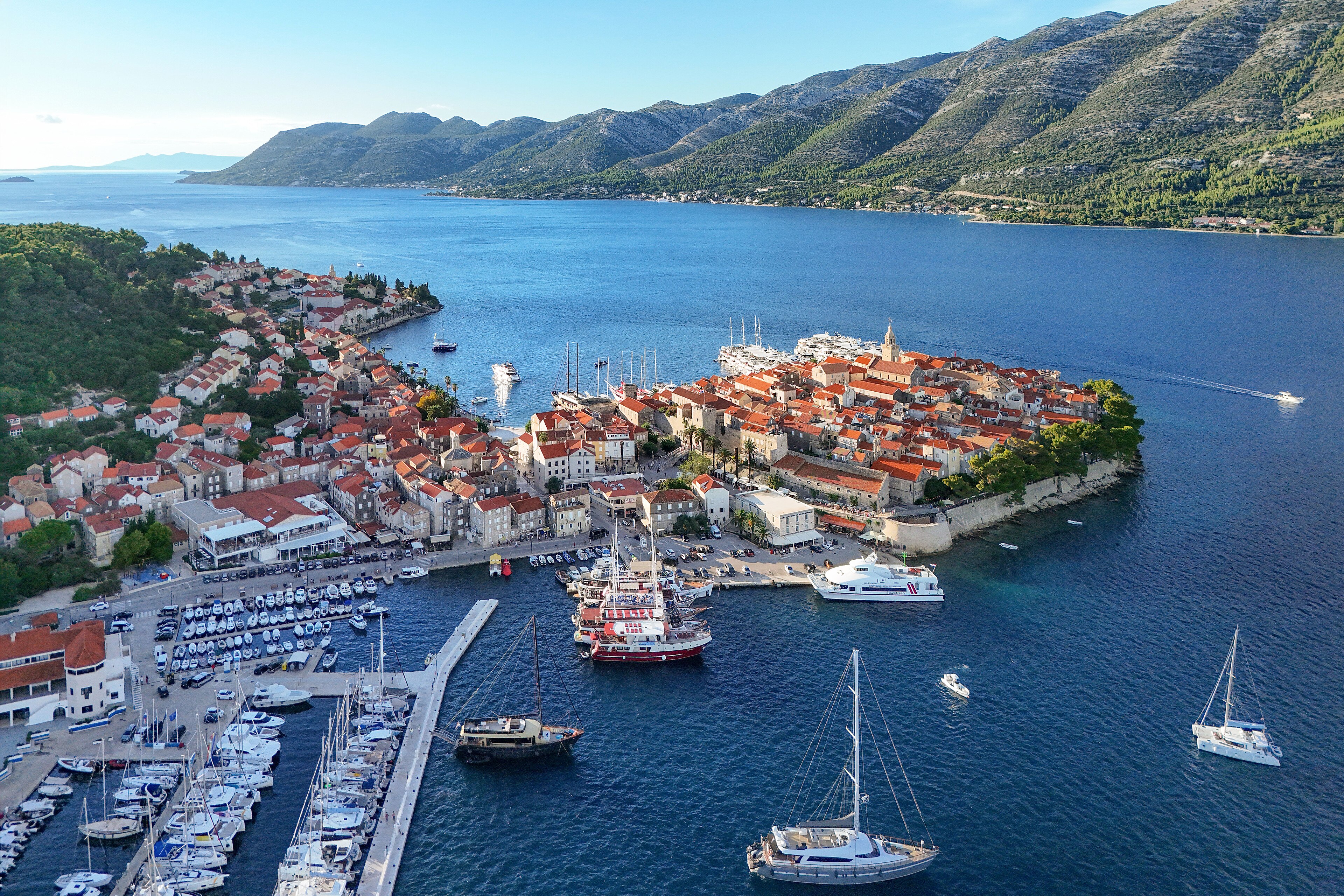
Why Korčula is Perfect for Your Celebration
- Korčula's UNESCO-listed medieval old town provides a naturally cinematic, stone-walled backdrop found nowhere else in the Adriatic
- Warm, reliably sunny summers (May–September) allow fully outdoor ceremonies and receptions on waterfront terraces
- The island's intimate scale creates a sense of exclusivity — a private celebration here feels genuinely secluded
- Strong local wine culture (Pošip and Grk white wines are island specialties) adds authentic Dalmatian character to events
- A well-established summer tourism season means quality catering, boat charters, and event support services are readily available
- Legendary connection to Marco Polo (traditionally said to be born here) adds a unique storytelling element to destination events

Compare Korčula with Other Top Destinations
Frequently Asked Questions
Is Korčula a good destination for a small intimate wedding?
Yes. Korčula is particularly well-suited to intimate weddings, typically for groups of up to around 80–120 guests. Its medieval old town, waterfront terraces, and heritage properties create a naturally romantic atmosphere, and the island's small scale gives a wedding group a genuine sense of exclusivity. It is one of the stronger choices in the Adriatic for couples prioritising setting and atmosphere over large-scale logistics.
What is the best time of year to hold a wedding or celebration in Korčula?
The best season runs from May through September. June and September are particularly popular with event planners — they offer warm, dry Mediterranean weather and long daylight hours while avoiding the peak-summer crowds of July and August. Outside this window, many venues and vendors operate on reduced schedules or close entirely, making event planning significantly more difficult.
How do guests get to Korčula from abroad?
Most international guests fly into either Dubrovnik Airport or Split Airport, both of which have strong European connections during summer. From either city, guests travel to Korčula by ferry or high-speed catamaran. The total journey from a major European hub, including the sea crossing, typically takes several hours, so guests should plan arrival and departure days with buffer time built in.
What kinds of event venues are available in Korčula?
Korčula's venues are primarily heritage-led and boutique in character — restored stone palaces within the old town, waterfront hotel terraces, private villa gardens, and outdoor spaces with direct Adriatic sea views. There are no large purpose-built banquet halls or convention centres. The most distinctive spaces suit smaller, atmospheric gatherings rather than large-scale productions.
How many guests can Korčula realistically accommodate for a destination event?
Korčula works best for events up to roughly 100–150 guests. Beyond that, the island's venue capacity and accommodation inventory become genuinely stretched. For larger groups, spreading guests across multiple properties is often necessary, which adds coordination complexity. Groups significantly larger than 150 guests may find a larger Dalmatian destination more practical.
Is accommodation readily available for a large wedding group in Korčula?
Accommodation is available but limited in total inventory. The island has a range of boutique hotels and heritage properties, but there is no single large resort that can house a big group under one roof. For groups of 50 or more guests, planners typically need to block rooms across several properties and coordinate transfers between them. Booking well in advance — ideally 12 months or more for peak summer — is strongly recommended.
Are there experienced local wedding and event vendors in Korčula?
Yes. Korčula has a mature summer tourism sector and a community of local coordinators, caterers, florists, photographers, and boat charter operators experienced in working with international couples. For highly specialised requirements, some vendors may need to be sourced from Split or Dubrovnik. Engaging a local coordinator early is advisable, as the best vendors book up quickly during peak summer months.
What makes Korčula distinctive as a wedding destination compared to other Croatian islands?
Korčula's medieval walled old town is among the best-preserved in the Adriatic and gives it a genuinely historic, cinematic character. The island also has its own wine heritage — Pošip and Grk white wines are produced here — and cultural traditions like the Moreška sword dance that give guests an authentic local experience. This combination of heritage, culture, and coastal beauty is relatively rare even within Croatia.
Can we host an outdoor ceremony in Korčula, and is the weather reliable?
Yes. Outdoor ceremonies are very well-suited to Korčula during the May–September season. The Mediterranean climate delivers reliably warm, dry conditions with very low rainfall probability during peak summer. Waterfront terraces, old town squares, and garden spaces are all commonly used for outdoor ceremonies and receptions. Weather risk is genuinely low during the curated best season.
Is Korčula suitable for non-wedding celebrations like anniversaries or private group retreats?
Yes. The island's intimate scale, boutique hospitality, and scenic setting make it well-suited to milestone anniversary celebrations, vow renewals, and small private group retreats. The contained geography of the island naturally keeps a group together and creates a shared sense of place, which works particularly well for multi-day celebration programmes.
What local transport options are available for guests once they arrive in Korčula?
Korčula's old town is compact and largely walkable, so most guests staying centrally can reach venues on foot. For guests at properties outside the town centre, local taxis and small shuttle services are available. Private boat charters are popular for moving groups between different points on the island or for sunset excursions. There is no large public bus network, so group transport should be arranged in advance.

Ready to explore venues in Korčula?
Korčula: Destination Wedding & Event Venues on Croatia's Adriatic Coast
◆Korčula is a compact, walled medieval island town on Croatia's Dalmatian Coast, best suited to intimate destination weddings, romantic anniversaries, and small private celebrations. Its primary vibe is romantic and dreamy — stone fortifications, Adriatic sea views, and a genuinely historic old town create a backdrop that is difficult to replicate elsewhere in Europe. The best season runs from May through September, when warm, reliably sunny Mediterranean weather supports fully outdoor events. Guest access requires a ferry or catamaran connection from the mainland, which adds a scenic but logistically involved journey; groups should plan transfers carefully. The hospitality ecosystem is well-developed for summer tourism but operates on a boutique, smaller-scale level rather than a large convention or mass-event model.
Korčula at a Glance
| Category | Detail |
|---|---|
| Best For | Intimate Destination Weddings, Romantic Anniversaries, Private Celebrations, Honeymoon Experiences |
| Primary Vibe | Romantic & Dreamy |
| Other Vibes | Historic & Cultural, Coastal & Scenic, Intimate & Exclusive |
| Best Season | Summer (May, Jun, Jul, Aug, Sep) |
Why Choose Korčula?
- A genuinely unique medieval setting: Korčula's old town is one of the best-preserved medieval walled towns on the Adriatic, with narrow stone lanes, Gothic and Renaissance architecture, and sea-facing bastions that provide a naturally dramatic event backdrop without requiring elaborate decoration.
- Authentic Dalmatian culture and cuisine: The island has its own distinct wine heritage — Pošip and Grk are indigenous white grape varieties produced here — and a strong tradition of fresh seafood and local produce, giving catered events a genuinely regional character rather than a generic hotel-banquet feel.
- Intimate scale and exclusivity: Korčula town is small enough that a wedding group can feel as though they have meaningfully taken over the destination, creating a sense of privacy and occasion that larger, more crowded resort cities cannot offer.
- Reliable summer weather: The Mediterranean climate delivers long, warm, dry days from May through September, with very low rainfall risk during peak summer — a significant practical advantage for outdoor ceremonies and receptions.
- Rich cultural programming: The Moreška sword dance, a centuries-old tradition performed in Korčula, and other local festivals during summer months give guests an authentic cultural experience that extends beyond the event itself.
- Well-established summer tourism infrastructure: Despite its small size, Korčula has a mature summer hospitality sector with experienced local caterers, boat charter operators, florists, and event coordinators who are accustomed to working with international guests.
Which Celebrations Work Best in Korčula?
- Intimate destination weddings: Korčula is particularly well-suited to smaller weddings — typically under 100 guests — where the couple prioritises atmosphere, setting, and a genuinely memorable experience over large-scale logistics. The old town's stone terraces, waterfront promenades, and heritage properties provide ceremony and reception spaces that feel inherently special.
- Romantic anniversaries and vow renewals: The island's combination of seclusion, scenic beauty, and high-quality boutique accommodation makes it an excellent choice for milestone anniversary celebrations or intimate vow renewal ceremonies.
- Private group retreats and celebrations: Small corporate retreats, birthday celebrations, and family reunion gatherings benefit from the island's contained geography, which naturally keeps a group together and creates a shared sense of place.
- Honeymoon experiences: While not an event in the traditional planning sense, Korčula is consistently regarded as one of Croatia's most romantic honeymoon destinations, and couples who marry elsewhere often choose it as a post-wedding retreat.
Venues & Event Spaces
Korčula's venue landscape is defined by its heritage character rather than large-scale purpose-built event infrastructure. The most distinctive spaces are found within or immediately adjacent to the medieval old town — restored stone palaces and heritage properties that have been converted into boutique hotels with private dining rooms, courtyard terraces, and sea-view event spaces. These venues are genuinely atmospheric but are best suited to groups of up to roughly 80–120 guests; they are not designed for large banquets or conference-scale gatherings.
Beyond the old town, the wider island offers waterfront hotel terraces, private villa gardens, and outdoor spaces with direct Adriatic sea views that can accommodate slightly larger groups for cocktail receptions and informal celebrations. Boat charters — ranging from traditional wooden vessels to modern motor yachts — are a popular extension of island events, allowing groups to host sunset cocktail hours or dinner cruises on the water. The overall venue character is boutique, romantic, and heritage-led rather than grand or convention-oriented.
Best Time to Celebrate
The curated best season for events in Korčula runs from May through September, and this reflects the island's Mediterranean climate in practical terms. May and June offer warm temperatures, long daylight hours, and significantly lower visitor density than peak July and August — making them particularly attractive for couples who want the full summer experience without the most crowded conditions. July and August are the warmest months, with sea temperatures ideal for swimming and outdoor activities, but the island is at its busiest and accommodation should be secured well in advance. September is widely regarded as one of the finest months — the summer heat softens slightly, the Adriatic remains warm, and the island begins to quiet down, creating a more relaxed and intimate atmosphere.
Outside this window, the picture changes considerably. October and April are mild shoulder months where some hospitality businesses remain open, but a meaningful number of restaurants, boat operators, and smaller hotels close for the off-season, reducing the options available to event planners. November through March brings cooler, wetter weather, reduced ferry frequency, and a largely dormant tourism infrastructure — the island is genuinely quiet in a way that makes hosting a multi-day event group logistically challenging. Events planned for the off-season should account for significantly reduced vendor availability and the possibility that preferred venues may not be operating.
Getting There & Local Connectivity
Korčula is an island, and reaching it always involves a water crossing — this is both part of its charm and a genuine logistical consideration for event planners. The two most practical mainland gateways are Dubrovnik and Split, both of which have international airports with strong European connections during the summer season. From either city, guests travel to Korčula by ferry or high-speed catamaran; journey times vary depending on the route and vessel type, but guests should generally plan for a total travel time of several hours from a major European hub including the crossing.
Within Korčula itself, the old town is compact and walkable — most guests staying in or near the town centre will find that the majority of event venues, restaurants, and points of interest are accessible on foot. For guests staying at properties slightly outside the old town, local taxis and small shuttle services are available, though the island does not have a large public transport network. For multi-day events, coordinating group ferry transfers and local transport in advance is strongly recommended, as ad-hoc arrangements during peak summer can be unreliable. Private boat charters are a popular and practical solution for moving groups between the island and the mainland or between different points on the island itself.
Local Vendor & Hospitality Ecosystem
Korčula has a well-developed but boutique-scale vendor ecosystem that has grown alongside its summer tourism industry. Local wedding and event coordinators with experience handling international couples are available on the island, and many have established relationships with florists, photographers, musicians, and catering teams who work regularly in the Dalmatian region. The quality of local seafood and regional produce is genuinely high, and several catering operators specialise in Dalmatian cuisine that can be adapted for formal event menus.
That said, the ecosystem is smaller than what planners would find in a major European city or a larger Croatian destination. For very large events or highly specialised requirements — elaborate floral installations, large production teams, specific international cuisine — some vendors may need to be brought in from Split, Dubrovnik, or further afield, which adds logistical complexity. Planners working on events in Korčula for the first time are generally advised to engage a local coordinator early in the process, as the island's vendor community operates on relationships and advance booking, particularly during the peak summer months when demand is high.
Pros & Things to Consider
Why Korčula Works Well
- One of the most visually distinctive and genuinely romantic event settings in the Mediterranean
- Reliable, warm, dry summer weather with very low rainfall risk during the best season
- Authentic local culture, cuisine, and wine heritage that enriches the guest experience
- Intimate island scale creates a natural sense of exclusivity and togetherness for event groups
- Experienced local hospitality and event vendor community during the summer season
- Strong European flight connections to both Dubrovnik and Split during summer, making international guest travel manageable
Things to Consider
- Island access via ferry or catamaran adds complexity to guest logistics, particularly for elderly guests or those with mobility considerations
- Venue capacity is inherently limited — the island is not suited to large weddings or events exceeding roughly 100–150 guests without significant logistical effort
- Peak July and August bring high visitor numbers; the old town can feel crowded, and accommodation must be booked very far in advance
- Off-season hospitality infrastructure is significantly reduced — events outside May–September face real constraints on vendor and venue availability
- The island's boutique character means there is limited large-scale accommodation inventory; housing a large guest group may require spreading guests across multiple properties
When Korčula May Not Be the Right Fit
- Large guest lists: Groups significantly exceeding 100–120 guests will find that Korčula's venue inventory and accommodation capacity are genuinely stretched; a larger Dalmatian city or resort destination would serve better.
- Guests with limited mobility or travel flexibility: The mandatory ferry crossing and the old town's cobbled stone streets can present real challenges for guests with mobility difficulties or those who find multi-leg travel arrangements stressful.
- Events planned outside the May–September window: Couples or planners set on a winter, early spring, or late autumn date will find significantly reduced venue availability, fewer active vendors, and a quieter island atmosphere that may not match the vibrant Adriatic experience they are seeking.
- Groups requiring large-scale production or convention-style infrastructure: Korčula has no large conference centres, ballrooms, or purpose-built event halls; groups needing that kind of infrastructure should look to Split or Dubrovnik instead.