
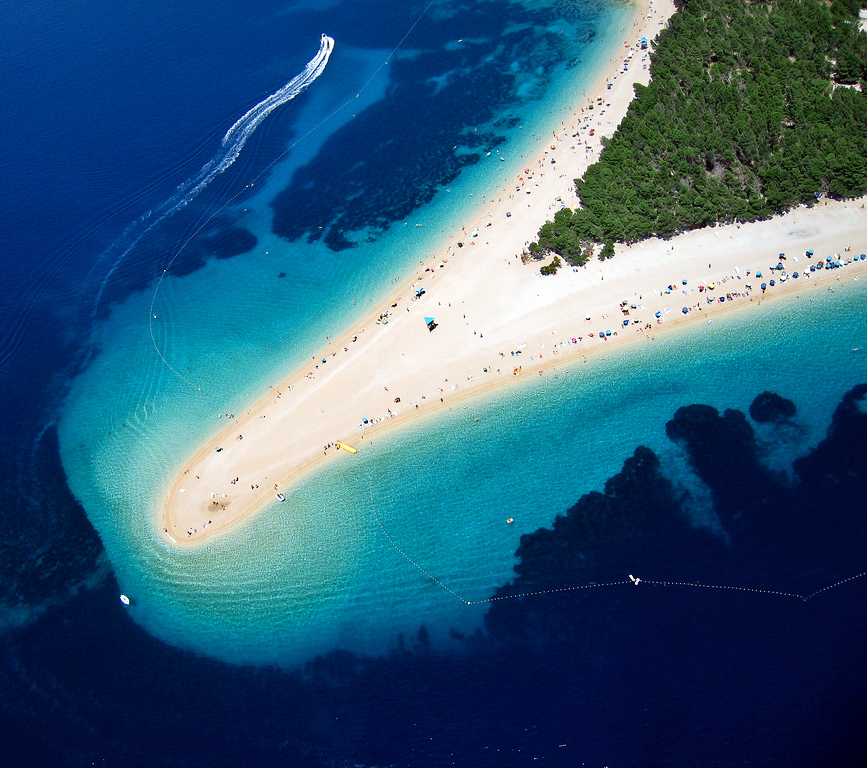
Why Brač is Perfect for Your Celebration
- Zlatni Rat beach and dramatic limestone coastline create an unmatched natural ceremony backdrop
- Authentic Dalmatian stone villages like Bol and Supetar offer intimate, photogenic settings
- Warm, reliably sunny summers (May–Sep) with long golden-hour evenings ideal for outdoor events
- Boutique hotels and private villa estates provide exclusive-use options for small to mid-size groups
- Fresh local seafood, Dalmatian wine, and olive oil traditions make catering a genuine highlight
- Island exclusivity naturally limits uninvited foot traffic, giving celebrations a private, contained feel

Compare Brač with Other Top Destinations
Frequently Asked Questions
Is Brač a good destination for a wedding?
Yes, particularly for intimate weddings of 30–150 guests. Brač offers a genuinely spectacular Adriatic setting — Zlatni Rat beach, limestone villages, and sea views — combined with a well-developed summer hospitality infrastructure. It suits couples who want a distinctly Mediterranean, visually dramatic celebration rather than a large-scale conventional venue. The island's natural exclusivity and strong local food culture make it a memorable choice.
How many guests can realistically be accommodated for an event on Brač?
Brač comfortably supports events of up to roughly 200–250 guests when accommodation is spread across multiple properties in Bol, Supetar, and nearby villages. For events above that size, the island's venue and accommodation inventory becomes genuinely stretched, and a mainland Dalmatian destination may be more practical. Smaller groups of 30–100 guests are where the island's boutique properties work most naturally.
What is the best time of year to hold a wedding or celebration on Brač?
May through September is the curated best season. June and September are particularly popular for events — the weather is reliably warm and sunny, the sea is swimmable, and the island is fully operational without the peak-August crowds. July and August offer maximum sunshine but require booking venues and accommodation 12–18 months in advance. Outside this window, many venues and ferry services reduce significantly or close.
How do guests get to Brač?
Most guests fly into Split Airport, which has direct summer connections from across Europe. From Split, a car ferry to Supetar takes approximately 50 minutes, and a catamaran to Bol takes a similar time. There is no railway connection to the island. During summer, ferries run frequently throughout the day, making the crossing manageable for groups arriving in waves. Private transfers on the island are the standard solution for moving guests between port, accommodation, and venue.
What kinds of venues are available for events on Brač?
The island offers seafront resort hotels with event terraces and garden lawns, historic stone courtyards and village squares, private villa estates with pools and sea views, and traditional konoba-style restaurants for smaller dinners. There are no large convention centres or ballroom-style facilities. The venue character is consistently boutique and Mediterranean, which suits intimate celebrations but limits very large-scale events.
Is it practical to organise group accommodation for a wedding on Brač?
Yes, though it requires planning. For groups up to around 100–150 guests, a single hotel property in Bol or Supetar can often accommodate the majority of the group. Larger groups will need accommodation spread across multiple properties in different villages, which makes coordinated transfer logistics essential. Booking 12–18 months ahead for summer weekends is strongly advisable, as the island's total accommodation inventory is finite.
What is the local food and catering like for events on Brač?
Dalmatian cuisine is a genuine event asset on Brač. Local caterers and restaurants can deliver high-quality menus built around fresh Adriatic seafood, local lamb, Plavac Mali wine, and Brač olive oil. The regional food culture gives catering a strong sense of place that guests consistently find memorable. For larger or more elaborate catering requirements, Split-based suppliers are commonly brought in alongside local operators.
Are there local wedding and event planners experienced with Brač?
Yes. A community of local and Split-based event planners specialises in Dalmatian island weddings and is familiar with Brač's specific logistics — ferry coordination, island transfers, venue relationships, and seasonal supplier availability. For couples planning from abroad, working with a planner who has existing island contacts significantly reduces coordination complexity and lead time for vendors.
What makes Brač different from a mainland Dalmatian wedding venue?
The island setting itself is the defining difference. The ferry crossing creates a natural threshold that gives the celebration a genuinely destination feel — guests arrive somewhere distinct, not just a different city. The combination of Zlatni Rat beach, stone village architecture, and Adriatic sea views is specific to Brač and cannot be replicated on the mainland. The trade-off is the additional logistical step of the crossing and a smaller overall venue inventory.
Is Brač suitable for a corporate retreat or incentive travel event?
Yes, for small groups. Brač works well for executive retreats and incentive travel groups of 20–80 people who want a distinctive, non-generic European setting. The island's relative seclusion, quality local dining, and outdoor activities — sailing, hiking, cycling — make it a credible choice. It is not suited to large-scale corporate conferences requiring dedicated AV infrastructure and breakout rooms at scale.
How far in advance should we book a wedding venue on Brač?
For summer weekend dates — particularly June, July, and September — booking 12–18 months in advance is strongly recommended. The island's most popular venues and accommodation properties fill early, especially for Saturday dates. May and early June offer slightly more flexibility, but the general principle of early commitment applies across the whole summer season given the finite inventory of quality event spaces.

Ready to explore venues in Brač?
Brač: Destination Wedding & Celebration Venues on Croatia's Dalmatian Island
◆Brač is a Dalmatian island off Croatia's Adriatic coast, best suited to intimate weddings, private celebrations, and small corporate retreats that benefit from a naturally exclusive, visually dramatic setting. Its primary vibe is romantic and dreamy — shaped by turquoise sea, limestone architecture, olive groves, and the famous Zlatni Rat beach near Bol. The island's hospitality infrastructure is well-developed for summer (May through September), when the climate is reliably warm and sunny. Access requires a ferry or catamaran crossing from Split, which adds a scenic but logistically real step for guests. The venue inventory skews toward boutique hotels and private properties rather than large-scale convention facilities, making Brač most naturally suited to groups of up to roughly 200–300 guests.
Brač at a Glance
| Category | Detail |
|---|---|
| Best For | Intimate weddings, honeymoon celebrations, private parties, small corporate retreats |
| Primary Vibe | Romantic & Dreamy |
| Other Vibes | Coastal, Rustic-Elegant, Secluded, Mediterranean |
| Best Season | Summer (May, Jun, Jul, Aug, Sep) |
Why Choose Brač?
- Zlatni Rat as a ceremony backdrop: The island's iconic pebble spit, which shifts shape with the currents, is one of the most photographed natural features in the Adriatic — a genuinely rare and memorable setting for outdoor ceremonies.
- Authentic Dalmatian stone architecture: Villages like Bol, Supetar, Pučišća, and Škrip offer centuries-old stone buildings, narrow lanes, and church squares that provide a naturally photogenic, heritage-rich environment without requiring elaborate décor.
- Island exclusivity: Because Brač is an island, celebrations feel naturally contained and private. Uninvited foot traffic is minimal compared to mainland city venues, and the ferry crossing itself becomes part of the guest experience.
- Reliable summer climate: From May through September, Brač enjoys some of the most consistent sunshine in the Mediterranean, with long evenings and warm sea temperatures that make outdoor events genuinely comfortable and predictable.
- Strong local food and wine culture: Dalmatian cuisine — fresh seafood, local lamb, Plavac Mali wine, and Brač olive oil — is a genuine event asset. Local caterers and konoba-style restaurants can deliver high-quality, regionally distinctive menus that become a talking point for guests.
- Boutique and exclusive-use options: The island's accommodation landscape includes several properties that can be partially or fully taken over for a wedding group, giving planners a level of control and intimacy that larger resort destinations rarely offer.
Which Celebrations Work Best in Brač?
- Intimate destination weddings: Brač is particularly well-suited to weddings of 30–150 guests who want a visually spectacular, genuinely remote-feeling setting without sacrificing quality hospitality. The combination of sea views, stone architecture, and local cuisine makes the island a strong choice for couples seeking something distinctly Mediterranean rather than conventionally grand.
- Honeymoon and anniversary celebrations: The island's romantic character — secluded coves, sunset dinners, and a relaxed pace — makes it a natural fit for smaller, more personal milestone events where atmosphere matters more than scale.
- Private birthday and milestone parties: Groups of friends or family looking for a memorable summer gathering benefit from the island's combination of beach access, good restaurants, and boutique accommodation that can be clustered around a single venue.
- Small corporate retreats and team events: The island's relative seclusion, combined with its well-developed summer hospitality infrastructure, makes it a credible choice for small executive retreats or incentive travel groups that want a distinctive, non-generic European setting.
Venues & Event Spaces
Brač's event venue landscape is defined by its Mediterranean character rather than by large-scale convention infrastructure. The most common venue types include:
- Seafront resort hotels: Several established hotel properties in Bol and Supetar offer dedicated event terraces, garden lawns, and indoor banquet spaces with direct sea views. These are the island's most reliably equipped venues for structured celebrations with catering, AV, and accommodation under one roof.
- Heritage stone buildings and courtyards: Older village properties — including renovated stone houses, church squares, and historic estate courtyards — can be hired for ceremonies and receptions, offering an authentically Dalmatian atmosphere that modern purpose-built venues cannot replicate.
- Private villa estates: The island has a growing inventory of privately owned villa properties with gardens, pools, and sea-view terraces that can be rented exclusively for a celebration. These suit smaller, more intimate groups and offer the highest degree of personalisation.
- Outdoor beach and clifftop settings: For ceremonies specifically, the island's coastline — including areas near Zlatni Rat and quieter coves around Bol and Milna — provides natural outdoor settings that require minimal staging to be visually extraordinary.
- Traditional konoba dining venues: For rehearsal dinners, welcome parties, or post-wedding lunches, the island's traditional tavern-style restaurants offer long communal tables, local wine, and a convivial atmosphere that works well for groups of 20–60 guests.
Best Time to Celebrate
The curated best season for events on Brač is May through September, and this reflects the island's genuine operational and climatic reality rather than a conservative estimate.
- May and June offer warm but not oppressive temperatures, lower tourist density than peak summer, and the full bloom of the island's vegetation — making them particularly attractive for couples who want good weather without the August crowds.
- July and August are the peak months: maximum sunshine, warmest sea temperatures, and the island's hospitality infrastructure operating at full capacity. The trade-off is higher visitor numbers in public areas and the need to book venues and accommodation well in advance — typically 12–18 months ahead for a wedding.
- September is widely regarded as one of the best months for events: the summer heat softens slightly, the sea remains warm from months of sun, tourist numbers begin to thin, and the light takes on a golden quality that photographers particularly value.
- October through April are genuinely unsuitable for most outdoor events. Many hotels, restaurants, and ferry services reduce their schedules significantly or close entirely from late October. Rainfall increases, temperatures drop to single figures in winter, and the island's event infrastructure is largely dormant. Planning a celebration outside the May–September window requires careful verification that specific venues and services will actually be operational.
Getting There & Local Connectivity
Brač is an island, and all guest arrivals involve a water crossing — this is the single most important logistical fact for any event planner to communicate clearly to guests.
- By air: The nearest international airport is Split Airport, which receives direct flights from major European cities throughout the summer season. From Split, guests travel to the port and board a ferry or catamaran to Supetar (the island's main town) or, via catamaran, directly to Bol. The sea crossing takes approximately 50 minutes by car ferry to Supetar, or around 50–60 minutes by catamaran to Bol.
- Ferry frequency: During summer, car ferries between Split and Supetar run frequently throughout the day, making the crossing manageable for large groups arriving in waves. Catamarans to Bol are less frequent and do not carry vehicles, so guests travelling with luggage need to plan accordingly.
- On the island: Brač has a limited public bus network connecting its main settlements. For event groups, private minibus or taxi transfers are the practical solution for moving guests between the ferry port, accommodation, and venue. This is a standard part of event logistics on the island and local operators are experienced with it.
- No railway access: There is no rail connection to Brač. All guests arrive by sea, either from Split or, less commonly, from other Dalmatian ports.
- Driving on the island: Guests who bring or hire a car on the island will find roads adequate but narrow in places, particularly in older village centres. Parking near popular venues in Bol can be limited during peak summer.
Local Vendor & Hospitality Ecosystem
Brač has a well-established summer tourism economy, and its vendor ecosystem for events is more developed than many comparably sized Mediterranean islands — though it remains boutique in scale rather than metropolitan.
- Catering and food: Local caterers and restaurant operators are experienced with group dining and can deliver high-quality Dalmatian menus. The island's own produce — olive oil, local fish, lamb, and wine from the broader Dalmatia region — gives catering a genuine sense of place.
- Wedding and event planners: A small but experienced community of local and Split-based event planners specialises in Dalmatian island weddings. Many have established relationships with island venues, florists, and transport operators, which simplifies coordination for couples planning from abroad.
- Floristry and décor: Local florists operate on the island during summer, though for larger or more elaborate installations, suppliers from Split are commonly brought in. This is standard practice and well-understood by local planners.
- Photography and music: The island attracts a strong pool of Croatian and international wedding photographers during summer, drawn by the quality of the light and the scenery. Live music — from traditional klapa vocal groups to contemporary bands — is available and adds an authentically Dalmatian dimension to celebrations.
- Accommodation capacity: The island's total accommodation inventory is sufficient for small to mid-size wedding groups, but for larger events (150+ guests), accommodation will need to be spread across multiple properties in different villages, which requires careful coordination of transfers.
Pros & Things to Consider
Why Brač Works Well
- Genuinely spectacular natural scenery — Zlatni Rat, limestone cliffs, and turquoise water — that elevates event photography without additional staging
- Authentic Dalmatian culture, cuisine, and architecture give celebrations a strong sense of place
- Island setting creates natural exclusivity and a contained, private atmosphere for guests
- Reliable, long summer season (May–September) with predictable sunshine and warm evenings
- Experienced local event and hospitality professionals who understand the specific logistics of island celebrations
- Strong air connectivity to Split from across Europe during summer, making international guest travel straightforward
Things to Consider
- The ferry crossing is a non-negotiable logistical step — guests with mobility challenges, heavy luggage, or travel anxiety may find it more demanding than a mainland venue
- Venue capacity is limited: the island does not have large-scale banquet or convention facilities, and events above roughly 250–300 guests will strain the available inventory
- Peak summer (July–August) brings significant tourist numbers to public areas, which can affect the sense of exclusivity in shared spaces like beaches and village squares
- Advance booking is essential — popular venues and accommodation fill 12–18 months ahead for summer weekends
- Off-season events (October–April) are largely impractical due to reduced ferry services, venue closures, and cooler, wetter weather
- Importing specialist vendors (large floral installations, specific entertainment acts, specialist AV equipment) from the mainland adds logistical complexity and lead time
When Brač May Not Be the Right Fit
- Large guest lists: Groups significantly above 200–250 guests will find the island's accommodation and venue inventory genuinely stretched. A mainland Dalmatian city or a larger resort destination would serve better at that scale.
- Guests with significant mobility or travel limitations: The ferry crossing, combined with the island's hilly terrain and cobbled village streets, can present real challenges for elderly guests or those with mobility impairments. A more accessible mainland venue may be a more considerate choice.
- Events planned outside May–September: If the preferred date falls in autumn or winter, Brač is unlikely to be operational in the way the couple envisions. The island's hospitality infrastructure is genuinely seasonal, and attempting an event outside the summer window requires extensive verification and carries real risk of limited services.
- Guests travelling from outside Europe with complex connections: While Split Airport is well-connected within Europe, guests flying intercontinentally face a multi-leg journey. For a guest group that is predominantly non-European, a destination with a major international hub airport may reduce travel fatigue and attrition.