
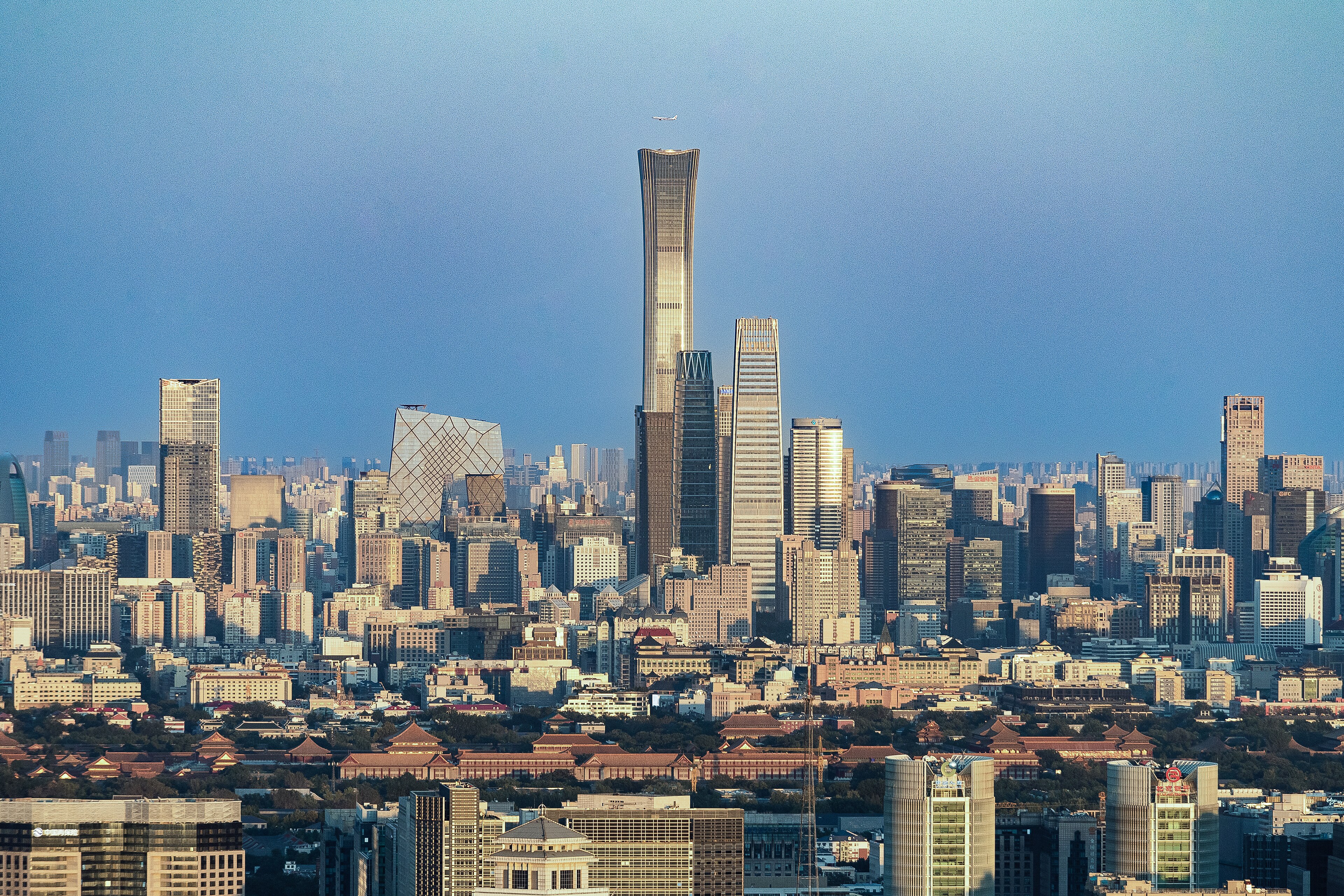
Why Beijing is Perfect for Your Celebration
- Iconic imperial landmarks — the Forbidden City, Summer Palace, and Temple of Heaven — create unmatched ceremonial backdrops
- World-class luxury hotel inventory with grand ballrooms capable of hosting hundreds of guests
- Exceptional international air connectivity via two major international airports serving guests from across Asia, Europe, and beyond
- Spring (Apr–May) and autumn (Sep–Oct) offer crisp, clear weather perfect for outdoor ceremonies and garden receptions
- Mature, sophisticated event vendor ecosystem with experienced international-standard caterers, florists, and AV specialists
- High-speed rail links make Beijing easily reachable for domestic guests from Shanghai, Xi'an, and other major Chinese cities

Compare Beijing with Other Top Destinations
Frequently Asked Questions
Is Beijing a good destination for a wedding celebration?
Yes. Beijing is particularly well-suited to destination weddings that prioritise cultural grandeur, visual drama, and premium hospitality. The city's imperial heritage landmarks, classical garden settings, and deep inventory of luxury hotel ballrooms create a range of ceremony and reception environments that are genuinely distinctive. It works best for couples comfortable with an international travel context and a culturally immersive experience for their guests.
What is the best time of year to hold an event in Beijing?
April, May, September, and October are the optimal months. Spring and autumn bring mild temperatures, low humidity, and reliably clear skies — conditions that suit both outdoor ceremonies and formal indoor receptions. Summer (June–August) is hot, humid, and prone to heavy rain, while winter (November–March) brings freezing temperatures and occasional air quality episodes that make outdoor events impractical.
How easy is it for international guests to travel to Beijing?
Very easy in terms of flight connectivity. Beijing is served by two international airports — Beijing Capital (PEK) and Beijing Daxing (PKX) — with direct routes from across Asia, Europe, North America, and the Middle East. The main practical consideration for international guests is the Chinese visa requirement; event planners should build sufficient lead time into the guest communication timeline to allow for visa processing.
How do domestic guests from other Chinese cities typically travel to Beijing for an event?
China's high-speed rail network makes Beijing highly accessible from most major domestic cities. Direct high-speed services connect Beijing to Shanghai (approximately 4–5 hours), Xi'an, Chengdu, Tianjin, and many other cities, making train travel a comfortable and practical alternative to flying for domestic guests. Beijing's two airports also handle extensive domestic routes for guests travelling from cities not on the rail network.
What kinds of venues are available for events in Beijing?
Beijing offers a wide range of event spaces: grand ballrooms and landscaped courtyards within internationally branded luxury hotels, heritage-adjacent properties set beside classical imperial gardens, boutique courtyard venues in the historic hutong districts for smaller gatherings, and purpose-built convention facilities for very large-scale corporate events. The hotel sector is particularly strong, with many properties offering multiple event spaces under one roof.
What guest group sizes can Beijing venues realistically accommodate?
Beijing's event infrastructure comfortably scales from intimate gatherings of 50 or fewer guests in boutique courtyard properties up to large-scale celebrations of 500–800 guests in the grand ballrooms of the city's leading luxury hotels. For very large corporate conferences or multi-day events requiring extensive breakout space, the city's convention facilities can accommodate significantly larger numbers.
How is local transport for guests once they arrive in Beijing?
Beijing has one of the world's most extensive metro networks, connecting airports, major hotel districts, and key landmarks efficiently. For event groups, private coach transfers between hotels, venues, and airports are widely available and routinely arranged by local event coordinators. Traffic congestion in central Beijing can be significant during peak hours, so group transfer schedules benefit from careful planning with coordinators who know the city's traffic patterns well.
Is the local event vendor and hospitality ecosystem in Beijing capable of handling international-standard events?
Yes, genuinely so. Beijing's vendor ecosystem has been shaped by decades of hosting state banquets, international summits, and the 2008 Olympic Games. The city has experienced professionals across catering, AV production, floral design, event management, and guest logistics. The leading luxury hotels all have dedicated multilingual event teams. For events involving external vendors, a bilingual local coordinator is strongly recommended to manage communication effectively.
Are there any internet or communication considerations for planning an event in Beijing?
Yes — this is a practical planning factor. China's internet environment restricts access to many commonly used international platforms, including Google Workspace, WhatsApp, and Instagram. Event planners coordinating remotely with Beijing-based vendors should factor in the use of local alternatives (WeChat is the primary business communication tool in China) and consider VPN access for their own use during the planning process.
What makes Beijing particularly suitable for corporate events and conferences?
Beijing's long history of hosting international diplomatic and business events has produced a hotel and convention infrastructure that is exceptionally well-equipped for corporate gatherings. Large-capacity pillar-free ballrooms, simultaneous interpretation facilities, professional AV infrastructure, and experienced multilingual event teams are standard at the city's leading properties. The city's cultural programme options — Great Wall excursions, imperial cuisine dinners, hutong experiences — also make it strong for multi-day corporate retreats.
What cultural experiences can be incorporated into a multi-day event programme in Beijing?
Beijing offers an extraordinary range of curated guest experiences that can be woven into a multi-day event programme: Great Wall excursions, guided tours of the Forbidden City and Summer Palace, traditional hutong cultural walks, imperial cuisine banquets, Peking opera performances, and traditional arts workshops. These experiences are well-established in the local tourism and event industry and can be arranged at scale for large guest groups through experienced local operators.
Is Beijing suitable for outdoor ceremonies and garden receptions?
Yes, but season-dependent. During April–May and September–October, Beijing's weather is reliably mild and clear, making outdoor ceremonies in hotel gardens, classical garden settings, and temple-adjacent spaces genuinely beautiful and practical. Outside these windows — particularly in summer (heat and heavy rain) and winter (freezing temperatures) — outdoor events carry significant weather risk and require robust indoor contingency planning.

Ready to explore venues in Beijing?
Beijing: Destination Wedding & Corporate Event Venues in China's Imperial Capital
◆Beijing is one of Asia's most powerful event destinations, combining imperial-scale heritage landmarks with a deep inventory of internationally branded luxury hotels and a fully mature event vendor ecosystem. Its primary vibe is Cultural & Timeless — rooted in dynastic grandeur, classical gardens, and centuries of ceremonial tradition. The destination suits corporate conferences, gala dinners, large weddings, and cultural festivals particularly well. Spring (April–May) and autumn (September–October) are the clear optimal windows, offering mild temperatures and clear skies. International accessibility is exceptional, with two major airports and an extensive high-speed rail network serving the city.
Beijing at a Glance
| Category | Detail |
|---|---|
| Best For | Destination Weddings, Corporate Events, Gala Dinners, Cultural Festivals |
| Primary Vibe | Cultural & Timeless |
| Other Vibes | Imperial, Grand, Heritage-Rich |
| Best Season | Spring (Apr, May, Sep, Oct) |
Why Choose Beijing?
- Unrivalled imperial heritage as a backdrop: No other city in Asia offers the ceremonial weight of the Forbidden City, the Summer Palace, the Temple of Heaven, and the Great Wall — all within reach of a single event base. These landmarks lend an inherently dramatic, once-in-a-lifetime quality to any celebration held in their proximity.
- Deep luxury hotel inventory: Beijing hosts one of the densest concentrations of internationally branded five-star hotels in Asia, with grand ballrooms, landscaped courtyards, and dedicated event wings capable of accommodating guest lists ranging from intimate gatherings to large-scale multi-day celebrations.
- Exceptional international and domestic connectivity: Two international airports — Beijing Capital (PEK) and Beijing Daxing (PKX) — serve direct routes from across Asia, Europe, North America, and the Middle East. High-speed rail connects Beijing to Shanghai, Xi'an, Chengdu, and dozens of other major Chinese cities, making domestic guest travel straightforward.
- Mature, internationally experienced event vendor ecosystem: Decades of hosting state banquets, international summits, and the Olympic Games have produced a vendor community — caterers, florists, AV specialists, event designers, and logistics coordinators — that routinely operates at the highest international standards.
- Distinct seasonal character: Spring and autumn in Beijing are genuinely beautiful — clear blue skies, comfortable temperatures, and (in autumn) vivid foliage across the city's classical gardens and temple grounds — providing a naturally photogenic environment that requires minimal additional decoration.
- Cultural depth for multi-day programmes: For corporate retreats or wedding weekends, Beijing offers an extraordinary range of curated guest experiences — Great Wall excursions, hutong cultural walks, imperial cuisine dinners, and traditional arts performances — that elevate a multi-day event programme well beyond the venue itself.
Which Celebrations Work Best in Beijing?
- Destination Weddings: Beijing's combination of imperial grandeur, luxury hotel infrastructure, and world-class catering makes it particularly compelling for couples seeking a culturally resonant, visually dramatic wedding. Classical garden settings and palatial hotel ballrooms offer a range of ceremony and reception environments that few cities can match.
- Corporate Conferences & Summits: The city's long history of hosting international diplomatic and business events means its hotels and convention facilities are exceptionally well-equipped for large-scale corporate gatherings. Breakout spaces, simultaneous interpretation infrastructure, and high-capacity banquet halls are standard at the city's leading properties.
- Gala Dinners & Award Ceremonies: The grandeur of Beijing's luxury hotel ballrooms — many with soaring ceilings, classical Chinese architectural detailing, and professional AV infrastructure — makes the city a natural fit for high-profile gala evenings and formal award ceremonies.
- Cultural Festivals & Brand Activations: Beijing's status as China's cultural capital, combined with its rich calendar of traditional festivals and its sophisticated urban audience, makes it an effective location for brand activations, product launches, and cultural festival events that benefit from an imperial heritage context.
- Anniversary & Milestone Celebrations: For significant personal or corporate milestones, Beijing's combination of iconic backdrops and premium hospitality creates a genuinely memorable setting — particularly for guests travelling internationally who will experience the city's heritage as part of the celebration itself.
Venues & Event Spaces
Beijing's event venue landscape is dominated by the grand ballrooms and landscaped courtyards of its internationally branded luxury hotels, which collectively represent one of the most capable event infrastructures in Asia. These properties typically offer multiple event spaces within a single building — from intimate private dining rooms to pillar-free ballrooms accommodating several hundred guests — allowing complex multi-function programmes to be managed within one venue.
Beyond the hotel sector, Beijing offers a distinctive category of heritage-adjacent venues: properties set within or immediately beside classical imperial gardens, where guests can hold ceremonies against a backdrop of traditional Chinese architecture, ornamental lakes, and ancient pavilions. These settings are particularly sought after for wedding ceremonies and formal dinners where visual impact is a priority.
The city also has a growing stock of purpose-built convention and exhibition centres for very large-scale corporate events, as well as a number of boutique courtyard properties — converted traditional siheyuan (courtyard houses) in the historic hutong districts — that suit smaller, more intimate gatherings seeking an authentic cultural atmosphere rather than international hotel scale.
Outdoor event spaces, including hotel gardens, temple forecourts (where permitted), and lakeside terraces, are particularly well-suited to the spring and autumn seasons, when Beijing's weather is reliably mild and clear.
Best Time to Celebrate
The curated best season for events in Beijing is Spring (April, May) and Autumn (September, October) — and this recommendation is well-grounded in the city's actual climate character.
April and May bring mild daytime temperatures, low humidity, and reliably clear skies. Spring blossoms — particularly in the city's classical gardens and temple grounds — add natural colour and beauty to outdoor ceremonies. Temperatures are comfortable for guests in formal attire, and the risk of rain is relatively low compared to the summer months.
September and October are widely considered Beijing's finest months. Summer heat and humidity have passed, the air is typically clear and dry, and the city's parks and garden venues take on vivid autumn foliage. October in particular offers some of the most photogenic conditions of the year, with golden light and crisp temperatures that suit both outdoor ceremonies and evening receptions.
June through August is significantly less suitable for events. Beijing's summers are hot and humid, with temperatures regularly exceeding 30°C and a concentrated rainy season (particularly July and August) that brings heavy downpours. Outdoor events face real weather risk, and the heat makes formal attire uncomfortable for guests.
November through March presents a different set of challenges. Beijing winters are genuinely cold — temperatures frequently drop well below freezing, and the city can experience significant air quality episodes during the heating season. While indoor events remain entirely feasible, outdoor ceremonies and garden receptions are generally impractical, and the overall atmosphere is considerably less welcoming for guests travelling from warmer climates.
Getting There & Local Connectivity
Beijing is among the best-connected cities in Asia for international event guests. Beijing Capital International Airport (PEK), located approximately 25 km northeast of the city centre, serves an extensive network of direct international routes across Asia, Europe, North America, and the Middle East. Beijing Daxing International Airport (PKX), located further south of the city, handles a growing share of both domestic and international traffic and is particularly well-connected to southern China and Southeast Asia.
For domestic guests, Beijing's position at the hub of China's high-speed rail network is a significant advantage. Direct high-speed services connect Beijing to Shanghai (approximately 4–5 hours), Xi'an, Chengdu, Tianjin, and dozens of other major cities, making train travel a practical and comfortable option for guests who prefer it to flying.
Within the city, Beijing's extensive metro network — one of the largest in the world — connects the airport, major hotel districts, and key landmarks efficiently. For event groups, private coach transfers between hotels, venues, and airports are widely available and routinely arranged by the city's experienced event logistics providers. Traffic congestion in central Beijing can be significant during peak hours, so transfer schedules for large groups benefit from careful planning with local coordinators who understand the city's traffic patterns.
Local Vendor & Hospitality Ecosystem
Beijing's event vendor ecosystem is genuinely world-class, shaped by decades of hosting state-level banquets, international diplomatic summits, the 2008 Olympic Games, and a continuous flow of high-profile corporate and cultural events. The city has a deep bench of experienced professionals across every event discipline — catering, floral design, AV and lighting production, event management, photography, entertainment, and guest logistics.
International event management companies maintain offices in Beijing, and many of the city's leading luxury hotels have dedicated in-house event teams with multilingual staff experienced in working with international clients. Catering standards at the top tier are consistently high, with the ability to deliver both traditional Chinese banquet cuisine and international menus at scale.
One practical consideration for international planners is the internet environment: China's firewall restricts access to many commonly used international platforms (Google Workspace, WhatsApp, Instagram, and others), which can affect real-time communication and coordination during the planning process. Experienced local partners and the use of appropriate tools (such as WeChat for domestic communication) are important for smooth remote collaboration.
Language is another factor worth planning around: while the leading luxury hotels all have English-speaking event staff, communication with local vendors outside the hotel ecosystem may require Mandarin-speaking coordination support. Engaging a bilingual local event coordinator is strongly recommended for any event that involves multiple external suppliers.
Pros & Things to Consider
Why Beijing Works Well
- Unmatched imperial heritage backdrops — the Forbidden City, Summer Palace, Great Wall, and Temple of Heaven are globally iconic
- One of Asia's deepest concentrations of internationally branded luxury hotels with large-scale event infrastructure
- Exceptional international air connectivity via two major airports with direct routes from across the globe
- Mature, internationally experienced event vendor and hospitality ecosystem
- Spring and autumn seasons offer genuinely beautiful, clear-sky conditions ideal for outdoor ceremonies
- Rich multi-day guest programme options — cultural excursions, imperial cuisine, traditional arts — that elevate the overall event experience
- High-speed rail network makes domestic guest travel from across China fast and comfortable
Things to Consider
- Internet restrictions: China's firewall blocks many international platforms commonly used in event planning and guest communication; VPN access and local platform alternatives (WeChat) need to be factored into logistics planning
- Language barrier: Outside the leading international hotels, Mandarin is the working language; a bilingual local coordinator is essential for managing external vendors effectively
- Visa requirements: International guests require a Chinese visa (or must qualify for visa-free entry under bilateral agreements), which adds a planning step for international guest lists — lead times for visa processing should be built into the event timeline
- Air quality variability: While spring and autumn are generally clear, Beijing can experience significant air quality episodes, particularly in winter and during certain weather patterns; this is less of a concern in the recommended season windows but worth monitoring
- Summer weather risk: June–August brings genuine heat, humidity, and heavy rain that makes outdoor events unreliable; events planned in this window should have robust indoor contingency arrangements
- Traffic congestion: Central Beijing traffic can be heavy, particularly during morning and evening peak hours; group transfer logistics require careful scheduling and local expertise
When Beijing May Not Be the Right Fit
- Outdoor-focused events in summer or winter: If the event concept centres on outdoor ceremonies or garden receptions and the dates fall between June and August (heat and rain) or November and March (freezing temperatures), Beijing's climate will work against the plan — a destination with more year-round outdoor-friendly weather would serve better.
- Guests with limited international travel experience or visa complications: For guest lists where a significant proportion of attendees face complex visa processes or have limited experience navigating international travel, the additional administrative layer of Chinese visa requirements may create friction that a more visa-accessible destination would avoid.
- Events requiring unrestricted use of international digital platforms: If the event programme relies heavily on real-time use of Google, WhatsApp, Instagram, or similar platforms for guest engagement, live streaming, or vendor coordination, China's internet environment will require workarounds that add complexity.
- Very small, intimate gatherings seeking a quiet, low-key setting: Beijing is a vast, high-energy capital city. Couples or groups seeking a secluded, private, or rural retreat atmosphere will find the city's scale and urban intensity work against that vision — a smaller heritage town or resort destination would be a more natural fit.