
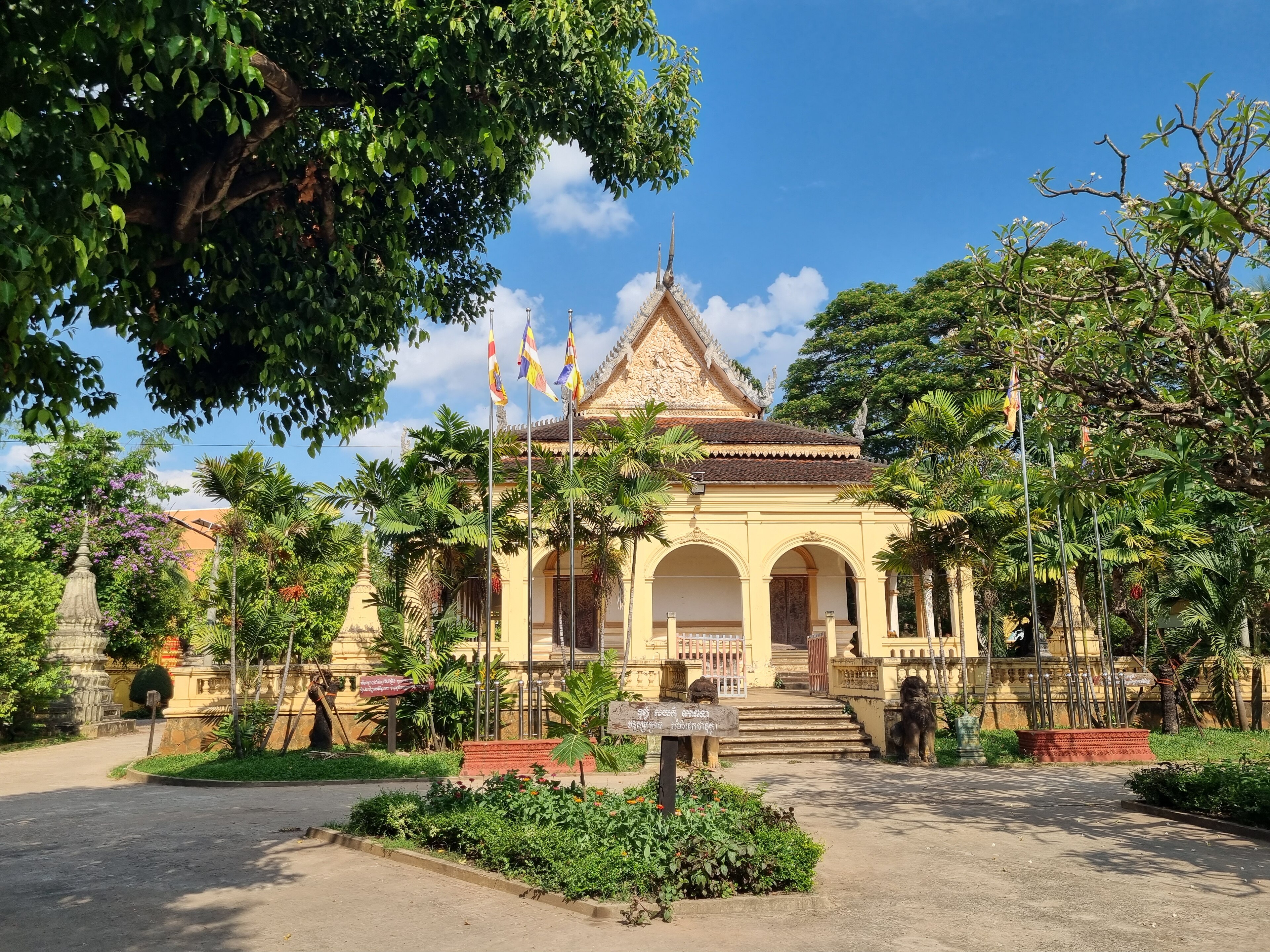
Why Siem Reap is Perfect for Your Celebration
- Iconic Angkor Wat backdrop creates unmatched ceremonial photography settings
- Boutique luxury resorts with private gardens and heritage-inspired event spaces
- Cool, dry season (Nov–Feb) offers comfortable outdoor conditions for ceremonies
- Rich Khmer cultural experiences — Apsara dance, traditional cuisine — elevate guest programs
- Intimate destination feel with a well-developed international hospitality ecosystem
- Relatively uncrowded event calendar compared to mainstream Asian wedding hubs

Compare Siem Reap with Other Top Destinations
Frequently Asked Questions
Is Siem Reap a good destination for a wedding?
Yes, particularly for intimate destination weddings. Siem Reap offers a genuinely unique setting — the Angkor temple landscape, lush tropical gardens, and heritage-inspired luxury resorts create a ceremonial atmosphere that is difficult to replicate elsewhere. It suits groups of roughly 20–300 guests most comfortably, and the cool dry season from November to February provides reliable outdoor conditions.
What is the best time of year to hold an event in Siem Reap?
November, December, January, and February are the strongest months. Temperatures are cooler (typically 24°C–30°C), humidity is lower, and rainfall is minimal — ideal for outdoor ceremonies and garden receptions. March to May brings significant heat, and June to October is the monsoon season with heavy daily rainfall that makes outdoor events impractical.
How do guests travel to Siem Reap for a destination event?
The primary gateway is Siem Reap–Angkor International Airport, which handles international arrivals. Direct connections are available from regional hubs including Bangkok, Kuala Lumpur, Singapore, and Ho Chi Minh City. Guests from further afield will typically require one connecting flight. There is no active railway service to Siem Reap, so air travel is the standard option for international guests.
What kinds of venues are available for events in Siem Reap?
The venue landscape is dominated by boutique luxury resorts and heritage-inspired properties with private tropical gardens, open-air pavilions, pool-side terraces, and dedicated ballrooms. Several properties offer exclusive-use options for smaller groups. Convention-capable resort properties also exist for corporate events requiring meeting rooms and AV infrastructure alongside leisure facilities.
How large a guest group can Siem Reap realistically accommodate for an event?
Siem Reap is most comfortably suited to groups of 20–400 guests. Several properties can host seated dinners or receptions in this range within a single venue. Very large events exceeding 400–500 guests may require a split-venue approach, as no single property in the city is designed primarily for large-scale convention or banquet formats at that scale.
Is local transport manageable for a large event group in Siem Reap?
Generally yes. The city's compact footprint means most hotels, restaurants, and event venues are within a short drive of each other. Tuk-tuks are widely available and can be arranged in convoys for group transfers, adding a cultural dimension to the guest experience. Private minibuses and vans are also readily available for larger group movements between venues or to the airport.
What cultural experiences can be incorporated into a wedding or event programme in Siem Reap?
Siem Reap offers a strong range of cultural programming: traditional Apsara dance performances, Khmer cooking classes, sunrise visits to Angkor Wat, tuk-tuk excursions through the temple complex, and Cambodian craft workshops. These experiences are well-established within the local tourism ecosystem and can be arranged through most luxury properties or a local destination management company.
Are there experienced local event vendors and planners in Siem Reap?
Yes. Siem Reap has a well-developed hospitality and events vendor ecosystem built over two decades of international tourism. Most luxury properties have in-house events teams experienced with destination weddings and corporate events. Local specialists in Khmer floral design, Apsara entertainment, and Cambodian cuisine catering are available. For complex multi-vendor events, engaging a local destination management company is advisable.
Can the Angkor temples be used as part of a wedding ceremony or event?
Incorporating the Angkor temples directly into event programming — beyond standard tourist visits — requires coordination with Cambodian heritage authorities and is subject to specific rules and permissions. This is achievable but adds planning complexity and lead time. Most couples use the temple landscape for photography rather than the ceremony itself, which is typically held within a resort property.
Is Siem Reap suitable for corporate retreats and incentive travel events?
Yes. The combination of luxury resort facilities, unique cultural excursions, and a compact, manageable city layout makes Siem Reap a strong incentive travel destination. Several properties offer dedicated meeting and breakout spaces alongside resort amenities, and the Angkor temple experience provides a genuinely memorable programme element that distinguishes the destination from more conventional corporate retreat locations.
How safe is Siem Reap for international event guests?
Siem Reap is generally considered safe for international tourists and event groups. The city has a well-established tourism infrastructure, and incidents specifically targeting visitors are uncommon. Standard travel precautions apply — as with any international destination — and most luxury properties have their own security arrangements. English is widely spoken across the hospitality sector, which reduces communication-related friction for guests.

Ready to explore venues in Siem Reap?
Siem Reap: Destination Wedding & Cultural Event Venues in Cambodia
◆Siem Reap is Cambodia's premier destination for intimate destination weddings, cultural celebrations, and milestone social events, anchored by its proximity to the UNESCO-listed Angkor Archaeological Park. The city's primary vibe is Cultural & Timeless — defined by ancient Khmer temple architecture, lush tropical gardens, and a hospitality ecosystem built around international visitors. It suits small-to-medium guest groups particularly well, with the strongest event season running from November through February when temperatures are cooler and rainfall is minimal. Accessibility requires international flights, often via regional hubs, making it best suited to guests comfortable with a multi-leg journey. The overall character leans boutique and experiential rather than large-scale convention-style.
Siem Reap at a Glance
| Category | Detail |
|---|---|
| Best For | Destination Weddings, Cultural Celebrations, Social Gatherings, Corporate Retreats |
| Primary Vibe | Cultural & Timeless |
| Other Vibes | Tropical, Boutique, Heritage, Romantic |
| Best Season | Cool / Mild Season (Jan, Feb, Nov, Dec) |
Why Choose Siem Reap?
- Unrivalled ceremonial backdrop: The Angkor temple complex — including Angkor Wat, Bayon, and Ta Prohm — provides a genuinely singular visual context for ceremonies and photography that no other destination in the world can replicate.
- Mature luxury hospitality: Siem Reap hosts an unusually high concentration of internationally branded and independently operated luxury and boutique properties relative to its city size, giving event planners strong venue choice without sacrificing quality.
- Rich cultural programming for guests: Traditional Apsara dance performances, Khmer cooking classes, sunrise temple visits, and tuk-tuk excursions give wedding guests a genuinely immersive multi-day experience beyond the event itself.
- Intimate scale: The destination naturally suits groups of 20–300 guests, making it ideal for couples who want a meaningful, curated celebration rather than a large-scale banquet-hall event.
- Established international tourism infrastructure: English is widely spoken across the hospitality sector, USD is broadly accepted alongside the local currency, and the city has reliable 4G connectivity and international-standard medical facilities.
- Relatively uncrowded event calendar: Unlike some Southeast Asian cities where event venues are heavily booked year-round, Siem Reap's event market remains less saturated, giving planners more flexibility in securing preferred dates and spaces during the peak season.
Which Celebrations Work Best in Siem Reap?
- Destination Weddings: Siem Reap is particularly well-suited to intimate destination weddings where the setting itself is a central part of the experience. Garden ceremonies at heritage-inspired resorts, candlelit dinners with temple views, and Khmer-influenced décor all contribute to a wedding that feels genuinely distinctive rather than interchangeable with any other tropical venue.
- Cultural & Heritage Celebrations: Milestone birthdays, anniversaries, and family reunions that want a culturally rich backdrop — rather than a purely beach or city setting — find Siem Reap a compelling choice. The Angkor temples and local Khmer traditions give these events a depth of meaning that guests typically remember long after the event.
- Corporate Retreats & Incentive Travel: The combination of luxury resort facilities, unique cultural excursions, and a relatively contained city footprint makes Siem Reap a strong option for corporate groups seeking an incentive travel destination with genuine experiential value. Several properties offer dedicated meeting and event spaces alongside resort amenities.
- Social Gatherings & Pre/Post-Wedding Events: The city's compact layout, abundance of boutique restaurants, and evening cultural shows make it easy to programme multi-day social itineraries — welcome dinners, farewell brunches, and group excursions — without complex logistics.
Venues & Event Spaces
Siem Reap's event venue landscape is dominated by boutique luxury resorts and heritage-inspired properties, many of which feature private tropical gardens, open-air pavilions, and pool-side terraces well-suited to outdoor ceremonies and receptions. Several internationally branded properties offer dedicated ballrooms and banquet halls capable of hosting seated dinners for larger groups, while smaller boutique hotels provide exclusive-use options for intimate gatherings where the entire property is reserved for the event group.
Beyond hotel-based venues, the broader Angkor Archaeological Park area offers unique ceremonial settings — subject to relevant Cambodian heritage authority permissions — that allow couples to incorporate the temple landscape directly into their event experience. Outdoor garden lawns are a particularly popular format during the cool season, with the tropical vegetation and warm evening temperatures creating a naturally atmospheric setting that requires minimal additional décor investment.
For corporate events and larger social gatherings, convention-capable resort properties in the city provide meeting rooms, breakout spaces, and AV infrastructure alongside their leisure facilities, making them practical for multi-day programmes that combine business sessions with cultural excursions.
Best Time to Celebrate
The Cool / Mild Season (November, December, January, and February) is the strongly preferred window for events in Siem Reap. During these months, daytime temperatures typically range from around 24°C to 30°C, humidity is noticeably lower than the rest of the year, and rainfall is minimal — conditions that make outdoor ceremonies, garden receptions, and temple-area photography genuinely comfortable for guests and vendors alike.
November and December mark the transition out of the monsoon and are particularly pleasant — the landscape is lush and green from the rains, the air is clear, and the light quality for photography is excellent. January and February are the driest and coolest months, making them the most reliably comfortable for multi-day outdoor event programmes.
The months of March, April, and May bring progressively rising heat, with temperatures regularly exceeding 35°C and humidity climbing sharply. While rainfall is still relatively low in March, the heat alone makes extended outdoor events uncomfortable for guests and can create logistical challenges for floral arrangements, food service, and guest comfort.
The monsoon season (June through October) brings heavy, often daily rainfall, with the wettest months typically being August and September. Flooding in and around the Angkor area is a genuine risk during peak monsoon, outdoor events become impractical, and the overall guest experience is significantly affected. October sees the tail end of the monsoon with still-significant rainfall, making it a month to approach with caution for outdoor-heavy event formats.
Getting There & Local Connectivity
Siem Reap is served by the Siem Reap–Angkor International Airport, which opened in 2023 to replace the former city-centre airport. The new airport handles international arrivals and is the primary gateway for event guests. Direct international connections are available from several regional hubs including Bangkok, Kuala Lumpur, Singapore, Ho Chi Minh City, and Hong Kong, among others, though guests travelling from further afield — including Europe, the Americas, or South Asia — will typically require at least one connection.
There is no active railway service to Siem Reap, so air travel is the practical choice for the vast majority of international guests. Road connections from Phnom Penh (Cambodia's capital) are available and used by some domestic travellers, though the journey takes several hours.
Within the city, tuk-tuks are the most characterful and widely used form of local transport, and many event planners incorporate them into the guest experience — for example, as a group convoy from the hotel to a dinner venue or temple visit. Private minibuses and vans are readily available for larger group transfers, and most luxury properties offer their own shuttle services. The city's compact footprint means that most hotels, restaurants, and event venues are within a short drive of one another, which simplifies logistics for multi-venue event programmes.
Local Vendor & Hospitality Ecosystem
Siem Reap has developed a well-established hospitality and events vendor ecosystem over the past two decades, driven by its status as one of Southeast Asia's most visited international tourism destinations. Most luxury and upper-midscale properties have in-house events teams experienced in managing international destination weddings and corporate events, including coordination with external vendors, décor suppliers, and cultural entertainment providers.
Local vendors specialising in Khmer-inspired floral design, traditional Apsara dance performance, and Cambodian cuisine catering are readily available and add genuine cultural authenticity to events. International-standard catering — including Western, Asian fusion, and dietary-specific menus — is well within the capability of the city's established hotel kitchens.
Photography and videography vendors with experience in temple-area shoots are available locally, and many international photographers also travel to Siem Reap specifically for destination wedding commissions given the uniqueness of the setting. Event décor and floral supply chains are functional, though for very specific or high-volume floral requirements, some lead time and advance planning is advisable given the city's smaller scale relative to major metropolitan event hubs.
English-language communication across the hospitality sector is generally reliable, which reduces friction for international event planners coordinating remotely. That said, for complex multi-vendor events, engaging a local destination management company (DMC) with established supplier relationships is typically advisable to navigate permitting, logistics, and cultural nuances smoothly.
Pros & Things to Consider
Why Siem Reap Works Well
- Genuinely unique ceremonial and photographic setting — the Angkor temple landscape is irreplaceable
- High concentration of boutique luxury and heritage-inspired properties relative to city size
- Cool, dry season (Nov–Feb) provides reliable outdoor event conditions
- Rich cultural programming keeps guests engaged across multi-day event itineraries
- Compact city layout simplifies group logistics and inter-venue transfers
- Established international hospitality standards with English widely spoken
- Relatively uncrowded event market compared to mainstream Southeast Asian wedding hubs
Things to Consider
- International connectivity requires connections: Most guests outside Southeast Asia will need at least one connecting flight, which adds travel time and complexity — particularly for older guests or those with limited travel experience.
- Strict monsoon season: The June–October monsoon is genuinely disruptive to outdoor events, and the heat of March–May is a real comfort concern — the usable event window is narrower than in some other destinations.
- Scale limitations: Siem Reap is best suited to groups of up to roughly 300–400 guests. Very large-scale events requiring 500+ seated guests in a single space may find the local venue inventory limiting.
- Heritage site access requires permissions: Incorporating the Angkor temples directly into event programming (beyond standard tourist visits) requires coordination with Cambodian heritage authorities and is subject to specific rules — this adds a layer of planning complexity.
- Vendor depth for niche requirements: While the core hospitality ecosystem is strong, very specialised vendors (certain floral varieties, specific entertainment acts, niche AV requirements) may need to be sourced from Phnom Penh or internationally, requiring additional lead time.
When Siem Reap May Not Be the Right Fit
- Monsoon-season outdoor events: If your preferred dates fall between June and October and your event format relies heavily on outdoor spaces, Siem Reap's heavy seasonal rainfall makes this a genuinely high-risk choice — a covered or indoor-primary venue format would be essential, and even then, guest comfort and logistics are affected.
- Very large guest lists: Groups significantly exceeding 400 guests may find that no single venue in Siem Reap can comfortably accommodate the full event in one space, requiring a split-venue approach that adds logistical complexity.
- Guests with limited international travel experience or mobility constraints: The multi-leg journey required for most international guests, combined with the tuk-tuk-centric local transport culture and uneven terrain around temple sites, can be challenging for guests who are elderly, have mobility limitations, or are uncomfortable with extended international travel.
- Events requiring a major metropolitan support ecosystem: If your event requires a very wide range of specialist vendors, last-minute sourcing flexibility, or proximity to a large international airport with many direct routes, a larger regional city may serve you better than Siem Reap's more boutique-scale infrastructure.