
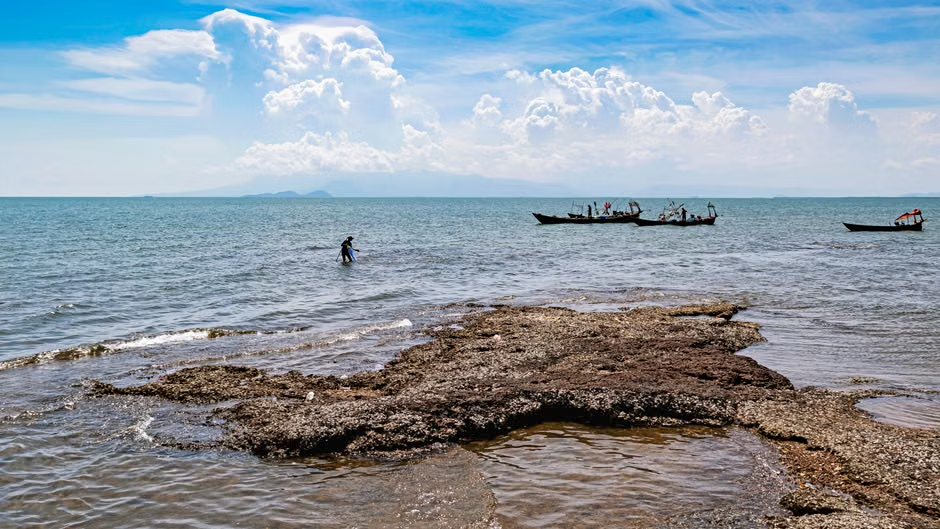
Why Kep is Perfect for Your Celebration
- Exclusive-use boutique resorts and private villas ideal for intimate gatherings
- Stunning Gulf of Thailand coastline provides a naturally scenic backdrop
- Kep National Park's forested hills create a lush, private atmosphere
- Cool, dry season (Nov–Feb) offers comfortable outdoor conditions for celebrations
- Low tourist footfall compared to larger Cambodian cities ensures genuine privacy
- Fresh local seafood and Khmer culinary traditions add a distinctive hospitality character

Compare Kep with Other Top Destinations
Frequently Asked Questions
Is Kep a good destination for a small wedding?
Yes. Kep is particularly well-suited to intimate weddings, typically under 100 guests. Its boutique resorts offer exclusive-use arrangements, meaning the entire property can be reserved for the wedding party. The coastal and hillside setting provides a naturally scenic backdrop, and the cool dry season from November to February delivers comfortable outdoor conditions for ceremonies and receptions.
What is the best time of year to hold a wedding or event in Kep?
The best window is the cool, dry season: January, February, November, and December. These months offer the most comfortable temperatures, lowest humidity, and most reliable dry conditions for outdoor events. January and February are the most consistently dry. The southwest monsoon from May through October brings heavy rain and high humidity that make outdoor celebrations unreliable.
How do guests get to Kep from abroad?
Most international guests fly into Phnom Penh International Airport and then travel to Kep by road — approximately 160 kilometres, typically a 2.5 to 3-hour journey by private transfer or minibus. There is no commercial airport in Kep itself. Pre-arranging group transfers from Phnom Penh is strongly advisable for coordinating a large guest group.
How many guests can Kep realistically accommodate for a destination event?
Kep's boutique resort inventory comfortably supports intimate gatherings, generally up to around 100–150 guests across accommodation and event spaces. Beyond that range, the local venue stock begins to strain. Kep is genuinely best suited to smaller, more curated guest lists rather than large-scale productions requiring high-capacity ballrooms or extensive accommodation blocks.
What kinds of event spaces are available in Kep?
Kep's venues are predominantly boutique resorts featuring open-air pavilions, garden lawns, pool terraces, and seafront or hillside dining areas. Exclusive-use resort bookings are a common format for weddings. Large air-conditioned ballrooms are not a feature of Kep's venue landscape — the destination's strength lies in natural, open-air settings rather than formal indoor infrastructure.
Can I find wedding vendors locally in Kep, or do I need to bring them in?
Kep has a genuine hospitality ecosystem oriented toward international guests, but specialist wedding vendors — florists, photographers, entertainment, and bespoke décor suppliers — typically need to be sourced from Phnom Penh or Kampot and transported to Kep. Planning lead times should be longer than for a major city destination, and vendor logistics need to be built into the event plan early.
Is Kep suitable for a corporate retreat or private group gathering?
Yes, particularly for small groups seeking a contained, resort-based environment away from urban distractions. Kep's seclusion and exclusive-use resort options make it well-suited to leadership retreats, small team offsites, and milestone private gatherings. The destination works best for groups comfortable with a degree of remoteness and a self-contained programme rather than needing access to a city's broader infrastructure.
What is the local food and catering culture like for events in Kep?
Kep has a distinctive culinary identity centred on fresh seafood — particularly crab from the famous local crab market — and regional Khmer cuisine. Resort kitchens with strong in-house teams can build event menus around this local character, which guests from abroad typically find memorable. This is a genuine differentiator that adds a sense of place to catered celebrations.
How reliable is internet and mobile connectivity in Kep for event planning and guests?
4G mobile coverage is generally available in Kep town and at most resort properties, but connectivity can be patchy in hillside areas and is not consistently high-speed. It is improving but should not be assumed to be reliable throughout. Planners coordinating remotely and guests expecting strong connectivity should confirm specifics with their chosen resort in advance.
Is Kep safe for international guests attending a wedding or event?
Generally, yes. Kep is considered a safe destination for international visitors, with a low-key local environment and a hospitality sector accustomed to foreign guests. Standard travel precautions apply. The town's small scale and limited nightlife mean it is a quieter, lower-risk environment than larger Cambodian cities, which most guests attending a private resort-based event will find reassuring.

Ready to explore venues in Kep?
Kep, Cambodia: Intimate Destination Wedding & Event Venues
◆Kep is a small, secluded coastal town in southern Cambodia, best suited to intimate weddings, elopements, private vow renewals, and boutique social gatherings. Its primary vibe is genuinely peaceful and secluded — this is not a destination for large-scale productions or high-footfall events. The cool, dry season from November through February offers the most comfortable outdoor conditions. Accessibility requires planning: guests typically travel overland from Phnom Penh or nearby Kampot, and the local venue inventory is deliberately small-scale. Kep suits couples and hosts who prioritise privacy, natural beauty, and a distinctive Cambodian coastal character over logistical convenience or large-capacity infrastructure.
Kep at a Glance
| Category | Detail |
|---|---|
| Best For | Intimate weddings, elopements, vow renewals, small private social gatherings |
| Primary Vibe | Peaceful & Secluded |
| Other Vibes | Tropical, Coastal, Boutique, Nature-immersed |
| Best Season | Cool / Mild Season (Jan, Feb, Nov, Dec) |
Why Choose Kep?
- Genuine seclusion: Kep receives a fraction of the tourist traffic of Siem Reap or Phnom Penh, meaning exclusive-use resort bookings feel truly private rather than performatively so.
- Distinctive natural setting: The combination of the Gulf of Thailand coastline, the forested hills of Kep National Park, and the iconic crab market creates a layered, photogenic environment that larger Cambodian cities cannot replicate.
- Boutique resort culture: Several well-regarded independent resorts have been purpose-built for discerning travellers, with architecture and landscaping that translate naturally into elegant event backdrops.
- Khmer culinary identity: Fresh crab, seafood, and regional Khmer cuisine give catered events a genuinely local flavour that guests from abroad find memorable and distinctive.
- Manageable scale: For hosts who want to keep a guest list tight and the atmosphere controlled, Kep's limited venue inventory is a feature rather than a limitation — it naturally caps group size and maintains intimacy.
- Cool-season comfort: The November-to-February window delivers reliably dry, breezy coastal weather that makes outdoor ceremonies and dinners comfortable without requiring heavy climate-control infrastructure.
Which Celebrations Work Best in Kep?
- Intimate destination weddings: Kep is particularly well-suited to couples seeking a small, meaningful ceremony — typically under 100 guests — in a natural coastal setting. Exclusive-use resort bookings allow the entire property to be dedicated to the wedding party, creating a cohesive, private experience across multiple days.
- Elopements and micro-weddings: The destination's quiet character and scenic hillside-meets-coast geography make it one of Southeast Asia's more compelling choices for couples who want a ceremony with very few guests or none at all, focused entirely on the experience rather than the spectacle.
- Vow renewals and anniversary celebrations: The relaxed pace and romantic coastal atmosphere suit milestone personal celebrations that prioritise atmosphere and meaning over logistical scale.
- Private social gatherings and retreats: Small corporate retreats, family reunions, or milestone birthday celebrations (40th, 50th) that benefit from a contained, resort-based environment work well here, particularly when the group is comfortable with a degree of remoteness and self-contained programming.
Venues & Event Spaces
Kep's event venue landscape is defined by boutique resort properties rather than large convention hotels or purpose-built banquet halls. The dominant venue typology is the hillside or seafront resort — typically featuring open-air pavilions, garden lawns, infinity pools, and terraced dining areas that can be configured for ceremonies and receptions. Several properties offer exclusive-use arrangements, meaning the entire resort — accommodation, dining, and event spaces — can be reserved for a single group, which is particularly appealing for destination weddings where the host wants full control over the environment.
Outdoor spaces are a particular strength: beachside lawns, forested garden terraces, and pool decks with Gulf of Thailand views are common features. Indoor event capacity is generally modest — Kep is not a destination with large air-conditioned ballrooms — so hosts planning events during the shoulder or wet season should factor in the limited indoor fallback options. The overall venue character skews toward natural materials, open-air design, and a relaxed tropical aesthetic rather than formal grandeur.
Best Time to Celebrate
The curated best season for events in Kep is the Cool / Mild Season: January, February, November, and December. During these months, the southwest monsoon has retreated, humidity drops to its most comfortable annual levels, and daytime temperatures typically sit in the high 20s Celsius with cooling coastal breezes in the evenings. Outdoor ceremonies and al-fresco dinners are genuinely comfortable without requiring significant climate-control infrastructure, and the Gulf of Thailand is generally calm enough for boat transfers or water-adjacent activities.
November and December mark the transition out of the wet season — conditions are typically dry and pleasant, though early November can occasionally see residual showers. January and February are the most reliably dry and comfortable months of the year and represent the peak of the event-planning window.
March and April see temperatures and humidity begin to climb noticeably ahead of the monsoon onset. Outdoor events remain possible but become progressively less comfortable, and the risk of pre-monsoon heat affecting guest experience increases.
May through October is the southwest monsoon season. Heavy, sustained rainfall, high humidity, rough coastal conditions, and the practical difficulty of outdoor event execution make this period genuinely unsuitable for most celebration formats in Kep. Unlike some larger Cambodian cities where indoor infrastructure can absorb monsoon disruption, Kep's predominantly open-air venue stock has limited capacity to compensate.
Getting There & Local Connectivity
Kep does not have its own commercial airport. The primary gateway for international guests is Phnom Penh International Airport, from which Kep is approximately 160 kilometres by road — typically a 2.5 to 3-hour journey depending on traffic and road conditions. Private transfers and shared minibus services operate this route regularly, and the road quality has improved in recent years, making the journey manageable for most guests.
A secondary option for guests already in the region is Sihanoukville Airport, which handles some regional and charter flights and is roughly comparable in road distance to Kep, though routing via Kampot is more common. The nearest active railway station is in Kampot, approximately 25 kilometres from Kep town, served by Royal Railway Cambodia's limited regional network — this is a scenic but slow option, more suited to individual travellers than coordinated group logistics.
Once in Kep, local movement is typically managed by tuk-tuks, motorbike taxis, and private resort transfers. The town itself is compact and navigable, but guests staying at hillside properties may find the terrain less walkable than a flat coastal town. For a large guest group, pre-arranging a fleet of private vehicles or coordinating with the resort's own transfer service is strongly advisable. There is no formal public bus network within Kep itself.
Local Vendor & Hospitality Ecosystem
Kep's vendor ecosystem is small but genuine. The town has a well-established hospitality culture oriented toward international visitors, and the better resort properties have experience hosting private events for foreign guests, including weddings. English is reasonably well understood in the hospitality sector, which reduces coordination friction for international couples and planners.
For specialist wedding services — florists, photographers, officiants, entertainment, and bespoke catering beyond the resort's own kitchen — hosts should expect to source vendors from Phnom Penh or Kampot and factor in travel and accommodation for those suppliers. Kep itself does not have a deep local wedding-industry ecosystem in the way that a larger destination city would. This is a meaningful planning consideration: lead times need to be longer, vendor availability needs to be confirmed earlier, and logistics for bringing external suppliers in need to be built into the event plan.
The local seafood and Khmer culinary tradition is a genuine asset — fresh crab from the Kep crab market is a distinctive catering element that larger, more generic resort destinations cannot authentically replicate. Resorts with strong in-house culinary teams can build menus around this local identity in a way that adds real character to a celebration.
Pros & Things to Consider
Why Kep Works Well
- Genuine privacy and seclusion — exclusive-use resort bookings feel authentically private
- Distinctive natural setting combining coastline, national park, and Khmer cultural character
- Cool-season weather (Nov–Feb) is reliably comfortable for outdoor events
- Small guest lists are well-served by the boutique resort format
- Local seafood and Khmer cuisine provide a memorable, place-specific catering identity
- Lower tourist density than major Cambodian cities means fewer disruptions and more control
Things to Consider
- No commercial airport in Kep — all guests require a multi-hour road transfer, which adds logistical complexity and travel fatigue for large groups
- Venue capacity is inherently limited — Kep is not suitable for guest lists above roughly 150 people without significant logistical strain
- Specialist wedding vendors (florists, photographers, entertainment) typically need to be sourced from Phnom Penh or Kampot and transported in
- The monsoon season (May–October) effectively closes the destination for outdoor events, and indoor fallback capacity is limited
- Connectivity (internet, mobile data) is improving but remains patchy in hillside areas — guests and planners should not assume reliable high-speed access throughout
- The destination's remoteness, while a strength for privacy, means that last-minute supplier changes or emergency logistics are harder to resolve than in a well-connected city
When Kep May Not Be the Right Fit
- Large guest lists: If your celebration involves more than 120–150 guests, Kep's boutique venue inventory will struggle to accommodate the group comfortably across accommodation, dining, and event spaces — a larger destination city would serve you better.
- Guests with limited travel flexibility: The absence of a local airport and the requirement for a 2.5–3 hour road transfer from Phnom Penh means Kep places a meaningful travel burden on guests, particularly elderly attendees or those with mobility considerations.
- Events planned during the monsoon season (May–October): Kep's predominantly outdoor venue stock and the intensity of the southwest monsoon make this period genuinely high-risk for outdoor celebrations, and the limited indoor alternatives mean there is little reliable fallback.
- Hosts needing a deep local vendor ecosystem: If your event requires a wide range of specialist suppliers — large production teams, multiple entertainment acts, elaborate floral installations — the need to source and transport most of these from Phnom Penh adds cost, complexity, and risk that a more vendor-mature destination would avoid.