
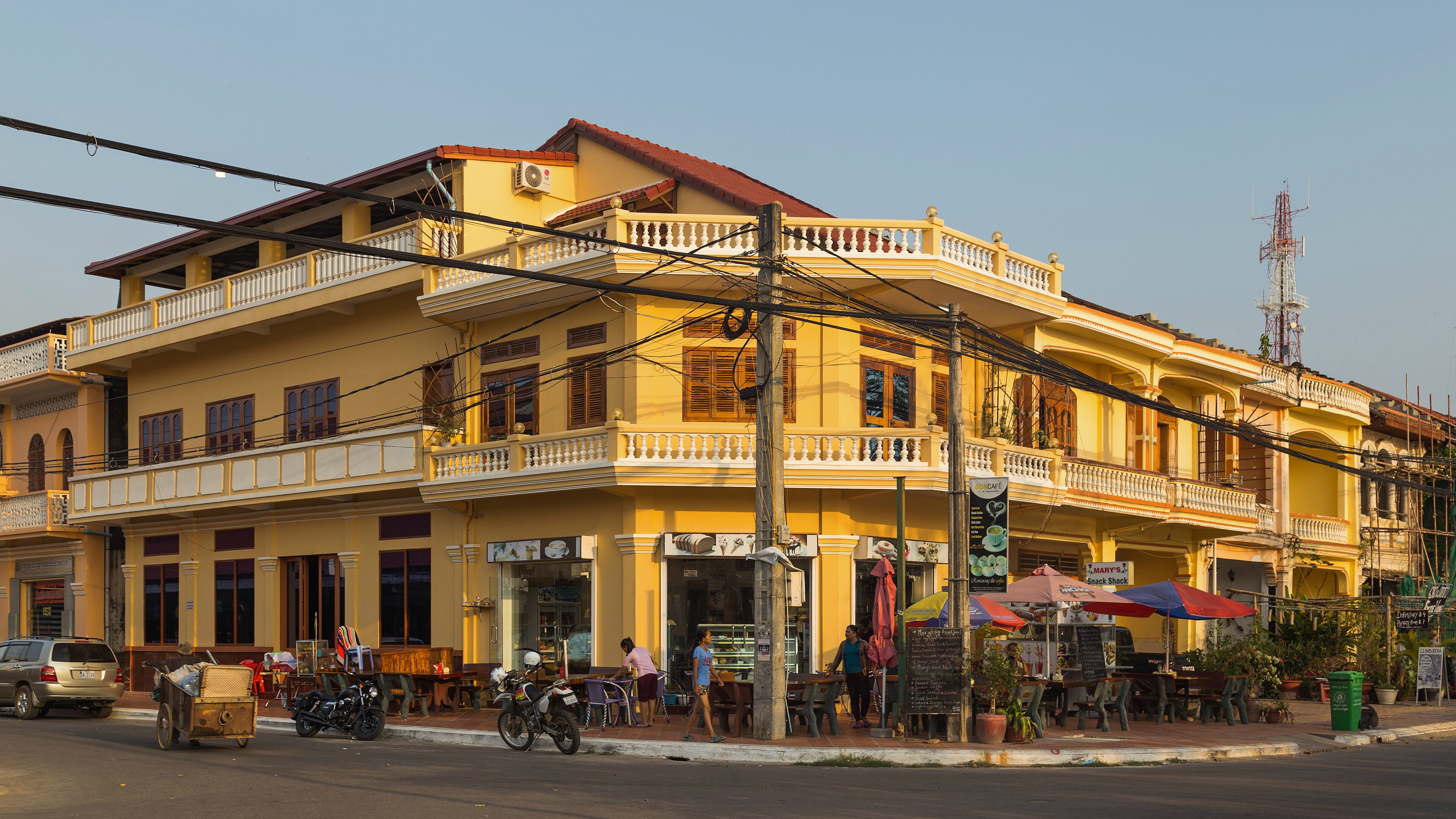
Why Kampot is Perfect for Your Celebration
- Unique French colonial townscape provides a naturally photogenic, character-rich event backdrop
- Kampot River and surrounding countryside offer rare outdoor riverside and garden venue settings
- Intimate scale of the town suits smaller, curated celebrations with a close-knit guest list
- Cool, dry season (Nov–Feb) delivers reliably comfortable outdoor conditions for evening events
- Local pepper plantations and Cambodian culinary traditions add a genuinely distinctive cultural dimension to menus and experiences
- Growing boutique resort and villa scene provides private, exclusive-use options uncommon in larger cities

Compare Kampot with Other Top Destinations
Frequently Asked Questions
Is Kampot a good destination for a wedding?
Yes, particularly for intimate and atmosphere-driven weddings. Kampot suits couples who prioritise a distinctive, character-rich setting — colonial architecture, riverside scenery, and boutique resort environments — over large-scale infrastructure. It works best for guest lists in the range of 20 to approximately 120 people. Couples seeking a genuinely memorable, non-formulaic celebration will find Kampot a strong fit.
What is the best time of year to hold a celebration in Kampot?
The best window is the cool, dry season: November, December, January, and February. During these months, temperatures and humidity are at their most comfortable, rainfall is minimal, and outdoor events — riverside ceremonies, garden receptions, evening dinners — are reliably practical. The monsoon season (June–October) brings heavy rain and flooding risk, making outdoor events inadvisable during that period.
How do guests get to Kampot from abroad?
International guests fly into Phnom Penh International Airport, Cambodia's main gateway, and then travel to Kampot by road — typically a 2.5 to 3-hour journey by private vehicle or organised group transfer. There is no direct international air access to Kampot itself. For event groups, pre-arranged private coach or minivan transfers from Phnom Penh are the standard approach.
What size of guest group can Kampot realistically accommodate for an event?
Kampot's venue and accommodation inventory is best suited to guest lists of roughly 20 to 120 people. The town's boutique properties can comfortably host intimate to mid-sized celebrations, but there are no large ballrooms or convention-scale venues. Groups significantly above 120–150 guests will find the local capacity genuinely stretched and may need to spread accommodation across multiple properties.
What kinds of venues are available for events in Kampot?
The primary venue types are boutique riverside resorts with outdoor terraces and garden lawns, exclusive-use colonial-era heritage properties and private villas, and tropical garden spaces suited to outdoor ceremonies. The nearby Kep coastal area adds a small number of additional boutique resort options within roughly 25–30 km. There are no large banquet halls or convention centres in Kampot.
Can guests be accommodated within Kampot itself, or do they need to stay elsewhere?
Most guests can be accommodated within Kampot town and its immediate riverside area, though the total accommodation inventory across all properties is limited. For larger guest groups, some guests may need to stay in nearby Kep (approximately 30 minutes away) and be transferred in for the event. Coordinating accommodation across multiple properties is a normal part of planning a larger Kampot celebration.
What makes Kampot's food and catering distinctive for an event?
Kampot is internationally recognised for its pepper, considered among the finest in the world, and the surrounding Gulf of Thailand coastline provides excellent fresh seafood. These local ingredients give event menus a genuinely distinctive character. Established properties work with skilled local chefs capable of producing both traditional Cambodian and international menus, and the culinary identity of the region is a genuine asset for event catering.
Are there local wedding and event planners based in Kampot?
A small number of event coordinators operate in Kampot, and established boutique properties typically have in-house event teams. However, the local specialist vendor ecosystem is more limited than in major regional hubs. Couples planning more elaborate events often work with a Phnom Penh-based event company that has Kampot experience, or rely heavily on the in-house coordination team at their chosen property.
What is the local transport situation for guests once they arrive in Kampot?
Kampot town is compact and the riverside area where most event properties are located is walkable for guests staying nearby. Tuk-tuks and motorbike taxis are the standard local transport mode. For event groups, coordinated private vehicle or tuk-tuk arrangements are straightforward to organise through local operators or the host property, and are the recommended approach for moving groups between venues or to and from activities.
Is Kampot suitable for a multi-day celebration programme?
Yes, and it is arguably one of Kampot's strengths. The town and surrounding area offer a range of genuine local experiences — pepper farm visits, river boat trips, colonial town walks, cooking experiences — that translate naturally into a multi-day celebration itinerary. Guests who travel to Kampot are typically open to immersive, experience-led programmes, making it well-suited to extended celebration weekends.
How safe is Kampot for international guests attending an event?
Kampot is generally considered safe for international visitors. The town has a well-established expat and tourism community, and the hospitality properties catering to international guests are experienced in managing the needs of overseas visitors. Standard travel precautions apply, and guests should be aware of road safety considerations when using local transport. The cool dry season, when events are typically held, is also the town's peak tourism period, when services and security are at their most reliable.

Ready to explore venues in Kampot?
Kampot: Destination Wedding & Celebration Venues in Cambodia
◆Kampot is a small riverside town in southern Cambodia best suited to intimate, atmosphere-driven celebrations — weddings, private parties, and cultural gatherings where character and setting matter more than scale. Its primary vibe is Cultural & Timeless, shaped by French colonial architecture, the Kampot River, surrounding pepper plantations, and a genuinely unhurried local pace. The cool, dry season from November through February is the clear window for outdoor events. Accessibility requires a road journey from Phnom Penh (roughly 2.5–3 hours), making it a considered destination rather than a convenient hub — best suited to smaller, curated guest lists rather than large-scale gatherings.
Kampot at a Glance
| Category | Detail |
|---|---|
| Best For | Intimate Weddings, Private Celebrations, Cultural Events, Elopements |
| Primary Vibe | Cultural & Timeless |
| Other Vibes | Riverside, Bohemian, Colonial, Laid-back |
| Best Season | Cool / Mild Season (Jan, Feb, Nov, Dec) |
Why Choose Kampot?
- Genuinely distinctive setting: Kampot's French colonial streetscapes, riverside promenade, and pepper farm landscapes create a visual backdrop that is essentially impossible to replicate elsewhere in Southeast Asia — photographs and memories carry a character that generic resort destinations cannot match.
- Intimate scale by design: The town's size and the nature of its hospitality properties naturally favour smaller, close-knit celebrations. Exclusive-use villas and boutique resorts allow a host to genuinely own the space for the duration of an event.
- Emerging luxury tier: A small number of well-regarded boutique luxury properties have established themselves in and around Kampot, offering high-quality accommodation and event infrastructure without the impersonal scale of a large convention hotel.
- Culinary distinctiveness: Kampot pepper is internationally recognised as among the finest in the world, and local Cambodian cuisine — particularly fresh seafood from the nearby Gulf of Thailand — gives event menus a genuinely local, memorable character.
- Relative privacy and exclusivity: Kampot remains off the mainstream international wedding circuit, meaning a celebration here carries a sense of discovery and exclusivity that more saturated destinations have lost.
- Comfortable cool-season conditions: During November through February, temperatures and humidity drop to levels that make extended outdoor evening events genuinely comfortable — a significant practical advantage for celebrations with outdoor ceremonies or dinners.
Which Celebrations Work Best in Kampot?
- Intimate destination weddings: Kampot is particularly well-suited to weddings with guest lists in the range of 20–120 people. The boutique resort and villa inventory, riverside outdoor spaces, and colonial-era architectural settings create a naturally romantic and photogenic environment. Couples seeking something personal and non-formulaic will find Kampot a strong fit.
- Elopements and micro-weddings: For couples prioritising atmosphere and privacy over guest count, Kampot's exclusive-use properties and scenic river and countryside settings make it one of the more compelling options in the region.
- Private milestone celebrations: Significant birthdays, anniversaries, and family reunions benefit from Kampot's ability to offer a fully immersive, away-from-it-all experience — guests genuinely feel they have arrived somewhere special rather than simply checked into a hotel.
- Cultural and experiential events: Kampot's identity — pepper farms, river boat experiences, colonial town walks, local craft traditions — lends itself to multi-day celebration programmes that incorporate genuine local experiences rather than generic resort activities.
- Corporate retreats and small incentive groups: The combination of distinctive setting, quality boutique accommodation, and relative seclusion makes Kampot a credible option for small corporate groups seeking an off-the-beaten-path retreat experience.
Venues & Event Spaces
Kampot's event venue landscape is defined by boutique properties rather than large-scale convention infrastructure. The dominant venue types include:
- Riverside boutique resorts: Several well-regarded properties sit directly on or very close to the Kampot River, offering outdoor terraces, garden lawns, and river-view dining spaces that are particularly effective for sunset ceremonies and evening receptions.
- Exclusive-use villas and heritage properties: A number of restored colonial-era buildings and private villa compounds can be taken on an exclusive-use basis, giving a host full control over the space, catering, and guest experience.
- Outdoor garden and lawn spaces: The tropical garden settings attached to several Kampot properties provide natural, lush ceremony backdrops that require minimal decoration to achieve a strong visual effect.
- Coastal resort properties nearby: The adjacent Kep coastal area (within roughly 25–30 km) adds a small number of additional boutique resort options with sea-facing event spaces, effectively extending the usable venue inventory for guests based in Kampot.
It is important to note that Kampot does not have large banquet halls, convention centres, or hotel ballrooms capable of hosting events of several hundred guests. The venue inventory is genuinely suited to intimate and mid-sized celebrations, and planners should calibrate guest list expectations accordingly.
Best Time to Celebrate
The real curated best season for Kampot is the Cool / Mild Season: January, February, November, and December. During these months, temperatures typically sit in a comfortable range, humidity is noticeably lower than the rest of the year, and rainfall is minimal. This combination makes extended outdoor events — sunset ceremonies, riverside dinners, garden receptions — genuinely practical and comfortable for guests.
November and December mark the transition out of the monsoon, with conditions improving steadily through the month. By late November, outdoor events are generally reliable. January and February represent the peak of the dry, cool season and are the most consistently comfortable months for any outdoor celebration.
March through May see temperatures and humidity rising significantly as the pre-monsoon period builds. Events remain possible but outdoor comfort declines, and the risk of unseasonal showers increases toward May. These months are considered shoulder season — not ideal, but not impossible for indoor or partially covered events.
June through October constitute the Southwest Monsoon season in Kampot. Rainfall is heavy and sustained, with flooding possible along the river and in low-lying areas. Outdoor events during this period carry substantial weather risk, and the general infrastructure of the town can be affected by seasonal flooding. This period is strongly advised against for any event with significant outdoor components.
Getting There & Local Connectivity
Kampot is accessed primarily by road from Phnom Penh, Cambodia's capital and main international gateway. The journey typically takes approximately 2.5 to 3 hours by private vehicle or organised transfer, making it a manageable but deliberate journey for arriving guests. For international guests, the routing is: international flight to Phnom Penh, then a road transfer to Kampot — there is no direct international air access to the town itself.
A limited rail service operates between Phnom Penh, Kampot, and Sihanoukville under Royal Railways Cambodia, though schedules are infrequent and journey times are longer than road travel. For event groups, private coach or minivan transfers from Phnom Penh are the standard and most practical approach.
Within Kampot itself, the town is compact and navigable. Tuk-tuks and motorbike taxis are the primary local transport mode, and for event groups, coordinated private vehicle arrangements are straightforward to organise through local operators. The riverside area where most event properties are located is walkable for guests staying nearby.
Guests travelling from Sihanoukville (approximately 1.5–2 hours by road) or Kep (approximately 30 minutes) have shorter transfer options, which can be useful for multi-destination itineraries built around a Kampot celebration.
Local Vendor & Hospitality Ecosystem
Kampot's vendor ecosystem is growing but remains modest in scale compared to established Southeast Asian wedding destinations. Key characteristics include:
- Boutique hospitality quality: The town's better properties have invested in genuine hospitality standards, and staff at established boutique resorts are generally experienced in managing private events and international guest expectations.
- Local catering strengths: Fresh seafood, Cambodian culinary traditions, and the world-renowned local pepper give event catering a distinctive and high-quality local character. Several properties work with skilled local chefs capable of producing both Cambodian and international menus.
- Event coordination: Dedicated wedding and event planners based in Kampot are fewer in number than in major regional hubs. Couples and planners should expect to either work with a Phnom Penh-based event company that operates in Kampot, or engage the in-house event team at their chosen property.
- Floral and décor suppliers: Local floral and décor options exist but are more limited in variety than in larger cities. Planners working on elaborate décor concepts may need to source some elements from Phnom Penh and arrange transport.
- Photography and entertainment: A community of skilled photographers and musicians operates in and around Kampot, partly sustained by the town's broader creative and expat community. Live music options with a local Cambodian character are genuinely available.
Pros & Things to Consider
Why Kampot Works Well
- Genuinely distinctive, non-generic setting that creates memorable event experiences
- Boutique luxury properties offer high-quality, intimate event environments
- Exclusive-use options give hosts real control over the guest experience
- Cool dry season (Nov–Feb) provides reliable outdoor event conditions
- Local culinary identity — Kampot pepper, fresh seafood — adds authentic character to event menus
- Relatively uncrowded and private compared to mainstream Southeast Asian event destinations
Things to Consider
- No direct international air access — all guests require a road transfer from Phnom Penh, adding travel time and logistical coordination
- Venue capacity is limited; guest lists above approximately 150 people will find the local inventory genuinely stretched
- The local vendor ecosystem is smaller and less specialised than in major regional wedding hubs, requiring more advance planning and potentially sourcing from Phnom Penh
- The monsoon season (June–October) makes outdoor events impractical and carries flooding risk — the usable event window is genuinely seasonal
- Accommodation inventory across all tiers is limited; large guest groups may need to spread across multiple properties, requiring coordinated transport
When Kampot May Not Be the Right Fit
- Large guest lists (150+ guests): The local venue and accommodation inventory is not designed for large-scale events. A guest list significantly above 100–120 people will likely exceed what Kampot's properties can comfortably accommodate in a single venue setting.
- Guests with limited travel flexibility: The road transfer from Phnom Penh adds meaningful travel time for international guests, particularly elderly guests or those with mobility considerations. If easy, direct accessibility is a priority, a destination with closer airport access would serve better.
- Events planned during the monsoon season (June–October): Any celebration with significant outdoor components — ceremonies, garden receptions, riverside dinners — carries real weather risk during the monsoon months. Kampot's outdoor settings are its primary strength, and that strength is largely unavailable during this period.
- Couples seeking a large, full-service wedding resort with extensive on-site amenities: Kampot's properties are boutique in character. Guests expecting a large resort with multiple pools, a spa, a ballroom, and a full convention-style event team will find the local offering more limited than major resort destinations in the region.