
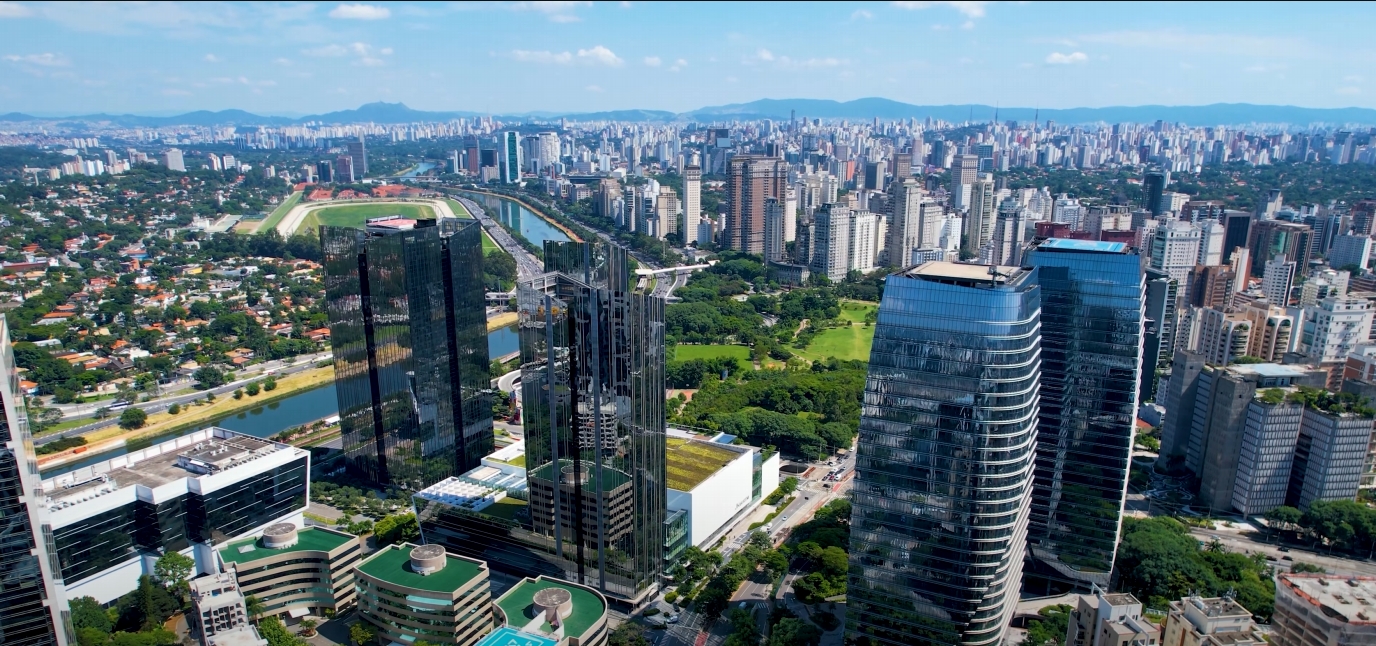
Why São Paulo is Perfect for Your Celebration
- One of Latin America's most internationally connected cities, with direct flights from major global hubs
- Exceptional diversity of event spaces — from grand hotel ballrooms in Jardins to rooftop venues in Vila Olímpia
- World-renowned gastronomy scene with top-tier catering and award-winning chefs available for events
- Mature, professional event-planning and vendor ecosystem with experience in large-scale international productions
- Cool, dry winters (May–September) provide comfortable conditions for both indoor and outdoor celebrations
- Rich cultural programming — art galleries, theatres, and iconic architecture add depth to any event itinerary

Compare São Paulo with Other Top Destinations
Frequently Asked Questions
Is São Paulo a good destination for corporate events and conferences?
Yes, strongly so. São Paulo is the leading corporate event destination in Latin America, with a mature convention infrastructure, a deep professional vendor ecosystem, and a high density of business-grade hotels with dedicated event facilities. It is particularly well-suited to regional summits, product launches, and large-scale conferences where professional execution and international guest accessibility are priorities.
What is the best time of year to hold an event in São Paulo?
May through September is the recommended window. These months form São Paulo's cool, dry season, with mild temperatures and significantly reduced rainfall compared to the summer. June and July are typically the driest and most comfortable. The summer months (November–March) bring frequent heavy thunderstorms that can disrupt outdoor event formats and add logistical risk.
How easy is it for international guests to travel to São Paulo?
Very straightforward. Guarulhos International Airport is one of Latin America's busiest hubs, with direct connections from major cities across Europe, North America, and South America. Domestic guests can also use Congonhas Airport, which handles a high volume of Brazilian domestic routes. Overall guest travel ease is high for most international origins.
What kinds of event venues are available in São Paulo?
The city offers exceptional variety: grand hotel ballrooms in upscale neighbourhoods like Jardins and Morumbi, rooftop venues with skyline views, converted industrial spaces in Lapa and Barra Funda suited to creative formats, heritage buildings in the historic centre, and large convention centres for high-capacity events. Both intimate and large-scale formats are well-supported.
How large a guest group can São Paulo realistically accommodate for an event?
São Paulo can comfortably accommodate very large groups. Major hotel ballrooms and convention facilities can host several hundred to over a thousand guests for a single event, and the city's hotel inventory is extensive enough that accommodation for large international delegations is rarely a constraint. Smaller, more intimate gatherings of 50–150 guests are equally well-served by boutique hotel and private venue options.
What is the local transport situation for guests once they arrive in São Paulo?
The city has an extensive metro and suburban rail network, but for event groups, pre-arranged private coach or minibus transfers are strongly recommended. São Paulo's road traffic can be heavy, particularly during peak hours, so transfer schedules should build in generous time buffers. Ride-hailing services are widely available and reliable for individual guests moving independently.
How developed is São Paulo's event vendor and catering ecosystem?
Highly developed. São Paulo has decades of experience hosting major international events, which has produced a deep, competitive market of specialist suppliers — AV and lighting production, floral design, entertainment, and event management agencies with international experience. The city's world-class culinary scene also translates directly into exceptional event catering quality, well above the standard of most destinations.
Is São Paulo suitable for a destination wedding?
Yes, for couples with a cosmopolitan, design-forward aesthetic. São Paulo is not a traditional scenic-backdrop wedding destination, but couples prioritising exceptional food, sophisticated venue design, and vibrant urban energy will find it genuinely compelling. Boutique hotel venues and private event spaces in neighbourhoods like Jardins and Itaim Bibi are particularly well-suited to intimate, high-quality wedding formats.
Are outdoor event formats viable in São Paulo?
Yes, but primarily during the cool dry season (May–September). During these months, outdoor ceremonies, rooftop cocktail hours, and alfresco dinners are reliably manageable. From November through March, frequent heavy afternoon thunderstorms make outdoor formats genuinely risky, and any event with significant outdoor components during this period should have a robust indoor contingency plan.
What language do local vendors and hotel event teams work in?
Portuguese is the primary working language. Senior professionals at major hotels and established event agencies generally have functional English, but for detailed vendor negotiations and on-the-ground coordination, working with a local event management partner fluent in both Portuguese and English is strongly advisable for international planners.
What makes São Paulo's event experience distinctive compared to other major cities?
São Paulo's combination of world-class gastronomy, a genuinely sophisticated design and creative culture, and a deeply professional event industry sets it apart. Guests also benefit from a rich cultural programme — art museums, modernist architecture, theatre, and nightlife — that gives multi-day events a compelling surrounding experience beyond the event itself, which is harder to replicate in less culturally dense destinations.

Ready to explore venues in São Paulo?
São Paulo: Destination Wedding & Corporate Event Venues
◆São Paulo is Brazil's largest city and one of the world's most dynamic cosmopolitan destinations, best suited to corporate events, milestone social celebrations, festivals, and sophisticated private gatherings. Its primary vibe is chic and urban — defined by world-class gastronomy, design-forward venues, and a mature hospitality industry. The cool, dry season from May through September offers the most comfortable conditions for events. Guests travelling internationally benefit from one of Latin America's busiest and best-connected airports, and the city's extensive hotel inventory means accommodation for large groups is rarely a constraint.
São Paulo at a Glance
| Category | Detail |
|---|---|
| Best For | Corporate Events, Milestone Celebrations, Festivals, Social Galas |
| Primary Vibe | Chic & Cosmopolitan |
| Other Vibes | Cultural, Gastronomic, Urban-Modern |
| Best Season | Cool / Mild Season (May, Jun, Jul, Aug, Sep) |
Why Choose São Paulo?
- Unmatched venue diversity: From grand hotel ballrooms in Jardins and Morumbi to rooftop terraces in Vila Olímpia, heritage-listed buildings in the historic centre, and purpose-built convention centres, São Paulo offers a breadth of event spaces that few cities in the Southern Hemisphere can match.
- World-class gastronomy: The city consistently ranks among the world's top culinary destinations, with a deep pool of award-winning chefs, specialist event caterers, and international cuisine options that elevate any celebration's food and beverage programme.
- Exceptional international connectivity: Guarulhos International Airport receives direct flights from across Europe, North America, and the rest of Latin America, making it straightforward for international guests to attend events with minimal connection complexity.
- Mature, professional event ecosystem: São Paulo has decades of experience hosting large-scale international corporate events, fashion weeks, and major social galas. The local vendor market — AV production, floral design, entertainment, event management — is sophisticated and competitive.
- Cultural programming as a guest experience: Guests can engage with world-class art museums, iconic modernist architecture, vibrant nightlife, and a theatre scene that adds genuine depth to a multi-day event itinerary beyond the event itself.
- Comfortable cool-season climate: The May–September window delivers mild temperatures and significantly reduced rainfall, making both indoor and outdoor event formats reliably manageable without the disruption risk of the city's summer storm season.
Which Celebrations Work Best in São Paulo?
- Corporate Events & Conferences: São Paulo is arguably the strongest corporate event destination in Latin America. Its convention infrastructure, business hotel density, and professional services ecosystem make it the natural choice for regional summits, product launches, and large-scale conferences.
- Milestone Social Celebrations (50th birthdays, anniversaries, galas): The city's luxury hotel ballrooms and design-led private venues are well-suited to high-production milestone events where sophisticated ambience, fine dining, and entertainment quality are priorities.
- Festivals & Cultural Events: São Paulo's cosmopolitan character and large, diverse population make it a natural host for multi-day festival formats — music, food, arts, and fashion events all find a receptive audience and strong logistical support here.
- Intimate Destination Weddings (for couples with a cosmopolitan aesthetic): While São Paulo is not a traditional romantic-scenery wedding destination in the way that coastal or heritage cities are, couples seeking a chic, urban, design-forward wedding with exceptional food and nightlife will find it genuinely compelling. Boutique hotel venues and private event spaces in Jardins and Itaim Bibi are particularly well-suited to this format.
- Brand Activations & Experiential Events: The city's creative industry — advertising, fashion, design — is concentrated here, and the local talent pool for experiential event production is among the deepest in South America.
Venues & Event Spaces
São Paulo's event venue landscape is one of the most varied in the Southern Hemisphere. At the top end, grand hotel ballrooms in the Jardins, Morumbi, and Vila Olímpia neighbourhoods offer full-service luxury event packages with in-house catering, AV infrastructure, and dedicated event coordination teams. Several of these properties have multiple function rooms that can be configured for ceremonies, receptions, and breakout sessions simultaneously.
Beyond hotels, the city has a strong supply of standalone event spaces: converted industrial warehouses in Lapa and Barra Funda that suit creative and festival-format events; heritage buildings in the historic centre that provide architectural character; rooftop venues with skyline views across the Paulista corridor; and private club spaces in upscale residential neighbourhoods that offer exclusivity for smaller gatherings.
For very large-scale events — conferences, trade shows, or multi-day festivals — dedicated convention and exhibition centres provide the floor area and technical infrastructure that hotel venues cannot. Outdoor event formats are viable in the cooler dry season, particularly in and around Ibirapuera Park and private estate grounds on the city's periphery, though São Paulo's urban density means truly expansive outdoor settings are more limited than in resort or rural destinations.
Best Time to Celebrate
The cool and mild season from May through September is the strongly preferred window for events in São Paulo. During these months, temperatures typically range from around 15°C to 24°C, rainfall is significantly reduced compared to the summer months, and the risk of the heavy afternoon thunderstorms that characterise the city's wet season drops considerably. This makes outdoor elements — garden ceremonies, rooftop cocktail hours, alfresco dinners — far more reliably executable.
June and July sit at the heart of this window and are generally the driest and most comfortable months. August and September remain good, with temperatures beginning to rise slightly toward the end of September as the city transitions toward its spring. May is a solid shoulder month — the wet season is winding down, and conditions are generally pleasant, though occasional rain is still possible.
November through March is the period to approach with the most caution for event planning. São Paulo's summer is characterised by high humidity and frequent, intense afternoon and evening thunderstorms that can be disruptive to outdoor event formats and guest logistics. While indoor events can proceed normally, the unpredictability of summer weather adds a meaningful planning risk for any event with outdoor components. April is a transitional month — the wet season is easing but not fully over, and it is generally treated as a shoulder period rather than a reliable event window.
Getting There & Local Connectivity
São Paulo is served by Guarulhos International Airport (GRU), one of the busiest airports in Latin America, with direct connections to major cities across Europe, North America, and the rest of South America. For guests travelling domestically within Brazil, Congonhas Airport — located closer to the city centre — handles a high volume of domestic routes and is particularly convenient for guests arriving from Rio de Janeiro, Brasília, and other Brazilian cities.
Once in the city, guests have access to an extensive metro and suburban rail network (CPTM), which connects major neighbourhoods and is a practical option for individual travellers. For event groups, however, private coach and minibus transfers are the standard approach — São Paulo's road traffic can be significant, particularly during peak hours, so event logistics should build in generous transfer times and ideally schedule guest movements outside of morning and evening rush periods.
Ride-hailing services operate widely across the city and are a reliable option for individual guests moving between hotels, venues, and the airport. The city's scale means that guests staying in different neighbourhoods may face meaningful travel times between accommodation and event venues, so coordinating a central accommodation cluster near the event venue is generally advisable for large groups.
Local Vendor & Hospitality Ecosystem
São Paulo's event vendor ecosystem is among the most developed in Latin America. The city has a long history of hosting major international corporate events, fashion weeks, and large-scale social galas, which has produced a deep and competitive market of specialist suppliers across every event category: AV and lighting production, floral and décor design, entertainment booking, event photography and videography, specialist catering and mixology, and full-service event management agencies with international experience.
The hospitality industry is similarly mature. Hotel event teams at the city's major properties are experienced in managing complex, multi-day programmes for international guest groups, and the standard of service at the upper end of the market is genuinely world-class. The culinary scene — one of the city's defining strengths — translates directly into event catering quality, with access to exceptional ingredients, skilled kitchen teams, and a culture of gastronomic ambition that elevates food and beverage programmes well above the generic banquet standard common in less culinarily developed destinations.
For international event planners, it is worth noting that Portuguese is the working language of the local vendor market. Most senior professionals at major hotels and established event agencies will have functional English, but for detailed vendor negotiations and on-the-ground coordination, working with a local event management partner who is fluent in both languages is strongly advisable.
Pros & Things to Consider
Why São Paulo Works Well
- Exceptional international and domestic flight connectivity makes guest travel straightforward from most origins
- One of the deepest and most professional event vendor ecosystems in South America
- World-class gastronomy scene elevates catering and dining experiences significantly
- Broad range of venue types and sizes accommodates everything from intimate gatherings to large-scale productions
- Cool, dry season (May–September) provides reliable, comfortable conditions for event planning
- Rich cultural and entertainment options give guests a compelling multi-day experience beyond the event itself
- Strong luxury hotel inventory means accommodation for large international groups is readily available
Things to Consider
- São Paulo is a very large, traffic-heavy city — guest logistics and transfer planning require careful attention to avoid significant delays, particularly during peak hours
- The summer wet season (November–March) brings frequent heavy thunderstorms that can disrupt outdoor event formats and add planning risk
- The city's urban character means it lacks the scenic natural backdrops (beaches, mountains, heritage landscapes) that some couples or event planners specifically seek
- Portuguese is the primary working language; international planners without local language support may find vendor coordination more complex than in more internationally-oriented destinations
- Urban safety requires the same awareness expected in any major global metropolis — guests should be briefed on standard precautions, and event transport should be pre-arranged rather than ad hoc
When São Paulo May Not Be the Right Fit
- Couples seeking a scenic natural setting: If the priority is a beachfront ceremony, a mountain backdrop, or a heritage landscape, São Paulo's dense urban environment will not deliver that aesthetic — a coastal or heritage destination would be a stronger match.
- Events planned during the summer wet season (November–March) with significant outdoor components: The risk of heavy afternoon thunderstorms during these months makes outdoor event formats genuinely unreliable, and planners who cannot shift their dates should consider whether the venue's indoor contingency fully meets their needs.
- Very small, intimate gatherings seeking a quiet, private retreat atmosphere: São Paulo's energy is metropolitan and stimulating — guests looking for a tranquil, secluded celebration away from urban intensity will find the city's character works against that goal.
- Groups where a significant proportion of guests face very long or complex international journeys: While GRU is well-connected, guests travelling from regions without direct routes to São Paulo may face long total journey times; for such groups, a destination with broader or more geographically central connectivity might reduce travel fatigue.