
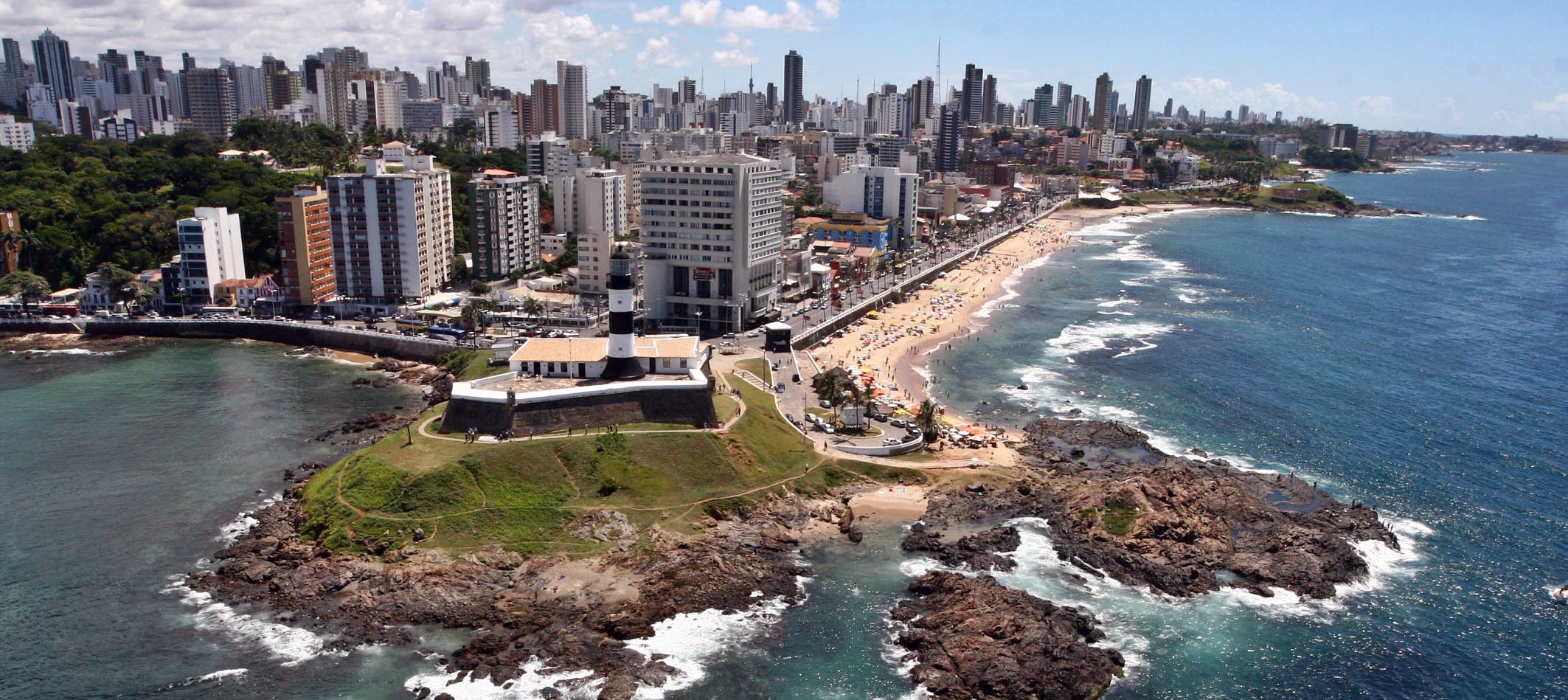
Why Salvador / Bahia is Perfect for Your Celebration
- Unique Afro-Brazilian cultural backdrop — drumming, capoeira, and Candomblé traditions create an unforgettable celebration atmosphere
- Historic Pelourinho district offers colonial-era courtyards and baroque architecture as dramatic event settings
- Long Atlantic coastline with beachfront resorts ideal for outdoor ceremonies and receptions
- Dry season (Jan, Feb, Sep–Dec) delivers reliably clear skies and warm temperatures for outdoor events
- Direct international flights from major cities in Europe, the Americas, and across Brazil via SSA airport
- Rich local vendor ecosystem — experienced in large-scale festive events, live entertainment, and Bahian cuisine

Compare Salvador / Bahia with Other Top Destinations
Frequently Asked Questions
Is Salvador / Bahia a good destination for a wedding?
Yes. Salvador / Bahia is particularly well-suited to destination weddings that prioritize cultural immersion, scenic variety, and a festive atmosphere. The combination of colonial heritage venues in the Pelourinho district, beachfront resort settings along the Atlantic coast, and a rich local entertainment ecosystem makes it a genuinely distinctive choice for couples seeking something beyond a standard resort wedding.
What is the best time of year to hold a wedding or event in Salvador / Bahia?
The dry season — January, February, and September through December — is the recommended window. These months offer lower humidity, infrequent rainfall, and warm temperatures well-suited to outdoor ceremonies and receptions. March through August is the wet season, with heavy and frequent rainfall that poses real risks to outdoor event delivery and is generally best avoided for celebration planning.
How do guests typically travel to Salvador / Bahia for a destination event?
Almost all guests arrive by air via Deputado Luís Eduardo Magalhães International Airport (SSA), located approximately 28 km from the city center. The airport has direct international connections from Europe and North America, and frequent domestic flights from São Paulo, Rio de Janeiro, Brasília, and other major Brazilian cities. There is no significant long-distance rail service to Salvador.
What kinds of venues are available for events in Salvador / Bahia?
Salvador offers a genuinely diverse range: colonial heritage properties and converted convents in the historic Pelourinho district, beachfront and coastal resort venues along the Orla, modern hotel ballrooms in business districts like Pituba and Campo Grande, and smaller boutique properties in neighborhoods such as Rio Vermelho and Barra. The inventory spans intimate settings for smaller celebrations through to larger ballrooms for several hundred guests.
How many guests can Salvador / Bahia realistically accommodate for a destination event?
The local venue inventory comfortably supports events in the range of roughly 50 to 500 guests across its various venue types. Heritage and boutique properties tend to suit smaller, more intimate gatherings, while larger hotel ballrooms and resort facilities can accommodate mid-to-large guest lists. Very large events requiring 800 or more guests under a single roof may find the available capacity more limited than in Brazil's largest metropolitan centers.
What makes Salvador / Bahia's local vendor ecosystem suited to events?
Salvador has a mature event production infrastructure shaped by decades of hosting Carnival — one of the world's largest and most logistically complex annual celebrations. This means the city has an experienced pool of event producers, live entertainment coordinators (musicians, capoeira groups, percussionists), catering specialists in Bahian cuisine, and large-scale logistics providers. This depth is a genuine differentiator compared to smaller or less event-experienced destinations.
Is local transport easy to arrange for a large guest group in Salvador?
It requires advance planning. Salvador's public transport is not well-suited to moving large event groups between venues, and the city's hilly geography means journey times can be longer than distances suggest. Private coach and minibus transfers arranged through hotels or event coordinators are the standard solution. Planners should build transfer logistics into the event program early, particularly for multi-venue itineraries.
Can Afro-Brazilian cultural elements genuinely be incorporated into a celebration in Salvador?
Yes, and this is one of Salvador's strongest differentiators. The city has a deep, living tradition of Afro-Brazilian culture — professional capoeira groups, percussion ensembles, Bahian cuisine specialists, and cultural performers are widely available and experienced in event contexts. These elements can be meaningfully integrated into ceremonies, receptions, and entertainment programs rather than being superficial add-ons.
Are there any safety considerations for guests attending an event in Salvador / Bahia?
Like most large Brazilian cities, Salvador requires normal urban caution. Tourist areas, the Pelourinho historic district, and major hotel zones are generally well-managed and routinely visited by international guests. Coordinated private transfers for guest groups — rather than unstructured independent movement, particularly at night — are advisable. A local event coordinator familiar with the city can provide practical guest briefings as part of event planning.
Does the Carnival period affect event planning in Salvador?
Yes, significantly. Carnival — typically held in February or early March — brings millions of visitors to Salvador, pushing accommodation to maximum capacity and elevating rates. Private events planned during this window face heightened logistics complexity and reduced venue and accommodation availability. Planners targeting January or February should confirm whether their specific dates overlap with Carnival and plan accordingly, or consider the September–December dry season window instead.
What types of celebrations beyond weddings work well in Salvador / Bahia?
Salvador suits a range of celebration types. Milestone social events such as significant birthdays and anniversaries benefit from the city's natural festive energy and live entertainment culture. Corporate retreats and incentive groups find genuine experiential value in the cultural programming available. Culturally themed events — incorporating Bahian cuisine, music, and performance — are particularly well-supported by the local vendor ecosystem.

Ready to explore venues in Salvador / Bahia?
Salvador / Bahia: Destination Wedding & Event Venues in Brazil's Cultural Capital
◆Salvador / Bahia is best suited to couples and event planners seeking a culturally immersive, festive, and visually dramatic celebration. Its primary strength lies in its Afro-Brazilian heritage, colonial architecture, and Atlantic beachfront — making it particularly well-matched to destination weddings, large social celebrations, and cultural festivals. The dry season (January, February, and September through December) provides the most reliable outdoor conditions. Accessibility is generally good via direct international and domestic flights, and the local hospitality and vendor ecosystem is experienced in large-scale, entertainment-rich events. It is a mid-to-upper-range destination in the Brazilian context.
Salvador / Bahia at a Glance
| Category | Detail |
|---|---|
| Best For | Destination Weddings, Social Celebrations, Cultural Festivals, Corporate Events |
| Primary Vibe | Vibrant & Festive |
| Other Vibes | Cultural, Coastal, Heritage, Romantic |
| Best Season | Dry Season (Jan, Feb, Sep, Oct, Nov, Dec) |
Why Choose Salvador / Bahia?
- Unmatched cultural depth: Salvador is the heartland of Afro-Brazilian culture — Candomblé ceremonies, capoeira performances, and the rhythms of axé and samba-reggae give celebrations here a genuinely unique character that no other Brazilian city can replicate.
- Historic Pelourinho as a living event backdrop: The UNESCO-listed Pelourinho district offers baroque churches, cobblestone squares, and colonial mansions that function as dramatic, ready-made settings for ceremonies and receptions without requiring heavy decoration.
- Atlantic beachfront diversity: Salvador's coastline stretches across multiple distinct neighborhoods — from the calmer waters near Barra to the livelier beaches of Ondina and Rio Vermelho — giving planners a range of outdoor ceremony and reception environments.
- Experienced festive event infrastructure: As the host city of one of the world's largest carnival celebrations, Salvador has a deeply developed local ecosystem of event producers, live entertainment coordinators, catering specialists, and large-scale logistics providers.
- Good international air connectivity: Deputado Luís Eduardo Magalhães International Airport (SSA) receives direct flights from major European hubs, North American gateways, and cities across Brazil, making it reasonably accessible for international guest groups.
- Dry season reliability: The January–February and September–December dry windows offer consistently warm, lower-humidity conditions that are well-suited to outdoor ceremonies, garden receptions, and beachfront events.
Which Celebrations Work Best in Salvador / Bahia?
- Destination Weddings: The combination of heritage venues in the historic center, beachfront resort settings, and a festive local culture makes Salvador particularly well-suited to couples who want their wedding to feel like a genuine cultural experience rather than a generic resort event. Both intimate ceremonies and larger celebrations are supported by the local venue inventory.
- Social Celebrations (Milestone Birthdays, Anniversaries): Salvador's natural festive energy — live music, vibrant street culture, and a strong tradition of communal celebration — makes it an excellent setting for milestone social events where the destination itself becomes part of the entertainment.
- Cultural Festivals & Themed Events: Groups seeking to incorporate Afro-Brazilian cultural programming — drumming ensembles, capoeira demonstrations, traditional Bahian cuisine — will find Salvador uniquely equipped to deliver authentic experiences that are difficult to source elsewhere.
- Corporate Retreats & Incentive Events: The city's combination of modern hotel conference facilities, distinctive cultural excursions, and a memorable atmosphere makes it a strong choice for corporate groups seeking an incentive destination with genuine experiential value beyond a standard hotel ballroom.
Venues & Event Spaces
Salvador / Bahia offers a genuinely diverse range of event venue types, spanning several distinct categories:
- Colonial heritage properties: Converted convents, historic mansions, and baroque-era buildings in and around the Pelourinho district provide atmospheric indoor and courtyard event spaces with strong architectural character. These are particularly popular for ceremonies and intimate receptions.
- Beachfront and coastal resorts: Several full-service resort properties along the Orla (coastal strip) offer outdoor ceremony lawns, terraces with Atlantic views, and indoor ballrooms capable of accommodating larger guest lists. These venues typically provide integrated accommodation, catering, and event coordination.
- Modern hotel ballrooms: Larger business-class hotels in neighborhoods such as Pituba and Campo Grande offer contemporary ballroom and conference facilities suited to corporate events, gala dinners, and receptions requiring significant capacity.
- Outdoor public and semi-public spaces: Salvador's squares, fortresses (such as the Forte de Santo Antônio da Barra area), and waterfront promenades can be incorporated into event programming for cocktail hours, cultural performances, and pre-ceremony gatherings, typically requiring coordination with local authorities.
- Boutique and independent properties: A number of smaller, independently operated guesthouses and boutique hotels — particularly in Rio Vermelho and Barra — offer more intimate settings for smaller celebrations or for housing key guests in a characterful environment.
Best Time to Celebrate
The curated best season for Salvador / Bahia is the Dry Season: January, February, and September through December. Here is why these months work well and what distinguishes them from the rest of the year:
- January and February are warm, relatively dry, and coincide with the lead-up to Carnival (typically in February or early March). This period offers excellent outdoor conditions, though planners should be aware that Carnival itself draws very large crowds to the city, which can affect accommodation availability and logistics for private events scheduled in the same window.
- September through December represents the most consistently reliable window for outdoor events. Humidity is lower than in the wet season, rainfall is infrequent, temperatures are warm but manageable, and the city is not at peak tourist saturation. This is generally the most practical period for destination weddings and corporate events that require predictable outdoor conditions.
- March through August constitutes Salvador's wet season, with March through June being particularly rainy. Rainfall during this period is frequent and can be heavy, making outdoor ceremonies and receptions genuinely risky without substantial covered contingency infrastructure. Humidity is also at its highest, which affects guest comfort. Event planners who must use this window should budget for full indoor or covered venue solutions and accept that the outdoor coastal aesthetic that defines Salvador's appeal will be harder to deliver reliably.
Getting There & Local Connectivity
Salvador is served by Deputado Luís Eduardo Magalhães International Airport (SSA), located approximately 28 km from the historic city center. The airport handles direct international routes from Europe (notably Lisbon and other Portuguese-speaking hubs), North America, and a wide network of domestic Brazilian cities including São Paulo, Rio de Janeiro, Brasília, and Recife. For most international guest groups, a connection through São Paulo (GRU) or Lisbon is the most common routing.
Within the city, local transport for event groups typically relies on private coach and minibus transfers arranged through event coordinators or hotels, as Salvador's public transport network — while functional for residents — is not well-optimized for moving large guest groups between dispersed venues efficiently. The city's geography, built across a series of hills (the Upper City and Lower City are connected by the historic Lacerda Elevator and road routes), means that journey times between neighborhoods can be longer than distances suggest. Planners should factor in transfer logistics carefully, particularly for multi-venue event programs.
There is no significant long-distance intercity rail service serving Salvador; guests arriving from other Brazilian cities will almost universally do so by air. The city's metro system is limited in coverage and is not a practical solution for event group movement.
Local Vendor & Hospitality Ecosystem
Salvador's vendor ecosystem is one of its genuine strengths for event planning. As the host of one of the world's most logistically complex annual celebrations — Carnival, which draws millions of visitors — the city has developed a mature infrastructure of event production companies, live entertainment coordinators, catering specialists, and large-scale logistics providers that is well above average for a city of its size.
- Catering and cuisine: Bahian cuisine is among the most distinctive in Brazil, with strong West African influences — dishes such as moqueca, acarajé, and vatapá are genuinely celebrated and can be incorporated into event menus as a meaningful cultural element rather than a generic local touch.
- Live entertainment: The local pool of professional musicians, percussionists, capoeira groups, and cultural performers is deep and experienced in event contexts. This is a genuine differentiator for Salvador compared to many other destination cities.
- Floral and décor: Tropical florals are abundant and locally sourced, and there is a growing community of event designers who work with the city's colonial and coastal aesthetics effectively.
- International vendor coordination: Couples or planners bringing vendors from outside Brazil should be aware that local licensing, import logistics for specialist equipment, and language coordination (Portuguese is the working language of the local vendor community) require advance planning and ideally a bilingual local coordinator.
Pros & Things to Consider
Why Salvador / Bahia Works Well
- Genuinely distinctive cultural identity — no other destination in South America offers the same Afro-Brazilian heritage depth
- Diverse venue typology spanning colonial heritage, beachfront resort, and modern hotel formats
- Experienced local event production ecosystem, shaped by decades of large-scale Carnival logistics
- Warm, tropical climate during the dry season with reliable outdoor conditions
- Good international air connectivity via SSA airport, with direct routes from Europe and major Brazilian hubs
- Rich local cuisine and entertainment options that can be meaningfully integrated into event programming
Things to Consider
- Wet season risk is significant: March through August brings frequent heavy rainfall that can seriously disrupt outdoor events — this is not a mild shoulder season but a genuine operational challenge.
- Carnival period congestion: Events planned in February or early March must account for the city being at maximum tourist capacity, with accommodation rates elevated and logistics more complex.
- Language barrier: Portuguese is the working language; international guests and planners without Portuguese-language support will need a bilingual local coordinator for smooth vendor and logistics management.
- Safety awareness required: Like many large Brazilian cities, Salvador has areas where personal safety requires normal urban caution. Tourist and event districts are generally well-managed, but guest briefings and coordinated transfers are advisable rather than unstructured independent movement.
- Group transport logistics: The city's hilly geography and limited public transport mean that private transfers for large guest groups require careful advance coordination and add to event logistics complexity.
When Salvador / Bahia May Not Be the Right Fit
- Outdoor-focused events during the wet season (March–August): If your event concept depends on outdoor ceremonies, garden receptions, or beachfront settings and your dates fall in the rainy season, Salvador's climate makes reliable delivery genuinely difficult. A destination with a more forgiving year-round climate would be a safer choice.
- Guests with limited international travel flexibility: While SSA has reasonable connectivity, guests traveling from regions without direct or convenient routing to Salvador may face long multi-leg journeys. If the majority of your guest list is based in a region poorly connected to Bahia, the travel burden may outweigh the destination's appeal.
- Very large-scale events requiring 800+ guests under one roof: Salvador's heritage and boutique venue inventory is strongest in the small-to-medium range. While larger hotel ballrooms exist, the city does not have the same density of very high-capacity purpose-built event venues as Brazil's largest metropolitan centers. Planners requiring very large single-space capacity should verify specific venue availability carefully.
- Planners seeking a low-complexity, fully standardized event experience: Salvador's greatest strengths — its cultural distinctiveness, its geography, its festive character — also introduce logistical complexity. Couples or planners seeking a straightforward, highly standardized resort-wedding experience with minimal coordination overhead may find a more purpose-built resort destination a better operational fit.