
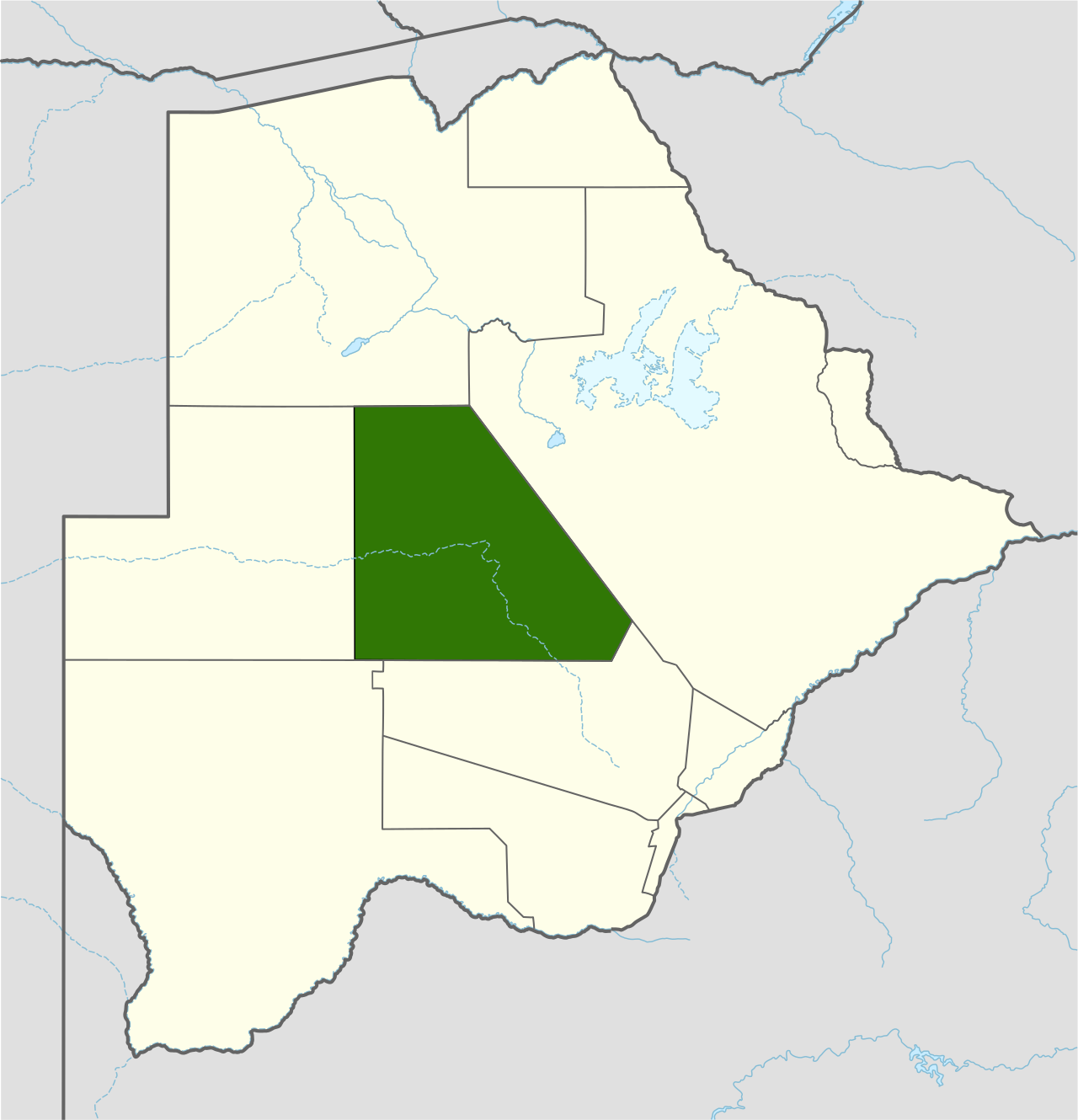
Why Central Kalahari is Perfect for Your Celebration
- Extraordinary exclusivity — the reserve's sheer scale means near-total privacy for intimate events
- Dramatic natural backdrops: Deception Valley, Baines' Baobabs, and vast Kalahari salt pans
- Dry season (May–Sep) delivers clear skies, mild temperatures, and outstanding wildlife sightings
- Exclusive-use safari camp buyouts allow fully bespoke, private celebrations for small groups
- Unmatched star-gazing conditions — near-zero light pollution makes night events truly spectacular
- Authentic Big Five and predator wildlife encounters woven naturally into the event experience

Compare Central Kalahari with Other Top Destinations
Frequently Asked Questions
Is the Central Kalahari a good destination for a wedding?
Yes, for the right couple. The Central Kalahari is particularly well-suited to intimate wilderness weddings of under 30 guests who want total privacy, extraordinary natural scenery, and a multi-day safari experience woven into their celebration. It is not suited to large weddings or guests who prefer conventional hotel comfort. Exclusive-use camp buyouts are the standard format for events here.
How many guests can realistically attend an event in the Central Kalahari?
Most camps within the reserve accommodate between 16 and 24 guests at full capacity. This makes the Central Kalahari best suited to very intimate celebrations — elopements, micro-weddings, milestone birthdays, or small group retreats. Groups larger than approximately 30 guests will find the local accommodation and event infrastructure insufficient to support them comfortably.
What is the best time of year to hold a celebration in the Central Kalahari?
The dry season — May through September — is the only genuinely recommended window. This period offers clear skies, accessible tracks, mild to warm daytime temperatures, and excellent wildlife activity. October and November bring extreme pre-rains heat, while December through March is the rainy season when many tracks become impassable and some camps close entirely.
How do guests get to the Central Kalahari Game Reserve?
Most guests arrive via Sir Seretse Khama International Airport in Gaborone or Maun Airport, which serves as the primary northern gateway. From Maun, light aircraft charters to airstrips within or near the reserve are the most practical option. Road access is possible from Gaborone via the southern entry points but requires high-clearance 4WD vehicles and involves substantial journey times on sandy tracks.
What kinds of venues and event spaces are available in the Central Kalahari?
Events are hosted within exclusive-use tented safari camps and permanent lodge properties. These feature open-sided dining areas, elevated decks, and intimate communal spaces. Ceremonies are typically held outdoors — on salt pans, beneath ancient trees, or on viewing platforms at dusk. There are no conventional banquet halls, marquee venues, or external event spaces within the reserve.
Can external vendors — photographers, florists, entertainers — work at events in the Central Kalahari?
Yes, but with significant logistical planning. No external vendors operate independently within the reserve. Any specialist supplier must be brought in from Maun, Gaborone, or further afield, coordinated well in advance. Catering is typically handled by the camp's own kitchen team. Working with an experienced Botswana-based destination management company is strongly recommended to manage supplier logistics effectively.
Is there mobile phone or internet connectivity in the Central Kalahari?
No. Mobile phone signal is absent across virtually the entire reserve. Camps operate on satellite communication systems for essential contact with the outside world. This makes real-time event coordination during the stay impossible via conventional means, and event planners should ensure all logistics are fully confirmed before guests arrive. Many guests consider the digital disconnect a significant part of the appeal.
What makes the Central Kalahari distinctive as an event destination compared to a conventional resort?
The Central Kalahari offers near-total privacy, one of Africa's darkest night skies, extraordinary wildlife encounters, and a landscape — vast salt pans, ancient fossil riverbeds, open savannah — that no constructed venue can replicate. The exclusive-use camp format means the entire property is dedicated to your group. The trade-off is limited guest capacity, complex access logistics, and restricted external vendor availability.
What is the weather like during the dry season event window?
May and June bring warm days (around 22–26°C) and cold nights that can drop below 5°C. July and August are the peak months — sunny days of 22–28°C with cold nights. September warms noticeably, with daytime temperatures climbing toward the low 30s°C by month's end. All dry season months offer clear skies and low humidity, with no meaningful rain risk.
Is the Central Kalahari suitable for guests who are not experienced safari travellers?
It can be, with the right preparation and expectation-setting. Camp teams are experienced at welcoming first-time safari guests and managing the transition from urban comfort to wilderness living. However, the remote setting, absence of connectivity, cold nights in peak season, and multi-leg travel are genuine adjustments. Groups with guests who have very low tolerance for rustic conditions or complex travel should consider this carefully.
How far in advance should an event in the Central Kalahari be planned?
Significantly further in advance than a conventional destination event — typically 12 to 18 months for a dry season date. Exclusive-use camp buyouts at the most sought-after properties book out well ahead of the May–September window. Coordinating external suppliers, light aircraft charters, and international guest travel also requires extended lead time. Last-minute planning is not realistic for this destination.

Ready to explore venues in Central Kalahari?
Central Kalahari: Wilderness Event & Celebration Destination Guide
◆The Central Kalahari Game Reserve in Botswana is best suited to small, exclusive, nature-immersed celebrations — intimate weddings, milestone birthdays, and private social gatherings for groups typically under 30 guests. Its primary vibe is raw wilderness: vast salt pans, ancient fossil riverbeds, open savannah, and near-total seclusion. The dry season (May through September) is the only genuinely practical window for events, offering accessible tracks, mild daytime temperatures, and exceptional wildlife activity. Accessibility is genuinely challenging — guests require multi-leg international travel plus light aircraft or long 4WD road transfers — making this a destination for committed, adventurous groups rather than large or mixed-mobility guest lists.
Central Kalahari at a Glance
| Category | Detail |
|---|---|
| Best For | Intimate Wilderness Weddings, Milestone Birthdays, Exclusive Social Gatherings, Elopements |
| Primary Vibe | Nature & Wilderness |
| Other Vibes | Seclusion, Adventure, Romance, Stargazing |
| Best Season | Dry Season (May, Jun, Jul, Aug, Sep) |
Why Choose Central Kalahari?
- Unrivalled exclusivity: At roughly 52,000 square kilometres, the Central Kalahari Game Reserve is one of the largest protected areas on Earth. Exclusive-use camp buyouts deliver a level of privacy that is simply unavailable in more accessible destinations — your group, your landscape, your event.
- Dramatic, cinematic natural backdrops: Deception Valley's ancient fossil riverbed, the Baines' Baobabs area, and the vast Piper and Passarge salt pans provide scenery that no constructed venue can replicate — particularly at sunrise and sunset when the Kalahari light turns the landscape gold and amber.
- Near-zero light pollution: The reserve's remoteness means night skies are among the darkest on the African continent, making evening celebrations and stargazing experiences genuinely extraordinary rather than a marketing claim.
- Integrated wildlife experience: Game drives, guided walks, and natural wildlife encounters — including lions, cheetahs, brown hyenas, and large herds of gemsbok and springbok — can be woven directly into the event programme, creating a multi-day experience guests will not forget.
- Dry season reliability: May through September delivers consistently clear skies, low humidity, and cool to mild temperatures, with no meaningful risk of the track flooding or access being cut off that characterises the summer rainy season.
- Genuine remoteness as a feature: For couples and hosts who want guests to be fully present — no city distractions, no phone signal, no outside world — the Central Kalahari's isolation is a deliberate and powerful asset rather than a logistical inconvenience.
Which Celebrations Work Best in Central Kalahari?
- Intimate wilderness weddings: The reserve is particularly well-suited to small ceremonies of under 30 guests, where the landscape itself becomes the centrepiece. Exclusive-use camp buyouts allow the entire property to be dedicated to the couple's event, with ceremonies held on salt pans, under ancient camelthorn trees, or beside fossil riverbeds at sunset.
- Elopements and micro-weddings: For couples seeking a truly private, just-the-two-of-us or very small inner-circle celebration, the Central Kalahari offers a setting that is both deeply romantic and logistically manageable at very small scale — some camps can accommodate as few as two guests in full exclusive style.
- Milestone birthday celebrations: A significant birthday — a 40th, 50th, or 60th — celebrated on a private safari in one of Africa's most remote reserves is a genuinely memorable alternative to a conventional party. The multi-day format naturally builds a shared experience among a close group of friends or family.
- Private social gatherings and group retreats: Small groups of friends or colleagues seeking a completely off-grid, immersive experience — combining game drives, guided walks, and shared meals under the stars — find the Central Kalahari's exclusive-use camps ideally structured for this format.
Venues & Event Spaces
The Central Kalahari's event infrastructure is built around exclusive-use tented safari camps and permanent lodge properties. These are not conventional hotel ballrooms or banquet halls — they are purpose-built wilderness camps with open-sided dining areas, elevated decks overlooking waterholes or salt pans, and intimate communal spaces designed for small groups. Ceremonies are typically held outdoors: on the open pan, beneath a stand of ancient trees, or on a raised viewing platform at dusk. Dining is commonly set up in the bush itself — a long table on the salt pan under a canopy of stars is a signature format at several properties.
Because the reserve is a protected national park, all event infrastructure must be provided by or coordinated through the licensed camps operating within it. There are no external banquet venues, marquee hire companies operating inside the reserve, or conventional event halls. This means the camp's own team — typically a small, highly experienced safari hospitality crew — manages all catering, décor, and logistics. Groups should expect intimate, curated service rather than large-scale production capability.
Best Time to Celebrate
The dry season, running from May through September, is the only genuinely recommended window for events in the Central Kalahari, and this is not simply a matter of preference — it is a practical necessity for most groups.
- May and June bring cool to cold nights (temperatures can drop below 5°C after dark) and warm, clear days. Wildlife concentrates around permanent water sources, making game drives particularly rewarding. The landscape is dry and golden, with excellent photographic light.
- July and August are the peak dry season months — the most popular for events. Days are warm and sunny (typically 22–28°C), nights are cold but manageable with proper camp equipment, and the reserve is at its most accessible. Dust can be a factor on long 4WD transfers.
- September marks the transition toward the pre-rains period. Temperatures begin to climb noticeably, and by late September daytime heat can reach the low 30s°C. It remains a viable event month, particularly in the first half.
- October and November are genuinely difficult: extreme pre-rains heat regularly exceeds 38°C, the landscape is parched and harsh, and the combination of heat and dust makes outdoor celebrations uncomfortable. These months are not recommended.
- December through March is the summer rainy season. While the rains transform the Kalahari into a green, flower-filled landscape of remarkable beauty, the sandy tracks become impassable for standard vehicles, access to many areas of the reserve is cut off entirely, and some camps close for the season. Events during this period are not practically viable for most groups.
- April is a transitional month — rains are tapering off but tracks may still be soft, and conditions are unpredictable. It is generally not recommended for event planning.
Getting There & Local Connectivity
Reaching the Central Kalahari requires deliberate planning and typically involves multiple travel legs. Most international guests arrive via Sir Seretse Khama International Airport in Gaborone (Botswana's capital) or via Maun Airport, which serves as the primary gateway for northern Botswana safari destinations. From Maun, light aircraft charters to airstrips within or adjacent to the reserve are the standard and most practical option — road transfers from Maun are possible but involve several hours on sandy 4WD tracks and require high-clearance vehicles.
From Gaborone, the reserve's southern entry points are accessible by road, but the distances involved — and the nature of the tracks inside the reserve — mean that 4WD vehicles are essential and journey times are substantial. There is no railway access to the reserve or its surrounding areas.
Within the reserve itself, movement is entirely by 4WD game drive vehicle, guided by camp staff. There is no public transport, no taxi infrastructure, and no conventional road network. Guests should expect to be fully dependent on the camp's own logistics for all movement during their stay — which, for a private event group, is typically managed seamlessly by the camp team.
Connectivity within the reserve is extremely limited. Most camps operate on satellite communication systems, and mobile phone signal is absent across the vast majority of the reserve. This is a feature for many guests seeking a genuine digital detox, but event planners should factor in the absence of real-time communication when coordinating logistics.
Local Vendor & Hospitality Ecosystem
The Central Kalahari's hospitality ecosystem is small, highly specialised, and built around the safari camp model rather than a conventional events industry. The camps operating within the reserve — particularly those affiliated with established safari operators — bring considerable experience in delivering high-quality, bespoke wilderness hospitality for small groups. Catering is typically handled entirely in-house by the camp kitchen team, using a combination of provisions brought in from Maun or Gaborone and, where possible, locally sourced ingredients.
External vendors — florists, photographers, entertainment companies, specialist caterers — do not operate within the reserve independently. Any specialist supplier required for an event must be brought in from outside, typically from Maun, Gaborone, or in some cases from South Africa. This adds logistical complexity and lead time to event planning, and groups should work closely with the camp's own event coordinator (or an experienced Botswana-based destination management company) to manage supplier logistics well in advance.
The quality of hospitality within the camps themselves is generally very high — experienced safari guides, skilled bush chefs, and attentive camp managers are the norm at the established properties. However, the scale of what can be produced is inherently limited by the remote setting: large floral installations, elaborate production lighting rigs, or complex multi-vendor event setups are not practically achievable in the way they would be in an urban or resort destination.
Pros & Things to Consider
Why Central Kalahari Works Well
- Absolute privacy and exclusivity — exclusive-use camp buyouts eliminate any possibility of sharing the space with other guests
- Scenery and atmosphere that no constructed venue can replicate — salt pans, ancient trees, open savannah, and extraordinary night skies
- Integrated multi-day experience — game drives, guided walks, and bush dining naturally fill a 3–5 day event programme
- Dry season reliability — May through September delivers consistently clear, accessible conditions with minimal weather risk
- Highly experienced, attentive camp hospitality teams accustomed to delivering bespoke experiences for small groups
- Genuinely transformative for guests — the combination of remoteness, wildlife, and landscape creates a shared experience that bonds a group in a way few other destinations can
Things to Consider
- Guest numbers are inherently limited — most camps accommodate a maximum of 16–24 guests, making this unsuitable for larger celebrations
- Multi-leg travel is unavoidable — international flights, a domestic connection or charter flight, and potentially a long 4WD transfer mean guests with limited mobility or low travel tolerance may find the journey difficult
- External vendor access is very restricted — specialist suppliers must be brought in from outside the reserve, adding cost, complexity, and lead time
- No mobile connectivity within the reserve — real-time communication during the event is not possible via conventional means
- The dry season window is firm — attempting an event outside May–September carries genuine logistical risk, particularly around track access and extreme heat
- The wilderness setting is not for everyone — guests who prefer urban comfort, reliable air conditioning, or conventional hotel amenities may find the camp environment challenging
When Central Kalahari May Not Be the Right Fit
- Large guest lists: If your celebration requires more than approximately 25–30 guests in one place at one time, the Central Kalahari's camp infrastructure cannot comfortably support it. A destination with larger resort or hotel capacity would be a more practical choice.
- Guests with limited mobility or low travel tolerance: The multi-leg journey — international flight, domestic connection or charter, and 4WD transfer — is demanding. Guests who find long or complex travel difficult, or who require accessible facilities, will find this destination genuinely challenging.
- Events planned outside the dry season: If your preferred dates fall between October and April, the Central Kalahari is not a reliable choice. Extreme heat, summer rains, and track access issues make event planning in this window impractical for most groups.
- Groups seeking conventional event production: If your vision includes large-scale décor, elaborate lighting rigs, live bands with full production equipment, or a wide choice of external vendors, the logistical constraints of a remote wilderness reserve will make achieving that vision very difficult. A resort or urban destination would serve this need better.