
Why Thimphu is Perfect for Your Celebration
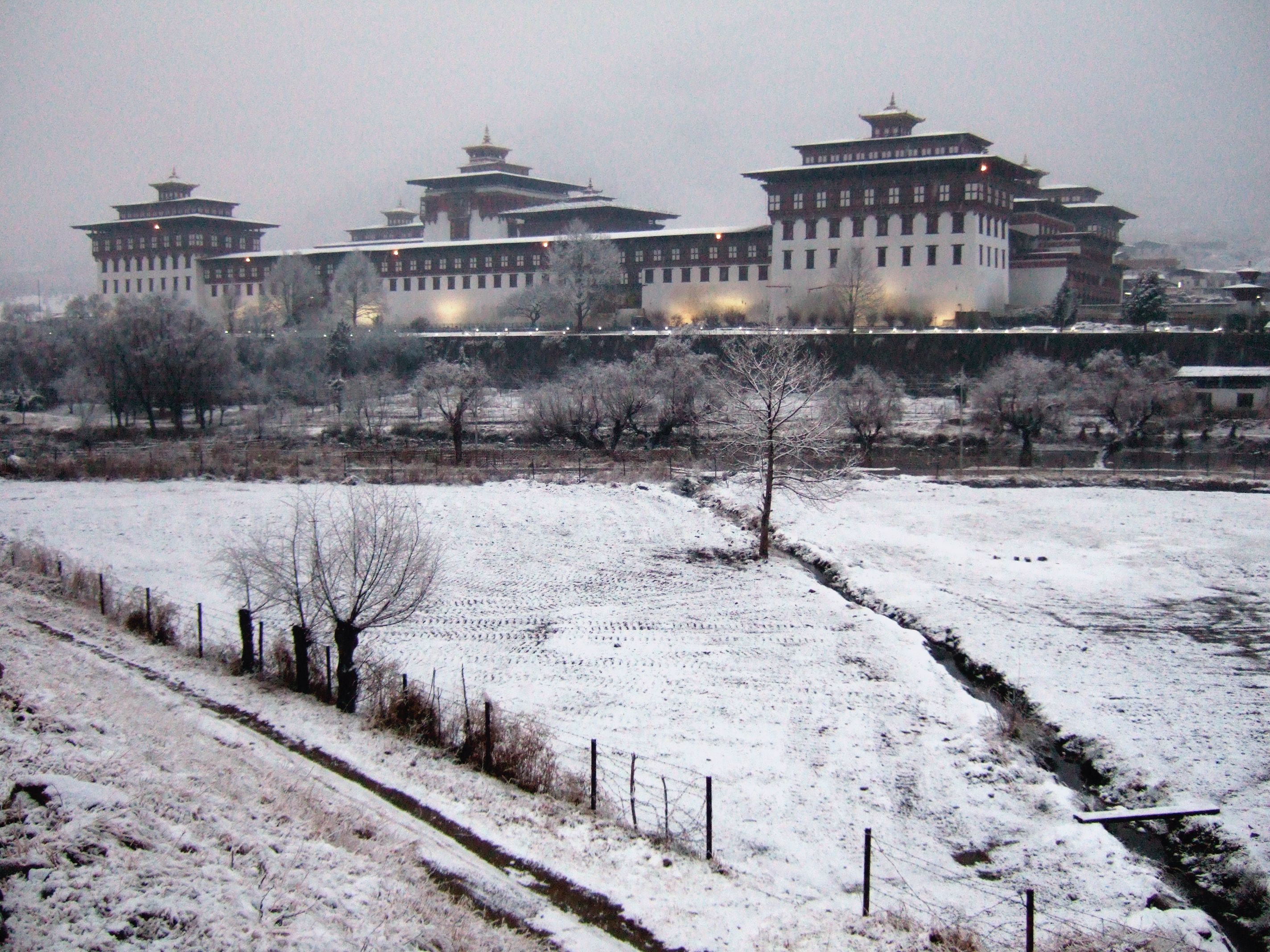
- Iconic Dzong fortresses and monastery backdrops create unmatched ceremonial settings
- Bhutan's strict low-volume tourism policy ensures exclusivity and privacy for events
- Crisp Himalayan air and forested valley scenery make spring and autumn celebrations visually stunning
- Authentic Bhutanese cultural performances, cuisine, and rituals can be woven into event programming
- The city's compact scale means guests, venues, and experiences are all within easy reach
- Bhutan's 'high value, low impact' tourism ethos aligns naturally with intimate, meaningful celebrations
Compare Thimphu with Other Top Destinations
Frequently Asked Questions
Is Thimphu a good destination for a wedding?
Yes, particularly for intimate weddings. Thimphu suits couples seeking a deeply meaningful, culturally rich celebration in a genuinely unique Himalayan setting. It works best for smaller guest lists — typically under 150 to 200 guests — where the focus is on experience, scenery, and cultural authenticity rather than large-scale production. The city's luxury properties offer dedicated event coordination and can manage the full logistics of a destination wedding in Bhutan.
What is the best time of year to hold an event in Thimphu?
Spring (March, April, May) and autumn (September, October, November) are the best periods. Both seasons offer clear skies, comfortable daytime temperatures, and minimal rainfall. October is particularly popular for its exceptional mountain visibility and the cultural richness of the Bhutanese festival calendar. Monsoon months (June–August) and winter (December–February) present significant weather and comfort challenges and are generally best avoided for outdoor or multi-day events.
How do guests travel to Thimphu for an event?
All guests fly into Paro International Airport — the only international airport in Bhutan — and then travel by road to Thimphu, approximately 55 km away (roughly one to one-and-a-half hours). Paro is connected to several regional hubs including Delhi, Mumbai, Kolkata, Kathmandu, Bangkok, and Singapore. There is no railway network in Bhutan. Event planners should coordinate guest flights well in advance, as seat availability into Paro can be limited during peak season.
Do guests need a visa to attend an event in Bhutan?
Yes. All international visitors to Bhutan — including event guests — require a visa and a tourism permit, which must be arranged in advance through a licensed Bhutanese tour operator or the event's host property. This is a standard requirement under Bhutan's tourism policy and applies to virtually all nationalities. Indian, Bangladeshi, and Maldivian nationals have a simplified permit process. Event planners should build visa coordination into their guest management timeline well ahead of the event date.
What kinds of venues are available for events in Thimphu?
Thimphu offers indoor banquet halls, landscaped outdoor terraces, and courtyard spaces within its luxury and heritage hotel properties, all designed with traditional Bhutanese architectural elements. Boutique properties can often be partially or fully bought out for private events. The city also has access to cultural performance spaces that can supplement event programming. Large-scale standalone convention or banquet facilities are limited — the destination is best suited to intimate, property-based event formats.
How many guests can Thimphu realistically accommodate for a destination event?
Thimphu comfortably supports events up to around 150–200 guests when accommodation and venue capacity across the city's properties are considered together. For events approaching or exceeding 250 guests, planners may find the combined venue and accommodation inventory stretched. The destination is genuinely best suited to smaller, more intimate gatherings where quality of experience takes precedence over scale.
What makes Thimphu distinctive as an event destination compared to other Himalayan cities?
Thimphu is the only capital city in the world with no traffic lights — a small but telling symbol of its deliberate, unhurried character. More substantively, it is the only destination where Bhutan's living Buddhist culture, Dzong fortress architecture, and government-mandated low-volume tourism combine to create an event setting that is structurally exclusive and culturally immersive in ways that cannot be replicated elsewhere in the Himalayan region.
Is Thimphu safe for international event guests?
Yes. Bhutan consistently ranks among the safest countries in Asia for international visitors. Crime rates are very low, the political environment is stable, and the local population is generally welcoming toward international guests. The main safety considerations for event planners are altitude-related (Thimphu sits at approximately 2,300 metres, which can affect some guests) and road conditions during the monsoon season, rather than personal safety concerns.
What cultural elements can be incorporated into an event in Thimphu?
Quite a range. Traditional Bhutanese masked dances (Cham), archery demonstrations, local music performances, Buddhist blessing ceremonies, and authentic Bhutanese cuisine can all be meaningfully woven into event programming. These are genuine cultural offerings rather than tourist simulations, and they are among the strongest reasons to choose Thimphu for a celebration where the guest experience extends beyond the event itself.
What should event planners know about local vendors and hospitality services in Thimphu?
The city's luxury properties have experienced in-house event teams capable of managing destination weddings and corporate retreats. Local catering, cultural performers, and basic décor vendors are available. However, the ecosystem is smaller than in more established event destinations — highly specialised production, floral, or lighting vendors may need to be sourced from outside Bhutan. Planners should discuss vendor requirements with their host property early in the planning process to identify any gaps.
Is Thimphu suitable for corporate retreats and offsites?
Yes, particularly for senior leadership retreats, strategy offsites, and incentive travel programmes. The city's calm, distraction-free environment, improving conference infrastructure within its luxury properties, and the broader Bhutan experience — which is genuinely motivating for most international professionals — make it a compelling choice for smaller corporate groups. It is less suited to large-scale conferences or conventions requiring extensive delegate infrastructure.
What is the altitude in Thimphu, and does it affect event guests?
Thimphu sits at approximately 2,300 metres above sea level. Most guests arriving from lower-altitude cities will experience mild altitude adjustment — occasional breathlessness, fatigue, or headache in the first 24 hours. This is generally manageable and not a serious concern for healthy adults, but event planners should build in an acclimatisation day at the start of the programme and ensure guests are aware of the altitude before travelling. The host property's event team can advise on standard precautions.

Ready to explore venues in Thimphu?
Thimphu: Destination Wedding & Cultural Event Venues in Bhutan
◆Thimphu is Bhutan's capital and its most developed event destination — best suited to intimate weddings, small corporate retreats, and culturally immersive celebrations for groups typically under 200 guests. Its primary vibe is Cultural & Timeless, shaped by Dzong architecture, Buddhist traditions, and a landscape of forested Himalayan valleys. The best seasons to plan are spring (March–May) and autumn (September–November), when skies are clear and temperatures are comfortable. Accessibility requires advance planning — all guests fly into Paro International Airport, and Bhutan's visa and tourism permit system means logistics need careful coordination. The destination sits at a premium cost tier by regional standards, reflecting Bhutan's high-value, low-volume tourism philosophy.
Thimphu at a Glance
| Attribute | Detail |
|---|---|
| Best For | Intimate Weddings, Cultural Celebrations, Corporate Retreats, Social Gatherings |
| Primary Vibe | Cultural & Timeless |
| Other Vibes | Serene, Exclusive, Himalayan, Heritage |
| Best Season | Spring (Mar, Apr, May, Sep, Oct, Nov) |
Why Choose Thimphu?
- Unmatched ceremonial backdrops: The Tashichho Dzong — a fortress-monastery that serves as Bhutan's seat of government — and other traditional Bhutanese architecture provide a visual setting that no purpose-built event venue can replicate.
- Genuine exclusivity by design: Bhutan's government-mandated low-volume tourism policy means Thimphu never feels crowded. Events here carry an inherent sense of privacy and prestige that is structurally guaranteed, not just marketed.
- Deep cultural programming potential: Authentic Bhutanese elements — traditional masked dances (Cham), archery demonstrations, local cuisine, and Buddhist blessing ceremonies — can be meaningfully integrated into event itineraries, not just offered as superficial add-ons.
- Compact, walkable city scale: Thimphu is small enough that guests staying at different properties can easily converge on a single venue, and the city's main attractions are within short driving distance of one another.
- Internationally branded luxury accommodation: The presence of internationally operated luxury properties alongside heritage independents means event planners can offer guests a range of accommodation styles without sacrificing quality.
- Exceptional natural environment: The surrounding Himalayan landscape — pine forests, river valleys, and mountain ridgelines — provides a natural event canvas that is genuinely rare among capital cities anywhere in the world.
Which Celebrations Work Best in Thimphu?
- Intimate destination weddings: Thimphu is particularly well-suited to smaller weddings — typically under 150 guests — where the couple prioritises meaning, scenery, and cultural depth over scale. The Bhutanese setting lends itself to ceremonies that feel genuinely special rather than formulaic.
- Corporate retreats and leadership offsites: The city's calm, distraction-free environment and improving conference infrastructure make it a compelling choice for senior leadership retreats, strategy offsites, and incentive travel programmes where the goal is focused engagement rather than large-scale conferencing.
- Cultural and heritage celebrations: Anniversary milestones, family reunions, and milestone birthday celebrations that benefit from a rich cultural backdrop — rather than a beach or palace setting — find Thimphu a natural fit.
- Social gatherings with a travel-experience dimension: For groups where the journey itself is part of the celebration — where guests are meant to experience something genuinely new — Thimphu delivers an itinerary that extends well beyond the event itself into sightseeing, monastery visits, and local experiences.
Venues & Event Spaces
Thimphu's event venue landscape is characterised by its intimate scale and strong architectural identity. The most prominent event spaces are found within the city's internationally affiliated luxury hotels, which typically offer indoor banquet halls, landscaped outdoor terraces, and smaller meeting rooms suitable for breakout sessions or pre-event gatherings. These properties are designed to blend Bhutanese architectural motifs — carved woodwork, traditional painted facades, and courtyard layouts — with contemporary event infrastructure including AV systems, catering kitchens, and dedicated event coordination teams.
Beyond hotel venues, Thimphu offers access to heritage-style properties and boutique lodges that can be partially or fully bought out for private events, providing an exclusive-use experience that is particularly appealing for intimate weddings. Outdoor event settings — including hotel lawns and terraced gardens with mountain views — are available and work well during the spring and autumn seasons. Traditional community halls and cultural centres exist in the city and can occasionally be incorporated into event programming for cultural performances or ceremonial elements, though these are typically used as supplementary spaces rather than primary event venues. Large-scale banquet infrastructure for events exceeding 300 guests is limited, which is a genuine planning consideration for larger groups.
Best Time to Celebrate
The curated best seasons for events in Thimphu are spring (March, April, May) and autumn (September, October, November), and both have distinct advantages worth understanding in detail.
Spring (March–May) brings warming temperatures, blooming rhododendrons across the surrounding hillsides, and reliably clear skies. March and April are particularly photogenic, with snow still visible on distant peaks and the valley floor coming alive with colour. Temperatures during the day are comfortable for outdoor events — typically ranging from around 10°C to 20°C — while evenings remain cool, which suits formal dinners and evening receptions well. May begins to warm further and can occasionally see early pre-monsoon cloud build-up, but generally remains a strong month for events.
Autumn (September–November) is widely considered the finest season in Bhutan overall. The monsoon clears by mid-September, leaving the landscape intensely green and the air exceptionally clear. October in particular offers some of the most dramatic mountain visibility of the year, with the high Himalayan peaks visible from Thimphu on clear days. Temperatures are similar to spring — comfortable by day, cool by evening — and the festival calendar (including the Thimphu Tshechu, typically held in September or October) adds a cultural dimension that can be woven into event programming.
Monsoon (June–August) brings persistent rainfall, muddy mountain roads, and significant disruption to outdoor event plans. While indoor events remain possible, the logistical challenges — including occasional road closures on the Paro–Thimphu highway — make this period genuinely difficult for event planning. Winter (December–February) brings cold temperatures, with nights frequently dropping below freezing and occasional snowfall. While the city remains accessible and visually striking in winter, the cold significantly limits outdoor event options and can make guest comfort a real concern, particularly for guests unaccustomed to high-altitude winters.
Getting There & Local Connectivity
All guests travelling to Thimphu arrive via Paro International Airport, which is the only international airport in Bhutan. Paro is approximately 55 km from Thimphu city centre, with a scenic road journey of roughly one to one-and-a-half hours through the Paro and Wang Chhu river valleys. The drive itself is part of the arrival experience — winding through forested mountain terrain — though it does mean guests should factor in transfer time when planning arrival and departure logistics.
Paro International Airport is served by a limited number of airlines, with Druk Air (Bhutan's national carrier) and Bhutan Airlines operating the majority of routes. Direct connections exist from several regional hubs including Delhi, Mumbai, Kolkata, Kathmandu, Bangkok, Singapore, and a small number of other Asian cities. Guests travelling from further afield will typically connect through one of these hubs. The limited number of daily flight slots into Paro — a function of the airport's challenging mountain approach — means that flight availability can be constrained, particularly during peak season. Event planners should coordinate guest travel well in advance and consider block-booking arrangements where possible.
There is no railway network in Bhutan, so road travel from Paro is the only option once guests have landed. Within Thimphu itself, the city is compact and easily navigable by road. Taxis and hotel transfers are the primary modes of local transport for event guests. For groups, private coach or minibus hire is readily available and practical given the city's scale. The main event venues, accommodation properties, and city attractions are all within a relatively short drive of one another, which simplifies group logistics considerably.
Local Vendor & Hospitality Ecosystem
Thimphu's hospitality ecosystem is small but increasingly professional, shaped by Bhutan's deliberate approach to tourism development. The internationally affiliated luxury properties maintain in-house event coordination teams with experience managing destination weddings and corporate events for international guests. These teams are generally well-versed in the logistical requirements of bringing guests into Bhutan — including visa and permit coordination — and can serve as a useful first point of contact for event planning.
Local catering capabilities are genuine and distinctive: Bhutanese cuisine — featuring dishes like ema datshi (chilli and cheese), red rice, and a range of locally sourced ingredients — can be incorporated into event menus alongside international options. The better properties have kitchens capable of producing multi-course event dining to a high standard. Floral and décor vendors exist in the city, though the range of imported or highly specialised décor materials is more limited than in larger South Asian event destinations; planners working with specific aesthetic requirements may need to bring some elements in from outside Bhutan.
Entertainment and cultural performance vendors are a genuine strength: traditional Bhutanese dance troupes, musicians, and cultural performers are available for event programming and add an authenticity that is difficult to replicate elsewhere. Photography and videography professionals with event experience are present in the city, though for very large or highly specialised productions, some planners choose to bring in additional crew from outside. Overall, the ecosystem suits intimate, well-planned events more naturally than large-scale, high-production-value productions that require a deep bench of specialist vendors.
Pros & Things to Consider
Why Thimphu Works Well
- Genuinely unique destination — few places in the world offer this combination of Himalayan scenery, living Buddhist culture, and modern hospitality infrastructure
- Inherent exclusivity and privacy, structurally guaranteed by Bhutan's tourism policy
- Strong luxury accommodation options with experienced event teams
- Rich cultural programming opportunities that make the event itself part of a broader guest experience
- Very safe destination with low crime and a stable, welcoming environment for international guests
- Compact city scale makes group logistics straightforward once guests have arrived
Things to Consider
- All guests must obtain a Bhutanese visa and tourism permit in advance — this adds a layer of administrative coordination that is absent in most other destination wedding locations
- Flight connectivity into Paro is limited; guests from many origins will require a connecting flight, and seat availability during peak season can be constrained
- Venue capacity is genuinely limited — Thimphu is not well-suited to events exceeding 200–250 guests, and planners expecting large-scale banquet infrastructure may find the local inventory insufficient
- Specialist décor, floral, and production vendors are fewer in number than in more established event destinations; some materials may need to be sourced externally
- The monsoon season (June–August) and winter (December–February) present real logistical and comfort challenges that make event planning in those months significantly more difficult
- Altitude (Thimphu sits at approximately 2,300 metres above sea level) can affect some guests, particularly those arriving from sea-level cities — a day of acclimatisation is advisable for most groups
When Thimphu May Not Be the Right Fit
- Large guest lists: If your event requires a venue for more than 250–300 guests with full banquet infrastructure, Thimphu's current venue inventory is unlikely to comfortably accommodate the scale without significant compromise.
- Guests with limited travel flexibility: If a significant portion of your guest list has difficulty obtaining visas, managing connecting flights, or travelling to a remote Himalayan destination, the logistical burden may outweigh the experiential benefit.
- Monsoon-season events: If your preferred dates fall between June and August, the persistent rainfall and road disruption risk make Thimphu a genuinely difficult choice for outdoor or multi-venue event formats.
- High-production events requiring deep vendor specialisation: Events that depend on a large ecosystem of specialist production, lighting, floral, or entertainment vendors may find Thimphu's local market too limited to fully support the vision without extensive external sourcing.